
TL;DR:
- Custom entryway furniture offers superior durability, longevity, and resistance to Maryland’s humid climate.
- Tailored designs maximize space, style, and functionality to suit each home’s unique layout.
- Choosing bespoke pieces reduces environmental impact, saves long-term costs, and enhances home value.
Your entryway sets the tone for everything that follows. It’s the first thing you see when you walk through the door after a long day, and it’s the first impression every guest forms about your home. Yet most Maryland homeowners settle for mass-produced furniture that doesn’t quite fit the space, fades within a few years, or looks identical to every other house on the block. Bespoke entryway furniture solves all of that. From custom dimensions to hand-selected materials, a piece built specifically for your home delivers advantages that off-the-shelf options simply cannot match. This article breaks down the five most compelling reasons to invest in custom-crafted entryway furniture.
Table of Contents
- Unmatched durability and superior materials
- Personalized design tailored to your space
- Sustainability and environmental impact
- Investment value and long-term savings
- The truth most experts miss about custom entryway furniture
- Ready to transform your Maryland entryway?
- Frequently asked questions
Key Takeaways
| Point | Details |
|---|---|
| Lasting durability | Bespoke entryway furniture is built from premium materials for decades of reliable use. |
| Perfect fit and style | Custom designs match your space, aesthetics, and practical needs exactly. |
| Eco-friendly impact | Bespoke pieces result in less waste and lower lifetime environmental impact. |
| Smart investment | Despite the higher initial cost, bespoke furniture can save money over the long term. |
Unmatched durability and superior materials
When you buy furniture from a big-box store, you’re buying whatever materials the manufacturer could source at the lowest cost. That usually means particle board cores, staple-and-glue joinery, and fabrics that start pilling after a season. Bespoke furniture works from the opposite direction. The craftsperson starts with the end goal, then selects the best material for the job.
For entryway pieces like mud lockers and benches, that means kiln-dried hardwoods with Janka hardness 950+ lbf and high-density foam rated between 1.8 and 2.5 lb/ft³ for any seating components. Kiln-drying removes moisture from the wood before construction, which dramatically reduces the risk of warping, cracking, or swelling over time. In Maryland’s humid summers and cold winters, that matters more than most homeowners realize.
The joinery methods used in bespoke construction also set it apart. Traditional techniques like mortise-and-tenon and dovetail joints create mechanical connections that don’t rely on glue alone. These connections distribute stress across a wider surface area, meaning the piece holds up under daily use for decades. Craftsmanship insights from master woodworkers consistently point to joinery as the single biggest differentiator between furniture that lasts and furniture that doesn’t.
Here’s a quick comparison of material benchmarks:
| Feature | Mass-produced | Bespoke custom |
|---|---|---|
| Wood core | Particle board or MDF | Kiln-dried hardwood |
| Joinery | Staples and glue | Mortise-and-tenon, dovetail |
| Foam density | Under 1.5 lb/ft³ | 1.8 to 2.5 lb/ft³ |
| Fabric durability | Under 10,000 Wyzenbeek rubs | Over 15,000 Wyzenbeek rubs |
| Expected lifespan | 3 to 7 years | 20 to 50+ years |
Key durability advantages of bespoke entryway furniture include:
- Resistance to warping in high-humidity climates like Maryland
- Easier repairs because solid wood can be sanded, refinished, or patched
- Consistent finish quality applied by hand rather than by machine
- Structural integrity that holds up to daily loading, hanging, and impact
Bespoke lifespan 7 to 15x longer than conventional alternatives is not a marketing claim. It’s an empirical benchmark supported by material science and real-world use.
Pro Tip: Ask your craftsperson for the Janka hardness rating of the wood species they plan to use. For a high-traffic entryway, aim for a rating above 1,000 lbf to ensure the surface resists dents and scratches over time.
“The entryway is the most punished room in any home. It takes the weight of coats, bags, shoes, and daily chaos. Only furniture built for that purpose can survive it long-term.”
Personalized design tailored to your space
No two homes are identical, and no two entryways share the same dimensions, lighting, or layout challenges. That awkward corner next to your front door, the low ceiling in the mudroom, the narrow hallway that needs storage without feeling cramped — these are problems that bespoke furniture crafted around your unique needs solves by design, not by accident.
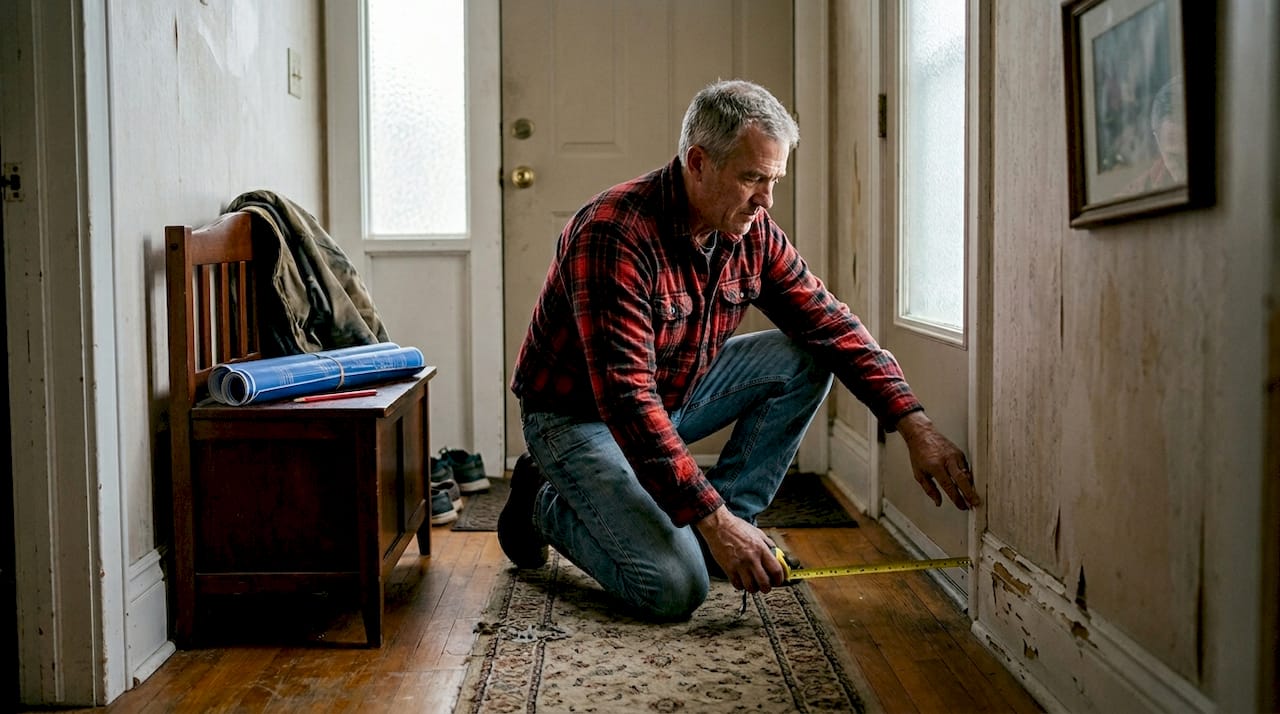
When you work with Maryland bespoke furniture specialists, the process starts with measurements. Every inch of your space is accounted for before a single piece of wood is cut. That means your mud locker fits flush against the wall, your bench sits at the right height for your family, and your storage compartments are sized for your actual boots and bags, not some average consumer’s.
Beyond dimensions, the design choices are genuinely unlimited. You select the wood species, the stain or paint color, the hardware finish, and the surface texture. Want a white oak with a matte natural finish and brushed brass hooks? Done. Prefer a painted shaker-style locker with soft-close drawers and a built-in charging station? Also done. The custom furniture process at a quality workshop involves collaborative design sessions where your preferences guide every decision.
Here’s how bespoke stacks up against off-the-shelf on the features that matter most:
| Feature | Off-the-shelf | Bespoke custom |
|---|---|---|
| Fit to space | Approximate | Exact to the millimeter |
| Style options | Limited catalog | Unlimited combinations |
| Integrated storage | Fixed compartments | Designed around your items |
| Hardware choices | 2 to 3 finishes | Any finish available |
| Seating integration | Rarely included | Built in by design |
Some of the most popular personalization features Maryland homeowners request include:
- Pull-out bench seating that doubles as a shoe storage cabinet
- Adjustable hook heights for adults and children in the same household
- Hidden cubbies for backpacks, umbrellas, and seasonal items
- Custom panel profiles that match existing millwork throughout the home
Pro Tip: Before your design consultation, photograph your entryway at different times of day. Natural light changes how wood tones and paint colors read, and your craftsperson can use those photos to recommend finishes that look great in your specific space. Tailored design case studies show that lighting-informed material choices make a measurable difference in long-term satisfaction.
Sustainability and environmental impact
Going bespoke is not just a personal choice. It’s an environmental one. Mass furniture production generates enormous waste, ships products thousands of miles, and relies on materials treated with volatile organic compounds that off-gas into your home for years. Custom furniture made by local Maryland artisans operates on a fundamentally different model.
Bespoke makers source responsibly harvested woods, often with FSC certification, and use non-toxic, water-based finishes that are safer for your family and the environment. Because each piece is made to order, there’s no overproduction, no warehouse full of unsold inventory, and no bulk shipping from overseas factories. Reduced waste of 85% and a 60% lower carbon footprint compared to conventional furniture production are documented outcomes of the bespoke model.
The longer lifespan of custom pieces compounds the environmental benefit. When your entryway furniture lasts 30 years instead of 5, you’re not sending three or four replacement pieces to the landfill over that same period. That’s a meaningful reduction in your household’s material footprint.
| Environmental factor | Mass-produced | Bespoke custom |
|---|---|---|
| Material waste | High (overproduction) | Minimal (made to order) |
| Carbon footprint | High (global shipping) | Low (local production) |
| Finish toxicity | Often high-VOC | Low-VOC or VOC-free |
| Landfill contribution | Frequent replacement | Rare replacement |
Here are practical steps Maryland homeowners can take to maximize the sustainability of their furniture investment:
- Ask your craftsperson for FSC-certified or reclaimed wood options
- Request water-based or natural oil finishes instead of solvent-based lacquers
- Choose a local Maryland maker to eliminate long-distance shipping emissions
- Opt for timeless designs that won’t feel dated in 10 years, reducing the temptation to replace
- Plan for refinishing rather than replacement when the finish eventually shows wear
“Every piece of furniture you keep out of the landfill is a direct environmental win. Bespoke furniture doesn’t just look better — it does better.”
Explore eco-friendly furniture making practices that align with responsible homeownership in Maryland.
Investment value and long-term savings
The upfront cost of bespoke furniture is higher. That’s a fact, and any honest craftsperson will tell you so. But the financial picture changes dramatically when you look beyond the purchase price and calculate the true cost of ownership over time.
A mass-produced entryway bench might cost $300 today. If it lasts five years before the joints fail or the finish peels beyond repair, you’ll spend $300 again. And again. Over 30 years, that’s $1,800 or more, plus the time and frustration of shopping, assembling, and disposing of multiple pieces. A bespoke piece built from kiln-dried hardwood with proper joinery can last that entire 30-year period with nothing more than occasional refinishing.
The bespoke lifespan 7 to 15x longer than mass-produced alternatives is the foundation of this calculation. Fewer replacements mean lower lifetime costs, less maintenance hassle, and less waste. For Maryland homeowners who plan to stay in their homes long-term, that math is compelling.
There’s also a resale dimension. Buyers in Maryland’s competitive real estate market notice quality. A custom-built entryway with integrated storage, premium hardware, and a finish that still looks sharp after a decade signals that the home has been cared for. That perception translates to real value at the negotiating table.
Key financial advantages of bespoke entryway furniture include:
- Lower lifetime cost when replacement cycles are factored in
- Refinishing flexibility instead of full replacement when wear appears
- Retained market appeal that supports home resale value
- Adaptability to changing needs without buying new pieces
Pro Tip: Keep a record of your furniture’s materials, finishes, and maker contact information. When it’s time for a touch-up or modification years down the road, that documentation makes the process faster and less expensive. Maintaining furniture value starts with knowing exactly what you have.
Stat to know: Bespoke furniture outlasts conventional alternatives by 7 to 15 times, meaning a single investment can replace what would otherwise be multiple purchase cycles over a homeowner’s lifetime.
The truth most experts miss about custom entryway furniture
Most articles about bespoke furniture focus on aesthetics. They talk about grain patterns, hardware finishes, and color palettes. Those things matter, but they’re not what makes a custom entryway piece genuinely life-changing for most homeowners. What actually changes is your daily routine.
When your entryway furniture is designed around how your household actually lives, mornings get easier. Backpacks have a place. Keys don’t disappear. Shoes aren’t scattered across the floor. That functional shift is something no style guide captures, but it’s what our clients talk about most after living with their pieces for a year.
There’s also pride of ownership that’s hard to quantify but impossible to ignore. Knowing that a craftsperson spent weeks building something specifically for your home creates a relationship with that object that mass-produced furniture never inspires.
One honest caution: over-customization is a real risk. Some homeowners try to pack every possible feature into a single piece and end up with something cluttered and hard to use. Trust your maker’s experience. The best custom furniture insight often comes from knowing what to leave out, not just what to include. Restraint in design almost always produces better results than maximalism.
Ready to transform your Maryland entryway?
You’ve seen how bespoke entryway furniture delivers on every dimension that matters: durability built to last decades, design tailored to your exact space, sustainability that reduces your environmental footprint, and long-term savings that justify the investment. These aren’t abstract benefits. They’re practical outcomes that Maryland homeowners experience every day.
At Maryland custom furniture, our family-owned workshop has spent over 20 years crafting entryway pieces that fit real homes and real lives. We’d love to show you what’s possible for your space. Whether you’re starting from scratch or replacing something that’s finally worn out, start your custom design conversation with our team today. Visit our showroom, browse our collections, or reach out directly to discuss your project.
Frequently asked questions
What makes bespoke entryway furniture more durable than ready-made pieces?
Bespoke furniture uses kiln-dried hardwoods, high-density foams, and time-tested joinery methods, resulting in a lifespan 7 to 15x longer than mass-produced alternatives. Those material and construction choices eliminate the weak points that cause conventional furniture to fail early.
How does bespoke furniture help the environment?
Custom furniture is made to order, which eliminates overproduction waste. Combined with responsibly sourced materials and local production, it delivers 85% less material waste and a 60% lower carbon footprint compared to conventional manufacturing.
Can custom entryway furniture increase my home’s value?
Yes. High-quality bespoke entryway pieces signal careful ownership and premium finishes to potential buyers, which can strengthen your home’s appeal and support a stronger asking price in Maryland’s competitive market.
How do I maintain bespoke entryway furniture?
Clean regularly with products recommended by your craftsperson and schedule periodic inspections or refinishing touch-ups to keep the piece in top condition. Because solid wood can be sanded and re-coated, maintenance extends the life of the piece rather than delaying an inevitable replacement.