
TL;DR:
- Bespoke furniture is tailored from scratch to fit your home’s unique needs and space.
- It offers perfect fit, durability, and personalized style, supporting local Maryland craftspeople.
- The process involves collaboration, design choices, and a 6-12 week timeline for handcrafted results.
Most people assume bespoke furniture is something reserved for mansion owners with unlimited budgets and a taste for the dramatic. That assumption holds a lot of Maryland homeowners back from getting exactly what their family actually needs. The truth is, bespoke design isn’t about excess. It’s about precision. Your entryway has a specific width, your kids have specific backpacks, your mornings have specific chaos, and a piece built around all of that serves you better than anything pulled off a showroom floor. This guide breaks down what bespoke design actually means, why it matters for Maryland homes, and how to figure out whether it’s the right move for your space.
Table of Contents
- What is bespoke design? A deeper look
- The advantages of bespoke design for your Maryland home
- Key steps in creating bespoke entryway furniture
- Is bespoke design right for you? Factors to consider
- Our take: Bespoke design isn’t just luxury—it’s value for Maryland families
- Ready to transform your entryway? Let’s talk bespoke.
- Frequently asked questions
Key Takeaways
| Point | Details |
|---|---|
| True personalization | Bespoke design gives you furniture that fits your space, needs, and tastes perfectly. |
| Long-term value | Investing in bespoke pieces adds durability and character to your home while supporting local craftsmen. |
| Collaborative process | Working with a local artisan means your ideas shape the final result every step of the way. |
| Not just for luxury | Bespoke solutions can be practical and accessible for Maryland families, not just for high-end homes. |
What is bespoke design? A deeper look
The word “bespoke” gets thrown around a lot, often interchangeably with “custom” or “made-to-order.” But these terms aren’t the same, and understanding the difference will save you from paying a premium for something that’s still just a template.
Bespoke design refers to products made-to-order, tailored specifically for individual needs. That means the entire piece starts from scratch based on your measurements, your lifestyle, your aesthetic. There’s no base model being slightly adjusted. A bespoke mud locker built for your Maryland entryway is built only for that entryway.
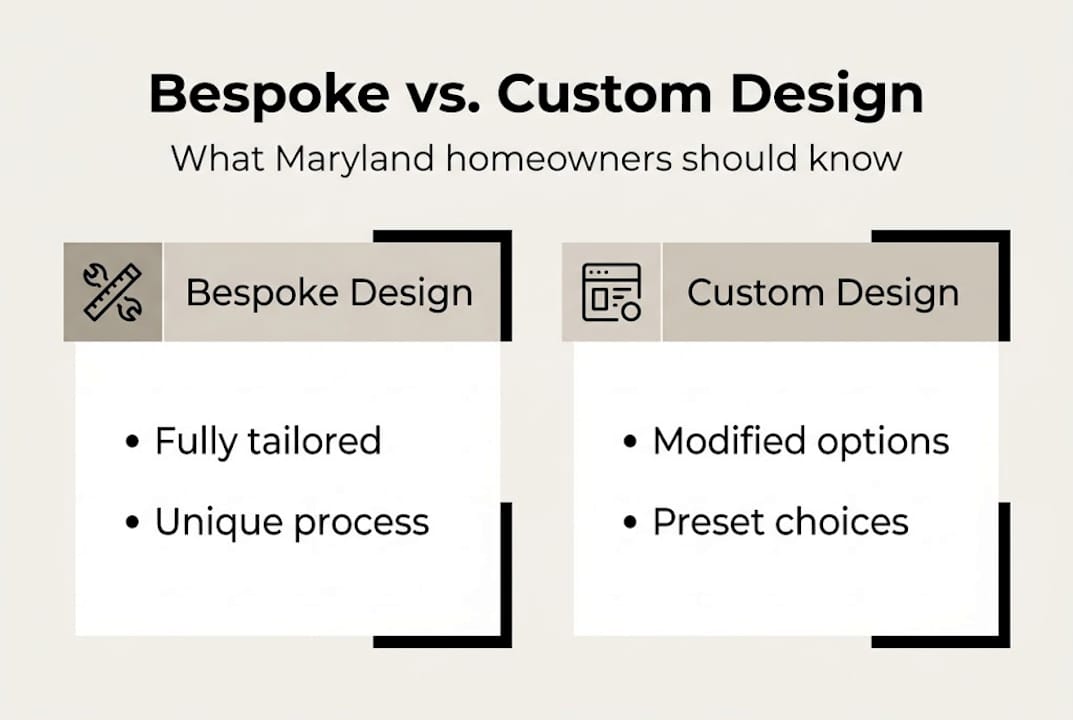
Here’s how the three terms actually compare:
| Feature | Ready-made | Custom | Bespoke |
|---|---|---|---|
| Starting point | Stock design | Modified template | Blank slate |
| Fit | Approximate | Close | Exact |
| Design input | None | Limited | Extensive |
| Uniqueness | Mass-produced | Semi-unique | One-of-a-kind |
| Timeline | Immediate | 2-4 weeks | 6-12 weeks |
| Craftsmanship | Factory-made | Variable | Artisan-built |
With bespoke, you’re involved from the first sketch. You choose the wood species, the finish, the hardware, the dimensions, and even the internal layout. A local Maryland craftsman takes all of that input and builds something that exists nowhere else. You can see what that process looks like with real custom furniture examples to get a sense of the range of possibilities.
“Bespoke means designed just for you, not a template from a catalog.”
Some common myths about bespoke design worth clearing up:
- It’s only for large homes. Not true. Bespoke works especially well for awkward or small spaces that standard furniture never fits properly.
- It always costs a fortune. Pricing varies widely depending on materials and complexity. Many families find it competitive when factoring in longevity.
- The process is complicated. A skilled artisan guides you through every decision. You don’t need a design degree to participate meaningfully.
- It takes too long. For something you’ll use every single day for decades, a few extra weeks is a worthwhile trade.
The key distinction is personal involvement. You’re not just picking a color from a swatch book. You’re shaping an object that reflects how your household actually functions.
The advantages of bespoke design for your Maryland home
Maryland homes come in all shapes. Federal-style rowhouses in Annapolis, craftsman bungalows in Baltimore, new construction in Columbia, farmhouses in Frederick County. Each has a different entryway with different needs, and none of them are perfectly served by furniture designed for an imaginary average home.
The unique value of bespoke design becomes clear when you look at what you’re actually getting:
- Perfect fit. Every inch is measured and accounted for. No gaps, no awkward overhangs, no pieces that almost work.
- Long-term durability. Local artisans use quality materials and traditional joinery techniques that outlast particle board by decades.
- Distinct style. Your entryway looks like yours, not like every other home on the street.
- Support for local craftsmen. Your investment stays in the Maryland economy and supports skilled trades.
- Higher home value. Bespoke pieces often increase perceived value and functionality in your home, which matters when it’s time to sell.
Pro Tip: When working with a Maryland-based artisan, mention the climate specifically. Humidity swings between summer and winter affect how wood behaves. A local craftsman knows which species and finishes hold up best in our region, and that knowledge is built into your piece from day one.
Think about the entryway in practical terms. It’s the first thing your family touches when they walk in and the last thing they interact with before leaving. A bespoke mud locker with dedicated hooks at the right height for each family member, built-in shoe cubbies sized for your actual shoe collection, and a bench at exactly the right height for pulling on boots is genuinely life-improving. You can explore how transforming entryways with purpose-built pieces changes daily routines in ways that generic furniture simply cannot.
Studies on home renovation satisfaction consistently show that homeowners feel most pleased with improvements that solve real, daily problems. A bespoke entryway piece does exactly that.
Key steps in creating bespoke entryway furniture
The process sounds intimidating if you’ve never been through it. It isn’t. Here’s exactly what to expect when you work with a local Maryland artisan on a bespoke entryway piece.
- Initial consultation. You meet with the craftsman, discuss your space, your household’s daily routines, and your style preferences. This is where the scope takes shape.
- Measurement and site visit. The artisan visits your home to take precise measurements and assess structural details like outlets, baseboards, and doorways.
- Design development. You review sketches or digital renderings and give feedback. Revisions happen here, not after the wood is cut.
- Material selection. You choose your wood species, finish, hardware, and any special features like built-in lighting or cushioned bench tops.
- Build phase. The craftsman constructs your piece in the workshop. This is where the expertise earns its keep.
- Delivery and installation. The finished piece is installed in your space, adjusted on-site for a perfect fit.
Collaboration between homeowner and designer is essential for true bespoke outcomes. The more clearly you communicate your needs at each stage, the better the result.
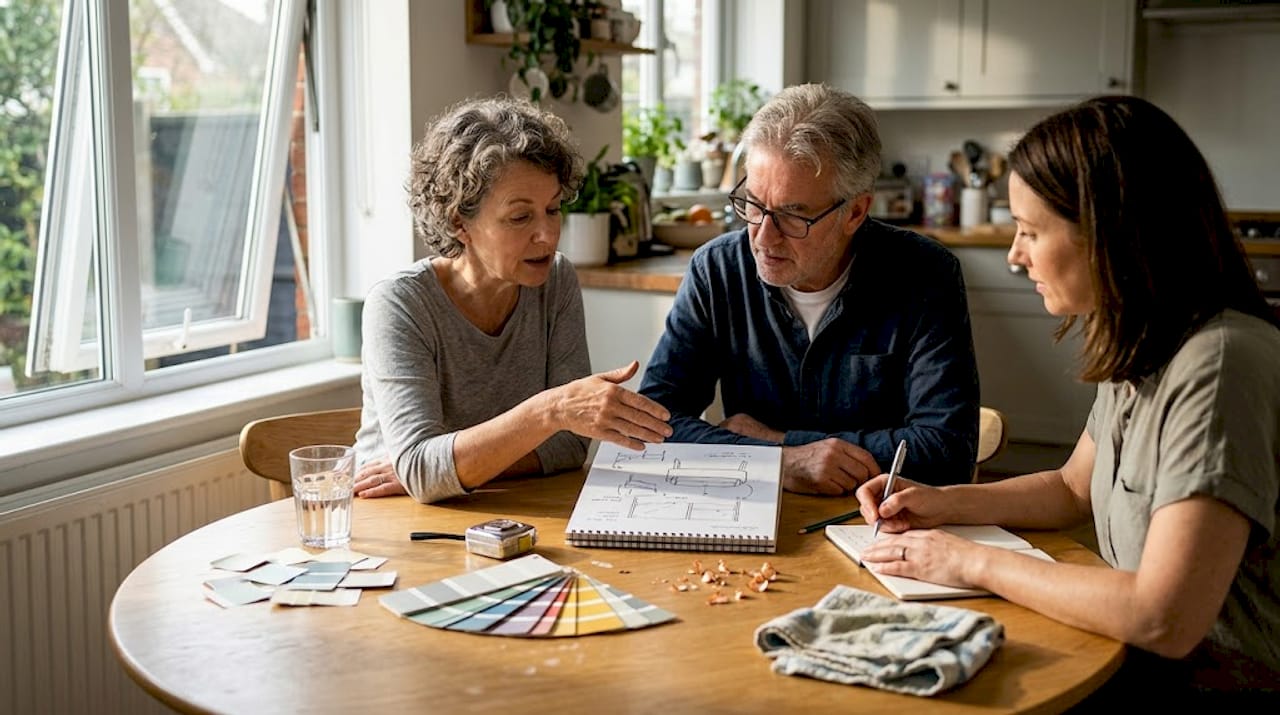
Pro Tip: Bring reference photos, a rough room sketch with measurements, and even paint swatches to your first consultation. The more context you give, the faster the design process moves and the more accurately the artisan can capture your vision.
Here’s a realistic timeline comparison:
| Project type | Typical timeline | Design input | Revisions possible? |
|---|---|---|---|
| Ready-made purchase | Same day to 1 week | None | No |
| Semi-custom order | 2-4 weeks | Minimal | Limited |
| Bespoke build | 6-12 weeks | Extensive | Yes |
The longer timeline for bespoke work reflects the handcrafted nature of the process. Each joint is cut by hand, each surface is finished with care, and each detail reflects a decision you made together with the artisan.
Is bespoke design right for you? Factors to consider
Bespoke isn’t the right answer for everyone, and being honest about that actually builds more trust than overselling. Here’s how to think through whether it fits your situation.
Homeowners should consider investment value, functionality, and style priorities when choosing bespoke. Start by asking yourself these questions:
- Budget. Are you prepared to invest more upfront for something that lasts 20 to 30 years instead of replacing a cheaper piece every five?
- Timeline. Can your household wait 6-12 weeks for the finished piece, or do you need a solution immediately?
- Design involvement. Do you enjoy making design decisions, or does the idea of choosing wood finishes and hardware feel overwhelming?
- Return on investment. Will this piece add lasting value to your daily life and your home’s resale appeal?
- Space challenges. Do you have an awkward entryway that standard furniture has never fit properly?
A quick self-assessment checklist:
- [ ] My entryway has specific dimensions that off-the-shelf pieces don’t address
- [ ] I want furniture that reflects my home’s character and my family’s needs
- [ ] I value longevity over low upfront cost
- [ ] I’m comfortable being involved in design decisions
- [ ] I want to support local Maryland craftsmanship
If you checked three or more of those, bespoke is probably the right direction. If you checked fewer, a semi-custom option might be a better starting point. You can always browse inspiration for your entryway to see different styles and approaches before committing to anything.
There are situations where ready-made makes more sense: short rental leases, very tight budgets, or entryways that genuinely work fine with standard sizing. Bespoke shines when your space or lifestyle has needs that mass production simply can’t address.
Our take: Bespoke design isn’t just luxury—it’s value for Maryland families
Here’s something the furniture industry doesn’t say often enough: mass-produced furniture is designed for no one in particular. It’s designed for an average that doesn’t exist. So when your standard bench doesn’t quite fit, or your hooks are at the wrong height, or the shoe cubby swallows small kids’ sneakers, that’s not a coincidence. That’s the nature of furniture built without you in mind.
We’ve spent over 20 years working with Maryland families, and the pattern is consistent. The homes with family-first furniture design built around how people actually live function better and feel better. Not because they’re fancier, but because every element earns its place.
“The most valuable furniture isn’t the most expensive. It’s the piece that fits your life so well you stop noticing it’s there.”
Local artisans bring something factories genuinely can’t replicate: they understand Maryland. They know how seasonal humidity affects wood, which finishes hold up in a mudroom that sees wet winter boots, and how to build something that grows with your family. That knowledge is worth more than any catalog price tag.
Ready to transform your entryway? Let’s talk bespoke.
If this guide has you thinking seriously about what a purpose-built entryway piece could do for your home, the next step is simpler than you’d expect.
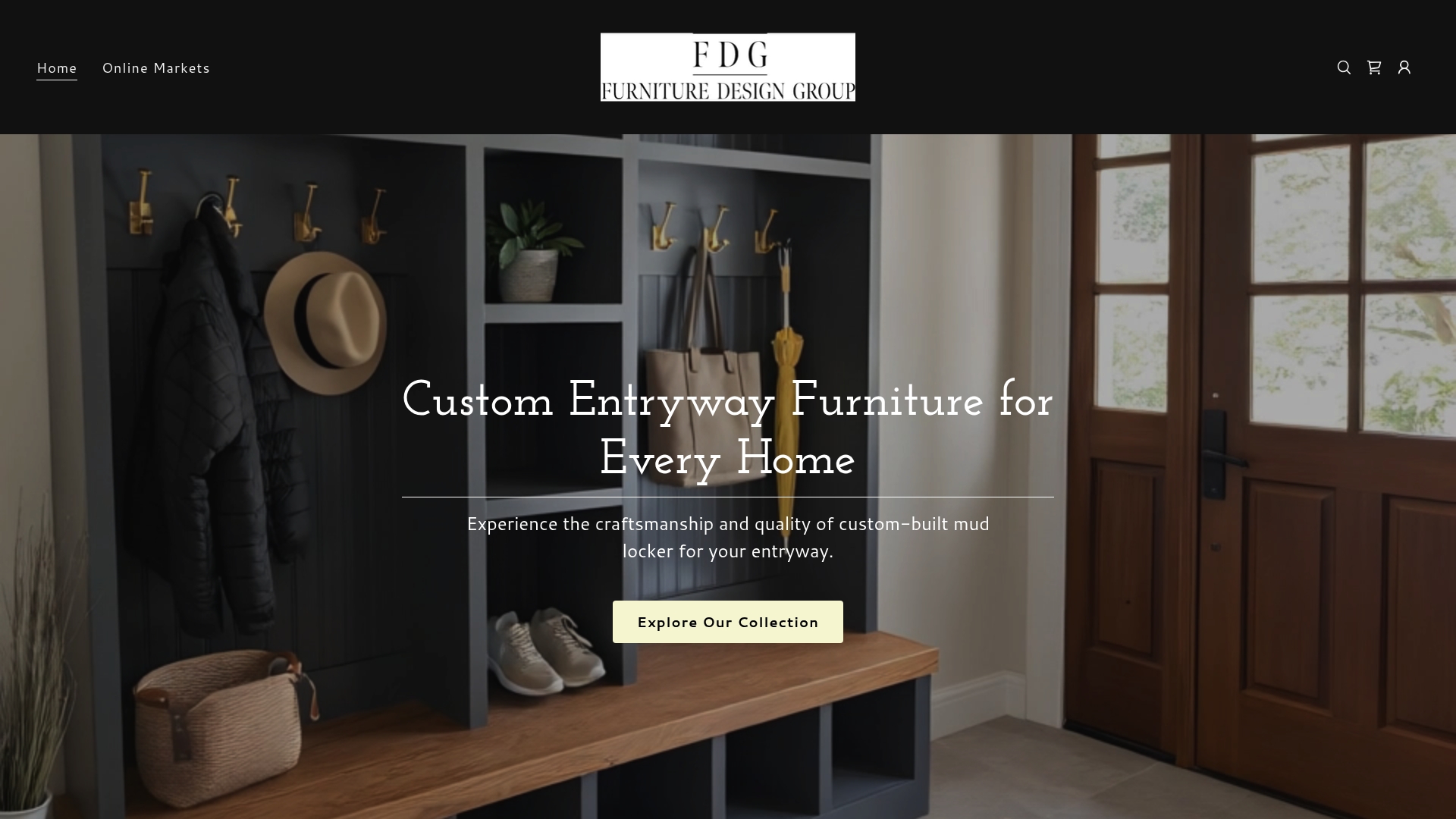
At Furniture Design Group, we’ve been crafting bespoke entryway furniture for Maryland families for over two decades. From mud lockers to full entryway systems, every piece starts with your space and your story. Take a look at what we’ve built by browsing our start your custom project page, or reach out directly to our team to schedule a consultation. We keep the process straightforward, collaborative, and genuinely enjoyable. Contact our team today and let’s figure out exactly what your entryway needs.
Frequently asked questions
How is bespoke entryway furniture different from custom or made-to-order furniture?
Bespoke furniture is built entirely from scratch based on your specific needs, while custom options typically modify an existing template. As one industry source notes, bespoke refers to products made-to-order and tailored specifically for individual needs, not adjusted from a standard design.
What does the process of working with a bespoke furniture artisan look like?
You’ll move through consultation, design, material selection, build, and installation with close collaboration at every stage. True bespoke outcomes depend on ongoing communication between the homeowner and the craftsman throughout the entire process.
Is bespoke furniture worth the investment for Maryland homeowners?
For most Maryland homeowners with specific space or lifestyle needs, yes. Bespoke pieces often increase perceived value and functionality in your home, and local craftsmanship means the piece is built to last for decades.
How long does bespoke entryway furniture take to complete?
Most bespoke entryway projects take 6-12 weeks from consultation to installation. Bespoke projects may require longer timelines than ready-made options, but the result is a personalized, durable piece built specifically for your home.
Can I be involved in the design decisions?
Absolutely. Your input shapes every aspect of the piece, from dimensions and materials to hardware and finish. Collaboration between homeowner and designer is essential to achieving a truly bespoke result that reflects your needs and personal style.