
Custom-designed entryway furniture can boost homeowner satisfaction by over a third. Your entryway sets the tone for your entire home, merging daily functionality with lasting style. This guide walks you through mastering bespoke design solutions tailored specifically for Maryland homes, from material selection to spatial optimization.
Table of Contents
- Understanding Functionality Of Entryway Design
- Craftsmanship And Material Choices That Enhance Durability
- Benefits Of Bespoke Customization In Entryway Furniture
- Common Misconceptions And Design Myths About Entryways
- Practical Steps For Choosing And Implementing Custom Entryway Furniture
- Discover Bespoke Entryway Furniture Solutions In Maryland
- FAQ
Key takeaways
| Point | Details |
|---|---|
| Clutter reduction | Effective entryway design reduces household clutter by 40% through designated storage zones. |
| Durability advantage | Quality craftsmanship extends furniture lifespan by over 15 years compared to mass-produced alternatives. |
| Satisfaction boost | Customization increases homeowner satisfaction by 35% through tailored aesthetic and functional solutions. |
| Space optimization | Smaller, multifunctional pieces often outperform oversized furniture in tight Maryland entryways. |
Understanding functionality of entryway design
Your entryway serves as the command center for daily household flow. A well-designed entry creates designated storage zones that reduce clutter by up to 40%, transforming chaos into order the moment you walk through the door.
Multifunctional furniture amplifies this benefit by serving multiple purposes without consuming extra space. A custom bench with integrated shoe storage, for example, provides seating while organizing footwear that would otherwise pile up. These dual-purpose pieces enhance usability by roughly 30%, making your entryway work harder for you.
Spatial constraints matter significantly in Maryland homes, where entryways range from compact townhouse entries to spacious colonial foyers. Assessing your specific dimensions ensures furniture fits naturally rather than cramping movement paths. Consider these functional priorities:
- Adequate clearance for door swing and traffic flow
- Storage capacity matching your household’s daily needs
- Visual sightlines that maintain open, welcoming atmosphere
- Accessibility for all family members and guests
Beyond organization, your entryway creates immediate impressions. Visitors form opinions within seven seconds of entering your home. A thoughtfully designed entry reduces homeowner stress by establishing order where disorder typically accumulates. When everything has a designated place, morning routines flow smoother and evening arrivals feel calmer.
The entryway design impacts extend into your home’s deeper spaces. An organized entry prevents clutter migration into living areas, maintaining the cleanliness you’ve worked to achieve throughout your house. Explore custom entryway transformations to see how strategic design reshapes daily life.
Craftsmanship and material choices that enhance durability
Material selection directly determines how long your entryway furniture maintains its beauty and function. Hardwoods last 25% longer than softwoods in high-traffic entry areas, resisting dents, scratches, and moisture damage that softwoods cannot withstand.
Oak, maple, and cherry stand as top choices for Maryland entryways. These hardwoods handle the region’s humidity fluctuations without warping or splitting. Their tight grain structures resist wear from daily contact, maintaining smooth surfaces even after years of use.
Artisanal craftsmanship adds 15 years to furniture lifespan compared to factory assembly methods. Skilled woodworkers employ traditional joinery techniques like mortise and tenon, dovetail, and tongue and groove. These connections distribute stress naturally, preventing the joint failure common in mass-produced pieces held together by glue and staples.
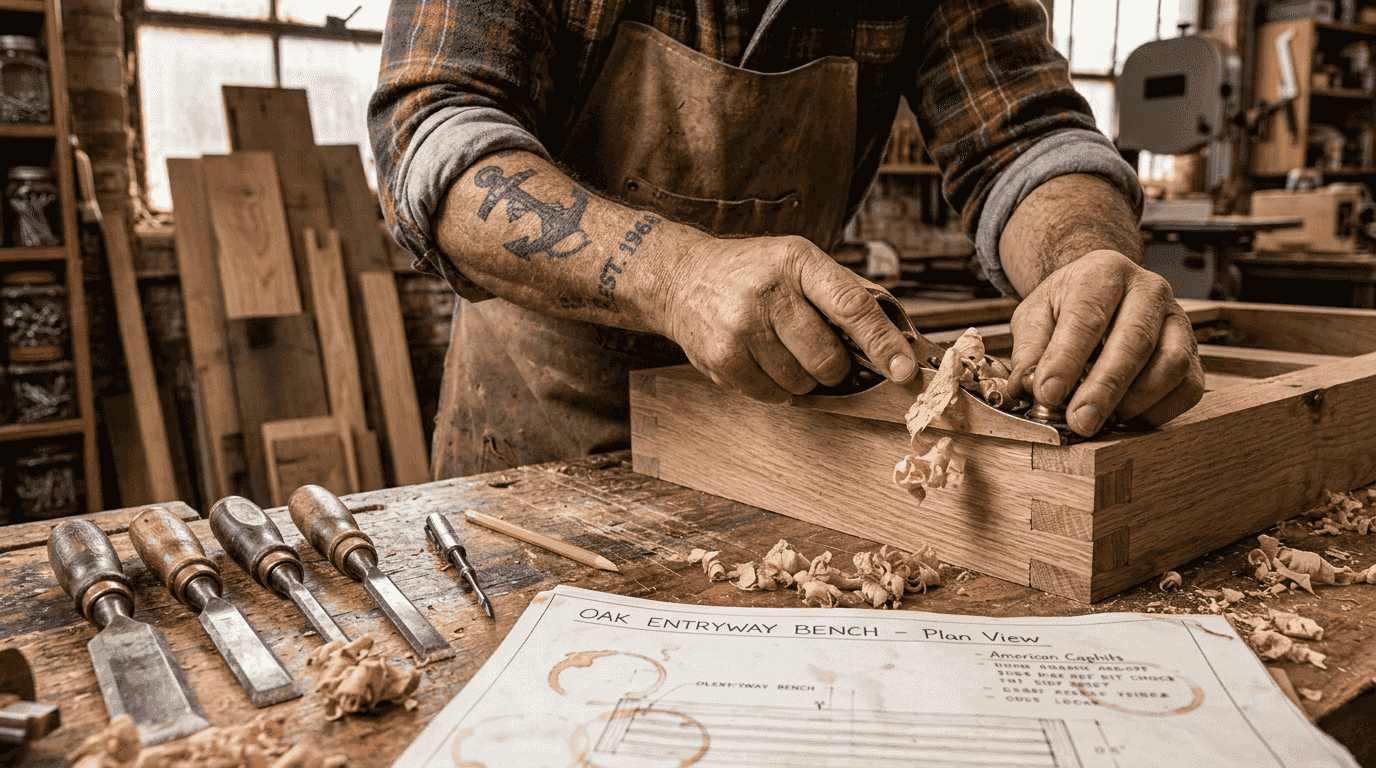
Maryland homeowners prioritize artisanal techniques 60% of the time when commissioning custom furniture. This preference reflects appreciation for handcrafted details and local maker relationships. Working with nearby artisans also enables direct communication about your specific needs and design vision.
Material choice shapes aesthetic consistency too. Hardwoods accept stains and finishes evenly, allowing precise color matching to your existing interior palette. They age gracefully, developing rich patinas that enhance rather than detract from appearance. Consider these durability factors:
- Grain density and hardness rating for wear resistance
- Moisture stability for Maryland’s climate conditions
- Finish durability and maintenance requirements
- Joinery method and connection strength
Pro Tip: Inspect joinery and finish details closely when evaluating custom furniture options. Run your hand along joints to feel for gaps or rough transitions. Quality work shows seamless connections and glass-smooth finishes. Visit workshops to observe craftsmanship and material quality firsthand before committing to bespoke furniture craftsmanship.
Benefits of bespoke customization in entryway furniture
Custom furniture solves spatial and organizational challenges that off-the-shelf pieces cannot address. When you work with a designer, every dimension, feature, and detail aligns precisely with your entryway’s unique characteristics. This precision fit eliminates the compromises you make when selecting standard furniture.
Custom furniture leads to a 35% increase in homeowner satisfaction compared to mass-produced alternatives. This boost stems from furniture that genuinely serves your needs rather than forcing you to adapt around its limitations. A custom mud locker, for instance, can accommodate your family’s specific gear, from sports equipment to work bags, with compartments sized appropriately.
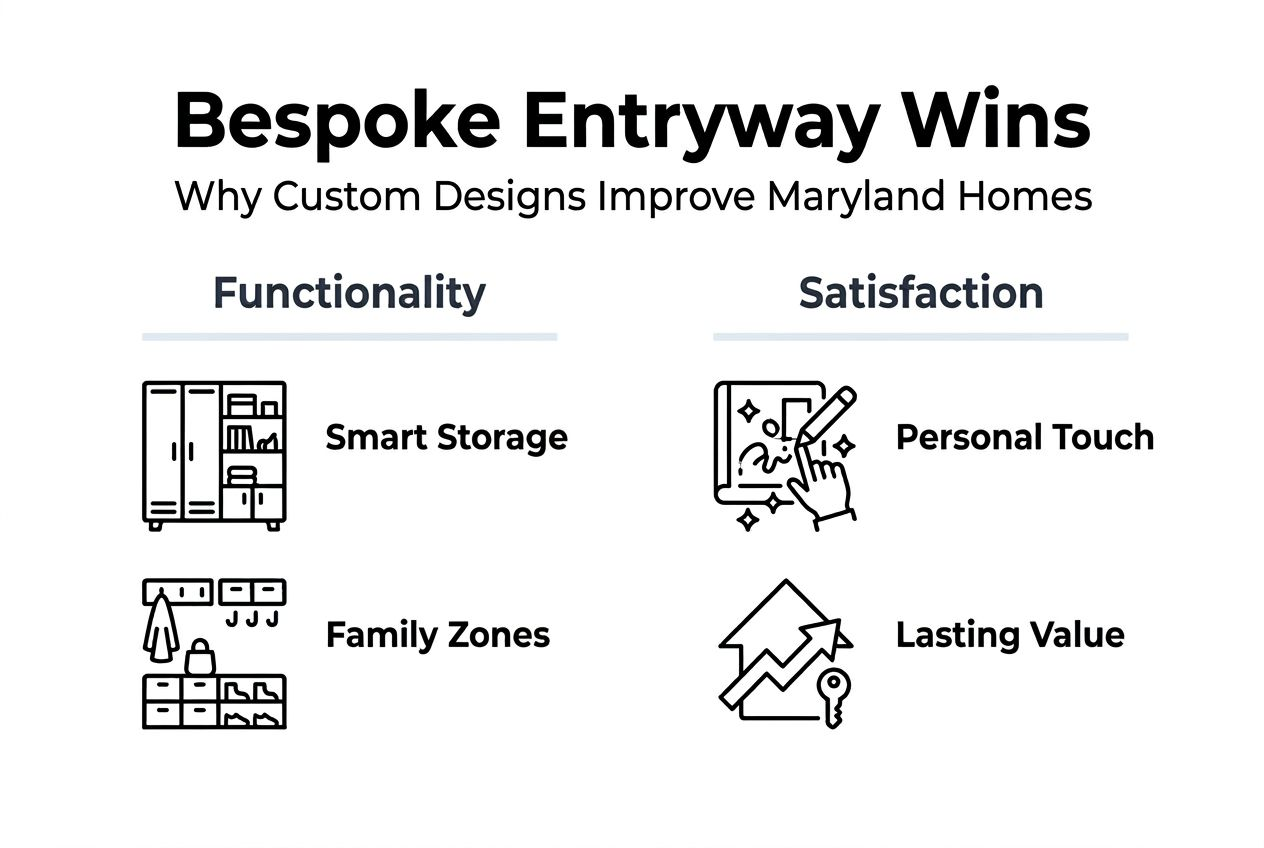
Tailored designs harmonize your entryway with your home’s broader interior style. Whether your aesthetic leans traditional, modern, or transitional, custom pieces integrate seamlessly rather than standing out as mismatched additions. This visual coherence creates sophisticated first impressions and maintains design flow throughout your home.
Bespoke customization delivers these specific advantages:
- Exact dimensional fit for awkward or irregular spaces
- Storage configurations matching your household’s actual needs
- Material and finish selection coordinating with existing decor
- Integrated features like charging stations or pet feeding areas
- Accessibility accommodations for mobility considerations
Direct consultation with local artisans fosters unique, lasting pieces infused with personal touches. You can request specific wood species, hardware styles, or decorative elements that reflect your taste. This collaborative process ensures the final product exceeds expectations rather than merely meeting them.
Custom mud lockers transform organization by providing dedicated space for each family member’s belongings. Instead of generic cubbies, you get compartments sized for actual coats, boots, and accessories. Built-in seating adds comfort for shoe removal, while adjustable shelving grows with changing storage needs.
The investment in custom entryway solutions pays dividends through daily convenience and long-term durability. Unlike disposable furniture requiring replacement every few years, bespoke pieces become heirloom-quality additions that serve multiple generations.
Common misconceptions and design myths about entryways
Many homeowners believe larger furniture automatically provides better functionality. This myth leads to oversized pieces that overwhelm small Maryland entryways, restricting traffic flow and making spaces feel cramped. Properly sized furniture optimizes storage without creating visual clutter or physical obstacles.
Another prevalent misconception treats entryway furniture as purely decorative. While aesthetics matter, prioritizing appearance over utility produces beautiful but impractical spaces. Balancing function and style yields better daily experiences and protects your investment by ensuring furniture actually gets used.
Aesthetic design can increase perceived home value by 15%, but only when paired with genuine functionality. A stunning console table that cannot hold keys, mail, and everyday items fails its primary purpose. Visual harmony matters, yet practical utility drives satisfaction.
Size considerations become critical in compact spaces. An oversized bench might offer impressive seating but block natural movement patterns. Smaller, strategically placed pieces often serve better by maintaining open circulation while providing necessary functions. Measure your entryway carefully and prioritize flow over furniture volume.
Comparing bespoke versus mass-produced furniture reveals important trade-offs:
| Feature | Bespoke Furniture | Mass-Produced Furniture |
|---|---|---|
| Dimensional fit | Exact measurements for your space | Standard sizes requiring compromise |
| Material quality | Premium hardwoods, artisan-selected | Cost-optimized materials, variable quality |
| Customization | Unlimited design options | Fixed configurations, limited finishes |
| Durability | 15+ years additional lifespan | Shorter service life, frequent replacement |
| Investment | Higher upfront cost, long-term value | Lower initial price, ongoing replacement costs |
The myth that custom furniture costs prohibitively ignores long-term economics. When you factor in replacement cycles, repair costs, and dissatisfaction with ill-fitting pieces, bespoke options often prove more economical. Quality furniture serving 30 years outperforms three generations of disposable alternatives.
Understanding these realities helps you make informed decisions aligned with both immediate needs and future satisfaction. Avoid entryway design myths by prioritizing balanced solutions over extreme approaches.
Practical steps for choosing and implementing custom entryway furniture
Successful custom furniture projects follow a clear sequence from assessment through installation. This systematic approach ensures your final piece meets expectations and serves effectively.
-
Assess your entryway’s spatial dimensions precisely, measuring width, depth, and ceiling height. Note door swings, light switches, outlets, and architectural features like baseboards or molding that affect furniture placement.
-
Define your aesthetic style by collecting inspiration images and identifying design elements you love. Consider how your entryway connects to adjacent rooms and whether you want consistent or contrasting styles.
-
Choose durable materials based on your household’s wear patterns and Maryland’s climate. Hardwoods suit high-traffic entries, while certain finishes resist moisture better in humid conditions.
-
Identify necessary customization features by listing what you need to store, how many family members use the space, and special requirements like pet areas or sports equipment.
-
Collaborate with local artisans through initial consultations where you share your vision, review their portfolio, and discuss budget parameters. Transparent communication prevents misunderstandings later.
-
Review detailed drawings and material samples before production begins. This verification step catches issues while changes remain easy and inexpensive to implement.
-
Plan installation logistics including delivery access, assembly requirements, and any preparation your space needs before furniture arrives.
Pro Tip: Request material samples or visit artisan workshops to verify quality firsthand before committing. Seeing craftsmanship in person reveals details photos cannot capture. Touch finished surfaces, test joinery strength, and observe work in progress to build confidence in your choice.
Working through the custom furniture commissioning process with experienced professionals streamlines decision-making. Skilled designers ask questions you might not consider, preventing oversights that compromise functionality. They also manage technical aspects like wood moisture content, finish curing times, and structural engineering.
Timeline expectations matter. Custom pieces typically require 6 to 12 weeks from design approval through delivery. This patience pays off through furniture perfectly suited to your needs rather than compromised by rush decisions or stock limitations.
Discover bespoke entryway furniture solutions in Maryland
Furniture Design Group crafts handcrafted, custom entryway furniture designed specifically for Maryland homeowners. With over 20 years of experience, their artisans understand regional climate considerations and architectural styles common throughout the state.
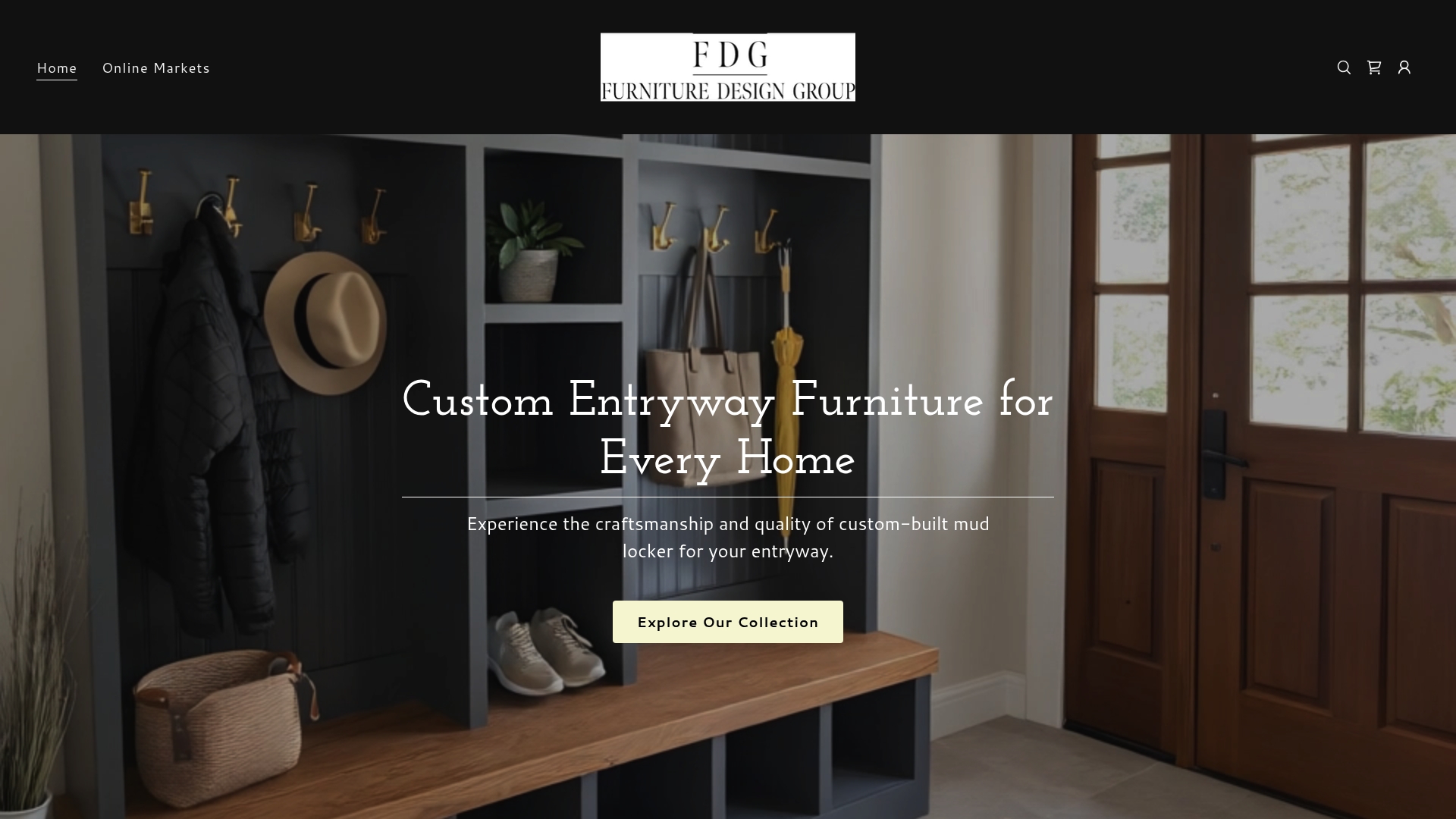
Personalized consultations align style preferences with functional requirements and premium craftsmanship. You’ll explore a wide range of materials, from classic oak to exotic hardwoods, plus finish options that complement your existing decor. Each project receives dedicated attention from initial concept through final installation.
Partner with skilled artisans committed to quality that generates lasting satisfaction. Their bespoke entryway furniture collection showcases diverse design possibilities, while the custom furniture design process ensures transparent collaboration every step of the way.
FAQ
What materials are best for durable entryway furniture?
Hardwoods like oak, maple, and cherry offer superior durability and wear resistance ideal for high-traffic entryways. These species handle Maryland’s humidity fluctuations without warping while resisting scratches and dents from daily use.
How can bespoke furniture improve small Maryland entryways?
Custom designs optimize limited space through modular, multifunctional pieces sized precisely for small dimensions. Tailored furniture eliminates wasted space while maximizing storage capacity and maintaining comfortable traffic flow.
What should I look for when selecting an artisan for custom entryway furniture?
Review portfolios for consistent quality and style range demonstrating technical skill. Verify the artisan uses premium materials and traditional joinery techniques rather than shortcuts. Seek specific experience with entryway furniture, as these pieces face unique functional demands compared to other furniture types.
How long does custom entryway furniture typically last?
Quality custom pieces crafted from hardwoods with artisanal joinery typically serve 30 years or longer with proper care. This lifespan exceeds mass-produced alternatives by 15 years or more, making bespoke furniture a sound long-term investment.
Does custom furniture really increase home value?
Well-designed custom entryway furniture can increase perceived home value by approximately 15% through enhanced aesthetic appeal and demonstrated quality. Buyers recognize and appreciate craftsmanship, viewing custom pieces as indicators of overall home care and attention to detail.