
Finding the perfect storage solution for a Maryland entryway can feel impossible when each home has its own quirks and challenges. That awkward alcove or narrow wall often becomes wasted space with off-the-shelf furniture, leaving clutter at your doorstep. Bespoke entryway storage is custom-designed to fit your exact needs, turning overlooked corners into beautiful, functional features. Discover how quality craftsmanship transforms everyday routines and preserves the character of your unique home.
Table of Contents
- Bespoke Entryway Storage Defined and Debunked
- Types and Key Features of Custom Entryway Storage
- How Customization Enhances Space and Organization
- Comparing Bespoke and Prefab Storage Solutions
- Cost, Maintenance, and Common Mistakes to Avoid
Key Takeaways
| Point | Details |
|---|---|
| Bespoke Storage Defined | Bespoke entryway storage is custom-built to fit your home and lifestyle, offering unique solutions for specific needs. |
| Misconceptions Debunked | Many believe bespoke is always expensive or overly ornate, but it can be functional and tailored to any style. |
| Long-Term Value | Although the upfront cost may be higher, bespoke storage generally lasts longer, making it more cost-effective over time. |
| Customization Matters | Tailored designs optimize space and organization, addressing daily habits and unique architectural features. |
Bespoke Entryway Storage Defined and Debunked
Bespoke entryway storage sounds fancy, but here’s what it really means: custom-built storage solutions designed specifically for your home and lifestyle. Unlike mass-produced options you’d find in a big box store, bespoke storage is crafted to fit your exact space, your architectural quirks, and your daily routines.
Many homeowners think “bespoke” just means expensive or overly decorated. That’s a misconception. Custom-designed storage solutions actually maximize the awkward spaces most people ignore—the alcove beside your front door, the dead space under your staircase, or that sliver of wall between two doors.
What Bespoke Actually Means
Bespoke entryway storage is built to solve your specific problems, not generic ones.
Here’s what sets it apart from off-the-shelf alternatives:
-
Tailored to your space: Every entryway has unique dimensions, architectural features, and layout challenges. Bespoke storage fits perfectly into these constraints rather than forcing you to adapt.
-
Personalized to your lifestyle: A busy family of five needs different storage than a empty-nester who rarely entertains. Your design reflects how you actually live.
-
Preserves home character: In period homes or architecturally significant spaces, bespoke storage respects the original design while adding modern functionality.
-
Quality craftsmanship: Built by skilled artisans using materials you choose, not assembly line production with inconsistent quality.
Common Myths Debunked
Myth 1: Bespoke is always more expensive than ready-made.
Not necessarily. A poorly chosen mass-produced unit might seem cheap upfront but wastes space and requires replacement in 5-7 years. Bespoke storage lasts decades.
Myth 2: Bespoke means overly ornate or fussy.
Minimalist, modern, traditional, rustic—bespoke can be any style you want. The custom part is the fit and function, not necessarily the aesthetic.
Myth 3: You need a designer to get bespoke storage.
Experienced craftspeople work directly with homeowners to create solutions. You describe your needs; they provide expertise.
Bespoke storage is an investment in design that solves real problems while looking like it belongs in your home.
Why Maryland Homeowners Choose Bespoke
Maryland homes vary wildly—colonial farmhouses, 1970s splits, modern renovations, historic row homes in Baltimore. Off-the-shelf storage rarely fits these distinct architectural styles or spatial constraints.
Bespoke solutions preserve the character of older homes while delivering practical function for today’s busier households. You’re not just buying storage; you’re investing in a piece built for your specific house.
Pro tip: _Start by measuring your entryway space and documenting what frustrates you most about current storage—coat overflow, shoe pile-ups, clutter on surfaces. Share this reality check with a craftsperson; they’ll identify opportunities you’ve overlooked.
Types and Key Features of Custom Entryway Storage
Custom entryway storage comes in several distinct types, each designed to solve different problems based on your space and lifestyle. The key is matching the right type to your actual needs rather than forcing a generic solution to work.
Most entryways need a combination of storage solutions working together. A bench with hidden compartments handles shoes and boots. Wall-mounted cabinetry keeps coats accessible. Open shelving displays decorative items and keeps keys visible. When these work in harmony, your entryway functions smoothly.
Common Custom Storage Types
Built-in shelves, cabinetry, and benches are the foundation of most custom entryway systems. Here’s what each brings to the table:
-
Built-in cabinetry: Seamless wall-to-wall storage that hides clutter completely. Drawers, shelves, and closed compartments keep everything organized behind clean lines.
-
Benches with storage: Functional seating that doubles as shoe and boot storage. Perfect for families with active kids or households with lots of outdoor gear.
-
Open shelving: Displays items you want visible while keeping floors clear. Works well in smaller entryways where closed cabinetry would feel cramped.
-
Console tables with deep drawers: Elegant surface storage for keys, mail, and daily essentials without bulk. Great for narrow spaces.
-
Locker-style systems: Individual compartments for each family member. Each person has their own designated space for coats, bags, and personal items.
Essential Features That Matter
Regardless of type, effective custom entryway storage shares these characteristics:
-
Concealed storage options: Hidden compartments and closed cabinets reduce visual clutter and create a calm entry experience.
-
Durable materials: Bespoke storage systems built with quality wood, hardware, and finishes last decades, not years.
-
Accessibility: Everything should be reachable without awkward bending or stretching. Kids need hooks and baskets they can actually use.
-
Specialized organization: Dedicated spots for shoes, coats, bags, and accessories make daily routines faster and easier.
-
Aesthetic integration: The storage should look intentional and attractive, not like a afterthought bolted to your wall.
Custom storage works best when form and function are designed together from day one, not added as separate concerns.
Matching Type to Your Lifestyle
A household with school-age children needs different features than a couple who works from home. Think about what actually happens in your entryway daily.
Do coats pile up? You need accessible hanging space. Are shoes everywhere? Dedicated shoe storage solves this. Is clutter visible from your living room? Closed cabinetry creates visual separation.
Your daily patterns should drive the design, not the other way around.
Pro tip: _Photograph your current entryway at the end of a typical week—chaos and all. This visual reality check shows a craftsperson exactly what you need storage for, eliminating guessing games about your lifestyle.
How Customization Enhances Space and Organization
Customization transforms how your entryway actually functions. Off-the-shelf storage treats all homes the same. Bespoke solutions work with your specific space, your habits, and the way your family really lives.
The difference shows up immediately. Clutter disappears into designated spots. Movement flows smoothly from door to coat closet to living room. Mornings become less chaotic because everything has a logical home.
Optimizing Unused and Awkward Spaces
Every entryway has wasted potential. That triangular space under the staircase. The slim alcove beside the door frame. The wall that’s too narrow for standard furniture. These spaces frustrate homeowners because standard solutions don’t fit.
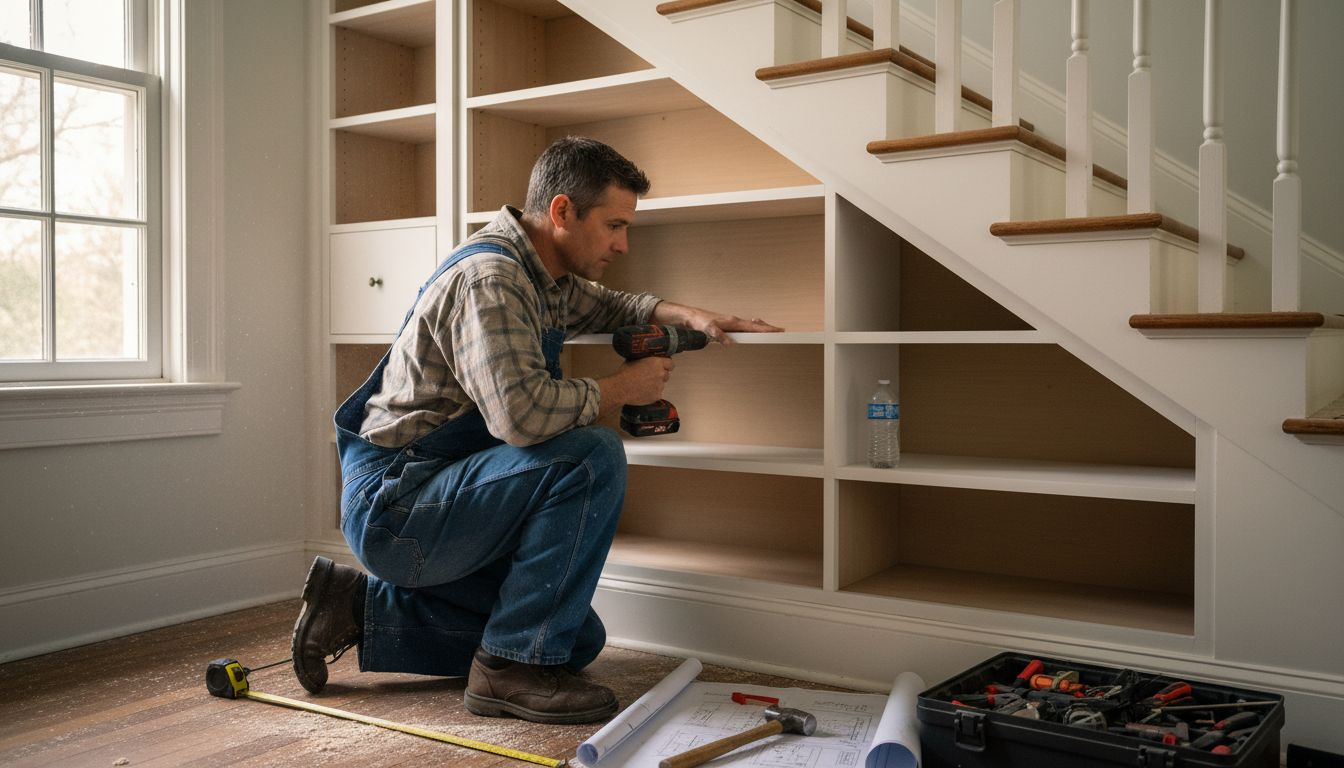
Bespoke storage optimizes unused spaces by filling these awkward areas with perfectly fitted solutions. Suddenly, that dead space becomes functional real estate.
Here’s what optimization looks like in practice:
-
Under-stair storage: Custom drawers or cubbies slide into spaces standard furniture can’t reach, adding significant capacity without eating floor space.
-
Alcove cabinets: Narrow wall pockets become built-in lockers or shelving tailored to exact dimensions.
-
Corner solutions: Angled storage units transform corner dead zones into accessible, organized compartments.
-
Vertical integration: Custom designs use wall height efficiently, keeping floors open and movement smooth.
Creating Intuitive Storage Zones
Organization works best when it mirrors how you actually use your entryway. Instead of random shelving, you get specific storage zones designed for specific purposes.
Your teenager’s sports gear has a dedicated locker. Everyday coats hang where everyone can reach them. Shoe storage sits at floor level, easy to access. Guest coats go higher, out of the daily shuffle.
When storage zones match your routines, organization becomes automatic rather than effortful.
Reducing Clutter Through Design
Clutter happens when you don’t have enough storage or when storage isn’t intuitive. Custom solutions address both problems simultaneously.
Concealed storage hides what you don’t want visible. Drawers close. Cabinet doors shut. Benches have hidden compartments. When clutter is hidden, your entryway feels calm and spacious.
Visible organization works differently. Open shelving displays items intentionally. Hooks and baskets stay within reach. Everything looks purposeful rather than scattered.
Custom design lets you mix both approaches. Hide what disrupts your visual calm. Display what adds character.
Customization works because it removes friction from daily routines, making organization feel natural instead of like constant effort.
Improving Movement and Flow
A well-organized entryway moves people efficiently. You walk in, your coat hangs in the closet, your shoes go in the rack, your bag lands on the shelf. Each step is intuitive because storage is positioned logically.
Poorly designed storage forces backtracking. You grab your coat, realize you need your gloves from another shelf, navigate back around furniture in a tight space. Frustration builds.
Custom solutions anticipate these movement patterns and eliminate them.
Pro tip: _Walk through your current entryway multiple times per week, noting every place items pile up and every movement that feels awkward. This movement map shows exactly where custom storage should go for maximum efficiency and minimum effort.
Comparing Bespoke and Prefab Storage Solutions
You have two main paths when choosing entryway storage: prefabricated furniture you buy off-the-shelf or bespoke solutions custom-built for your space. Both have real advantages and real trade-offs. The right choice depends on your specific situation, budget, and priorities.
Prefab offers speed and lower upfront costs. Bespoke delivers tailored functionality and lasting design coherence. Understanding the differences helps you make the right call.
Below is a concise comparison of bespoke and prefab entryway storage to help you evaluate which fits your home and needs.
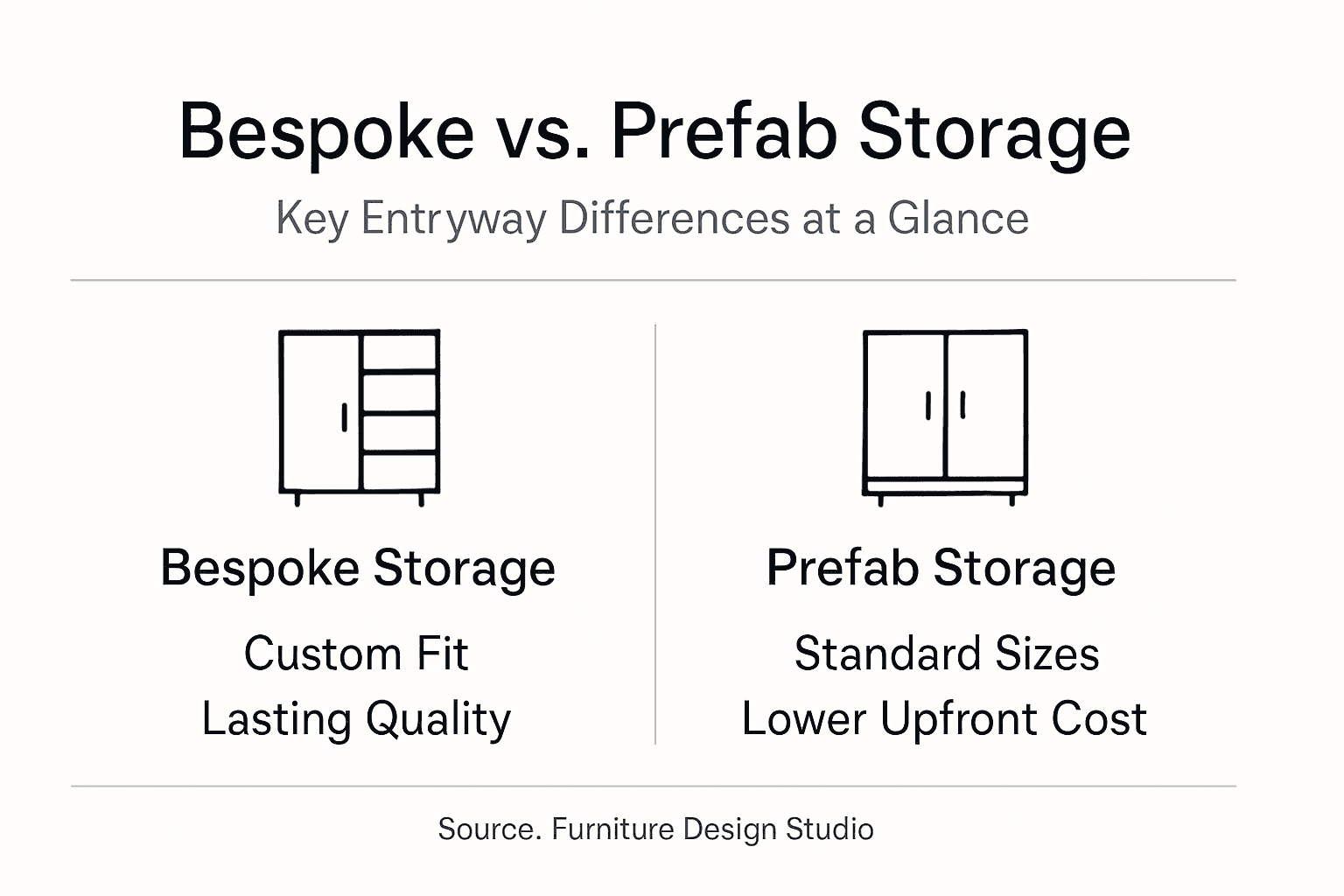
| Aspect | Bespoke Storage | Prefab Storage |
|---|---|---|
| Spatial Fit | Custom for unique spaces | Limited to standard shapes |
| Durability | High-quality, lasts decades | Lower quality, short lifespan |
| Aesthetic Match | Made to match home style | May clash with décor |
| Upfront Cost | Higher initial investment | Lower purchase price |
| Installation Time | Longer, requires planning | Immediate, minimal setup |
| Long-Term Value | Cost-effective over decades | Needs frequent replacement |
| Flexibility | Personalized features and zones | Some modularity, less tailored |
The Prefab Appeal
Prefabricated storage has genuine advantages for certain situations. You walk into a store, find a piece that looks good, and take it home the same day. No waiting. No design meetings. No surprises.
Cost advantages are real too. Mass-produced furniture spreads manufacturing costs across thousands of units, making individual pieces more affordable upfront.
Here’s what prefab typically offers:
-
Immediate availability: Purchase today, use today—no lead time or waiting.
-
Lower initial investment: Entry-level pricing makes storage accessible for budget-conscious homeowners.
-
Flexibility to change: You can swap out or relocate modular pieces if your needs shift.
-
Minimal installation: Most prefab pieces just assemble and sit—no construction required.
Where Prefab Falls Short
The convenience comes with real limitations. Prefab furniture often fails to maximize unusual spaces because standard sizes don’t fit non-standard homes.
That awkward alcove? Standard shelving won’t fit. The sloped wall under your staircase? Prefab benches are rectangular. Your entryway is unique, but prefab assumes all entryways are identical.
Style mismatches are common too. The storage looks fine on its own but clashes with your home’s architectural character or existing décor.
Long-term, cheaper prefab wears quickly. Hinges loosen. Shelves sag. Paint chips. You’re replacing it in 5-7 years, not 20+.
The Bespoke Advantage
Bespoke storage is tailored to fit your exact space and lifestyle, maximizing every inch while maintaining design coherence with your home.
You’re not compromising on fit or forced to accept mismatched aesthetics. Every detail—materials, finishes, dimensions, functionality—aligns with your needs and your home’s character.
Bespoke benefits include:
-
Perfect spatial fit: Built to your exact dimensions, filling awkward spaces efficiently.
-
Architectural harmony: Designed to complement your home’s style, not compete with it.
-
Superior durability: Quality materials and craftsmanship mean decades of reliable use.
-
Personalized functionality: Storage zones organized around how you actually live.
-
Long-term value: Higher upfront cost spreads over 15-20+ years of use.
Making Your Decision
Bespoke makes sense when your space is unusual, your style matters, or you plan to stay long-term. Prefab works for straightforward spaces, temporary situations, or minimal budgets.
Consider these questions: Does your entryway have architectural quirks? Will this storage last through your lifetime in this home? Does the style need to match specific décor? If yes dominates, bespoke delivers better results.
The best storage choice matches your space complexity, timeline, and vision for what your entryway should feel like.
Pro tip: _Get quotes from both approaches for your specific entryway before deciding. Compare total cost over 15 years, not just the purchase price, to see where real value lies.
Cost, Maintenance, and Common Mistakes to Avoid
Bespoke entryway storage requires a bigger upfront investment than prefab alternatives. Understanding what drives those costs and how to protect your investment helps you make smarter financial decisions.
The good news: quality bespoke storage costs less over time because it lasts longer and requires less maintenance than cheaper alternatives that wear out quickly.
Understanding the Cost Structure
Bespoke storage typically involves higher upfront costs due to design, material quality, and installation complexity. But breaking down those costs helps explain why.
Design and planning take time. A craftsperson works with you to understand your space, your lifestyle, and your vision. Materials cost more because quality wood, hardware, and finishes outperform cheap alternatives. Installation requires skilled labor, not assembly-line efficiency.
Expect to invest significantly more upfront than a prefab unit. But compare total cost over 15-20 years, not just the purchase price.
Budget Factors to Consider
Several variables affect your final cost:
-
Material selection: Solid wood costs more than plywood; exotic woods cost more than domestic options. Choose based on durability and appearance you want.
-
Finish complexity: Simple stain is cheaper than multi-step finishes, hand-painted details, or specialty hardware.
-
Space size: Larger installations cost more. An entire wall of cabinetry costs more than a single bench unit.
-
Customization level: More specialized features, drawers, and compartments increase complexity and cost.
-
Installation requirements: Built-ins anchored to walls cost more than freestanding pieces.
Maintenance Requirements
Quality bespoke storage requires minimal upkeep compared to mass-produced alternatives. High-quality finishes resist wear, scratches, and stains far better than cheap surfaces.
Basic maintenance is straightforward:
-
Dust regularly with a soft cloth to prevent buildup.
-
Wipe spills immediately to prevent staining or water damage.
-
Check hinges and handles annually; tighten if needed.
-
Use appropriate cleaners for your finish type (ask your craftsperson for recommendations).
-
Avoid excessive moisture in humid climates; proper ventilation matters.
Quality materials age gracefully. Minor scuffs add character rather than looking shabby. This durability is why bespoke storage justifies higher investment.
For easy reference, here are key maintenance steps that protect your custom storage investment.
| Task | Frequency | Impact |
|---|---|---|
| Dusting with soft cloth | Weekly | Prevents buildup, keeps finish pristine |
| Wiping spills | As needed | Avoids stains and water damage |
| Checking hinges/handles | Annually | Ensures functionality and safety |
| Using proper cleaners | As advised | Maintains surface quality and longevity |
| Monitoring moisture | Ongoing | Prevents warping and decay |
Critical Mistakes to Avoid
These errors derail bespoke projects before installation even starts:
Mistake 1: Poor space measurement. Take measurements multiple times at different heights and depths. Walls aren’t always square. Floors aren’t always level. Accurate measurement prevents expensive mistakes.
Mistake 2: Ignoring lifestyle needs. Design beautiful storage that doesn’t match how you actually live, and you’ll resent it immediately. Be honest about chaos points, daily routines, and who uses what storage.
Mistake 3: Compromising architectural coherence. Storage that clashes with your home’s style looks out of place no matter how well-built. Match materials, finishes, and design language to your home’s existing character.
Mistake 4: Skipping the planning phase. Rushing into construction without detailed planning leads to costly changes mid-project.
Mistake 5: Choosing materials for cost alone. Cheap wood or finishes fail sooner, negating upfront savings. Invest in durability.
Proper planning and professional design engagement eliminate costly mistakes and ensure your storage serves you well for decades.
Pro tip: _Before committing to final design, live with your current setup for two weeks, documenting exactly what frustrates you and what you wish existed. This real-world data prevents designing solutions to problems that don’t actually exist.
Transform Your Entryway with Custom Storage Solutions
Finding entryway storage that fits your unique space and lifestyle can be a real challenge. The article highlights how bespoke storage unlocks hidden potential in awkward spaces while creating organized zones tailored to your family’s daily routines. If you struggle with clutter, mismatched style, or wasted space, a custom-built solution offers lasting quality and seamless design integration.
Discover how expert craftsmanship and thoughtful customization bring harmony to your Maryland home. At Furniture Design Group, we specialize in custom entryway furniture such as mud lockers that perfectly fit your home’s character and your lifestyle needs. Our family-owned business has over 20 years of experience crafting durable, elegant storage that transforms high-traffic entryways into welcoming, functional spaces.
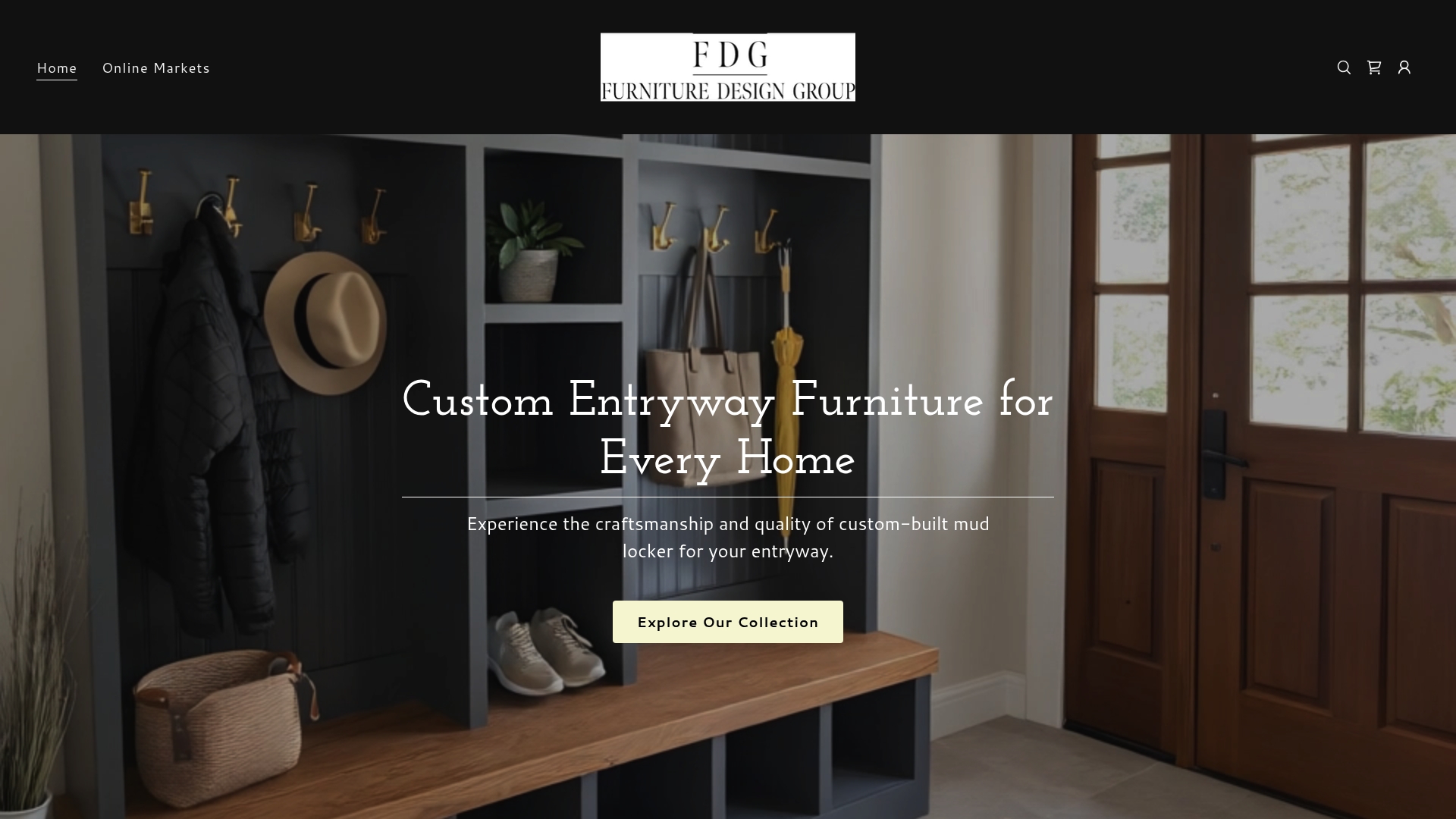
Ready to experience the difference bespoke entryway storage makes? Explore our collection and schedule a personalized consultation to discuss your specific requirements. Visit our landing page now to get started and gain clarity on your space’s fullest potential. Don’t settle for off-the-shelf solutions when your home deserves custom quality designed just for you.
Frequently Asked Questions
What is bespoke entryway storage?
Bespoke entryway storage refers to custom-built storage solutions specifically designed for your home’s unique dimensions and your lifestyle needs, as opposed to mass-produced options.
How does bespoke storage differ from prefab solutions?
Bespoke storage is tailored to fit your exact space and personal requirements, offering better durability and aesthetic integration with your home, while prefabricated solutions may not utilize awkward spaces effectively and could clash with your home’s style.
What are the key benefits of investing in bespoke entryway storage?
Investing in bespoke storage can maximize functionality, preserve the character of your home, provide quality craftsmanship, and create a clutter-free entryway tailored to your daily routines.
How can I ensure my bespoke storage meets my specific lifestyle needs?
To ensure your bespoke storage fits your lifestyle, evaluate your current clutter, identify specific storage challenges, and communicate these needs clearly to your craftsperson during the design phase.