
Cluttered entryways often hide the true beauty and potential of a Maryland home. For homeowners who value artisanal craftsmanship, custom-built furniture creates more than just a place to store shoes and coats. Built-in designs can increase your usable space by up to 40 percent compared to traditional furniture while blending seamlessly into your home’s architecture. This guide unpacks how tailored entryway solutions deliver style, organization, and long-term value—transforming overlooked spaces into welcoming, efficient entry points.
Table of Contents
- Defining Built-In Furniture And Common Misconceptions
- Types Of Built-In Entryway Furniture Explained
- Key Features And Customization Options
- Space Efficiency, Durability, And Home Value Impact
- Costs, Common Mistakes, And Comparing Alternatives
Key Takeaways
| Point | Details |
|---|---|
| Built-In Furniture Benefits | Built-in furniture maximizes space, increases property value, and provides tailored storage solutions that standard furniture cannot achieve. |
| Permanent Installations | Unlike freestanding options, built-ins are integrated into the home’s architecture, enhancing design and functionality. |
| Customization is Essential | Tailoring built-in solutions to specific needs and preferences ensures optimal usability and aesthetic appeal. |
| Long-Term Value Considerations | While initial costs may be higher, built-in furniture represents a sound long-term investment in home value and functionality. |
Defining Built-In Furniture and Common Misconceptions
Built-in furniture transforms home spaces by permanently integrating custom installations directly into a home’s architectural structure. Unlike traditional movable furniture, these specialized pieces create seamless, functional environments that maximize spatial potential.
Built-in furniture represents a sophisticated design approach that goes far beyond simple storage solutions. Permanent architectural elements offer remarkable advantages for homeowners seeking to optimize their living spaces. These custom installations provide several unique benefits:
- Maximizes unused vertical space
- Increases property value
- Creates seamless design integration
- Provides tailored, precise storage solutions
- Eliminates visual clutter typical with standalone furniture
Many homeowners misunderstand built-in furniture, viewing it merely as stylish cabinetry. However, these architectural fixtures represent a strategic approach to space management that can increase usable area by up to 40% compared to traditional furniture arrangements.
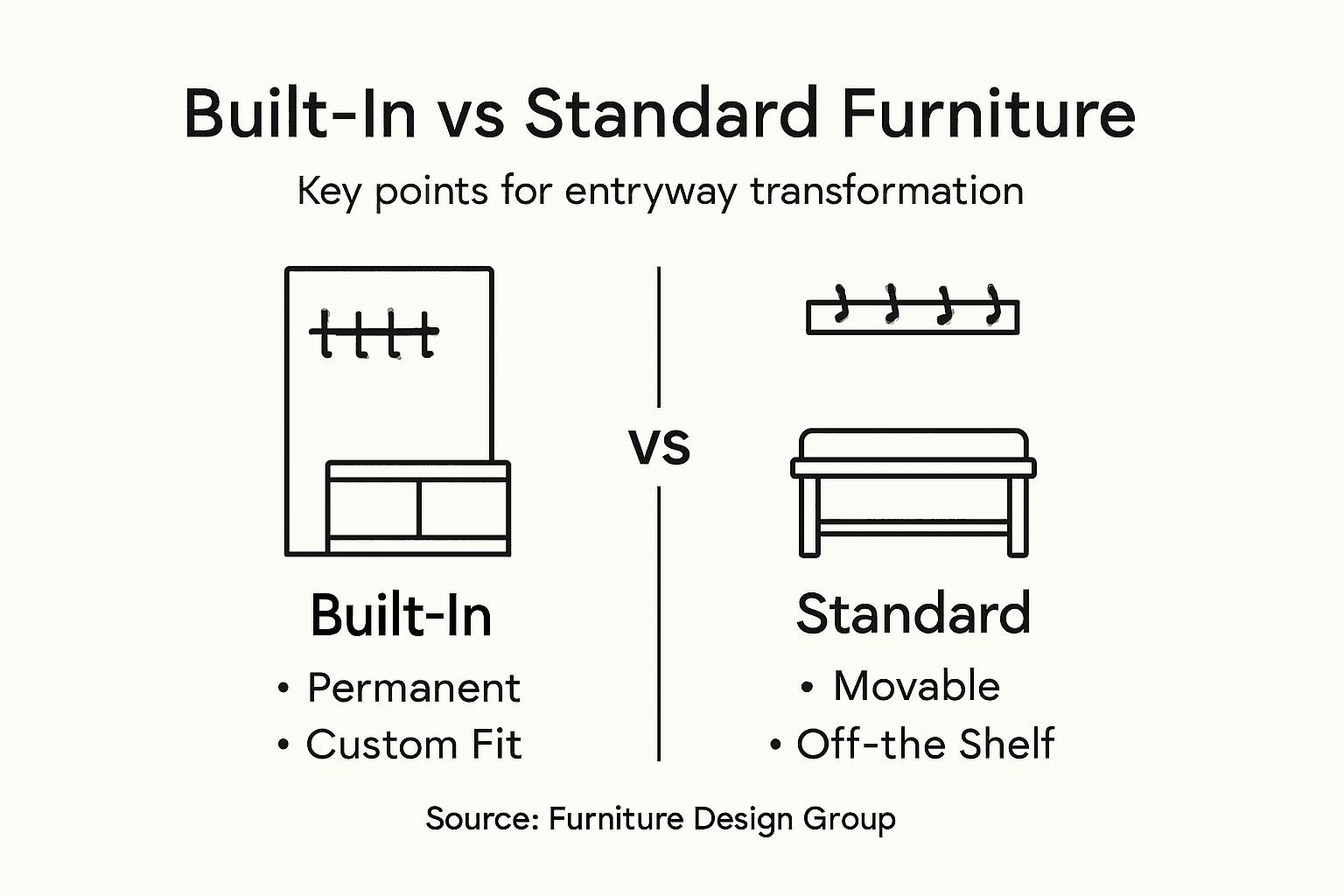
The key distinction between built-ins and standard furniture lies in their permanence. Unlike freestanding pieces that can be easily moved, built-in furniture becomes an integral part of the home’s structure. This means these installations typically remain with the property during sales, adding long-term value and creating a high-end, custom feel that standard furniture cannot replicate.
Pro tip: When planning built-in furniture, always consult with a professional designer who understands both architectural integration and your specific spatial requirements.
Types of Built-In Entryway Furniture Explained
Entryway furniture serves as the critical first impression of a home, blending functionality with design to create welcoming and organized spaces. Homeowners have multiple built-in options that can transform this transitional area into a highly efficient zone for daily routines.
Built-in furniture for entryways offers versatile solutions that maximize space and organization. The most popular types include:
-
Shoe Storage Solutions
- Closed cabinets with hidden compartments
- Open shoe racks for easy access
- Pull-out drawers with specialized shoe organizers
-
Seating Options
- Benches with integrated storage
- Cubbies with built-in seating
- Cushioned platforms with underneath storage
Console tables represent another strategic built-in option, providing surface areas for keys, mail, and decorative elements. Entryway bench designs particularly excel at combining aesthetics with practical storage, offering a place to sit while putting on shoes and storing personal items.
Customization is key when designing built-in entryway furniture. Homeowners can tailor these installations to specific spatial constraints, lifestyle needs, and aesthetic preferences. Whether working with a compact urban apartment or a spacious suburban home, built-in solutions can be scaled and configured to maximize functionality.
Pro tip: Measure your entryway precisely and consider traffic flow before designing built-in furniture to ensure optimal usability and comfort.
The following table outlines key built-in entryway furniture solutions and their ideal use case:
| Entryway Solution | Best For | Added Functionality |
|---|---|---|
| Shoe Cabinet | Households with many shoes | Conceals footwear, reduces clutter |
| Bench with Storage | Families, kids, or guests | Seating plus item stowage |
| Console Table | Small or narrow entryways | Surface for essentials |
Key Features and Customization Options
Built-in furniture represents a sophisticated approach to home design, offering unparalleled flexibility and personalization for homeowners seeking to optimize their living spaces. The ability to create custom solutions transforms ordinary areas into highly functional and aesthetically pleasing environments.
Built-in furniture features provide homeowners with remarkable customization possibilities. Key customization options include:
-
Material Selection
- Hardwood varieties
- Engineered wood
- Laminate finishes
- Metal accents
-
Design Configurations
- Modular layouts
- Adjustable shelving
- Specialized compartments
- Integrated lighting options
Architectural integration techniques allow for seamless design that maximizes previously underutilized spaces. Homeowners can now transform awkward corners, narrow hallways, and unconventional room layouts into functional, beautiful storage solutions that perfectly match their individual aesthetic and practical needs.
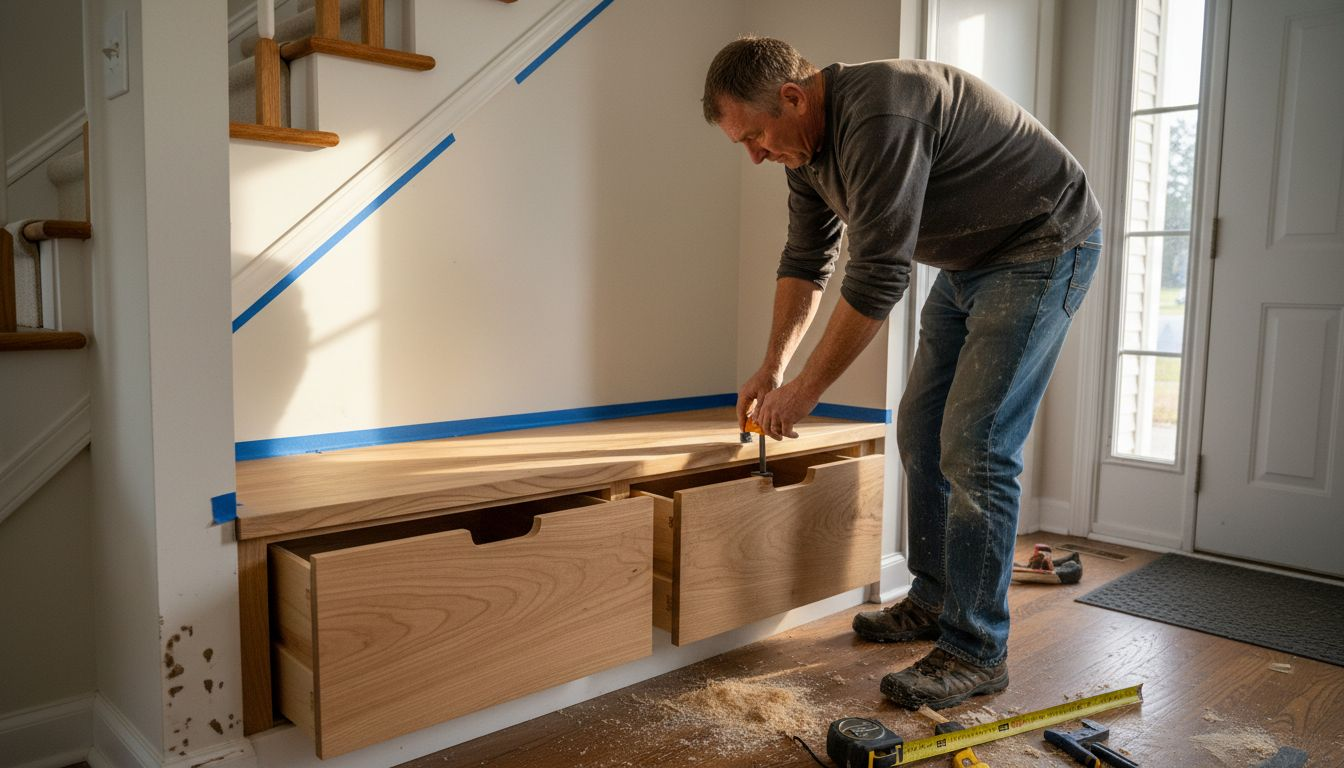
The true magic of built-in furniture lies in its ability to create a unified design language throughout the home. Custom pieces can be precisely tailored to match existing architectural elements, color schemes, and personal style preferences. This level of personalization ensures that built-in furniture becomes an integral part of the home’s design, rather than simply an additional piece of functional equipment.
Pro tip: Consult with a professional designer who can help you visualize and execute built-in furniture that seamlessly integrates with your home’s existing architectural style and meets your specific functional requirements.
Space Efficiency, Durability, and Home Value Impact
Space optimization is the cornerstone of intelligent home design, and built-in furniture emerges as a revolutionary solution for maximizing residential functionality. Homeowners increasingly recognize the transformative potential of custom installations that turn previously overlooked areas into valuable living spaces.
Space utilization strategies reveal significant advantages in residential design. Built-in furniture offers remarkable benefits:
-
Space Efficiency Advantages
- Utilizes dead zones like alcoves
- Maximizes under-stair storage
- Eliminates clutter
- Creates streamlined living environments
-
Durability Considerations
- Custom-selected materials
- Precision construction
- Longer lifespan than standard furniture
- Reduced wear and tear
Multifunctional furniture solutions demonstrate remarkable potential for transforming constrained urban living spaces. These strategic installations not only improve functional efficiency but also contribute significantly to a home’s market value, making them smart long-term investments.
The economic impact of built-in furniture extends beyond immediate aesthetic appeal. Potential homebuyers recognize and appreciate carefully designed built-in solutions, which can translate directly into increased property valuation. By addressing storage challenges and creating visually seamless living environments, these custom installations represent more than mere furniture—they are architectural enhancements that speak to thoughtful design and practical living.
Pro tip: Prioritize built-in designs that offer flexible configurations, allowing future adaptability as your lifestyle and space requirements evolve.
Costs, Common Mistakes, and Comparing Alternatives
Budget considerations play a critical role in selecting the right furniture strategy for any home renovation project. Homeowners must carefully weigh the long-term benefits against initial investment when exploring built-in furniture options.
Cost analysis for built-in furniture reveals several key financial and strategic factors. Common cost considerations include:
-
Initial Investment Components
- Custom design fees
- Professional installation
- Material selection
- Complexity of design
-
Common Mistakes to Avoid
- Inaccurate space measurements
- Neglecting future lifestyle changes
- Choosing inappropriate materials
- Overlooking functional requirements
Furniture investment strategies demonstrate that while built-in solutions typically require higher upfront costs, they offer superior long-term value. Modular and freestanding alternatives provide more immediate affordability but often sacrifice the tailored fit and aesthetic cohesion of custom built-ins.
Ultimately, the decision between built-in and alternative furniture solutions depends on individual priorities. Homeowners must balance immediate budget constraints with long-term value, considering factors like durability, flexibility, and potential property value enhancement. Each approach offers unique advantages, and the right choice varies based on specific residential needs and personal preferences.
Here’s a summary comparing built-in, modular, and freestanding furniture for residential use:
| Attribute | Built-In Furniture | Modular Furniture | Freestanding Furniture |
|---|---|---|---|
| Permanence | Permanently installed | Semi-permanent, reconfigurable | Easy to relocate |
| Customization | Highly customizable | Moderate customization | Limited adaptations |
| Initial Cost | High investment required | Moderate cost | Most affordable option |
| Value Impact | Enhances property value | May add moderate value | Usually no value increase |
Pro tip: Consult with multiple professionals and request detailed cost projections that include both initial installation and potential long-term value appreciation before making your final furniture investment decision.
Transform Your Entryway with Expertly Crafted Built-In Furniture
Maximizing space while creating a welcoming first impression can be challenging without the right solutions. The article highlights key entryway pain points such as inefficient shoe storage, lack of seating, and cluttered, disconnected designs. Built-in furniture designed for entryways offers the perfect balance of permanence and customization to elegantly solve these issues. With terms like “built-in furniture,” “custom cabinetry,” and “seamless design integration,” the focus is on transforming transitional spaces into practical, beautiful environments that reflect your style and meet your daily needs.
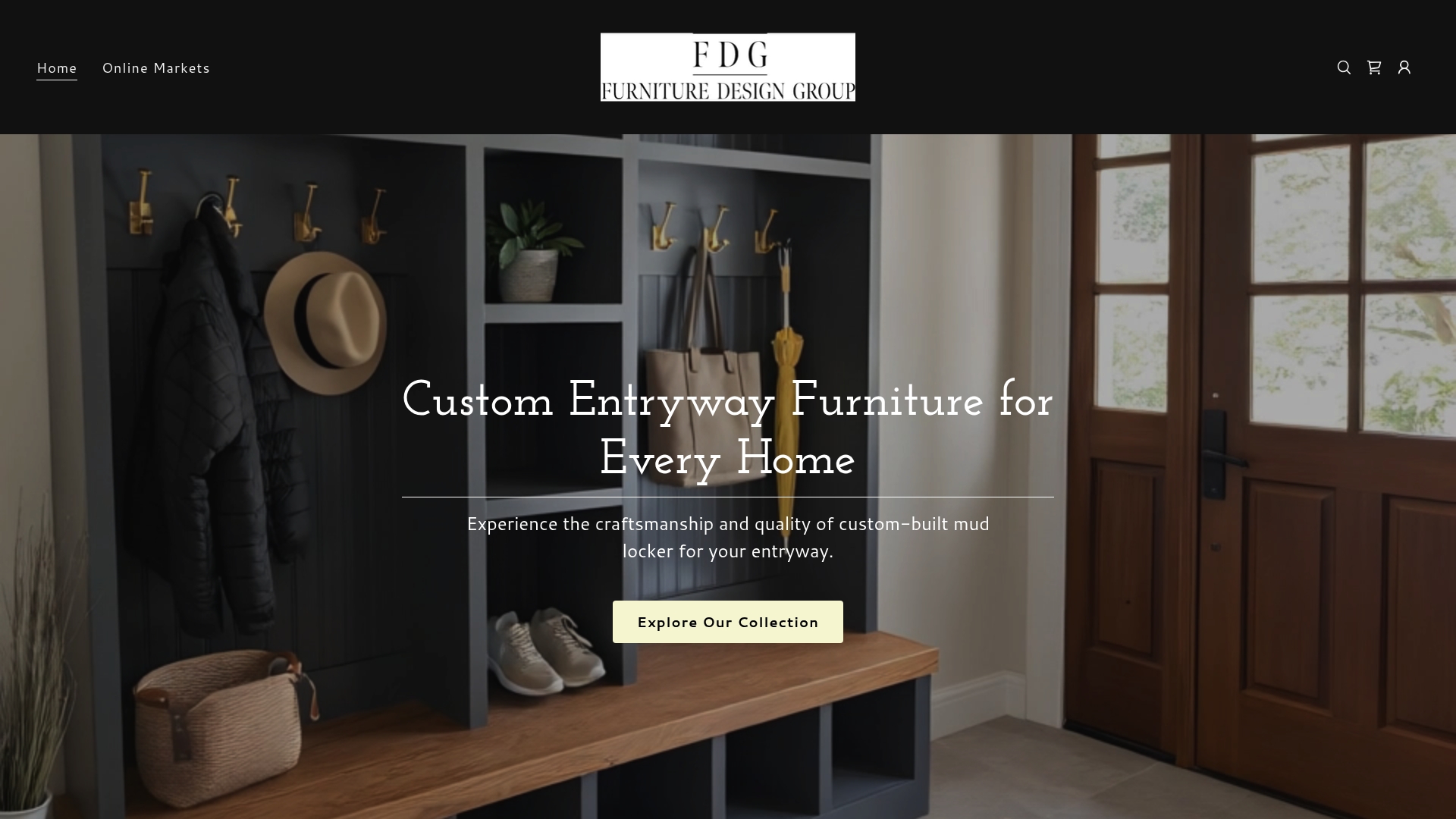
At Furniture Design Group, a family-owned company based in Maryland with over 20 years of craftsmanship experience, we specialize in custom-built entryway furniture including bespoke mud lockers and seating with storage. Our expert artisans use quality materials to create tailored pieces that fit your space perfectly while reducing clutter and improving flow. Whether you seek ergonomic benches, concealed shoe storage, or multifunctional console solutions, our designs bring architectural elegance to your home’s entry.
Ready to upgrade your entryway with built-ins that truly transform your space?
Discover how our custom-crafted furniture can create a seamless, durable, and functional entryway solution. Visit Furniture Design Group now to explore our collections, schedule a showroom visit, or request a personalized consultation. Don’t wait to experience the lasting value and style that expertly designed built-in furniture offers.
Frequently Asked Questions
What are the benefits of built-in furniture for entryways?
Built-in furniture for entryways maximizes unused vertical space, enhances property value, integrates seamlessly into your home’s design, and provides tailored storage solutions while reducing visual clutter.
How can built-in entryway furniture improve space efficiency?
Built-in entryway furniture can utilize dead zones, maximize under-stair storage, and streamline living environments by eliminating clutter and creating functional spaces for everyday use.
What customization options are available for built-in entryway furniture?
Customization options for built-in entryway furniture include material selection such as hardwood or laminate, modular layouts, adjustable shelving, specialized compartments, and integrated lighting features to meet specific functional and aesthetic needs.
How does built-in furniture compare to modular and freestanding options?
Built-in furniture is permanently installed and highly customizable, enhancing property value. Modular furniture is semi-permanent and offers moderate customization, while freestanding furniture is the most affordable and easily relocatable but typically lacks tailored fit and aesthetic cohesion.