
Many Maryland homeowners assume craftsmanship in furniture primarily affects appearance. In reality, craftsmanship determines durability, functionality, and personalization far beyond surface aesthetics. This guide reveals how expert craftsmanship transforms custom entryway furniture into long-lasting, tailored solutions. You’ll learn to recognize quality construction, understand artisan techniques, and choose pieces that truly enhance your home’s entryway for decades.
Table of Contents
- Understanding Craftsmanship In Furniture Making
- How Craftsmanship Enhances Quality And Durability
- Techniques And Materials Unique To Custom Entryway Furniture
- Common Misconceptions About Craftsmanship In Furniture
- Comparing Craftsmanship Vs Mass Production
- Selecting The Right Custom Furniture: A Practical Guide For Maryland Homeowners
- Real-World Benefits Of Custom-Crafted Entryway Furniture
- Local Craftsmanship Trends And Resources In Maryland
- Explore Expert-Crafted Custom Entryway Furniture
- FAQ
Key takeaways
| Point | Details |
|---|---|
| Craftsmanship ensures superior quality | Handcrafted furniture lasts three times longer than mass-produced alternatives through traditional joinery and material expertise. |
| Material selection matters critically | Kiln-dried hardwoods reduce warping by up to 70%, ensuring dimensional stability and longevity in entryway furniture. |
| Common misconceptions persist | Many believe craftsmanship only affects looks, but it fundamentally improves durability, functionality, and indoor air quality. |
| Personalization exceeds mass production | Custom furniture offers design flexibility and ergonomic tailoring impossible in factory settings. |
| Maryland resources support quality | Local artisan workshops and showrooms provide hands-on evaluation opportunities for discerning homeowners. |
Understanding craftsmanship in furniture making
Craftsmanship in furniture involves skilled hand techniques and meticulous attention to detail at every construction stage. This approach traces back centuries to artisanal traditions where furniture makers dedicated years mastering wood selection, joinery methods, and finishing techniques. Unlike automated assembly, craftsmanship requires deep material knowledge and problem-solving abilities to address each wood piece’s unique characteristics.
True craftsmanship defines quality through deliberate, methodical work rather than speed or volume. Each joint receives individual fitting, every surface undergoes careful preparation, and finishing coats apply with precision. This level of care creates furniture that responds to environmental changes gracefully, ages beautifully, and maintains structural integrity under daily use.
For custom entryway furniture, craftsmanship becomes especially vital. Entryways endure constant traffic, moisture from wet coats, and temperature fluctuations from opening doors. Only expert construction techniques withstand these demands. Personalized design also requires craftspeople who understand how proportions, ergonomics, and aesthetic details create functional art tailored to specific homes.
Maryland homeowners seeking custom pieces benefit from understanding these fundamentals. When you recognize craftsmanship’s role, you can distinguish genuinely handcrafted furniture from mass-produced items with superficial customization. Key indicators include:
- Visible joinery showing traditional techniques
- Wood grain patterns carefully matched across surfaces
- Hand-applied finishes with depth and richness
- Customization extending beyond simple dimension changes
Exploring quality furniture begins with recognizing these craftsmanship markers. Furniture Design Group exemplifies this artisan approach, combining traditional techniques with contemporary design sensibilities.
How craftsmanship enhances quality and durability
Artisanal craftsmanship results in furniture lasting three times longer than mass-produced pieces through superior construction methods and material preparation. This longevity stems from specific techniques that address wood’s natural properties and stress points.
Traditional joinery methods form the foundation of durable construction. Consider these techniques:
- Dovetail joints interlock wood pieces mechanically, eliminating reliance on glue alone and creating connections that strengthen under stress.
- Mortise and tenon joinery distributes weight across larger surface areas, preventing concentration points where failure typically begins.
- Dado grooves allow wood panels to float within frames, accommodating seasonal expansion without cracking.
- Through tenons provide visual confirmation of joint integrity while adding structural reinforcement.
Careful material preparation separates craftsmanship from industrial production. Artisans inspect each board for grain direction, knot placement, and moisture content before cutting. They orient wood strategically to counteract warping tendencies and select pieces where natural characteristics enhance rather than compromise strength. This selectivity ensures consistent quality impossible in high-volume manufacturing.
Quality controls in craftsmanship workshops exceed factory standards. Each piece undergoes multiple inspections during construction, with adjustments made immediately when tolerances drift. Glue joints receive proper clamping time rather than rushed assembly schedules. Finishes cure completely between coats, creating protective barriers that penetrate deeply into wood fibers.
The investment in custom furniture justifies itself through performance and lifespan. While initial costs exceed mass-produced alternatives, the extended service life, minimal repairs, and enduring aesthetic appeal deliver superior value over time. Calculate cost per year of use, and crafted furniture consistently proves more economical.
Pro Tip: When evaluating furniture, examine joints closely under good lighting. Quality dovetails show tight fits with no gaps, and mortise joints sit flush without glue squeeze-out. Run your hand across surfaces to feel for smoothness indicating proper sanding progression through multiple grits.
Maryland homeowners gain particular advantages from durable entryway furniture. The state’s humid summers and cold winters create challenging conditions. Only properly crafted pieces using techniques developed over centuries maintain beauty and function through these seasonal extremes. Furniture Design Group applies this expertise specifically to entryway solutions.
Techniques and materials unique to custom entryway furniture
Kiln-dried hardwoods form the foundation of quality entryway furniture. Kiln-dried hardwoods reduce warping and cracking by up to 70% compared to untreated woods used in mass production. The kiln process removes moisture uniformly, bringing wood to equilibrium with typical indoor humidity levels. This preparation prevents the dimensional changes that cause doors to stick, panels to crack, and joints to loosen.
Traditional joinery techniques adapted for entryway demands include:
- Reinforced corner blocks in mud locker frames to withstand impact from bags and equipment
- French dovetail drawer construction allowing smooth operation even when packed heavily
- Floating panel doors that accommodate humidity changes without binding
- Through-tenon bench construction visible at joints, combining aesthetics with structural superiority
Ergonomic design enhances entryway furniture usability significantly. Craftspeople consider user height ranges when determining bench seating depth and hook placement height. They angle coat hooks slightly upward to prevent garments from sliding off. Storage cubbies receive dimensions accommodating actual shoe sizes and backpack volumes rather than arbitrary measurements.
Material choices extend beyond wood selection to include health considerations. Quality craftspeople use low-VOC finishes that cure without releasing harmful chemicals into your home’s air. They select wood glues meeting strict environmental standards. These choices create healthier indoor environments, particularly important in entryways where air circulates throughout your home.
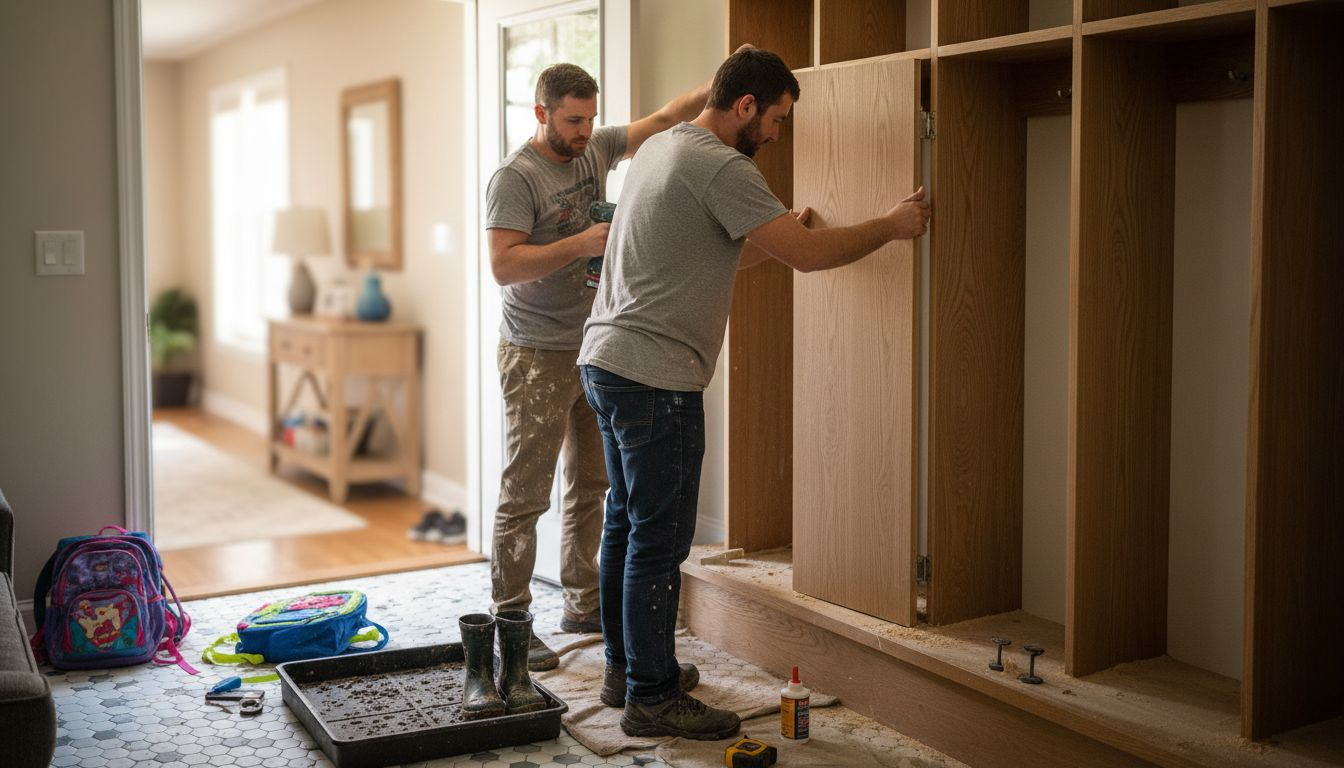
Custom mud lockers exemplify how technique and material unite. A well-crafted locker combines durable hardwood frames, carefully fitted panels, smooth-operating drawers, and strategically placed hooks. Each element receives individual attention during construction, with joints fitted precisely and finishes applied methodically. The result transforms a utilitarian storage piece into furniture worthy of your home’s first impression.
Statistic callout: Quality hardwood preparation reduces warping by 70%, ensuring your entryway furniture maintains proper alignment and appearance for decades rather than years.
Benches require particular attention to weight distribution and surface durability. Craftspeople use techniques like laminated construction for seats, creating strength without excessive thickness. They apply conversion varnish or oil finishes that penetrate deeply, protecting wood from moisture tracked in from outdoors. Leg joinery employs wedged through-tenons or mortise connections capable of supporting heavy loads repeatedly.
Understanding these technical aspects helps you evaluate furniture quality intelligently. When you recognize proper techniques, you can ask informed questions and distinguish genuine craftsmanship from marketing claims. Resources like this wood selection guide provide deeper material knowledge. Furniture Design Group applies these standards rigorously to every custom piece.
Common misconceptions about craftsmanship in furniture
Many people believe craftsmanship primarily affects furniture appearance. This misconception overlooks how construction quality determines durability, functionality, and even indoor air quality. A beautifully veneered particleboard piece may look attractive initially, but its performance and lifespan fall far short of solid hardwood construction with proper joinery.
Another prevalent myth suggests custom furniture costs prohibitively more than mass-produced alternatives. Smart design choices and material selection make quality craftsmanship accessible. When you factor in replacement costs for furniture that fails prematurely, custom pieces often prove more economical over their service life. The key lies in understanding value rather than fixating solely on initial price.
Some assume mass production quality now matches handcrafted furniture through advanced machinery. Modern equipment certainly improves consistency in cutting and shaping, but machines cannot replicate the judgment craftspeople apply when selecting wood, adjusting techniques for material variations, or hand-fitting joints. Automated processes follow programmed parameters regardless of individual board characteristics.
Common misunderstandings include:
- Believing all wood furniture offers similar durability regardless of construction methods
- Assuming customization means only changing dimensions, not fundamental design
- Thinking finishes serve purely decorative rather than protective functions
- Expecting furniture to require no maintenance regardless of construction quality
Educating yourself on these misconceptions supports better purchasing decisions. When you understand craftsmanship’s comprehensive impact, you evaluate furniture based on construction quality, material preparation, and long-term performance rather than surface appearance alone.
Pro Tip: Ask furniture makers specific questions about their processes. Request to see joinery methods they use, inquire about wood moisture content before construction, and ask how they address seasonal wood movement. Vague answers or resistance to showing construction details often indicate limited actual craftsmanship.
Maryland’s climate presents particular challenges that expose furniture quality quickly. Humidity swings between summer and winter test every joint and finish. Furniture built without proper techniques shows problems within the first year through warping, loose joints, or finish failures. Quality craftsmanship anticipates these stresses and builds resilience into every connection.
Recognizing these misconceptions protects you from purchases that disappoint. Furniture Design Group welcomes detailed questions about construction methods, openly discussing techniques and materials that ensure lasting quality.
Comparing craftsmanship vs mass production
Understanding differences between artisanal craftsmanship and mass production helps you make informed furniture decisions. This comparison highlights key factors affecting your entryway furniture’s performance and value.
| Factor | Artisanal Craftsmanship | Mass Production |
|---|---|---|
| Average Lifespan | 30 to 50+ years with minimal repairs | 10 to 15 years before replacement |
| Customization Options | Extensive design flexibility, tailored dimensions, personalized details | Limited to predetermined sizes and configurations |
| Material Quality | Kiln-dried hardwoods, hand-selected for grain and characteristics | Mixed quality lumber, often including engineered materials |
| Joinery Methods | Traditional techniques like dovetails, mortise and tenon, hand-fitted | Staples, dowels, cam locks, minimal glue surface area |
| Customer Satisfaction | Approximately 30% higher reported satisfaction | Standard satisfaction levels with frequent replacement acceptance |
| Initial Investment | Higher upfront cost reflecting labor and materials | Lower initial price, higher lifetime cost through replacement |
Lifespan differences prove most significant when calculating actual value. Artisanal furniture serving your family for three decades costs far less annually than replacing mass-produced pieces every decade. This calculation excludes the inconvenience and environmental impact of disposal and repurchasing.
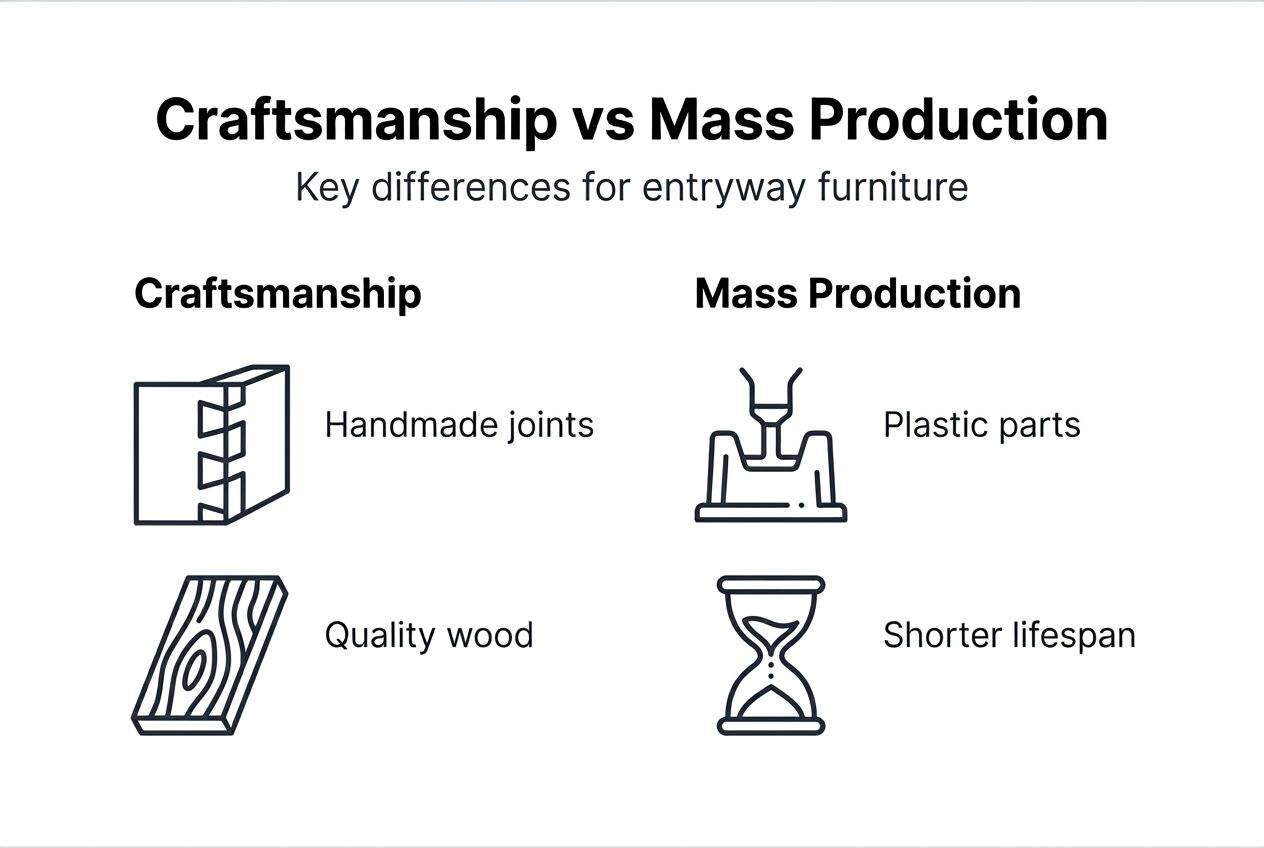
Customization capabilities separate these approaches fundamentally. Mass production requires standardization for efficiency. You select from available options rather than designing pieces matching your specific needs. Craftsmanship inverts this relationship, starting with your requirements and creating furniture accordingly. This distinction matters especially for entryways with unique dimensions or specific storage needs.
Material preparation represents another critical difference. Artisans inspect and select each board, rejecting pieces with defects or unsuitable grain patterns. Mass production uses lumber meeting minimum specifications, with less selectivity. This difference directly impacts how furniture responds to environmental changes and stress over time.
Construction methods reveal quality instantly to trained eyes. Examine drawer corners on mass-produced furniture, and you typically find stapled joints or simple butt joints with minimal glue surface. Quality craftsmanship shows dovetails or box joints with substantially more glue surface and mechanical interlock. These details determine whether drawers survive years of daily use or fail requiring replacement.
Customer satisfaction metrics reflect these quality differences. While 30% may seem modest, it represents substantially higher contentment with purchase decisions and furniture performance. Satisfaction stems from pieces meeting specific needs, lasting as expected, and maintaining beauty over time.
Furniture Design Group demonstrates artisanal advantages through every custom piece, combining traditional techniques with contemporary design sensibilities tailored for Maryland homes.
Selecting the right custom furniture: a practical guide for Maryland homeowners
Evaluating craftsmanship quality requires systematic assessment of materials, construction, and design appropriateness. Follow these steps when selecting custom entryway furniture:
- Examine wood closely under good lighting, looking for consistent grain patterns, absence of large knots in structural areas, and properly sealed end grain.
- Test joinery by gently applying pressure to corners and joints, checking for any movement or flexing indicating inadequate construction.
- Inspect finish quality by viewing surfaces at angles where light reveals smoothness, checking for even color, and confirming proper sealing around edges.
- Verify customization options extend beyond simple dimension changes to include design modifications matching your home’s architectural style.
- Request information about wood treatment processes, specifically asking about moisture content and kiln-drying procedures.
- Discuss warranty terms and maker’s willingness to service furniture long-term, indicating confidence in construction quality.
Material quality assessment focuses on specific indicators:
- Wood species appropriate for entryway demands, typically hardwoods like oak, maple, or cherry
- Evidence of proper seasoning through stable dimensions and absence of checking
- Finish products meeting low-VOC standards for healthy indoor air quality
- Hardware quality matching furniture investment, with smooth operation and durable plating
Construction technique evaluation requires asking pointed questions. Inquire specifically about joinery methods used in frame construction, drawer assembly, and door hanging. Ask how the maker addresses wood movement in panel construction. Request to see examples of typical joinery used, as quality craftspeople readily display their techniques.
Design personalization should match your home’s aesthetic and functional needs precisely. Discuss your entryway’s specific challenges, from limited space to heavy daily use by large families. Quality makers suggest design solutions addressing these concerns rather than offering only standard configurations.
Practical questions to ask furniture makers include:
- How do you source and prepare lumber before construction?
- What joinery techniques do you use for structural connections?
- How do you address seasonal wood movement in panel construction?
- What finishing products do you apply and how many coats?
- Can you provide references from customers with similar projects?
- What warranty do you offer and what does it cover specifically?
Environmental and health considerations extend beyond finish VOC content. Ask about wood sourcing practices, whether makers use sustainably harvested lumber. Inquire about glue products and their emissions. These questions identify makers prioritizing both quality and environmental responsibility.
Furniture Design Group welcomes these detailed discussions, viewing education as essential to customer satisfaction. Their transparent approach helps Maryland homeowners make confident decisions based on understanding rather than marketing claims.
Real-world benefits of custom-crafted entryway furniture
Maryland homeowners experience tangible improvements when choosing quality custom entryway furniture. These benefits extend beyond initial satisfaction to decades of reliable performance and aesthetic pleasure.
Storage efficiency improvements prove immediately noticeable. Custom mud lockers designed for specific family needs increase usable storage by approximately 25% compared to generic solutions. This improvement comes from optimizing cubby dimensions for actual items stored, positioning hooks at heights matching users, and incorporating specialized storage for items like sports equipment or pet supplies.
Durability success stories dominate user testimonials. Families report entryway furniture maintaining structural integrity and appearance for 20 to 30 years with only basic maintenance. Compare this to mass-produced pieces requiring replacement every 5 to 10 years. The cost savings become substantial when calculated over these timeframes, not including the convenience of avoiding repeated furniture shopping and installation.
Aesthetic personalization creates unique homes reflecting owner’s tastes precisely. Custom furniture allows matching existing architectural details, coordinating with specific color palettes, and incorporating design elements meaningful to families. This personalization transforms entryways from purely functional spaces into welcoming areas expressing your home’s character.
Real benefits homeowners report include:
- Elimination of entryway clutter through properly designed storage matching actual needs
- Furniture appearance improving with age as wood develops rich patina rather than showing wear
- Pride in owning unique pieces crafted specifically for their homes
- Reduced stress from knowing entryway furniture handles daily demands reliably
- Increased home value through quality built-in or semi-custom furniture
Testimonials consistently emphasize satisfaction with investment decisions. Families appreciate how well-designed entryway furniture simplifies daily routines, from morning departures to evening arrivals. The combination of beauty and function creates experiences mass-produced furniture cannot match.
Storage solutions particularly benefit families with children. Custom mud lockers provide each child designated space, encouraging organization habits. Lower hooks accommodate smaller users, promoting independence. Bench heights work for various ages, making shoe changes easier.
These real-world benefits connect theoretical craftsmanship advantages to actual experiences. When you invest in quality custom furniture, you gain functional improvements, durability, and aesthetic satisfaction lasting decades. Resources like these storage efficiency testimonials demonstrate how thoughtful design transforms spaces.
Furniture Design Group creates these transformative experiences for Maryland homeowners through expert craftsmanship and personalized design consultation.
Local craftsmanship trends and resources in Maryland
Maryland’s custom furniture market shows growing appreciation for artisanal craftsmanship. Homeowners increasingly recognize value in locally crafted pieces over mass-produced alternatives. This trend reflects broader movements toward supporting local artisans, sustainable practices, and personalized home environments.
Local artisan workshops provide opportunities for direct consultation and collaboration. Meeting makers in their workshops lets you observe techniques firsthand, examine material quality, and discuss projects in environments where creation happens. This transparency builds confidence in craftsmanship quality and establishes relationships extending beyond single purchases.
Showrooms enable hands-on furniture evaluation impossible through online shopping. You can test drawer operation, examine joinery details closely, assess finish quality under various lighting, and experience furniture scale in person. These evaluations prove essential when investing in custom pieces intended for decades of service.
Maryland resources supporting quality craftsmanship include:
- Regional woodworking guilds offering craftsperson directories and quality standards
- State programs promoting sustainable forestry and local lumber sourcing
- Building codes and regulations ensuring material safety standards
- Professional associations maintaining ethical business practices and workmanship standards
- Educational institutions training new generations in traditional techniques
Certifications and standards help identify reputable craftspeople. Look for makers affiliated with professional woodworking organizations, those using certified sustainable lumber sources, and businesses maintaining strong Better Business Bureau ratings. These indicators suggest commitment to quality and customer satisfaction.
Growing demand for custom furniture creates opportunities for collaboration between homeowners and makers. Rather than selecting from limited catalog options, you participate in design processes creating truly unique pieces. This collaboration often reveals creative solutions you hadn’t considered, improving both function and aesthetics.
Local economic benefits accompany choosing Maryland craftspeople. Your investment supports families and businesses in your community rather than distant corporations. This local focus often translates to better customer service, easier communication, and craftspeople invested in your satisfaction through community reputation.
Finding trustworthy craftsmen becomes easier with proper resources. Seek recommendations from interior designers familiar with local makers. Visit showrooms and workshops to assess work quality directly. Request references from previous customers with similar projects. These steps identify craftspeople capable of executing your vision expertly.
Furniture Design Group exemplifies Maryland’s thriving custom furniture craftsmanship, combining over 20 years experience with commitment to quality, personalized service, and community engagement.
Explore expert-crafted custom entryway furniture
Now that you understand craftsmanship’s critical role in furniture quality and longevity, consider how these principles apply to your Maryland home’s entryway. Furniture Design Group specializes in expertly handcrafted custom entryway furniture combining traditional techniques with contemporary design.
Our personalized design consultations ensure furniture matches your home’s specific aesthetic and functional requirements. We use kiln-dried hardwoods and traditional joinery methods delivering the durability and quality discussed throughout this guide. Each piece receives individual attention from experienced craftspeople dedicated to excellence.
Visit Furniture Design Group to discover our unique mud lockers, benches, and storage solutions crafted specifically for Maryland homes. Our showroom lets you examine construction quality firsthand, discuss customization options, and experience the difference craftsmanship makes. Whether you need space-efficient storage for a compact entryway or an elaborate custom system for a large family, we create solutions blending style and function seamlessly.
Start upgrading your entryway with custom pieces built to last generations. Contact us today to schedule a consultation and begin transforming your home’s first impression into a welcoming, organized space reflecting your family’s unique character.
FAQ
What is craftsmanship in furniture and why does it matter?
Craftsmanship involves skilled handwork ensuring quality and durability extending far beyond surface aesthetics. It matters because properly crafted furniture lasts three times longer than mass-produced alternatives while offering superior functionality and personalized design matching your specific needs.
How does custom craftsmanship compare to mass-produced furniture?
Crafted furniture typically lasts 30 to 50 years compared to 10 to 15 years for mass-produced pieces. Custom work offers extensive design flexibility and personalized details impossible in factory settings, with traditional joinery providing structural superiority that stapled joints cannot match.
What should Maryland homeowners ask when selecting custom entryway furniture?
Inquire specifically about wood species, moisture content, and kiln-drying processes used. Ask detailed questions about joinery techniques, particularly how makers address seasonal wood movement. Request information about finish products, their VOC content, and warranty terms covering both materials and workmanship.