
Standard entryway furniture rarely fits Maryland homes perfectly. Awkward dimensions waste up to 30% of available space, leaving homeowners frustrated with clutter and poor organization. Custom entryway solutions solve these problems by delivering tailored functionality, lasting durability, and personalized style that mass-produced pieces simply cannot match.
Table of Contents
- Understanding Custom Entryway Solutions
- Why Custom Solutions Matter For Maryland Homeowners
- Customization Benefits And Options
- Functional Benefits Of Custom Entryway Solutions
- Common Misconceptions About Custom Entryway Furniture
- Case Studies And Local Relevance
- How To Get Started With Custom Entryway Furniture
- Explore Custom Entryway Furniture With Furniture Design Group
- Frequently Asked Questions
Key takeaways
| Point | Details |
|---|---|
| Space efficiency | Custom furniture maximizes every inch of uniquely shaped Maryland entryways, reducing wasted space significantly. |
| Climate resilience | Moisture-resistant materials and finishes protect against Maryland’s humid conditions, extending furniture lifespan. |
| Personalization options | Technology integration, style choices, and modular designs let homeowners create solutions matching their exact needs. |
| Organizational benefits | Tailored storage reduces daily clutter and stress while improving home flow and first impressions. |
| Long-term value | Durable craftsmanship and perfect fit justify initial investment through years of reliable performance. |
Understanding custom entryway solutions
Custom entryway furniture means pieces specifically designed and built to fit your home’s unique dimensions and style preferences. Unlike mass-produced alternatives found in big-box stores, these solutions address your exact spatial constraints and functional requirements.
Mass-produced furniture comes with inherent limitations. Standard sizes force you to compromise on fit, leaving awkward gaps or requiring you to sacrifice floor space. Limited style options mean settling for designs that clash with your home’s aesthetic. Lower-quality materials used in factory production often fail to withstand daily wear, especially in demanding entryway environments.
Custom entryway furniture provides a tailored fit that maximizes space efficiency in uniquely shaped or sized Maryland homes, improving organization and flow. This approach addresses common challenges like narrow hallways, irregular wall angles, and specific storage needs that generic solutions ignore.
Tailored solutions offer distinct advantages:
- Perfect dimensional fit eliminates wasted space and awkward gaps
- Personalized storage accommodates your specific items and daily routines
- Cohesive design integration matches your home’s existing architectural style
- Superior material quality ensures longevity under real-world conditions
When you choose custom furniture solutions, you invest in pieces that work with your space rather than against it. This fundamental difference transforms frustrating entryways into functional, welcoming spaces.
Why custom solutions matter for Maryland homeowners
Maryland’s climate presents unique challenges for entryway furniture. High humidity levels throughout summer months cause standard wood pieces to warp, swell, and deteriorate faster than in drier regions. Moisture-resistant materials and protective finishes become essential rather than optional.
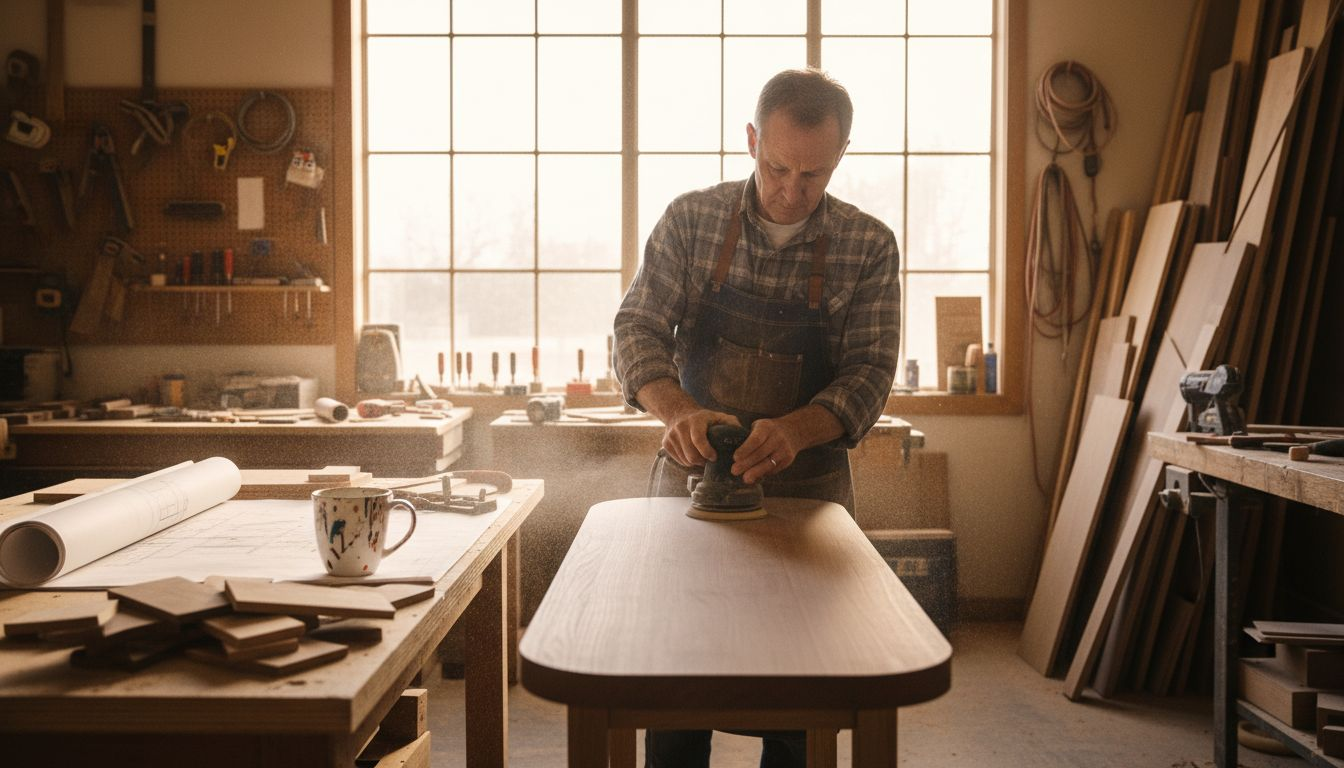
Typical Maryland homes feature architectural quirks that complicate furniture placement. Colonial-era homes often have narrow, asymmetrical entryways. Modern townhomes squeeze entries into minimal square footage. Custom sizing can reduce unused space by up to 30% compared to standard furniture, making every inch count.
Local lifestyle demands also drive customization needs:
- Wet weather gear storage for frequent rain and snow requires dedicated boot trays and umbrella holders
- Seasonal equipment rotation accommodates beach gear in summer and winter sports equipment
- Family size variations mean different storage volumes than national average assumptions
- Commuter necessities like bag hooks and key storage support Baltimore-Washington corridor lifestyles
Craftsmanship focused on longevity protects your investment against Maryland’s environmental impact. Quality construction withstands daily wear from multiple family members, pets, and guests while maintaining structural integrity through years of use.
Pro Tip: Selecting marine-grade finishes and hardwoods like white oak or cherry designed for Maryland’s climate extends furniture life by 10-15 years compared to standard retail pieces.
You deserve entryway furniture that performs reliably regardless of weather conditions or daily demands. Custom furniture solutions built specifically for local conditions deliver this reliability consistently.
Customization benefits and options
Material choices form the foundation of custom entryway furniture. Hardwoods like maple, cherry, and walnut offer distinct grain patterns and durability levels. Engineered materials provide moisture resistance at lower price points. Finish options range from natural oils highlighting wood character to painted surfaces matching specific color palettes.
Design personalization extends beyond basic dimensions. You select hardware styles from traditional brass to contemporary stainless steel. Cabinet door configurations adapt to your preferred aesthetic, whether shaker-style panels or modern flat fronts. Color choices coordinate with existing trim, flooring, and wall treatments.
Technology integration represents a growing customization area. Over 40% of custom furniture buyers request technology integration for entryways and mudrooms, enhancing convenience. Popular tech additions include:
- Built-in charging stations with USB and wireless charging pads
- Smart locks integrated into cabinet doors for secure storage
- LED lighting systems with motion sensors for nighttime visibility
- Ventilation systems preventing moisture buildup in closed storage
Modular options offer scalable customization balancing cost and features. Start with essential storage components and add elements as budget allows. This phased approach makes custom solutions accessible while maintaining design cohesion.
Personalization empowers you to reflect your personality while solving practical challenges. Display niches showcase family photos or decorative items. Specialized compartments organize sports equipment, pet supplies, or cleaning tools exactly where you need them. Every design choice serves both functional and aesthetic purposes.
Custom furniture options let you create entryway solutions that genuinely work for your daily routines rather than forcing you to adapt to generic configurations.
Functional benefits of custom entryway solutions
Optimized space use directly reduces clutter and improves traffic flow through frequently used entry areas. Custom configurations eliminate dead zones where standard furniture leaves awkward gaps. Every cabinet, hook, and shelf serves a specific purpose based on your actual storage needs.
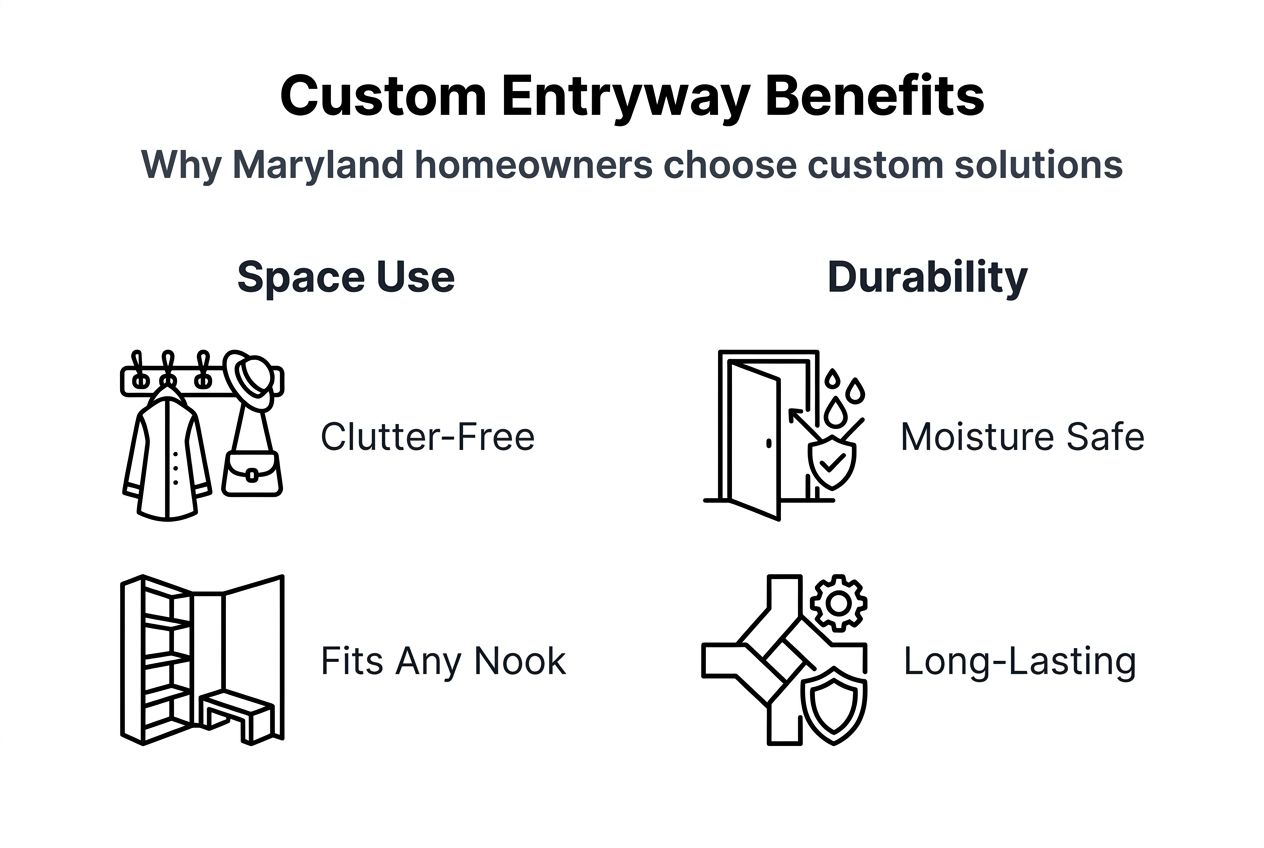
Maryland’s weather patterns demand specialized storage solutions. Custom designs incorporate dedicated spaces for wet boots, dripping umbrellas, and damp outerwear. Waterproof boot trays prevent floor damage. Ventilated compartments allow wet items to dry properly. These features protect your home while keeping essential items accessible.
Daily routines become smoother when everything has an assigned location. You spend less time searching for car keys, school bags, or dog leashes when departure time arrives. Morning stress decreases measurably when family members can grab what they need quickly.
| Benefit Category | Custom Solution Impact | Mass-Produced Impact |
|---|---|---|
| Space efficiency | 25-30% better utilization | Standard sizing wastes corners |
| Storage capacity | Tailored to actual needs | Generic compartments |
| Climate durability | 10-15 year extended life | 5-7 year typical replacement |
| Home value | 3-5% market value increase | Minimal appreciation |
| Daily convenience | Reduces search time 40% | Limited organization |
Real estate studies show homes with bespoke built-ins in entryways see a 3-5% higher market value on average due to enhanced first impression and functionality. This appreciation compensates significantly for initial investment costs.
Pro Tip: Investing in pull-out hampers, adjustable shelving, and dedicated shoe storage maintains organization long-term by making tidiness the path of least resistance for every family member.
Functional benefits extend beyond immediate convenience to create lasting value throughout homeownership. Your entryway furniture value grows as you experience years of reliable performance and organizational ease.
Common misconceptions about custom entryway furniture
Many homeowners assume custom furniture pricing places it beyond realistic budgets. This belief overlooks modular design approaches that deliver personalized solutions at accessible price points. Starting with essential components and adding features over time spreads costs while maintaining design cohesion.
The assumption that mass-produced furniture suffices for all needs ignores significant limitations:
- Standard dimensions rarely match actual entryway measurements precisely
- Generic storage configurations waste space on unused features
- Lower-grade materials deteriorate faster under daily use
- Limited style options force aesthetic compromises
Some people imagine the design collaboration process as intimidating or excessively complex. Reality shows that reputable craftspeople guide you through clear steps, translating your preferences into actionable plans. Your involvement focuses on decisions about appearance and function rather than technical construction details.
Long-term value calculations shift the cost perspective dramatically. A $3,000 custom piece lasting 20 years costs $150 annually. A $800 retail piece needing replacement every 6 years costs $133 annually while delivering inferior fit and function. Durability and satisfaction justify the difference.
Active participation during design ensures results match your vision. Expressing preferences clearly, asking questions, and reviewing prototypes prevents misunderstandings. This collaboration produces furniture you genuinely love rather than merely accept.
Understanding these realities helps you evaluate custom furniture myths accurately and make informed decisions based on actual costs, processes, and outcomes rather than assumptions.
Case studies and local relevance
A Annapolis homeowner faced a challenging narrow entryway with an awkward corner angle in their 1920s colonial home. Standard furniture left 18 inches of unusable space while failing to provide adequate storage. Custom mud lockers built to exact specifications maximized every available inch, creating storage for four family members without overwhelming the compact area.
Another Maryland client prioritized moisture resistance after replacing warped retail furniture twice in five years. Working with experienced craftspeople, they selected marine-grade finishes and ventilated design features. Three years later, the custom pieces show no humidity damage despite Maryland’s challenging summer conditions.
A Bethesda family integrated smart technology into their custom entryway solution. Built-in charging stations eliminated countertop cord clutter. Motion-activated LED strips provided safety lighting for late arrivals. The seamless integration maintained clean design lines while adding modern functionality their lifestyle demanded.
Measured improvements appeared across all projects:
- Organizational efficiency increased as designated storage reduced searching time by 40%
- Daily stress decreased when family members could locate essentials quickly
- Home aesthetics improved through cohesive design matching existing architecture
- Long-term durability eliminated repeated replacement cycles
These outcomes demonstrate how customization aligns specifically with Maryland architectural styles and lifestyle demands. Whether adapting to historic home constraints or incorporating modern technology, custom entryway case studies show real solutions for local homeowners facing similar challenges.
How to get started with custom entryway furniture
Beginning a custom furniture project requires systematic planning to ensure successful outcomes. Follow these steps to transform your entryway efficiently:
- Assess your entryway’s space and storage needs thoroughly by measuring dimensions, noting architectural features, and listing items requiring storage daily.
- Research and select materials suitable for Maryland’s climate by comparing moisture resistance, durability ratings, and maintenance requirements for different wood species and finishes.
- Consult with a reputable custom furniture maker to discuss your vision, budget parameters, and timeline expectations for the project.
- Collaborate closely during design selection by reviewing style options, finish samples, hardware choices, and any technology integration you want included.
- Review and approve design prototypes or detailed drawings before fabrication begins to verify dimensions, features, and appearance match your expectations.
- Maintain open communication throughout construction by asking questions, addressing concerns promptly, and staying engaged with project progress.
Thorough preparation during early steps prevents costly changes later. Accurate measurements ensure perfect fit. Clear communication about priorities helps craftspeople allocate design attention appropriately. Budget honesty allows realistic feature selection within financial constraints.
Your active participation produces better results than passive approval. Express preferences clearly, even when unsure of technical terminology. Experienced makers translate your lifestyle needs into functional design elements that serve you well for years.
Taking these practical steps positions you for success when starting custom furniture project initiatives that transform frustrating entryways into welcoming, organized spaces.
Explore custom entryway furniture with Furniture Design Group
You’ve learned how custom solutions address Maryland-specific challenges through tailored design, climate-appropriate materials, and personalized features. Furniture Design Group specializes in bespoke entryway furniture crafted specifically for Maryland homes, bringing over 20 years of expertise to every project.
Their artisans collaborate closely with you throughout the design process, ensuring your vision becomes reality. From initial consultation through final installation, you receive personalized attention matching your style preferences, functional requirements, and budget parameters. Discover durable materials and design options that withstand Maryland’s climate while elevating your home’s first impression. Visit Furniture Design Group to schedule your consultation and start transforming your entryway with custom entryway furniture services tailored to your unique needs.
Frequently asked questions
Why choose custom entryway furniture over standard options?
Custom furniture is designed to precisely fit your space and storage needs, offering superior durability and personalized style. Standard options often have limited sizes and features that may not suit your entrance, leaving wasted space and forcing compromises.
How does Maryland’s climate affect my entryway furniture choice?
Maryland’s humid climate requires materials resistant to moisture and warping to ensure furniture longevity. Custom options let you choose finishes and construction methods that protect against local weather effects, preventing the deterioration common with standard retail pieces.
Is custom entryway furniture affordable for most homeowners?
Custom furniture pricing varies, with modular designs offering affordable entry points featuring personalized elements. Long-term durability means better value despite higher initial investment, often costing less annually than repeatedly replacing cheaper alternatives.
What is the typical process to get custom entryway furniture made?
The process includes space assessment, design collaboration, material selection, prototype review, and final fabrication. You actively participate to ensure the furniture meets your needs and style, with experienced craftspeople guiding you through each decision point.