
Every busy household knows the frustration of shoes scattered in the hallway and coats piled up by the door. An organized entryway is more than just a luxury for your Maryland home—it is the welcome mat to your everyday life. By focusing on custom mud locker solutions built with lasting materials and smart design, you can finally enjoy a tidy, beautiful entrance that reflects your family’s needs and personality.
Table of Contents
- Step 1: Assess Space and Define Functional Needs
- Step 2: Select Quality Materials for Custom Builds
- Step 3: Design Entryway Furniture for Personalization
- Step 4: Fabricate Components with Precision Craftsmanship
- Step 5: Assemble and Finish to Ensure Durability
Quick Summary
| Key Point | Explanation |
|---|---|
| 1. Assess Space and Functions | Measure your entryway accurately and identify storage needs based on family size and usage patterns. |
| 2. Choose Quality Materials | Select durable, moisture-resistant materials suitable for Maryland’s climate, like hardwoods or engineered wood. |
| 3. Personalize Entryway Design | Customize colors, hardware, and storage options to reflect your style and adapt to changing needs. |
| 4. Ensure Precision Craftsmanship | Focus on accurate measurements and joinery techniques to create strong, aesthetically pleasing furniture. |
| 5. Prioritize Assembly and Finish | Use durable assembly methods and protective finishes to enhance the lifespan and functionality of your furniture. |
Step 1: Assess Space and Define Functional Needs
Transforming your home’s entryway starts with a strategic assessment of your available space and understanding its functional requirements. This crucial initial phase sets the foundation for designing a mud locker that not only looks great but works perfectly for your specific lifestyle and home layout.
Begin by measuring your entryway’s dimensions with precision. Grab a tape measure and document the exact width, depth, and height of the area where you plan to install your custom furniture. Pay special attention to architectural elements like doors, windows, electrical outlets, and potential obstacles. Designing inclusive spaces requires considering how the space will accommodate different users and mobility needs.
To effectively define your functional needs, consider these key factors:
- Traffic flow and daily usage patterns
- Number of family members or frequent visitors
- Types of items you need to store (shoes, coats, bags, sports equipment)
- Accessibility requirements for all potential users
- Climate considerations specific to Maryland weather
Your assessment should also account for future needs. A well-designed entryway solution adapts to changing family dynamics and storage requirements. Accessible entrance criteria recommend ensuring at least 60% of entry points remain easily navigable, which means leaving sufficient clearance around your mud locker.
A thoughtful space assessment prevents costly redesigns and ensures your custom furniture serves your household perfectly.
Pro tip: Take photos of your entryway from multiple angles to help you and your furniture designer visualize potential configurations more accurately.
Step 2: Select Quality Materials for Custom Builds
Choosing the right materials is critical when crafting a custom entryway solution that will withstand daily use and look stunning for years to come. Your material selection determines not just the aesthetic appeal of your mud locker, but its durability, functionality, and long-term performance.
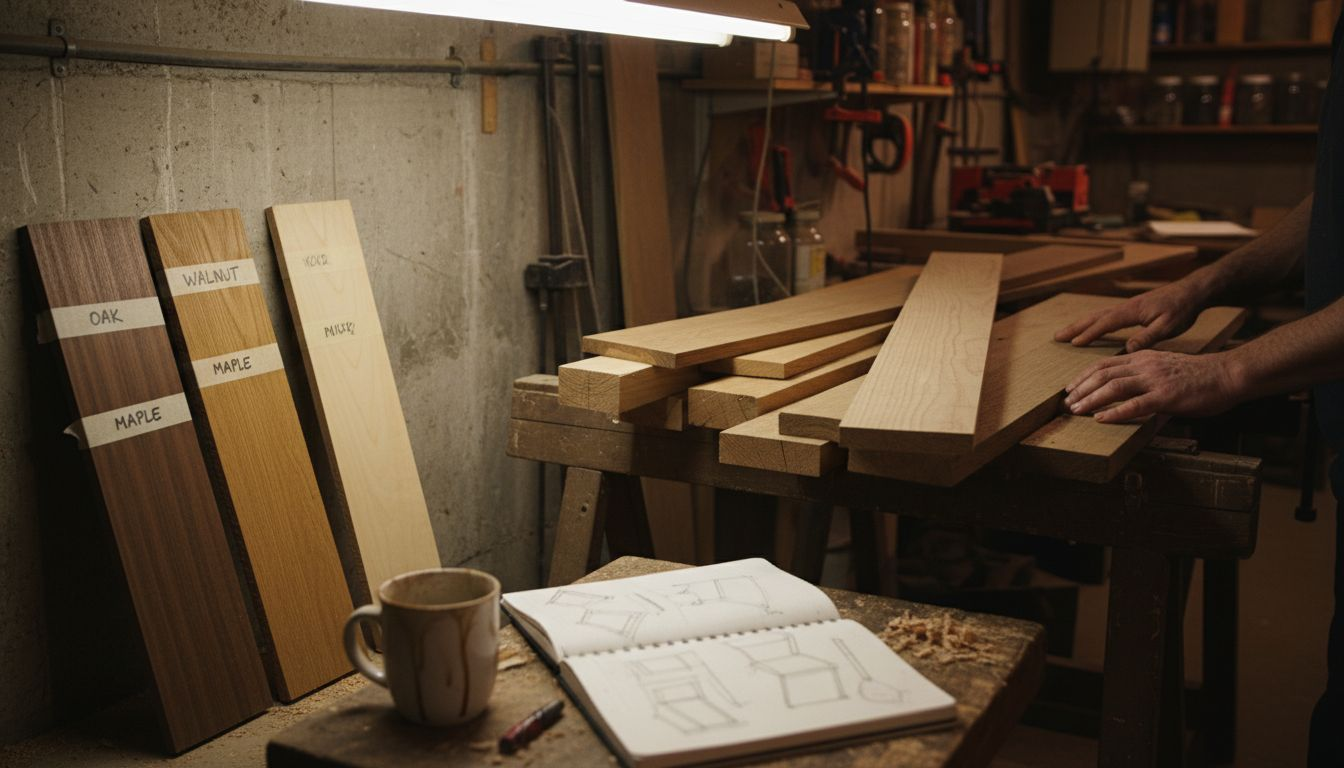
Furniture design principles emphasize the importance of understanding material properties before making selections. For Maryland homes, where weather conditions can be unpredictable, you’ll want materials that resist moisture, temperature fluctuations, and daily wear. Wood selection becomes paramount in creating a resilient piece.
Consider these essential material characteristics:
- Moisture resistance
- Structural integrity
- Local climate adaptability
- Maintenance requirements
- Aesthetic compatibility with your home’s design
When evaluating wood options, hardwoods like oak, maple, and walnut offer exceptional durability. Sustainable material guidelines recommend choosing materials that balance performance with environmental responsibility. Engineered wood products can provide additional stability and resistance to warping.
Here’s a quick guide to entryway material options and their practical impact:
| Material Type | Durability Impact | Maintenance Level |
|---|---|---|
| Solid Hardwood | Withstands heavy usage | Occasional polishing |
| Engineered Wood | Resists warping, stable | Low, easy cleanup |
| Veneer Finish | Prone to surface wear | Needs gentle care |
| Metal Accents | Adds structural strength | Rust prevention needed |
The right material isn’t just about appearance - it’s about creating a functional, lasting solution that meets your specific needs.
Pro tip: Always request material samples and test them in your actual home environment before making a final selection to ensure perfect performance and aesthetic match.
Step 3: Design Entryway Furniture for Personalization
Personalizing your entryway furniture transforms a functional space into a unique reflection of your home’s character and your individual style. By carefully selecting design elements that speak to your personal aesthetic, you can create a mud locker that’s not just a storage solution, but a statement piece that welcomes you home.
Entryway furniture design allows homeowners to express creativity through multiple customization options. Color and finish selection becomes your primary canvas for personalization. Consider how different wood stains, paint colors, and hardware choices can dramatically alter the look and feel of your furniture.
Key personalization strategies include:
- Selecting hardware that matches your home’s architectural style
- Choosing wood tones that complement existing furniture
- Incorporating unique storage configurations
- Adding personalized engraving or monogramming
- Integrating family photos or meaningful decorative elements
Design strategies for entrance spaces emphasize creating visual harmony while maintaining individual character. Modular design elements offer flexibility, allowing you to adapt your entryway furniture as your needs change over time.
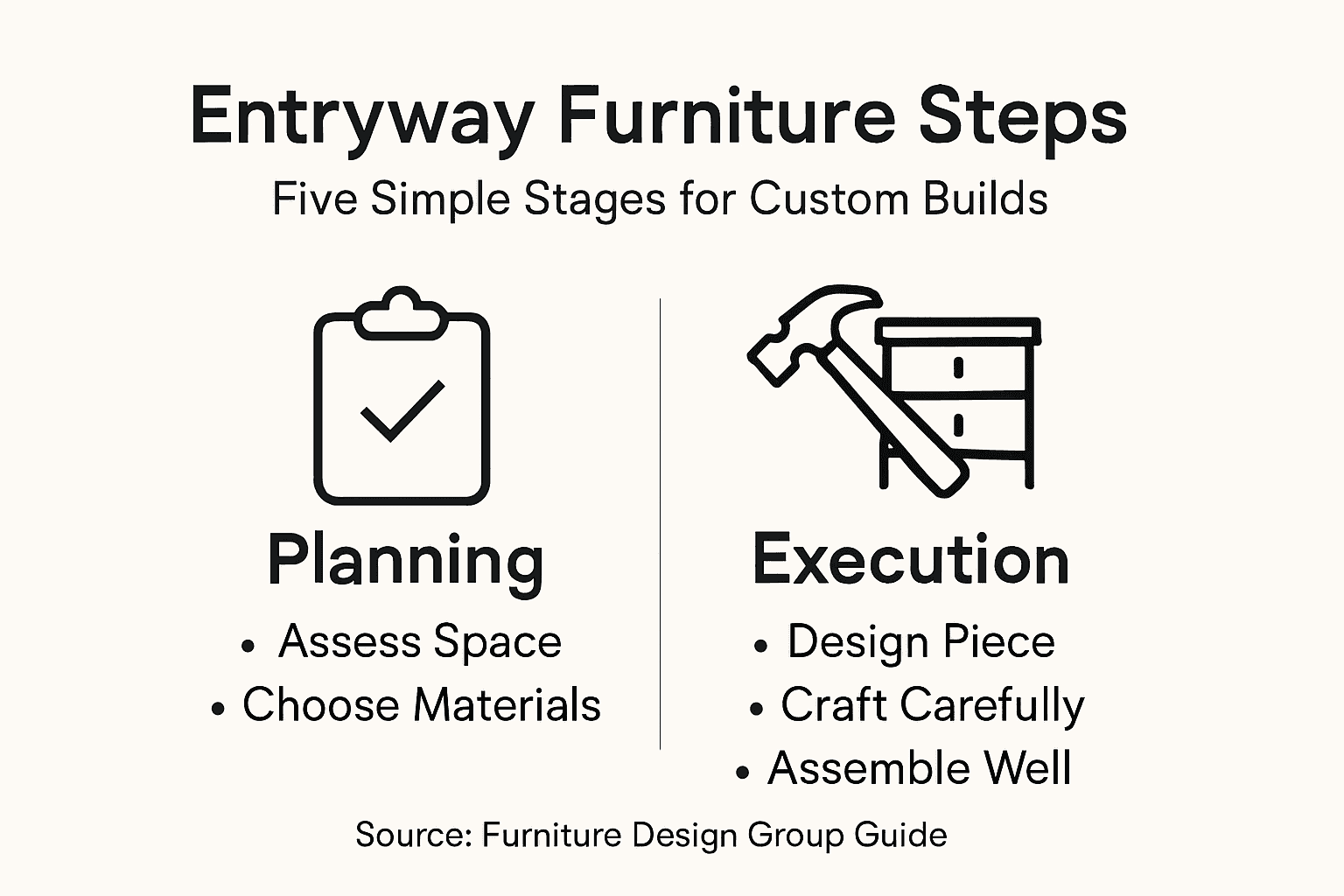
Use this summary to choose the optimal personalization feature for your entryway:
| Personalization Option | Visual Effect | Adaptability Over Time |
|---|---|---|
| Custom Hardware | Enhances style unique to home | Easily updated later |
| Engraving/Monogram | Adds personal charm | Permanent feature |
| Modular Storage | Flexible organization | Reconfigurable as needed |
| Color/Finish Selection | Matches existing decor | Can repaint or refinish |
Personalization is about creating a space that tells your story - every detail matters.
Pro tip: Create a mood board with color swatches, hardware samples, and design inspirations before finalizing your custom entryway furniture to ensure a cohesive and personalized result.
Step 4: Fabricate Components with Precision Craftsmanship
Crafting each component of your custom entryway furniture requires meticulous attention to detail and an unwavering commitment to precision. This stage transforms raw materials into functional, beautiful pieces that will serve your home for years to come.
Furniture design techniques emphasize the critical importance of precision in every cut, joint, and finish. Measuring and marking materials becomes an art form, where even a fraction of an inch can impact the entire piece’s structural integrity and aesthetic appeal.
Key precision craftsmanship techniques include:
- Using high-quality measuring tools like digital calipers
- Checking material squareness and alignment before cutting
- Selecting appropriate cutting and shaping tools for each material
- Creating multiple test cuts to ensure accuracy
- Implementing tight, consistent joinery techniques
Construction fabrication standards recommend rigorous quality control processes that ensure every component meets exacting specifications. Woodworking precision techniques demand patience, skill, and an almost meditative focus on each intricate detail.
Precision is not just about measurements - it’s about transforming raw materials into functional art.
Pro tip: Invest in professional-grade measuring and marking tools, and always create a detailed mockup or prototype before final fabrication to catch potential issues early.
Step 5: Assemble and Finish to Ensure Durability
The final stage of crafting your custom entryway furniture transforms individual components into a cohesive, functional masterpiece that will withstand daily use and environmental challenges. Proper assembly and finishing are not just technical steps but crucial investments in your furniture’s long-term performance.
Furniture assembly techniques require precision and strategic thinking. Selecting appropriate fastening methods becomes critical, ensuring each joint provides maximum strength while maintaining the piece’s aesthetic integrity. Consider using reinforced wood joinery like dovetail or mortise-and-tenon connections that distribute stress evenly across the structure.
Key durability enhancement strategies include:
- Using corrosion-resistant hardware
- Applying multiple layers of protective finish
- Sealing wood grain to prevent moisture penetration
- Checking alignment and structural integrity
- Allowing adequate drying time between finishing coats
Furniture durability guidelines emphasize the importance of comprehensive surface protection. This means selecting finishes that not only beautify your piece but also shield it from Maryland’s fluctuating humidity and temperature conditions.
Durability is a combination of intelligent design, precise assembly, and meticulous finishing.
Pro tip: Test your finish on a scrap piece of the same wood first to ensure color consistency and compatibility before applying it to your final project.
Elevate Your Entryway with Expert Custom Furniture Solutions
Designing a high-quality entryway that perfectly fits your space and lifestyle requires more than just good ideas. You need craftsmanship that respects precise measurements, quality materials resistant to weather challenges, and personalization that tells your story. Whether you want a mud locker that organizes daily clutter or a statement piece that welcomes guests with lasting durability, the challenge lies in balancing function with aesthetic appeal.
At Furniture Design Group, we bring over 20 years of experience in creating custom-built entryway furniture tailored to your exact needs. Our Maryland-based team understands the importance of moisture-resistant materials, precision crafting techniques, and adaptable designs that grow with your household. Explore how our artisanal construction methods and personalized options can transform your entryway into a truly welcoming and practical space.
Ready to invest in craftsmanship that stands the test of time and enhances your home’s first impression? Visit our website to learn more about our custom solutions or contact us today for a personalized consultation. Take the first step toward an entryway that combines beauty, durability, and thoughtful design tailored just for you.
Frequently Asked Questions
How do I assess the space for my custom entryway furniture?
Begin by accurately measuring the dimensions of your entryway, including width, depth, and height. Document the spacing around architectural elements like doors and windows to ensure that your custom mud locker fits well within the available area.
What materials should I consider for building high-quality entryway furniture?
Choose materials that offer moisture resistance, structural integrity, and ease of maintenance. For example, hardwoods like oak or engineered wood products can provide durability while adapting to fluctuations in climate.
How can I personalize my entryway furniture design?
You can personalize your entryway furniture by selecting custom hardware, color finishes, and unique storage configurations that reflect your style. Create a mood board with your ideas to visualize how these elements will come together in your space.
What techniques are crucial for precise fabrication of entryway furniture?
Utilizing quality measuring tools and ensuring proper material alignment are essential for precise fabrication. Take the time to create test cuts and check joinery techniques to ensure accuracy in every component.
What assembly practices enhance the durability of my custom furniture?
Focus on using corrosion-resistant hardware and reinforcing joints with strong methods like dovetail or mortise-and-tenon connections. Ensure that each piece is correctly aligned and allowed ample drying time for finishes to maximize its lifespan.