
Finding entryway furniture that truly fits your Maryland home can feel like a struggle when mass-produced options never seem quite right. Homeowners want solutions that go beyond generic storage, embracing both function and personal style. Choosing custom furniture means investing in craftsmanship and thoughtful design that transforms your entryway into an inviting, organized space unique to your household.
Table of Contents
- Custom Furniture Defined and Common Myths
- Types of Custom Entryway Furniture Solutions
- From Design to Delivery: The Custom Process
- Key Features of Quality Craftsmanship
- Regulations, Safety, and Legal Requirements
- Costs, Mistakes, and Smart Alternatives
Key Takeaways
| Point | Details |
|---|---|
| Custom Furniture Offers Personalization | Unlike mass-produced options, custom furniture is tailored to individual needs, enhancing both style and functionality in living spaces. |
| Quality Craftsmanship is Key | Exceptional craftsmanship focuses on precision, material integrity, and functional innovation, creating durable and aesthetically pleasing pieces. |
| Understanding the Process is Crucial | The custom furniture creation journey involves multiple stages, necessitating clear communication and collaboration between client and designer for optimal results. |
| Avoid Common Purchasing Mistakes | Homeowners should evaluate total costs, prioritize quality materials, and seek professional guidance to ensure their custom furniture aligns with their vision and budget. |
Custom Furniture Defined and Common Myths
Custom furniture represents a transformative approach to design, moving far beyond mass-produced pieces to create unique, personalized living spaces. At its core, custom furniture represents crafted objects intentionally designed and constructed to meet specific functional and aesthetic requirements for individual homeowners.
Understanding custom furniture requires dispelling several persistent myths about craftsmanship and design. Contrary to popular belief, custom pieces are not exclusively expensive luxury items, but rather tailored solutions that reflect personal style and spatial needs. Furniture design historically demonstrates how artisan-created pieces serve both practical and symbolic purposes beyond mere utility.
Key characteristics that distinguish custom furniture include:
- Precise measurements customized to specific room dimensions
- High-quality materials selected for durability and aesthetic appeal
- Unique design elements reflecting individual homeowner preferences
- Craftsmanship that prioritizes structural integrity and artistic expression
- Potential for multi-generational use and future heirloom status
Many homeowners mistakenly assume custom furniture requires astronomical budgets or months of production time. In reality, skilled craftsmen can often produce personalized pieces within reasonable timeframes and price ranges, particularly when working with experienced local designers who understand both material constraints and client visions.
Custom furniture transforms spaces from generic to genuinely personal, turning functional objects into meaningful expressions of individual style.
Pro tip: Before commissioning custom furniture, measure your space carefully and collect visual inspiration to help your designer understand your aesthetic goals.
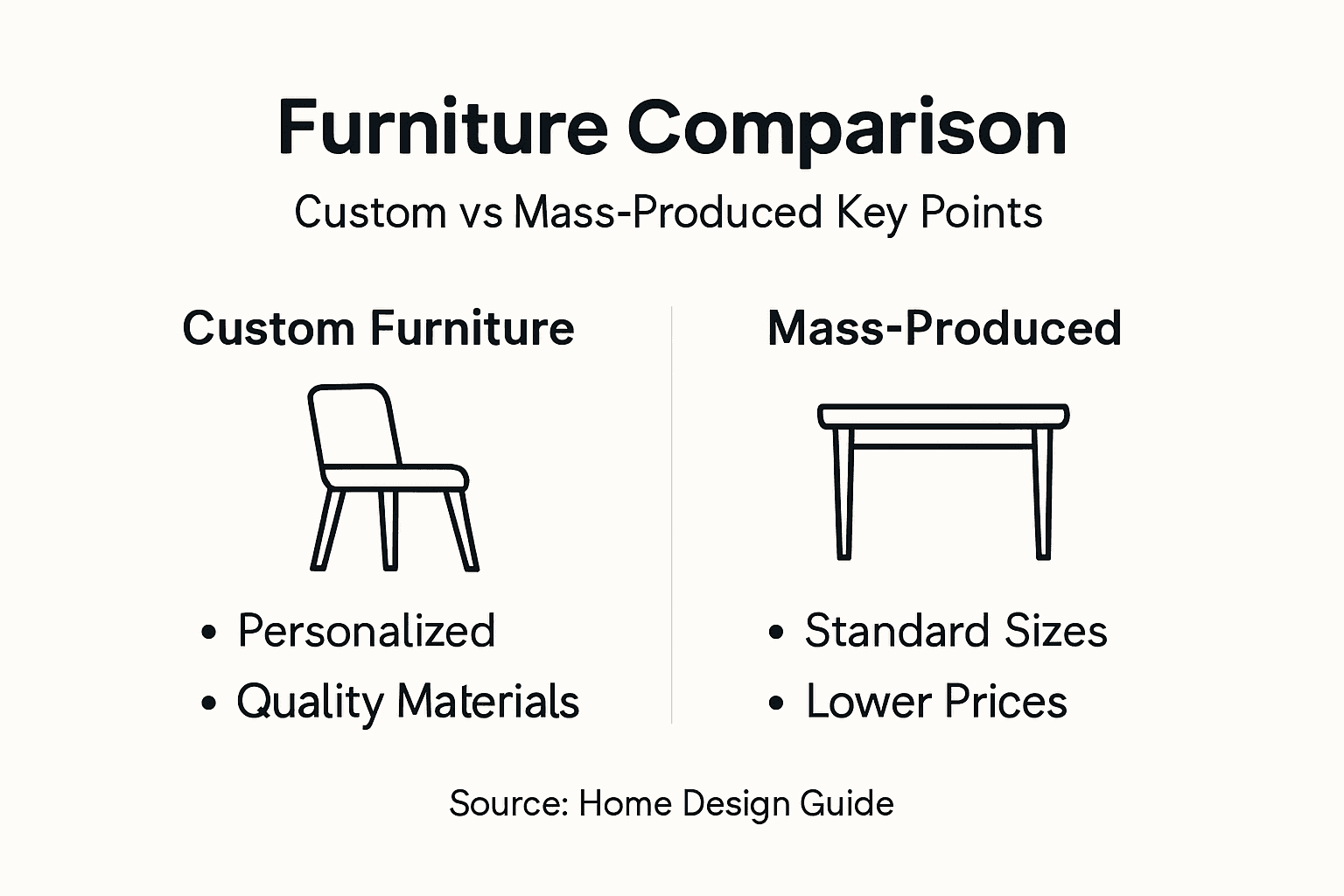
Here is a comparison of custom versus mass-produced furniture:
| Aspect | Custom Furniture | Mass-Produced Furniture |
|---|---|---|
| Personalization | Fully tailored to your needs | Limited options |
| Material Quality | High-end, selected materials | Standard, bulk materials |
| Production Timeframe | Varies by project | Typically quick and in stock |
| Long-Term Value | Often higher, may become heirloom | Depreciates more quickly |
Types of Custom Entryway Furniture Solutions
Custom entryway furniture solutions transform transitional spaces from mere passageways into functional and aesthetically pleasing zones that welcome residents and guests alike. These specialized furniture pieces are meticulously designed to address the unique challenges of home entry areas, combining practicality with personalized style.
Entryway systems play a critical role in managing indoor environment quality while providing essential organizational support. The most popular custom entryway furniture solutions include:
- Mudroom Lockers: Personalized storage units with individual compartments for each family member
- Bench Seating: Integrated seating with hidden storage for shoes and outdoor accessories
- Console Tables: Slim profile furniture pieces designed for key drops, mail sorting, and decorative displays
- Multi-Functional Storage Units: Combination pieces that incorporate coat hooks, shoe storage, and seating
- Custom Grate and Mat Systems: Specialized floor solutions that trap dirt and manage moisture
Homeowners increasingly recognize that entryway furniture is not just about storage, but about creating a seamless transition between outdoor and indoor spaces. These custom solutions can be tailored to match specific architectural styles, family sizes, and functional requirements.
Custom entryway furniture represents the intersection of design intelligence and practical living, transforming awkward spaces into elegant, organized transitions.
Designing an effective entryway solution requires careful consideration of traffic patterns, available space, and individual lifestyle needs. Professional designers can help homeowners maximize their entryway’s potential by creating furniture that is both visually appealing and supremely functional.
Pro tip: Measure your entryway’s dimensions precisely and consider your family’s specific storage needs before designing custom furniture solutions.
From Design to Delivery: The Custom Process
Custom furniture creation is a meticulously crafted journey that transforms initial design concepts into tangible, personalized pieces of functional art. Furniture design involves comprehensive planning that bridges creative vision with precise technical execution, ensuring each piece meets both aesthetic and functional requirements.
The custom furniture process typically unfolds through several critical stages:
- Initial Consultation: Detailed discussion of client needs, space constraints, and design preferences
- Conceptual Sketching: Developing preliminary design concepts and exploring potential material options
- Detailed Rendering: Creating precise digital or hand-drawn blueprints with exact measurements
- Material Selection: Choosing high-quality woods, finishes, and complementary materials
- Prototyping: Developing small-scale models to validate design and structural integrity
- Fabrication: Skilled craftspeople transform designs into actual furniture pieces
- Finishing: Applying specialized stains, paints, or protective coatings
- Quality Inspection: Rigorous assessment of structural and aesthetic characteristics
- Delivery and Installation: Careful transportation and placement of the finished piece
Each stage requires exceptional attention to detail, with master craftspeople leveraging years of experience to translate client visions into reality. Professional furniture makers understand that custom design is more than just manufacturing—it’s about creating personalized solutions that reflect individual style and functional needs.
Custom furniture production is an intricate dance between artistic vision, technical skill, and client collaboration.
Successful custom furniture projects demand open communication, precise technical skills, and a deep understanding of materials, design principles, and client expectations. The process is inherently collaborative, requiring ongoing dialogue between designer and client to achieve the perfect result.
Pro tip: Communicate your lifestyle needs, aesthetic preferences, and practical requirements clearly during the initial design consultation to ensure your custom furniture perfectly matches your vision.
Key Features of Quality Craftsmanship
Quality craftsmanship transcends mere functionality, representing a profound commitment to excellence that transforms ordinary furniture into extraordinary pieces of artistry. Craftsmanship demands precise manual skills that blend technical expertise with creative interpretation, creating furniture that tells a unique story through its design and construction.
The hallmark features of exceptional craftsmanship include:
- Precision Joinery: Seamless connections between wood pieces that demonstrate technical mastery
- Material Integrity: Careful selection and thoughtful use of high-quality, sustainably sourced materials
- Balanced Proportions: Harmonious design that creates visual and functional equilibrium
- Attention to Detail: Meticulously finished surfaces, smooth edges, and refined transitions
- Structural Durability: Construction techniques that ensure long-lasting performance
- Aesthetic Originality: Unique design elements that reflect individual artistic vision
- Functional Innovation: Thoughtful solutions that enhance the piece’s practical utility
True craftsmanship goes beyond visual appeal, representing a deep understanding of materials, techniques, and design principles. Skilled artisans approach each piece as a unique challenge, interpreting design intent through years of accumulated knowledge and refined manual skills.
Craftsmanship is the silent dialogue between the artisan’s hands, the chosen materials, and the final design—a conversation of skill, creativity, and intention.
The most exceptional craftspeople understand that each piece of furniture is more than an object—it’s a functional sculpture that reflects both the maker’s expertise and the client’s personal aesthetic. This approach requires continuous learning, technical precision, and an unwavering commitment to quality.

Pro tip: Examine furniture closely by running your hand along surfaces, checking for smooth transitions and examining joint connections to truly appreciate quality craftsmanship.
Regulations, Safety, and Legal Requirements
Custom furniture manufacturing operates within a complex framework of safety regulations and legal standards designed to protect both consumers and workers. Occupational safety standards govern furniture production meticulously, establishing comprehensive guidelines that ensure workplace safety and product reliability.
Key regulatory considerations for custom furniture include:
- Material Compliance: Verification of material safety and environmental standards
- Structural Integrity: Meeting minimum load-bearing and durability requirements
- Chemical Safety: Restricting toxic substances in finishes and adhesives
- Workplace Protection: Implementing safety protocols for manufacturing environments
- Consumer Protection: Ensuring products meet minimum safety performance criteria
- Liability Standards: Maintaining appropriate documentation and quality control
- Environmental Regulations: Adhering to sustainability and waste management guidelines
Manufacturers must navigate multiple layers of compliance, from voluntary industry standards set by organizations like the Business and Institutional Furniture Manufacturers Association (BIFMA) to mandatory federal and state regulations. These standards address everything from material sourcing to final product testing, creating a comprehensive framework that prioritizes consumer safety.
Safety regulations are not constraints, but essential guardrails that protect both craftspeople and consumers throughout the furniture creation process.
Complex legal requirements demand that custom furniture makers maintain rigorous documentation, implement comprehensive quality control processes, and stay current with evolving safety standards. This commitment goes beyond legal obligation—it represents a fundamental responsibility to deliver products that are safe, reliable, and ethically produced.
Pro tip: Request documentation of material certifications and safety compliance from your custom furniture manufacturer to ensure you’re investing in a legally and ethically produced piece.
Costs, Mistakes, and Smart Alternatives
Navigating the world of custom furniture requires a strategic approach that balances aesthetic desires with financial realities. Cost-benefit analysis helps avoid common purchasing mistakes, enabling homeowners to make smarter, more informed decisions about their furniture investments.
Common mistakes in custom furniture purchasing include:
- Underestimating Total Costs: Failing to account for design, materials, labor, and potential modifications
- Neglecting Long-Term Value: Focusing solely on upfront pricing instead of durability and longevity
- Overlooking Functionality: Prioritizing aesthetics over practical daily use requirements
- Ignoring Scale and Proportion: Selecting pieces that don’t harmonize with existing space
- Skipping Professional Consultation: Attempting design without expert guidance
- Compromising on Material Quality: Choosing cheaper options that deteriorate quickly
- Avoiding Customization Flexibility: Limiting design options to reduce initial expenses
Smart alternatives can significantly mitigate potential financial risks. Experienced homeowners approach custom furniture as an investment, carefully evaluating design options, material selections, and long-term utility. This approach transforms potential pitfalls into opportunities for creating truly meaningful living spaces.
Smart furniture purchasing is about understanding value beyond price—it’s an investment in daily comfort and personal expression.
Successful custom furniture procurement requires a holistic perspective that considers aesthetic preferences, functional needs, budget constraints, and potential future adaptability. Thoughtful decision-making can transform what might seem like a significant expense into a worthwhile long-term investment.
Pro tip: Request detailed cost breakdowns and explore multiple design iterations before committing to your custom furniture project to ensure optimal value and satisfaction.
Here is a summary of common mistakes and ways to avoid them:
| Mistake | Impact on Outcome | Prevention Strategy |
|---|---|---|
| Underestimating the total cost | Leads to surprise expenses | Request detailed cost breakdown |
| Ignoring scale and proportion | Furniture may not fit the space | Measure rooms and review designs |
| Compromising on materials | Reduced durability and satisfaction | Prioritize quality over lowest price |
Transform Your Entryway with Custom Craftsmanship Tailored to You
Are you ready to turn your entryway into a personalized space that reflects your style while solving common challenges like limited storage and awkward layouts? The article highlights key issues such as underestimating costs, ignoring precise measurements, and compromising on material quality. At Furniture Design Group, we specialize in creating custom entryway furniture designed with expert craftsmanship and attention to detail to overcome those exact pain points.
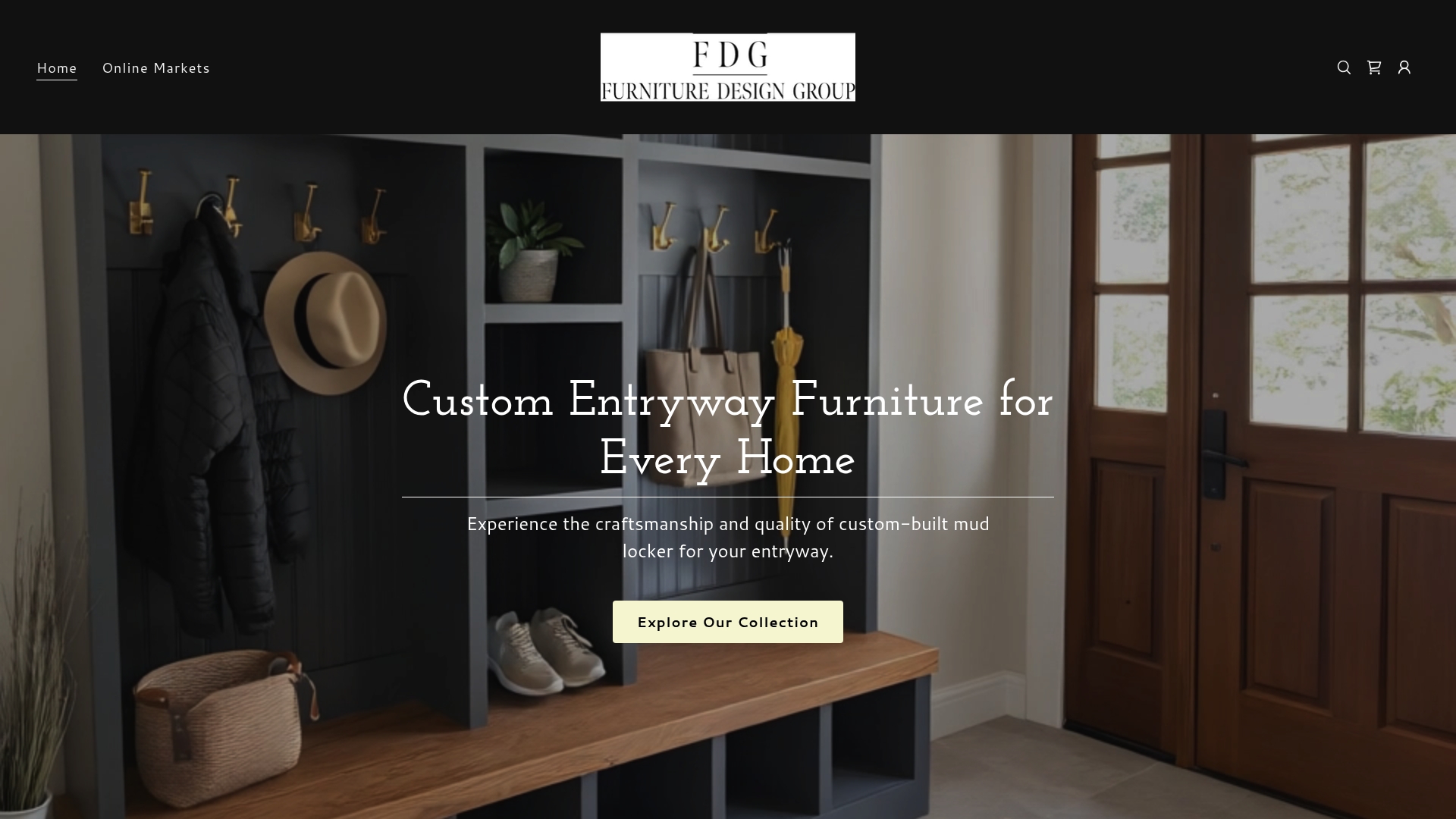
Explore our carefully crafted mud lockers, benches, and multi-functional storage solutions that combine aesthetic originality with lasting durability. Visit Furniture Design Group now to discover how our family-owned company brings over 20 years of experience to every piece. Contact us today for a consultation or visit our showroom to experience firsthand the quality that transforms your entryway from generic to genuinely personal. Don’t settle for off-the-shelf when your home deserves bespoke solutions built just for you.
Frequently Asked Questions
What is custom furniture?
Custom furniture is uniquely designed and built to meet specific functional and aesthetic needs of individual homeowners, allowing for personalized living spaces that reflect personal style.
How does custom furniture compare to mass-produced furniture?
Custom furniture is fully tailored to individual needs, often using high-quality materials, while mass-produced furniture offers limited personalization and typically uses standard materials. Custom pieces can have a higher long-term value, while mass-produced items often depreciate quickly.
What are the typical steps involved in the custom furniture creation process?
The custom furniture process includes initial consultation, conceptual sketching, detailed rendering, material selection, prototyping, fabrication, finishing, quality inspection, and delivery and installation.
What should I consider before commissioning custom furniture?
Before commissioning custom furniture, consider measuring your space carefully, understanding your functional storage needs, and collecting visual inspiration to communicate your aesthetic goals effectively.