
Stepping through the front door should feel inviting, but cramped layouts and clutter can make entryways more stressful than soothing. Many Maryland homeowners face the challenge of making these transitional spaces functional and stylish. With strategic space planning and custom-crafted furniture, you can turn even a small foyer into a beautiful and practical gateway that fits your family’s needs and personal style.
Table of Contents
- Step 1: Assess Your Entryway Needs And Space
- Step 2: Define Custom Furniture Features And Style
- Step 3: Select Materials And Finishes For Durability
- Step 4: Collaborate With Craftsmen And Finalize Designs
- Step 5: Review And Approve Final Custom Furniture Installation
Quick Summary
| Key Point | Explanation |
|---|---|
| 1. Assess Your Entryway Dimensions | Measure the total floor space and note architectural features to optimize furniture design and functionality. |
| 2. Define Furniture Functionality and Style | Identify specific needs, such as storage or seating, while ensuring the design aligns with your home’s aesthetic. |
| 3. Choose Durable Materials and Finishes | Select sturdy materials like hardwoods and metal, focusing on long-term usage and environmental sustainability. |
| 4. Collaborate Effectively with Craftsmen | Communicate detailed design ideas and stay open to suggestions for refined, practical solutions. |
| 5. Thoroughly Review Final Installation | Inspect for quality and fit, ensuring the piece matches your vision and request adjustments if necessary. |
Step 1: Assess Your Entryway Needs and Space
Custom furniture planning for your entryway begins with a thorough understanding of your space’s unique characteristics and functional requirements. The goal is to create a welcoming entry that balances aesthetic appeal with practical utility.
Start by taking detailed measurements of your entryway, noting the precise dimensions, architectural features, and potential obstacles. Strategic space planning involves understanding how every square inch can be optimized for maximum efficiency. Consider these key assessment factors:
- Total floor space available
- Natural light sources
- Door swing and clearance requirements
- Existing architectural elements like baseboards or built-in features
- Traffic flow patterns
For compact entryways, smart design becomes even more critical. Small spaces demand furniture that serves multiple purposes and maximizes functionality. Look for pieces that offer integrated storage, such as benches with hidden compartments or slim console tables that provide both decorative surface area and practical utility.
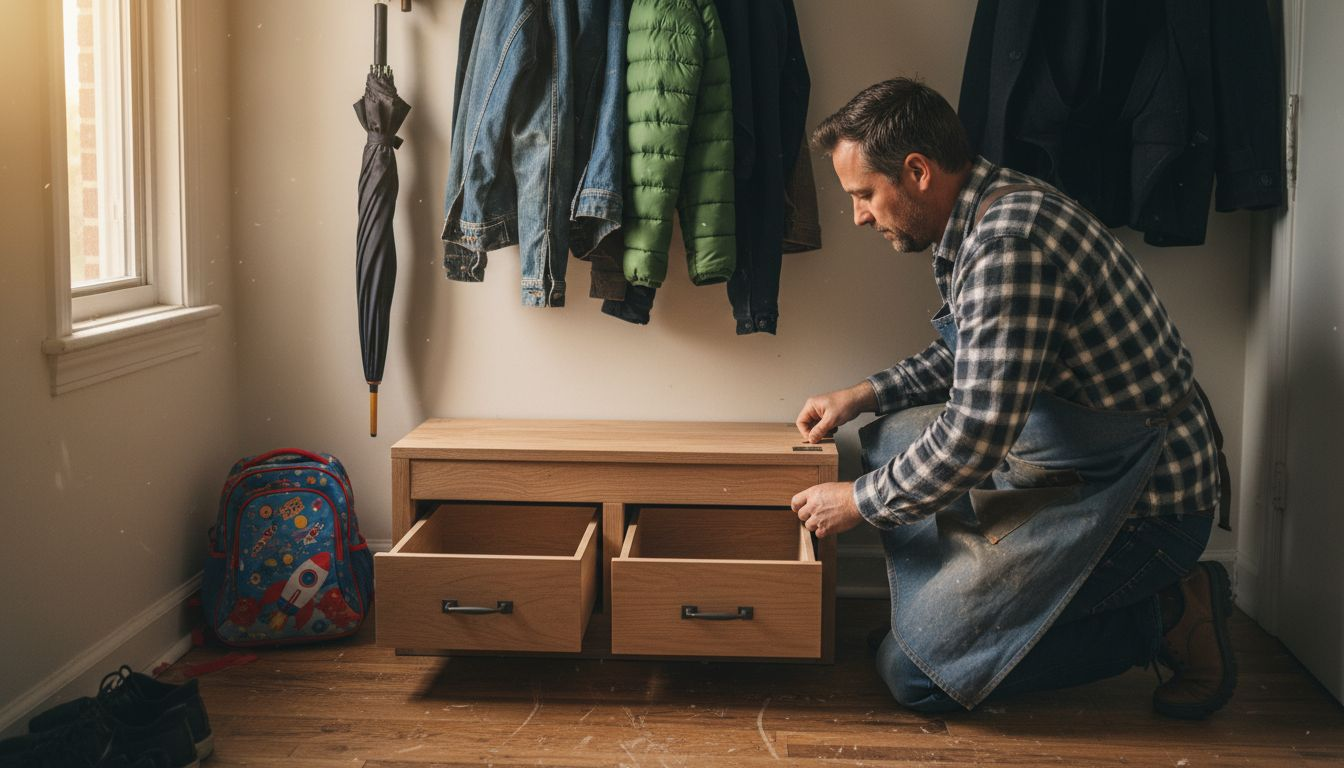
Here is a comparison of common entryway spatial challenges and suitable custom furniture solutions:
| Spatial Challenge | Recommended Furniture Solution | Design Benefit |
|---|---|---|
| Narrow hallway | Wall-mounted shelves or slim consoles | Saves floor space, increases storage |
| Irregular corners | Custom-fit corner benches | Maximizes rarely used areas |
| Lack of storage | Benches with hidden compartments | Conceals clutter, keeps entry tidy |
| High traffic zones | Durable hardwood with metal frames | Withstands heavy daily use |
Visualize how people will move through the space and interact with potential furniture pieces. Imagine family members and guests entering, removing coats, storing shoes, and transitioning from outdoors to indoors. This mental walkthrough helps ensure your custom furniture design supports smooth, intuitive movement.
Successful entryway design transforms a simple transition zone into a functional and welcoming introduction to your home.
Pro tip: Take photographs of your entryway from multiple angles to help visualize potential furniture layouts and identify potential design challenges before making final decisions.
Step 2: Define Custom Furniture Features and Style
Defining the perfect custom furniture for your entryway requires a strategic approach that balances functionality with personal aesthetic preferences. This step transforms your vision into a concrete design that reflects your unique style and meets your practical needs.
Parametric furniture design offers an innovative approach to creating tailored pieces that adapt precisely to your space. Consider these key elements when defining your custom furniture features:
- Functional requirements for storage and organization
- Aesthetic style matching your home’s overall design
- Materials that complement existing decor
- Ergonomic considerations for comfort and usability
- Color palette and finish options
Start by identifying the primary functions your entryway furniture must serve. Do you need a bench for putting on shoes? A console table for keys and mail? Multiple storage compartments for coats and accessories? Each piece should serve a specific purpose while contributing to the overall design harmony.
Think beyond basic utility and consider how the furniture will enhance your entryway’s visual appeal. The right custom design can transform a mundane transition space into a stunning introduction to your home. Pay attention to details like hardware finishes, wood grains, and proportions that reflect your personal style and complement your home’s architectural character.
Custom furniture is an opportunity to create a truly personalized space that tells your unique story.
Pro tip: Create a mood board with fabric swatches, color samples, and inspiration images to help visualize how your custom entryway furniture will look and feel in your actual space.
Step 3: Select Materials and Finishes for Durability
Choosing the right materials and finishes for your custom entryway furniture is crucial for creating a long-lasting, beautiful piece that withstands daily wear and tear. Your selection will directly impact the furniture’s performance, maintenance requirements, and overall aesthetic appeal.
Materials and finishes play a critical role in determining your furniture’s durability and appearance. Consider these key factors when making your selection:
- Hardwood options like oak, walnut, and maple
- Metal structural components for added strength
- Water-based protective finishes
- Resistance to moisture and scratches
- Maintenance requirements for each material
Focus on selecting materials that can handle the high-traffic nature of an entryway. Hardwoods offer exceptional durability and timeless beauty, while metal accents can provide structural integrity. Water-resistant finishes are particularly important in areas exposed to outdoor elements and frequent use.
Consider the long-term sustainability of your material choices. Many modern furniture designers prioritize eco-friendly options that don’t compromise on performance. Look for FSC-certified woods and low-VOC finishes that provide both environmental responsibility and lasting quality.
The table below summarizes how different material choices impact entryway furniture performance:
| Material Type | Durability | Maintenance Needs | Visual Impact |
|---|---|---|---|
| Oak Hardwood | Very High | Occasional polishing | Classic, timeless look |
| Powdered Metal | High | Minimal, wipes clean | Modern, sleek style |
| Laminate | Moderate | Easy to clean | Many colors available |
| Bamboo | High | Occasional oiling | Eco-friendly warmth |
The right materials transform custom furniture from a simple functional item to a lasting work of art.
Pro tip: Request material samples and test them in your actual entryway lighting and environment to ensure they meet your durability and aesthetic expectations.
Step 4: Collaborate with Craftsmen and Finalize Designs
Transforming your custom entryway furniture from concept to reality requires effective collaboration with skilled craftsmen who can bring your vision to life. This critical step bridges the gap between your design ideas and practical implementation.
Collaborative furniture design combines creative vision with technical expertise, ensuring your custom piece meets both aesthetic and functional requirements. When working with craftsmen, consider these key communication strategies:
- Detailed design sketches and measurements
- Clear description of functional requirements
- Material and finish preferences
- Budget constraints
- Timeline expectations
Prepare a comprehensive design brief that communicates your vision clearly. Bring visual references such as mood boards, color swatches, and inspiration images to help craftsmen understand your aesthetic goals. Be open to their professional insights and recommendations, as experienced craftsmen can offer valuable perspectives on design feasibility and potential improvements.
During design discussions, remain flexible and collaborative. Your craftsmen’s expertise can help refine your initial concept, addressing potential structural challenges or suggesting innovative solutions that enhance both form and function. Expect multiple iterations and be prepared to make adjustments that balance your vision with practical manufacturing considerations.
Successful custom furniture emerges from a partnership between your creative vision and the craftsman’s technical skill.
Pro tip: Request a detailed prototype or 3D rendering before final production to visualize the exact design and make any necessary adjustments.
Step 5: Review and Approve Final Custom Furniture Installation
The final stage of your custom entryway furniture project involves a comprehensive review and approval process to ensure the piece meets your exact specifications and quality expectations. This critical step transforms your design from concept to reality.
Material approval processes are essential for guaranteeing the highest quality custom furniture installation. When conducting your final review, focus on these key evaluation criteria:
- Precise measurements and fit
- Color and finish accuracy
- Structural integrity
- Functional performance
- Overall aesthetic alignment with your vision
Carefully inspect every detail of the installed piece, comparing it against the original design specifications. Check for seamless craftsmanship in joints, finishes, and functional elements like drawers, hinges, and storage compartments. Pay attention to how the piece integrates with your entryway’s existing architecture and design elements.
During the final review, don’t hesitate to request minor adjustments. A reputable craftsman will be committed to ensuring your complete satisfaction. Take your time examining the piece from multiple angles, testing its functionality, and verifying that every aspect meets your expectations.
A meticulous final review transforms a custom furniture piece from merely good to absolutely perfect.
Pro tip: Photograph the installed piece from multiple angles in different lighting conditions to document its craftsmanship and ensure it matches your original design vision.
Elevate Your Entryway with Custom Craftsmanship That Meets Your Unique Needs
Creating the perfect entryway requires thoughtful planning to balance functionality and style. This article highlights challenges like maximizing limited space, selecting durable materials, and designing furniture that truly fits your lifestyle. At Furniture Design Group, we specialize in custom-crafted entryway solutions that solve these exact problems. With over 20 years of experience crafting bespoke mud lockers and storage benches, we understand how to blend form and function to transform your entry into a welcoming and organized space.
Discover how our expert artisans can bring your vision to life using quality hardwoods and tailored designs. Start your journey today by exploring our collection and sharing your specific needs with us. Visit Furniture Design Group to view examples of our custom-built residential entryway furniture or contact us to schedule a personalized showroom visit. Don’t wait to create an entryway that perfectly fits your home and lifestyle.
Frequently Asked Questions
What should I consider when assessing my entryway space for custom furniture?
To assess your entryway space, measure the total floor space, note existing architectural features, and consider traffic flow patterns. Take detailed measurements and identify potential obstacles to determine the best furniture layout and design.
How can I define the functional requirements for my custom entryway furniture?
Define your entryway furniture’s functional requirements by identifying what you need, such as storage for shoes or a place to sit while putting on shoes. List the primary uses for the space, and create a plan that ensures each piece serves a specific purpose in a cohesive design.
What materials should I choose for durability in custom entryway furniture?
Opt for materials like hardwoods and metal for durability, as they can withstand heavy daily use in busy entryways. Consider water-resistant finishes to protect against moisture, especially if your entryway connects to outdoor spaces.
How can I effectively collaborate with craftsmen during the custom furniture design process?
Collaborate with craftsmen by providing detailed design sketches, clear functional requirements, and your material preferences. Maintain open communication, be prepared to adjust your ideas based on their expertise, and ensure they understand your vision throughout the process.
What should I review before approving the installation of my custom furniture?
Before approving the installation, check for precise measurements, finish accuracy, and structural integrity. Conduct a thorough inspection, testing the functionality of components like drawers and storage compartments to ensure everything aligns with your vision.