
Most homeowners believe custom furniture involves endless meetings, confusing jargon, and sky-high costs. The reality is far simpler. Understanding the custom furniture process empowers you to create entryway pieces that perfectly match your space, lifestyle, and aesthetic vision. This guide walks you through each step, from initial consultation to final installation, helping you collaborate confidently with skilled craftsmen. Whether you need a mud locker for a busy family or an elegant console for a formal entry, knowing what to expect transforms the experience from intimidating to exciting.
Table of Contents
- Understanding The Custom Furniture Process
- Materials And Craftsmanship: What Makes Custom Entryway Furniture Special
- How To Collaborate Effectively With Your Custom Furniture Maker
- Comparing Custom Furniture With Ready-Made Options: What To Consider
- Discover Your Perfect Custom Entryway Furniture With Furniture Design Group
- FAQ
Key takeaways
| Point | Details |
|---|---|
| Process overview | Custom furniture creation involves consultation, design approval, material selection, fabrication, and finishing stages |
| Timeline expectations | Most entryway furniture projects require 6 to 12 weeks from initial meeting to delivery |
| Material flexibility | You choose specific woods, finishes, hardware, and protective coatings tailored to your home |
| Collaboration matters | Clear communication with your maker ensures the final piece matches your vision and budget |
| Value proposition | Custom pieces offer durability, perfect fit, and personalized design unavailable in mass-produced options |
Understanding the custom furniture process
The custom furniture process involves several key stages: consultation, design, material selection, fabrication, and finishing. Each phase builds on the previous one, creating a clear path from concept to completed piece. Breaking down these steps removes the mystery and helps you participate actively in creating furniture that serves your specific needs.
Step one begins with consultation. You meet with your furniture maker to discuss your entryway’s dimensions, storage requirements, style preferences, and budget parameters. This conversation establishes the project foundation. Bring measurements, photos of your space, and examples of designs you admire. The maker asks detailed questions about how you use your entryway, who will interact with the furniture, and what features matter most to your household.
Step two moves into design development. Your maker creates sketches or 3D renderings based on your consultation. These visual representations show proportions, storage configurations, and overall aesthetic direction. You review these designs carefully, requesting adjustments until the concept aligns perfectly with your vision. This approval stage prevents costly changes later in the process.
Step three focuses on material selection. You choose wood species, finish colors, hardware styles, and protective coatings. Your maker guides you through options suitable for entryway use, explaining how different materials perform under daily wear. Maple offers durability for high-traffic areas, while walnut provides rich, sophisticated tones. Cherry develops a beautiful patina over time.
Step four involves fabrication. Skilled craftsmen cut, shape, and assemble your furniture using traditional joinery techniques. They build each component with precision, ensuring structural integrity and smooth operation of drawers, doors, and hooks. This phase typically consumes the majority of your project timeline.
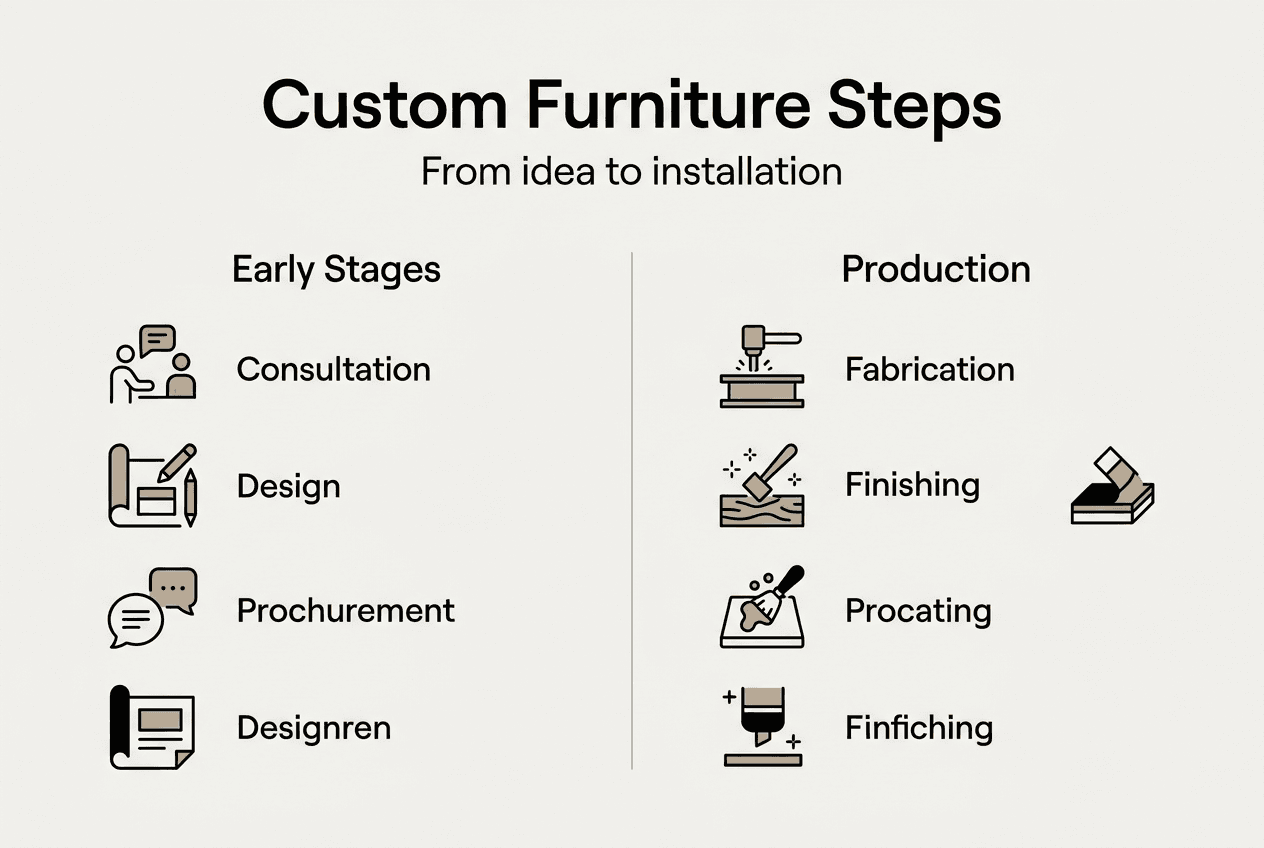
Step five applies finishing touches. Craftsmen sand surfaces to silky smoothness, apply stains or paints in your chosen colors, and add protective topcoats. These finishing layers enhance beauty while defending against moisture, scratches, and daily use.
Step six completes the journey with delivery and installation. Your maker transports the finished piece to your home, positions it carefully in your entryway, and ensures everything functions perfectly. They often provide care instructions to help you maintain the furniture’s beauty for decades.
Pro Tip: Take detailed photos of your entryway from multiple angles before your consultation. Include shots showing adjacent rooms, lighting conditions, and traffic patterns. These images help your maker understand the context and design furniture that harmonizes with your entire home.
Materials and craftsmanship: what makes custom entryway furniture special
Quality craftsmanship and personalized material selection distinguish custom entryway furniture from factory alternatives. Understanding these elements helps you appreciate the value you receive and make informed choices during your project.
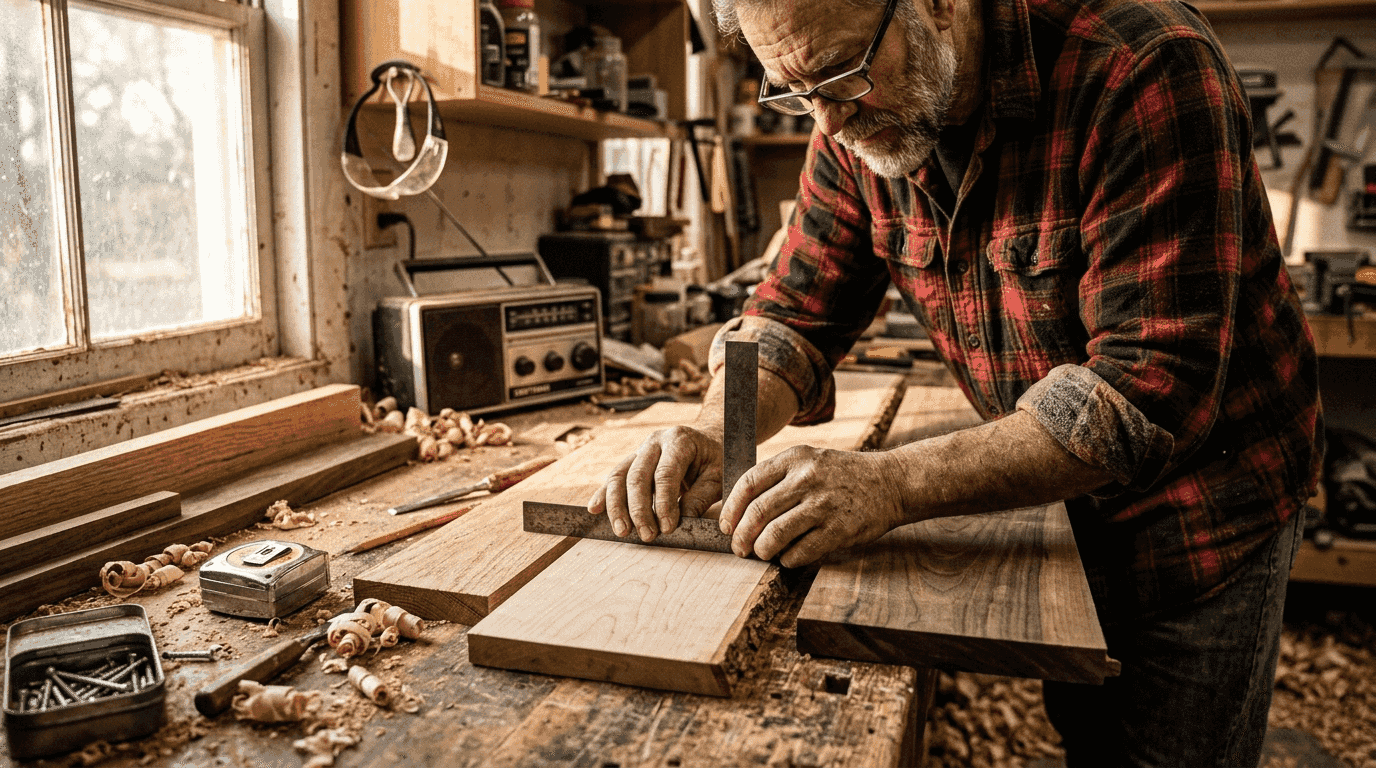
Wood species selection dramatically impacts both appearance and performance. Maple provides exceptional hardness, resisting dents and scratches in busy entryways. Its tight grain accepts stains evenly, creating clean, contemporary looks. Oak features prominent grain patterns that add character and traditional warmth. Cherry starts light and darkens beautifully over years of exposure to natural light. Walnut delivers rich chocolate tones and sophisticated elegance. Each species brings unique characteristics to your finished piece.
Custom finishes transform raw wood into personalized statements. Stains enhance natural grain while adding color depth. You might choose honey tones for warmth, espresso shades for drama, or gray washes for modern aesthetics. Paint provides unlimited color options, from classic whites to bold accent hues matching your decor. Distressed finishes create vintage charm through controlled wear techniques. Protective polyurethane topcoats shield surfaces from moisture, scratches, and daily handling.
Joinery techniques reveal true craftsmanship quality. Dovetail joints interlock drawer components with mechanical strength that outlasts glue alone. Mortise and tenon connections create rigid frames resistant to racking and wobbling. Dado grooves support shelves and backs invisibly. These traditional methods require skill and time but produce furniture that lasts generations.
Hardware selection completes the functional and aesthetic package. Custom makers offer drawer slides ranging from basic side-mount options to premium soft-close undermount systems. Hinges can be exposed for rustic character or concealed for clean lines. Hooks, knobs, and pulls come in countless styles, from brushed nickel to oil-rubbed bronze to hand-forged iron. You choose elements that match your home’s existing fixtures.
Advantages over mass-produced furniture become clear when you examine construction details. Factory pieces often use particleboard cores, stapled joints, and thin veneer surfaces. Custom furniture employs solid wood throughout, hand-cut joinery, and substantial material thickness. This construction withstands decades of use while maintaining structural integrity and appearance.
Pro Tip: Request wood samples finished with your proposed stain or paint. Seeing actual material with your chosen finish prevents surprises and ensures the final color matches your expectations. Different wood species accept the same stain differently, so physical samples provide accurate previews.
How to collaborate effectively with your custom furniture maker
Successful custom furniture projects depend heavily on clear communication and collaboration between client and maker. Following these guidelines optimizes your experience and ensures satisfaction with the final product.
Set clear expectations from your first conversation. Discuss your budget range honestly so your maker can design within realistic parameters. Establish timeline requirements, especially if you need the furniture by a specific date. Communicate your style preferences using concrete examples rather than vague descriptions. Share photos, magazine clippings, or Pinterest boards showing designs you love.
Be open to professional advice and material recommendations. Your maker brings years of experience understanding how different woods, finishes, and construction methods perform in real-world conditions. They might suggest alternatives you hadn’t considered that better serve your needs. Cherry might suit your aesthetic better than maple. Soft-close drawer slides might justify their cost through daily convenience. Trust their expertise while maintaining your vision.
Review design proofs carefully before approving production. Study dimensions against your space measurements. Visualize how doors and drawers will open without blocking traffic flow. Consider whether the storage configuration truly matches your family’s habits. Request modifications now rather than after fabrication begins. Changes during production often prove impossible or expensive.
Discuss delivery and installation details upfront. Confirm whether the maker provides these services or if you need to arrange them separately. Understand how the furniture will navigate doorways, hallways, and stairs. Some pieces require assembly on site due to size constraints. Clarify who handles any necessary wall anchoring or floor protection.
Maintain regular communication during the build phase. Most makers welcome periodic check-ins and progress photos. These updates reassure you that work proceeds on schedule and allow early identification of any concerns. However, respect that craftsmen need focused time for detailed work. Agree on a communication frequency that balances your interest with their productivity.
Ask questions whenever something seems unclear. Custom furniture projects involve specialized terminology and techniques unfamiliar to most homeowners. Good makers explain concepts in accessible language and welcome your curiosity. Understanding the process enhances your appreciation of the finished piece.
Comparing custom furniture with ready-made options: what to consider
Custom furniture offers tailored design and quality, while ready-made options provide immediate availability and lower initial costs. Understanding these trade-offs helps you make informed decisions for your entryway.
Customization represents the primary advantage of bespoke furniture. Custom pieces fit your exact space dimensions, eliminating awkward gaps or overhang. You control every design element, from wood species to hardware finishes to storage configurations. Your entryway furniture can incorporate specific features like coat hooks positioned for children’s heights, charging stations for devices, or hidden compartments for valuables. Ready-made furniture offers fixed designs in standard sizes, requiring you to adapt your needs to available options.
Cost factors require careful consideration beyond initial price tags. Custom furniture typically costs more upfront due to skilled labor, quality materials, and individualized attention. However, superior construction and timeless design provide long-term value. Well-crafted custom pieces last decades with minimal maintenance, often becoming family heirlooms. Mass-produced furniture uses cheaper materials and construction shortcuts, frequently requiring replacement within years. Calculate total cost of ownership rather than just purchase price.
Lead times differ dramatically between custom and ready-made options. Custom projects require 6 to 12 weeks from design approval to delivery. This timeline allows for material sourcing, careful fabrication, and proper finishing. Ready-made furniture ships immediately or within days. If you need furniture urgently, ready-made options solve immediate problems. For planned renovations or new construction, custom timelines integrate smoothly into project schedules.
Durability and repairability favor custom furniture significantly. Solid wood construction, quality joinery, and accessible hardware make custom pieces easy to repair if damage occurs. Replace a drawer pull, refinish a scratched surface, or tighten a loose joint without replacing the entire piece. Particleboard cores, stapled joints, and proprietary hardware in mass-produced furniture often make repairs impractical or impossible.
Satisfaction from personalized design provides intangible value difficult to quantify. Custom furniture reflects your aesthetic preferences, fits your space perfectly, and serves your specific needs. This alignment creates daily satisfaction every time you use your entryway. Ready-made compromises on fit, function, or appearance may cause ongoing frustration.
| Factor | Custom Furniture | Ready-Made Furniture |
|---|---|---|
| Design flexibility | Complete control over dimensions, materials, features | Fixed designs in standard sizes |
| Initial cost | Higher due to craftsmanship and materials | Lower purchase price |
| Timeline | 6 to 12 weeks typical | Immediate to few days |
| Durability | Decades with proper care | Often requires replacement within years |
| Repairability | Easy to repair and refinish | Often impractical to fix |
Pro Tip: Consider custom furniture an investment in your home’s value and your daily quality of life. The perfect entryway solution that serves your family beautifully for 20 years costs far less per year than replacing cheap furniture every 3 to 5 years.
Discover your perfect custom entryway furniture with Furniture Design Group
Now that you understand the custom furniture process, you’re ready to create the entryway solution you’ve been imagining. Furniture Design Group specializes in handcrafted custom entryway furniture tailored to Maryland homeowners seeking quality and personalization. With over 20 years of experience, their skilled craftsmen transform your vision into functional art that welcomes you home every day.
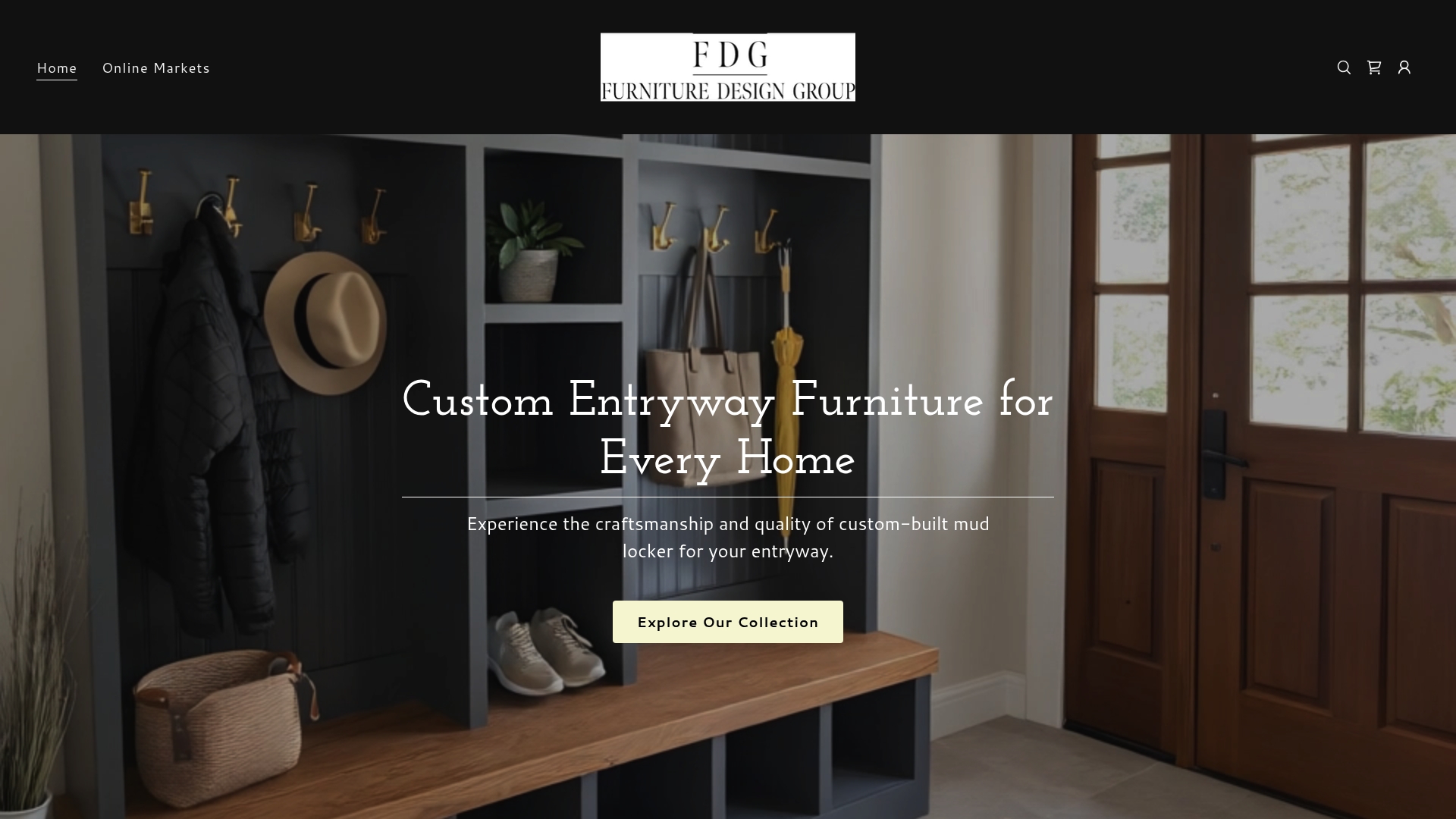
Their comprehensive approach guides you through every stage, from initial consultation to final installation. You’ll work directly with experienced designers who listen carefully to your needs and translate them into beautiful, practical furniture. Their showroom lets you see craftsmanship quality firsthand and explore material options in person. Whether you need a compact mud locker for a small entryway or an elaborate storage system for a grand foyer, they create solutions that fit perfectly. Contact Furniture Design Group today to schedule your free consultation and start your custom furniture journey.
FAQ
What is the typical timeline for completing a custom entryway furniture project?
Completion usually takes 6 to 12 weeks depending on design complexity and material availability. Simple pieces with standard woods finish faster, while elaborate designs with specialty materials or intricate details require more time. Your maker provides a specific timeline estimate during the consultation phase. Building in a few extra weeks for unexpected delays ensures you’re not disappointed if minor adjustments extend the schedule.
Can I choose the exact materials and finishes for my custom furniture?
Yes, working with your maker you select specific woods, stains, paint colors, and hardware to match your vision. They guide you through options suitable for entryway use, explaining performance characteristics of different materials. You’ll review samples showing how finishes appear on actual wood before making final decisions. This collaborative selection process ensures the completed piece matches your aesthetic preferences and functional requirements perfectly.
What should I expect during the consultation phase?
During consultation, you’ll discuss your needs, style preferences, usage patterns, and budget parameters with your furniture maker. They’ll ask detailed questions about your space dimensions, storage requirements, and household habits. Bring measurements, photos, and examples of designs you admire to facilitate productive conversation. This meeting establishes project foundations and helps your maker understand how to create furniture that truly serves your lifestyle. You’ll leave with clear next steps and realistic expectations for timeline and investment.
How do custom furniture makers handle delivery and installation?
Most makers coordinate professional delivery and careful installation to ensure safe placement in your home. They transport finished pieces using proper padding and securing techniques to prevent damage. Upon arrival, they position furniture precisely where you want it, level the piece if necessary, and verify that all components function smoothly. Many makers also provide care instructions explaining how to maintain your furniture’s beauty for years. This white-glove service completes your custom furniture experience and ensures you’re completely satisfied with the final result.