
Many homeowners think artisanal furniture is just about beautiful aesthetics. That’s a costly misconception. True artisanal entryway furniture combines visual appeal with structural durability and personalized functionality. Maryland homes face unique climate challenges and spatial constraints that demand more than pretty pieces. This article clarifies what genuinely defines artisanal furniture design, helping you invest wisely in entryway solutions that last decades while reflecting your lifestyle. You’ll discover the craftsmanship standards, durability metrics, and custom design approaches that separate authentic artisanal work from mass-produced alternatives.
Table of Contents
- Key takeaways
- What defines artisanal furniture design?
- Durability: the backbone of artisanal entryway furniture
- Custom design solutions for Maryland entryways
- Why investing in artisanal entryway furniture pays off
- Discover custom artisanal furniture with Furniture Design Group
- Frequently asked questions
Key Takeaways
| Point | Details |
|---|---|
| Durable materials and joinery | Artisanal entryway pieces use solid hardwoods and traditional mortise and tenon joints to deliver lasting strength and easy repairs. |
| Custom fit for spaces | Artisans tailor dimensions and features to your exact entryway layout and daily routines. |
| Heirloom longevity and sustainability | Investing in artisanal furniture creates heirloom quality pieces designed to last decades and reduce waste compared with disposable options. |
| Climate resilient construction | The design emphasizes materials and construction that withstand Maryland humidity and seasonal changes to avoid rapid degradation. |
What defines artisanal furniture design?
Artisanal furniture represents a fundamental shift from mass production to intentional craftsmanship. Each piece emerges from skilled hands using traditional techniques refined over generations. The process prioritizes quality materials, typically solid hardwoods rather than veneers or composites. This approach creates furniture that improves with age rather than deteriorating.
The philosophy behind artisanal work centers on personalization. Your entryway has specific dimensions, traffic patterns, and aesthetic requirements. Mass-produced furniture forces you to adapt your space to generic dimensions. Custom artisanal furniture solutions reverse this relationship, adapting the furniture to your exact needs. Artisans measure your space, discuss your daily routines, and design pieces that enhance functionality.
Durability forms the backbone of artisanal design. Craftsmen select woods based on structural properties, not just appearance. They employ mortise-and-tenon joinery, dovetails, and other time-tested connections that strengthen over time. These joints allow for repairs and adjustments decades later, something impossible with glued particleboard construction.
Artisanal furniture sustainability extends beyond environmental impact. These pieces become family heirlooms, reducing the cycle of replacement that defines disposable furniture culture. In Maryland’s variable climate, proper care maintains artisanal furniture indefinitely while mass-produced alternatives fail within years.
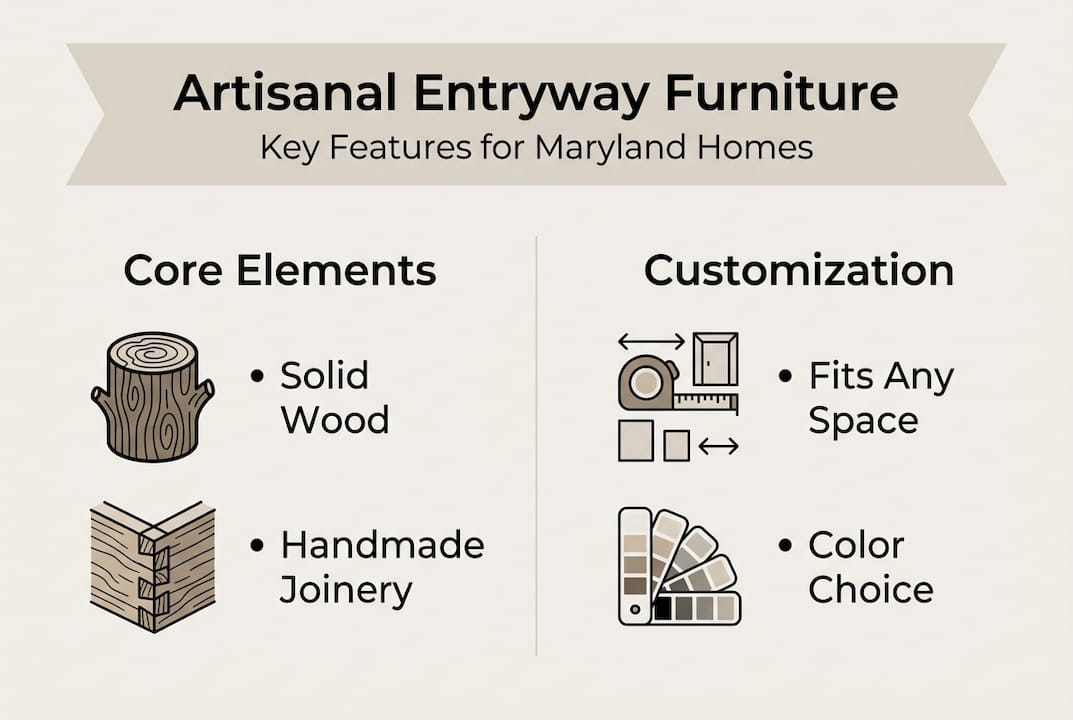
Key characteristics that define artisanal furniture:
- Hand-selected solid hardwoods chosen for specific structural properties
- Traditional joinery techniques that increase strength and allow future repairs
- Customized dimensions and features tailored to your exact spatial constraints
- Finishes applied by hand in multiple coats for depth and protection
- Design collaboration between artisan and homeowner throughout the process
The investment in artisanal furniture reflects a different value system. You’re purchasing decades of use, not temporary convenience. The initial cost spreads across a lifespan that often exceeds 50 years, making the per-year expense remarkably low compared to replacing cheap furniture every few years.
Durability: the backbone of artisanal entryway furniture
Your entryway endures more abuse than any other furniture location. Wet boots, heavy bags, constant traffic, and Maryland’s humidity swings demand exceptional structural integrity. Artisans engineer durability through deliberate material selection and construction methods that most homeowners never consider.
The Janka hardness scale measures wood’s resistance to denting and wear. Entryway furniture requires woods with ratings above 1000 to withstand daily impacts. White oak scores 1360, making it ideal for benches and storage units. Soft woods like pine (690) show damage quickly under entryway conditions.
| Wood species | Janka rating | Entryway suitability | Maintenance needs |
|---|---|---|---|
| White oak | 1360 | Excellent for all applications | Annual oiling, humidity control |
| Hard maple | 1450 | Superior for high-traffic benches | Minimal, resists moisture well |
| Cherry | 995 | Good for decorative elements | Regular dusting, avoid direct sun |
| Walnut | 1010 | Adequate with proper finish | Moderate, benefits from waxing |
| Pine | 690 | Poor, dents easily | High maintenance, frequent refinishing |
Traditional joinery techniques multiply structural strength. Mortise-and-tenon joints create mechanical locks that tighten as wood expands and contracts with humidity changes. Dovetails in drawer construction prevent separation even after decades of use. These methods require significant skill and time but eliminate the weak points inherent in screwed or glued assemblies.
Maryland’s indoor humidity fluctuations pose the greatest threat to wood furniture longevity. Maintaining 40-45% relative humidity prevents the expansion and contraction cycles that crack joints and split panels. Artisans account for seasonal movement in their designs, incorporating floating panels and strategic grain orientation.
Pro Tip: Install a whole-house humidifier or use room humidifiers near your entryway furniture during winter months when heating systems dry indoor air. This single step can double your furniture’s lifespan by preventing stress cracks.
Finish quality determines surface durability. Artisans apply multiple thin coats of oil or varnish, allowing each layer to cure fully. This builds depth and protection that resists water rings, scratches, and UV damage. The finish also allows for spot repairs rather than complete refinishing when minor damage occurs.
Durability factors to prioritize:
- Hardwood selection with Janka ratings exceeding 1000 for surfaces that contact bodies and objects
- Mortise-and-tenon or dovetail joinery rather than pocket screws or biscuit joints
- Hand-rubbed finishes applied in 4-6 coats for maximum protection
- Design features that accommodate seasonal wood movement without stress
- Humidity control systems to maintain stable 40-45% relative humidity year-round
The 50-year lifespan common to well-maintained artisanal furniture isn’t marketing hype. It’s the natural result of combining appropriate materials, proven construction methods, and environmental awareness. Durable custom furniture craftsmanship transforms your entryway from a temporary solution into a permanent architectural feature.
Custom design solutions for Maryland entryways
Maryland homes present unique spatial challenges that mass-produced furniture simply can’t address. Narrow Victorian entryways, awkward Colonial layouts, and modern open-plan configurations each demand different approaches. Artisans excel at transforming these constraints into opportunities for creative problem-solving.
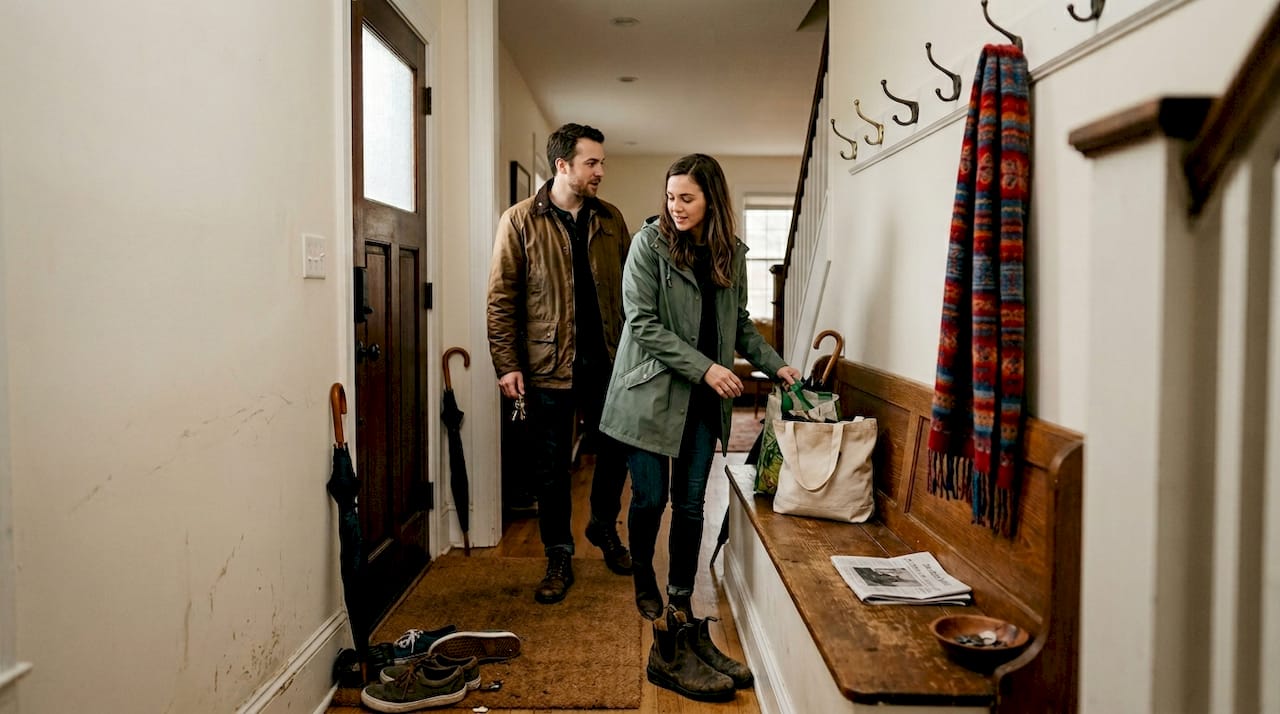
Shallow entryways measuring around 2 feet deep create the most common challenge. Standard furniture won’t fit without blocking traffic flow. Artisans integrate storage and benches in shallow depths by designing vertical storage that maximizes wall space while keeping the footprint minimal. Pull-out shoe racks, fold-down benches, and stacked cubbies compress functionality into compact dimensions.
Matching existing flooring materials creates visual continuity that makes entryways feel larger and more cohesive. When your furniture base uses the same wood species and finish as your floors, the transition becomes seamless. This technique works particularly well in open-plan homes where the entryway flows directly into living spaces.
| Entryway type | Common challenges | Custom design solutions | Key features |
|---|---|---|---|
| Shallow (under 2 feet) | Limited depth, traffic blocking | Vertical storage, fold-down benches, wall-mounted hooks | Space efficiency, multi-use elements |
| Awkward angles | Non-square walls, odd corners | Custom-fitted pieces, angled backs, wraparound designs | Precision measurements, creative geometry |
| Standard (2-4 feet) | Generic needs, aesthetic matching | Integrated seating and storage, coordinated finishes | Balanced proportions, home style harmony |
| Open-plan | Visual continuity, defined zones | Furniture as subtle dividers, matching materials | Seamless transitions, architectural integration |
The artisan design process follows a structured approach:
- Initial consultation where you describe daily entryway use patterns and frustrations
- Precise measurement of the space including ceiling height, wall angles, and traffic flow
- Design sketches incorporating your functional requirements and aesthetic preferences
- Material selection based on durability needs, existing finishes, and budget parameters
- Construction with regular progress updates and opportunities for adjustments
- Installation and final fitting to ensure perfect integration with your space
Pro Tip: Document your entryway routine for a week before meeting with an artisan. Note where items pile up, what storage you lack, and which activities feel awkward. This concrete information helps artisans design solutions for real problems rather than assumed needs.
Awkward spaces become signature features through artisanal problem-solving. That odd corner under the stairs transforms into a custom coat closet. The narrow wall beside your door becomes a vertical mail and key organizer. Artisans view spatial constraints as design parameters, not limitations.
Color and finish coordination extends beyond matching wood tones. Artisans consider your home’s architectural style, existing furniture, and personal aesthetic preferences. A Federal-style home might feature formal proportions and rich mahogany tones. A contemporary space could incorporate clean lines and natural oil finishes that highlight wood grain.
Entryway furniture design ideas emerge from collaboration between your vision and artisan expertise. You provide the lifestyle requirements and aesthetic direction. The artisan contributes technical knowledge about materials, construction methods, and spatial solutions. This partnership creates furniture that feels both personally meaningful and professionally executed.
Why investing in artisanal entryway furniture pays off
The upfront cost of artisanal furniture often surprises homeowners accustomed to retail pricing. Understanding the long-term value equation changes this perspective completely. You’re not buying furniture, you’re commissioning a functional art piece that serves your family for generations.
Artisanal furniture resists disposability culture through inherent quality that appreciates rather than depreciates. Well-maintained pieces often sell for more than their original cost decades later. The combination of solid construction, timeless design, and documented provenance creates genuine antiques that future generations treasure.
Maryland’s climate tests furniture durability through humid summers and dry winters. Mass-produced pieces using engineered wood products delaminate, warp, and fail within years under these conditions. Solid hardwood construction with proper joinery adapts to seasonal changes without structural compromise. Your investment maintains both function and appearance indefinitely with basic care.
Tangible and intangible returns on artisanal investment:
- Resale value that often exceeds original cost after 20-30 years of use
- Emotional attachment from owning a unique piece created specifically for your home
- Environmental impact reduction by eliminating the replacement cycle of disposable furniture
- Design uniqueness that distinguishes your home from generic retail interiors
- Repair and refinishing options that extend lifespan rather than requiring replacement
- Family legacy potential as pieces pass to children and grandchildren
The cost-per-year calculation reveals the true economy of artisanal furniture. A $3,000 custom entryway bench used for 50 years costs $60 annually. Compare this to replacing a $400 retail bench every 5 years, totaling $4,000 over the same period. The artisanal piece costs less while providing superior quality and personal significance.
Artisanal furniture transforms from purchase to investment when you consider its full lifecycle. The piece that greets you daily for decades becomes part of your home’s story, accumulating memories and patina that no factory can replicate. This emotional value, combined with structural longevity and potential appreciation, makes artisanal furniture one of the wisest home investments available.
Sustainability extends beyond environmental considerations. Artisanal furniture supports local craftsmen, preserves traditional skills, and strengthens community economic resilience. Your investment circulates within Maryland’s economy rather than enriching distant corporations. This local impact multiplies the value of your purchase beyond personal benefit.
Proper care in Maryland’s climate maintains artisanal furniture indefinitely. Annual oiling, humidity control, and prompt attention to minor damage prevent major repairs. These simple maintenance tasks become rituals that deepen your connection to the piece while protecting your investment.
Artisan furniture investment benefits compound over time as you avoid the hassle, expense, and waste of replacement cycles. Your entryway remains consistently functional and beautiful while retail furniture owners navigate constant upgrades and disappointments. This stability has psychological value that’s difficult to quantify but easy to experience.
Discover custom artisanal furniture with Furniture Design Group
Your Maryland home deserves entryway furniture that combines durability, personalization, and timeless design. Furniture Design Group crafts custom artisanal furniture solutions tailored to your specific spatial challenges and aesthetic preferences. Our family-owned company brings over 20 years of experience creating bespoke entryway pieces that withstand Maryland’s climate while enhancing your daily routines.
Explore our collections to see how traditional craftsmanship solves modern living challenges. Visit our showroom to experience the quality difference firsthand, discuss your entryway needs with experienced artisans, and begin designing furniture that serves your family for generations. Manage your design preferences and project details easily through your account management portal.
Frequently asked questions
What is artisanal furniture design?
Artisanal furniture design involves handcrafting custom pieces using quality solid hardwoods and traditional joinery techniques refined over generations. Each piece receives individual attention from skilled craftsmen who prioritize durability, personalization, and aesthetic excellence over production speed. The process emphasizes uniqueness through collaboration between artisan and homeowner, resulting in furniture tailored to specific spatial requirements and lifestyle needs. This approach creates heirloom-quality pieces that improve with age rather than deteriorating like mass-produced alternatives.
How does artisanal furniture differ from mass-produced furniture?
Artisanal furniture is created by skilled craftsmen who focus on quality materials, traditional construction methods, and customization for each client’s needs. Mass-produced furniture prioritizes manufacturing efficiency and cost reduction, typically using engineered wood products, mechanical fasteners, and standardized dimensions. The durability difference is substantial, with artisanal pieces often lasting 50+ years while retail furniture requires replacement within 5-10 years. Artisanal work also offers design flexibility to solve unique spatial challenges that generic furniture cannot address.
Why is durability important for entryway furniture?
Entryways experience the highest traffic and most severe environmental conditions in your home, with wet boots, heavy bags, and constant use testing furniture strength daily. Durable construction using hardwoods rated above 1000 on the Janka scale ensures your furniture withstands these demands without showing damage. Maryland’s humidity fluctuations add stress through expansion and contraction cycles that crack weak joints and split inferior materials. Prioritizing durability means your entryway furniture maintains appearance and function for decades rather than requiring frequent replacement.
How can I optimize space with custom artisanal entryway furniture?
Custom artisanal furniture solves spatial constraints through tailored designs that mass production cannot match. For shallow entryways around 2 feet deep, artisans integrate storage and benches in compact footprints using vertical space and multi-use elements like fold-down benches. Matching your existing flooring materials creates visual continuity that makes small spaces feel larger and more cohesive. Working directly with artisans who specialize in problem-solving awkward angles and non-standard dimensions transforms spatial limitations into opportunities for creative, functional design that enhances your home’s unique character.