
Your entryway sets the tone for your entire home, yet many Maryland homeowners struggle to balance personal style with quality craftsmanship and functional design. Choosing decor that highlights artisanal furniture while meeting daily storage needs can feel overwhelming, especially when considering resale value and first impressions. This guide walks you through proven criteria, top handcrafted options, style comparisons, and a clear decision framework to help you create an entryway that showcases both beauty and practical function. You’ll discover how thoughtful decor choices can transform your space and even boost your home’s market appeal.
Table of Contents
- Key takeaways
- Criteria for choosing personalized entryway decor
- Top artisanal furniture and decor options for your entryway
- Comparing entryway decor styles and materials for Maryland homes
- How to decide on the perfect entryway decor for your home
- Explore artisanal furniture to elevate your Maryland entryway
- Frequently asked questions about entryway decor
Key Takeaways
| Point | Details |
|---|---|
| Craftsmanship matters | Choose pieces with visible joinery, hand finished surfaces, and solid construction to ensure long lasting quality. |
| Functional storage design | Assess daily traffic and storage needs and select durable materials with hooks, cubbies, or drawers while measuring space to avoid crowding. |
| Lighting and texture | Plan for natural light and fixtures that highlight storage and add depth with textures like wood, baskets, and metal accents. |
| Market value impact | Entryway upgrades can boost home value by two thousand three hundred to six thousand five hundred dollars and reduce time on market by as much as ten days. |
Criteria for choosing personalized entryway decor
Selecting the right entryway decor requires evaluating several key factors that balance aesthetics with functionality. Understanding these criteria helps you make confident decisions that align with your personal taste and home’s architectural style.
Craftsmanship stands as the foundation of quality entryway furniture. Look for pieces with visible joinery, hand-finished surfaces, and solid construction that will last decades. Artisanal furniture tells a story through its details, from the grain patterns in reclaimed wood to the patina on hand-forged metal accents. These elements create visual interest that mass-produced items simply cannot replicate.
Functional criteria matter just as much as beauty. Your entryway must handle daily traffic, so prioritize durable materials that resist scratches and moisture. Consider your household’s storage needs: do you need hooks for multiple coats, cubbies for shoes, or drawers for keys and mail? Measure your space carefully to ensure furniture fits without crowding walkways. A bench should allow comfortable seating while leaving at least 36 inches of clearance for movement.
Aesthetic considerations tie everything together. Choose pieces that complement your home’s existing style, whether that’s rustic farmhouse, sleek modern, or classic traditional. Pay attention to color palettes, selecting finishes that harmonize with adjacent rooms. Texture adds depth, so mix smooth wood with woven baskets or metal accents. Lighting transforms ambiance, so plan for both natural light and strategic fixtures that highlight your entryway storage and organization solutions.
The Maryland real estate market rewards thoughtful entryway investments. Entry refreshes yield $2.3K to $6.5K value increases and can reduce time on market by up to 10 days. Even if you’re not selling soon, these upgrades enhance daily living while protecting future resale potential.
Balancing personal taste with broader appeal requires strategy. Choose timeless pieces with character rather than trendy items that may feel dated quickly. Neutral base colors allow flexibility, while accent pieces let you express personality without overwhelming buyers if you eventually sell.
Pro Tip: Before purchasing any entryway furniture, photograph your space from multiple angles and bring measurements when shopping. This prevents costly mistakes and helps artisans create custom pieces that fit perfectly.
- Evaluate joinery quality and finish details on handcrafted pieces
- Measure doorways and clearance paths before selecting furniture sizes
- Test durability by checking wood thickness and hardware strength
- Consider seasonal needs like wet coat storage during Maryland winters
- Plan lighting placement to eliminate shadows and highlight architectural features
Top artisanal furniture and decor options for your entryway
Handcrafted furniture transforms ordinary entryways into welcoming spaces that reflect quality and attention to detail. These specific pieces combine form and function while showcasing the artisanal craftsmanship Maryland homeowners value.
Benches with hand-carved details serve dual purposes as seating and storage. Look for pieces with lift-top compartments or built-in cubbies underneath. Solid wood construction ensures stability for daily use, while carved accents or turned legs add visual interest. Consider benches with cushioned tops for comfort, especially if family members use them to put on shoes. The best designs incorporate both open and closed storage, giving you flexibility for displaying baskets or hiding clutter.
Console tables blending metal and wood create striking focal points. Blacksmith-forged iron legs paired with reclaimed wood tops offer industrial elegance that works in both traditional and contemporary homes. These pieces provide surface space for keys, mail, and decorative items while maintaining a slim profile that doesn’t crowd narrow entryways. Look for tables with lower shelves for additional storage or display opportunities.
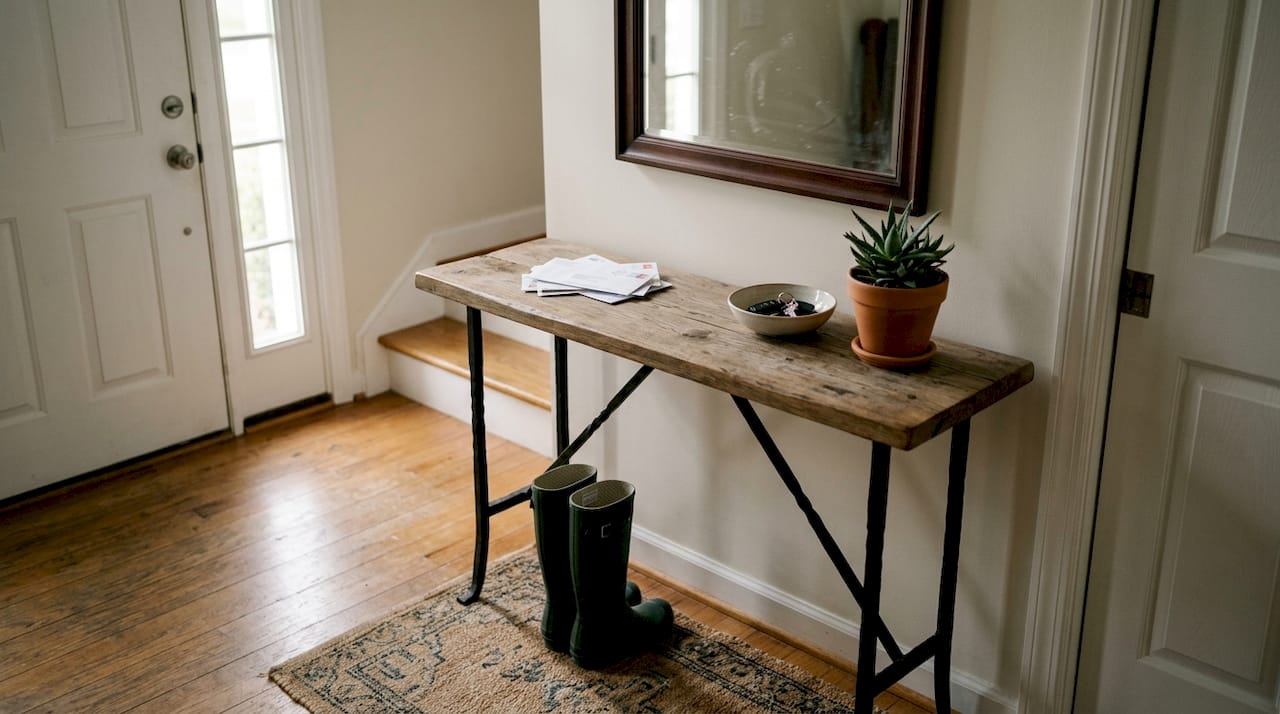
Storage solutions extend beyond furniture to include handcrafted coat racks and ottomans. Wall-mounted racks with hand-forged hooks add vertical storage without consuming floor space. Ottomans upholstered in durable fabrics provide hidden storage for scarves and gloves while offering extra seating when guests arrive. Choose pieces that complement your primary furniture while adding texture through materials like leather, linen, or wool.
Accent rugs from local artisans anchor your entryway design while protecting floors from dirt and moisture. Hand-woven or hand-knotted rugs bring warmth and color, creating defined zones in open floor plans. Select patterns and colors that hide everyday wear while coordinating with your overall palette. Natural fiber rugs like jute or sisal work well in high-traffic areas and complement wooden furniture beautifully.
Lighting fixtures make or break entryway ambiance. Handcrafted pendant lights or sconces with artisan glass shades cast interesting shadows while providing necessary illumination. Consider fixtures with dimmer switches to adjust brightness for different times of day. The right lighting highlights your artisan furniture collections and creates a welcoming glow that greets you home.
Personal decor items complete your entryway story. Display handmade pottery, framed local artwork, or sculptural pieces that reflect your interests. These elements add personality without cluttering, especially when rotated seasonally. Remember that strategic entryway improvements add measurable value to Maryland homes.
Pro Tip: Source multiple pieces from the same artisan or workshop to create cohesive design flow. Matching wood tones and construction techniques tie disparate furniture types together visually.
- Hand-carved benches with integrated storage compartments
- Metal and wood console tables with slim profiles
- Wall-mounted coat racks featuring hand-forged hooks
- Upholstered ottomans offering hidden storage solutions
- Hand-woven accent rugs in durable natural fibers
- Artisan-crafted lighting fixtures with custom glass or metal work
Comparing entryway decor styles and materials for Maryland homes
Understanding how different styles and materials perform helps you select decor that matches both your aesthetic preferences and practical requirements. This comparison clarifies the trade-offs between popular options.
Rustic style emphasizes natural wood grains, distressed finishes, and handcrafted imperfections that add character. Reclaimed barn wood brings history into your home, with nail holes and weathering that tell stories. This style pairs beautifully with Maryland’s historic architecture and countryside settings. Maintenance remains minimal, as new scratches blend into existing patina. However, rustic pieces may feel too casual for formal homes or contemporary spaces.
Modern style features clean lines, minimal ornamentation, and mixed materials like metal, glass, and smooth wood. Walnut or maple with natural oil finishes showcase wood beauty without heavy staining. Modern pieces work well in open floor plans and newer construction. They’re easy to clean and maintain their appearance with simple dusting. The challenge comes in finding truly handcrafted modern pieces, as the style often leans toward manufactured precision.
Traditional style incorporates classic joinery, turned details, and rich wood tones like cherry or mahogany. These pieces complement older Maryland homes with period architecture. Traditional furniture often includes more ornate storage solutions like drawers with dovetail joints and cabinet doors with raised panels. Maintenance requires occasional polishing to maintain luster. Traditional pieces typically cost more due to complex construction techniques.
Material choices significantly impact durability and ambiance. Reclaimed wood offers sustainability and unique character but may require stabilization to prevent warping. New hardwoods provide consistency and can be finished to your exact specifications. Metal accents add industrial edge and exceptional durability, though they may feel cold without wood or fabric to soften them. Upholstered elements introduce comfort and color but need protection from moisture in entryways.
| Style | Cost Range | Maintenance | Durability | Resale Impact |
|---|---|---|---|---|
| Rustic | $800-$2,500 | Low | High | Strong appeal in rural/suburban areas |
| Modern | $1,000-$3,000 | Low | High | Broad appeal, especially in urban markets |
| Traditional | $1,200-$3,500 | Medium | Very High | Strongest in historic neighborhoods |
| Mixed Materials | $900-$2,800 | Medium | High | Versatile appeal across buyer types |
Maryland home architecture varies from historic colonials to modern townhomes, so matching your decor style to your home’s character creates harmony. Buyer expectations in your specific neighborhood also matter. Research recent sales to understand what styles command premium prices in your area. That said, quality craftsmanship transcends style trends, and thoughtful entryway refreshes consistently add value across Maryland markets.
The best approach often combines styles strategically. A modern console table with traditional wood tones bridges style gaps, while rustic accents warm up sleek modern spaces. Browse handcrafted furniture styles to see how artisans blend techniques for unique results.
- Rustic style works best with historic or countryside Maryland homes
- Modern pieces suit contemporary construction and minimalist preferences
- Traditional furniture complements period architecture and formal spaces
- Reclaimed wood adds character but requires careful selection for stability
- Metal accents increase durability while adding visual contrast
How to decide on the perfect entryway decor for your home
Making confident decor decisions becomes straightforward when you follow a systematic process that integrates everything you’ve learned about criteria, options, and style comparisons.
Start by assessing your specific needs and constraints. Measure your entryway dimensions precisely, noting ceiling height, wall space, and traffic flow patterns. List your storage requirements based on household size and lifestyle. A family of four needs more coat hooks and shoe storage than a couple. Photograph your space in different lighting conditions to reference while shopping.
Define your style preferences by creating a mood board with images that resonate with you. Notice common threads in colors, materials, and design elements. This clarity helps artisans understand your vision when discussing custom pieces. Consider your home’s existing architecture and adjacent room styles to ensure cohesion.
Set a realistic budget that balances immediate costs with long-term value. Quality handcrafted furniture costs more upfront but lasts decades and maintains resale value. Remember that strategic entryway investments return $2.3K to $6.5K in Maryland markets. Allocate funds proportionally, spending more on primary pieces like benches or console tables and less on accessories you can change easily.
Source authentic artisanal pieces by visiting local workshops and showrooms where you can see construction quality firsthand. Ask about wood species, joinery methods, and finish options. Local craftspeople often customize dimensions and details to fit your exact space. This personalization justifies higher costs compared to mass-produced alternatives.
Plan your lighting strategy before finalizing furniture placement. Natural light changes throughout the day, so supplement with layered artificial lighting. Install overhead fixtures for general illumination, add sconces for ambient glow, and consider accent lights to highlight specific furniture pieces or artwork.
Incorporate texture through varied materials and finishes. Pair smooth wood with woven baskets, metal hooks with fabric cushions, and hard surfaces with soft rugs. This layering creates visual interest and tactile appeal that makes your entryway feel intentionally designed rather than randomly furnished.
Before making final purchases, use this checklist to confirm your decisions align with your goals:
- Verify all measurements account for door swings and traffic clearance
- Confirm furniture style matches your home’s architecture and adjacent rooms
- Ensure storage capacity meets your household’s daily needs
- Check that materials and finishes suit your maintenance preferences
- Calculate total costs including delivery and installation
- Review artisan credentials and warranty terms for custom pieces
- Plan lighting placement and electrical requirements
- Consider seasonal needs like wet coat storage during Maryland winters
Pro Tip: Order samples of wood finishes and fabric swatches before committing to custom pieces. View them in your actual entryway lighting to ensure colors and textures work as expected.
Explore comprehensive entryway decor solutions that bring together furniture, storage, and design expertise. Professional guidance ensures your selections work together harmoniously while meeting both aesthetic and functional requirements. Understanding how Maryland entryway upgrades benefit your home value helps justify investments in quality craftsmanship.
Explore artisanal furniture to elevate your Maryland entryway
Transforming your entryway with handcrafted furniture that showcases quality craftsmanship starts with finding the right partner who understands both design and function.
Furniture Design Group specializes in creating artisanal, custom-built pieces perfect for Maryland entryways. With over 20 years of experience crafting bespoke furniture, they understand how to balance beauty with the practical demands of daily use. Their approach centers on quality materials and traditional construction techniques that ensure your investment lasts for generations.
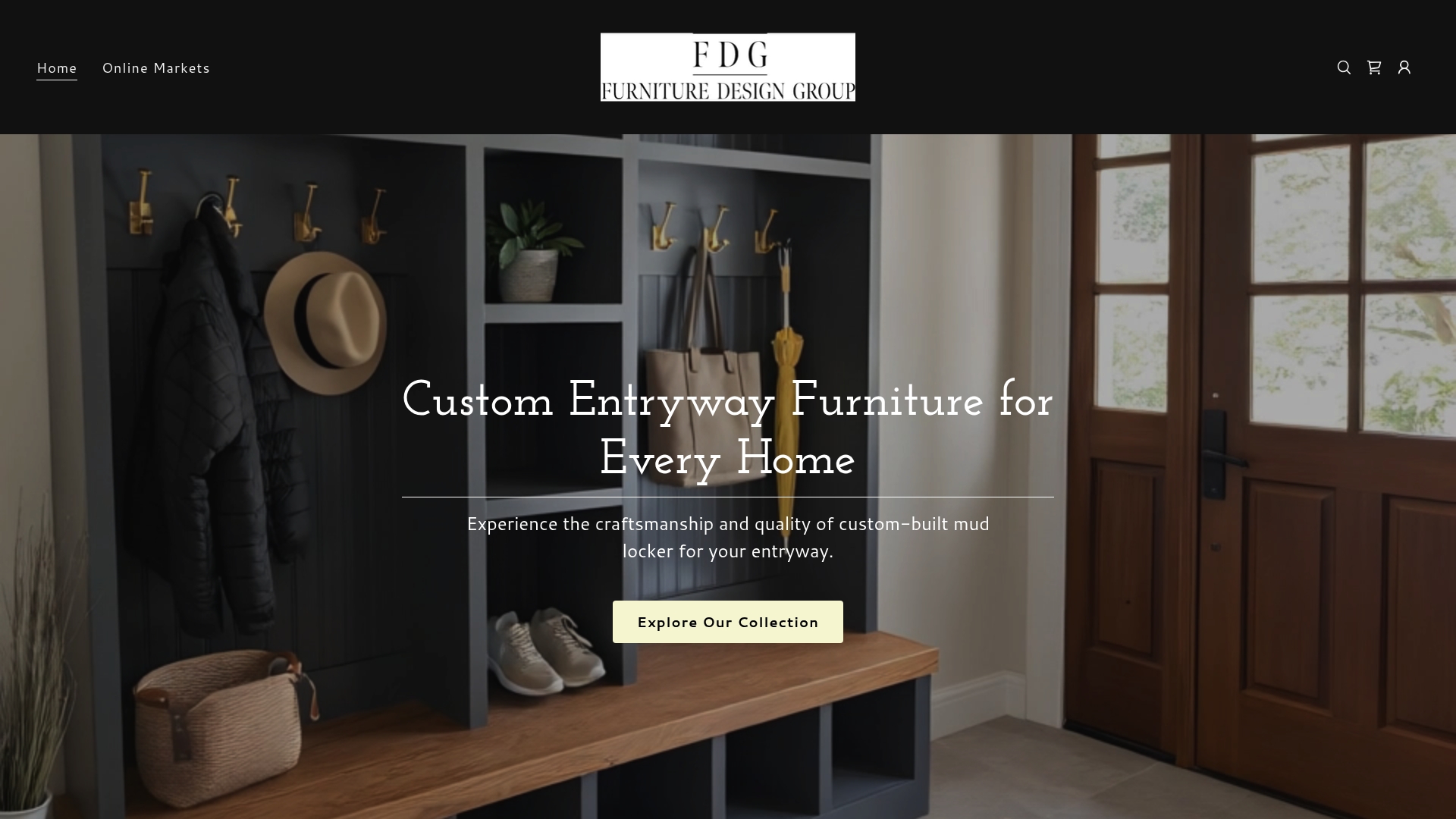
Explore customizable options through their handcrafted furniture collections designed specifically for entryway applications. Whether you need a compact solution for a narrow hallway or a comprehensive system with seating, storage, and display space, their team works directly with you to create pieces that fit your exact specifications. Professional guidance throughout the design process ensures every detail aligns with your style preferences and functional requirements.
Visit their showroom to see craftsmanship quality firsthand and discuss how custom solutions can transform your entryway. Their family-owned approach means personalized attention and flexibility that larger retailers cannot match. Easily manage your orders and track custom furniture progress through secure account access for custom orders, making the entire experience seamless from consultation through delivery.
Frequently asked questions about entryway decor
What are the best materials to highlight artisanal craftsmanship in entryway decor?
Solid hardwoods like oak, walnut, and cherry showcase grain patterns and joinery details that define quality craftsmanship. Reclaimed wood adds character through weathering and history, while hand-forged metal accents provide contrast and durability. Natural finishes like oil or wax allow wood beauty to shine through better than heavy stains.
How can entryway decor increase home value in Maryland?
Thoughtful entryway improvements create strong first impressions that influence buyer perceptions of overall home quality. Strategic refreshes using quality materials and functional design can add thousands in appraised value while reducing time on market. The key lies in choosing timeless pieces with broad appeal rather than highly personalized or trendy items.
Which lighting options best complement handcrafted furniture in entryways?
Layered lighting works best, combining overhead fixtures for general illumination with wall sconces for ambient glow. Pendant lights with artisan glass shades add visual interest while highlighting furniture details. Install dimmer switches to adjust brightness for different times of day, and position lights to eliminate shadows in functional areas like mirrors and seating.
How to balance style and storage needs in a small entryway?
Prioritize multi-functional pieces like benches with built-in storage or console tables with shelves underneath. Use vertical space with wall-mounted hooks and narrow shelving that doesn’t consume floor area. Choose furniture with slim profiles and open bases that maintain sight lines, making small spaces feel larger while still providing necessary storage.
Are locally made pieces more beneficial for Maryland homeowners?
Local artisans understand Maryland’s climate challenges and architectural styles, creating pieces suited to regional conditions. Supporting local craftspeople also means easier customization, faster delivery, and the ability to see quality firsthand before purchasing. These pieces often appreciate in value as artisan reputations grow, unlike mass-produced furniture that depreciates immediately.