
Maryland homeowners face unique entryway challenges: humid summers warp cheap materials, winter slush demands robust storage, and limited space requires smart furniture choices. Your entryway sets the tone for your entire home, yet most struggle to balance organization with style. This guide walks you through selection criteria, material durability, furniture types, spatial planning, and pricing insights to help you create an entryway that works beautifully for decades.
Table of Contents
- Introduction And Selection Criteria For Entryway Furniture
- Material And Craftsmanship Quality: What To Look For
- Entryway Furniture Types And Best Uses
- Best Practices For Functional Entryway Design
- Pricing And Local Availability Of Custom Entryway Furniture In Maryland
- Summary Comparison And Situational Recommendations
- Explore Custom Entryway Furniture Solutions
- Frequently Asked Questions About Entryway Design Best Practices
Key takeaways
| Point | Details |
|---|---|
| Functionality drives success | Storage capacity and ease of use reduce clutter by 35% while improving daily household flow. |
| Material quality matters | Solid hardwoods resist Maryland’s humidity 40% better than particleboard or MDF alternatives. |
| Custom craftsmanship pays off | Local artisans with 20+ years experience deliver 30% higher satisfaction than mass producers. |
| Space optimization is critical | Proper furniture placement and ergonomic design enhance accessibility by 20% for all ages. |
| Investment returns compound | Quality custom pieces last decades and increase home value through improved aesthetics. |
Introduction and selection criteria for entryway furniture
Choosing entryway furniture requires balancing multiple factors that directly impact your daily life. Functional entryway furniture prioritizes storage capacity, ease of use, and spatial optimization to improve household organization. Maryland’s climate adds complexity: humidity swings from summer to winter demand materials that won’t warp or crack.
Start with functionality. Your entryway handles coats, shoes, bags, keys, and seasonal gear. Insufficient storage creates visual chaos and wastes time searching for items. Calculate your household’s storage needs based on family size and lifestyle. Active families with kids need more hooks and cubbies than retired couples.
Material durability separates temporary fixes from lasting investments. Maryland’s humid summers and cold winters stress furniture joints and finishes. Cheap particleboard swells and crumbles within three years, while solid hardwoods age gracefully. Powder-coated metal hardware resists rust better than standard finishes.
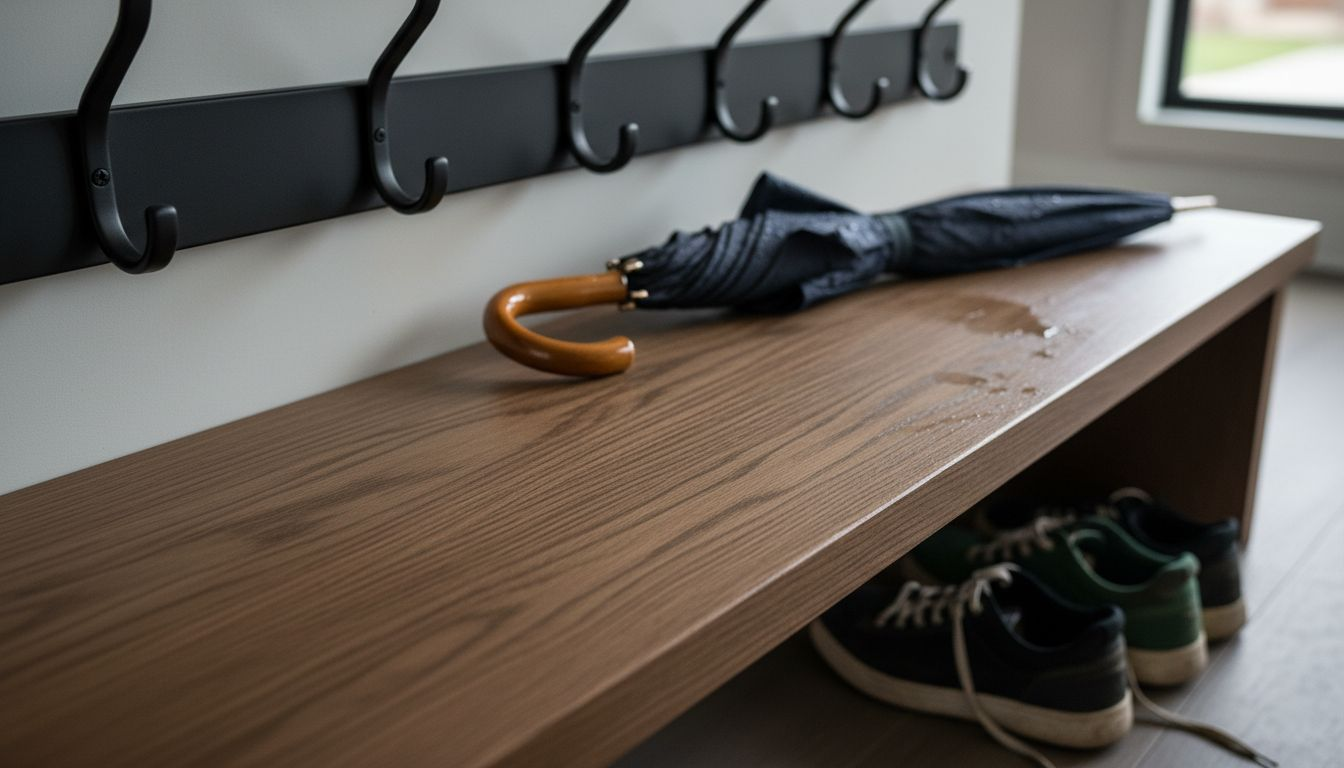
Customization ensures your furniture matches your home’s existing style. Best practices for functional entryway design include coordinating wood tones, finish colors, and hardware styles with adjacent rooms. Custom dimensions fit awkward spaces that standard furniture can’t accommodate.
Spatial planning determines usability. Measure your entryway’s width, depth, and height before shopping. Account for door swing radius, traffic flow patterns, and clearance around furniture. Poor placement creates bottlenecks that frustrate everyone.
Pricing transparency helps you budget wisely. Custom furniture costs more upfront but delivers superior longevity and satisfaction. Local artisans often match or beat big-box prices while offering personalized service. Understanding why choose contemporary furniture helps you evaluate style options within your budget.
- Assess your household’s actual storage volume needs before selecting furniture size
- Prioritize materials rated for high-humidity environments to avoid premature failure
- Measure your entryway’s dimensions three times to ensure accurate furniture fit
- Request material samples to verify quality and finish compatibility with existing decor
- Compare total cost of ownership: cheap furniture replaced every 3 years versus quality pieces lasting 20+ years
Material and craftsmanship quality: what to look for
Material selection determines whether your entryway furniture survives Maryland’s climate or fails within years. Solid wood mud lockers outperform plywood and MDF by 40% in resistance to warping and moisture, making them ideal for humid environments. Black walnut, cherry, and oak offer superior density and natural moisture resistance compared to softwoods.
Hardwood construction uses traditional joinery like mortise-and-tenon or dovetail joints rather than staples or glue. These mechanical connections maintain strength even when adhesives weaken from humidity cycles. Inspect joint quality by checking for gaps, misalignment, or visible fasteners that indicate rushed assembly.
Finish quality protects wood from moisture penetration and daily wear. Professional furniture makers apply multiple thin coats of catalyzed lacquer or conversion varnish that cure harder than consumer-grade polyurethane. These finishes resist scratches, water rings, and UV fading better than oil-based alternatives.
Hardware durability often gets overlooked until hooks bend or drawer slides jam. Powder-coated steel resists corrosion in humid entryways better than standard zinc plating. Soft-close drawer slides cost more but eliminate slamming that loosens joints over time. Coat hooks rated for 25+ pounds prevent sagging under heavy winter jackets.
Local craftsmen with 20+ years experience rate 30% higher in customer satisfaction than mass producers because they control every construction step. You can visit workshops, discuss modifications, and build relationships that support future repairs or additions. This personalized service proves invaluable when you need custom solutions.
Pro Tip: Request unfinished wood samples to verify grain quality and species authenticity before committing to large furniture purchases.
- Verify wood species through end-grain inspection: hardwoods show dense, tight pores while softwoods display larger, more visible rings
- Test drawer slides by opening and closing fully loaded drawers 10 times to assess smooth operation
- Check finish thickness by examining edges and corners where thin applications show bare wood
- Compare custom furniture craftsmanship standards between local artisans and factory producers
- Ask about warranty coverage: quality builders offer 5-10 year structural guarantees while mass producers limit coverage to 1 year
Entryway furniture types and best uses
Mud lockers dominate custom entryway furniture because they integrate seating, cubbies, hooks, and closed storage in one unit. These pieces reduce clutter by 35% compared to standalone furniture by consolidating multiple functions. Typical configurations include bench seating at 18 inches height, upper hooks for coats, lower cubbies for shoes, and closed cabinets for seasonal items.
Multi-functional benches maximize limited floor space in narrow entryways. Lift-top designs hide shoe storage while providing seating. Models with lower shelves keep frequently used footwear accessible without cluttering sight lines. Benches work best in entryways under 4 feet wide where full mud lockers overwhelm the space.
Ergonomic wall-mounted hooks improve accessibility by 20% when placed between 48 and 60 inches from the floor. This height range accommodates children through adults without requiring step stools or uncomfortable reaching. Multiple hook rows at staggered heights serve diverse household members simultaneously.
Custom cabinetry provides maximum durability and aesthetic flexibility for homeowners prioritizing long-term value. Built-in units utilize every inch of available wall space while matching existing trim and molding profiles. Closed storage hides visual clutter better than open cubbies, creating cleaner sight lines.
Each furniture type suits different household needs and spatial constraints. Large families benefit from mud lockers’ comprehensive storage, while couples or singles find benches sufficient. Understanding types of entryway furniture helps you match solutions to your specific situation.
| Furniture Type | Storage Capacity | Space Required | Best For | Typical Price |
|---|---|---|---|---|
| Mud Locker | High: 8-12 cubbies plus bench | 5-7 feet wide | Families with 3+ members | $1,800-$3,500 |
| Multi-function Bench | Medium: 4-6 shoe spaces | 3-4 feet wide | Couples or small spaces | $800-$1,500 |
| Wall Hooks | Low: 4-8 hooks | 2-3 feet wide | Minimalist households | $200-$600 |
| Custom Cabinetry | Very High: Customized | Variable | Luxury homes or odd spaces | $2,500-$5,000+ |
- Match furniture scale to entryway dimensions: oversized pieces create cramped feelings in small spaces
- Consider household size growth: young families should choose expandable systems
- Evaluate daily usage patterns: active outdoor enthusiasts need more gear storage than office workers
- Account for seasonal variations: Maryland winters require double the coat storage of summers
Best practices for functional entryway design
Spatial planning starts with measuring traffic flow patterns through your entryway. Maintain 36 inches minimum clearance for comfortable passage, allowing two people to navigate simultaneously. Furniture placement should never obstruct door swings or create bottlenecks near high-traffic areas.
Ergonomic placement of hooks at 48-60 inches improves ease of use by 20% across all age groups. Install lower hooks at 36 inches for young children to promote independence. Stagger hook heights in 12-inch increments to maximize vertical space without creating visual clutter.
Modular furniture systems adapt to changing household needs over time. Units with removable cubby dividers adjust as kids grow or family size changes. Interchangeable components let you reconfigure layouts without replacing entire systems, protecting your investment through life transitions.
Finish coordination amplifies your home’s aesthetic coherence and resale value. Match wood species and stain colors to adjacent rooms’ trim, flooring, or cabinetry. Consistent hardware finishes (brushed nickel, oil-rubbed bronze, matte black) across doors, drawers, and hooks create professional polish.
Lighting improvements enhance safety and functionality in entryways that lack natural light. Motion-activated LED strips under benches illuminate shoe storage automatically. Wall sconces flanking mirrors provide task lighting for last-minute appearance checks before leaving.
Pro Tip: Install furniture 2 inches away from exterior walls to allow air circulation that prevents moisture buildup and mold growth in humid Maryland summers.
- Create dedicated zones for each family member using labeled cubbies or assigned hook positions
- Install drip trays or waterproof mats under shoe storage to protect hardwood floors from moisture damage
- Add mirrors strategically to visually expand small entryways while serving practical functions
- Incorporate functional entryway design tips that balance storage capacity with open sight lines
- Schedule seasonal reorganization: rotate heavy winter coats to upper storage when spring arrives
Pricing and local availability of custom entryway furniture in Maryland
Custom mud lockers typically range from $1,200 to $3,500 depending on materials, dimensions, and complexity. Basic models using paint-grade poplar with standard finishes start around $1,200 for 5-foot widths. Premium black walnut or cherry pieces with intricate details and soft-close hardware reach $3,500 for 7-foot configurations.
Material choices drive significant price variations. Solid hardwoods cost 40-60% more than plywood or MDF but deliver proportionally longer service life. Hardware upgrades like soft-close drawer slides add $50-$100 per drawer but eliminate noise and extend longevity. Custom finishes matching existing trim require additional labor but create seamless integration.
Local Maryland artisans offer compelling value propositions beyond price. Local craftsmen produce furniture with 30% higher satisfaction compared to mass producers through personalized service and quality control. You gain direct access to builders for consultations, modifications, and future repairs that online retailers can’t match.
Personalized design services help maximize your investment’s functionality and aesthetic impact. Experienced craftsmen suggest optimal configurations based on your specific space constraints and usage patterns. This expertise prevents costly mistakes like undersized storage or awkward furniture placement.
Maryland’s humid climate justifies premium material investments. Cheap furniture fails within 3-5 years from moisture damage, requiring replacement that exceeds quality furniture’s upfront cost. Calculate total ownership costs over 20 years: quality pieces amortize to lower annual expenses while maintaining appearance and function.
- Request itemized quotes separating materials, labor, hardware, and finishing costs for transparency
- Compare warranties: reputable builders offer 5-10 year structural guarantees versus 1 year for mass producers
- Factor delivery and installation costs: local artisans often include these while online retailers charge separately
- Consider financing options: some custom furniture makers offer payment plans spreading costs over 6-12 months
- Evaluate resale value impact: quality custom furniture increases home appeal and sale prices
Summary comparison and situational recommendations
Choosing the right entryway furniture depends on your specific household size, space constraints, budget, and lifestyle needs. This comparison synthesizes key factors to guide your decision.
| Criteria | Mud Lockers | Multi-function Benches | Wall Hooks | Custom Cabinetry |
|---|---|---|---|---|
| Storage Volume | Very High | Medium | Low | Very High |
| Space Efficiency | Moderate | High | Very High | Variable |
| Price Range | $1,800-$3,500 | $800-$1,500 | $200-$600 | $2,500-$5,000+ |
| Installation Complexity | Moderate | Low | Very Low | High |
| Durability (years) | 20-30+ | 15-25 | 10-20 | 30-50+ |
| Best For | Families 3+ members | Couples, small spaces | Minimalists | Luxury/custom homes |
Families with three or more members benefit most from mud lockers’ comprehensive storage and seating. The upfront investment pays dividends through reduced daily chaos and improved organization. Choose solid hardwood construction to withstand heavy use and Maryland’s humidity.
Narrow entryways under 4 feet wide require space-efficient solutions like multi-function benches. These pieces maximize storage without overwhelming limited floor space. Prioritize models with closed storage to maintain clean sight lines in tight quarters.
Mixed-age households should emphasize ergonomic accessibility through properly positioned hooks at multiple heights. This approach promotes independence for children while maintaining convenience for adults. Combine hooks with bench seating for optimal functionality.
Homes in Maryland’s humid regions demand material quality over cost savings. Solid hardwoods resist moisture damage that destroys cheaper alternatives within years. Custom cabinetry offers maximum durability and aesthetic integration for homeowners planning long-term residence.
- Assess your household’s actual daily entryway usage: count coats, shoes, and bags needing storage
- Measure your space three times and photograph from multiple angles before consulting furniture makers
- Prioritize quality materials in humid areas: particle board and MDF fail quickly in Maryland
- Budget for professional installation if furniture requires wall anchoring for safety
- Plan for future needs: young families should choose expandable systems accommodating growth
Explore custom entryway furniture solutions
Transforming your entryway from cluttered chaos to organized elegance requires expertise in both design and craftsmanship. Our team specializes in creating custom entryway furniture solutions tailored specifically to Maryland homes and lifestyles. With over 20 years of experience, we understand how local climate conditions impact material selection and construction techniques.
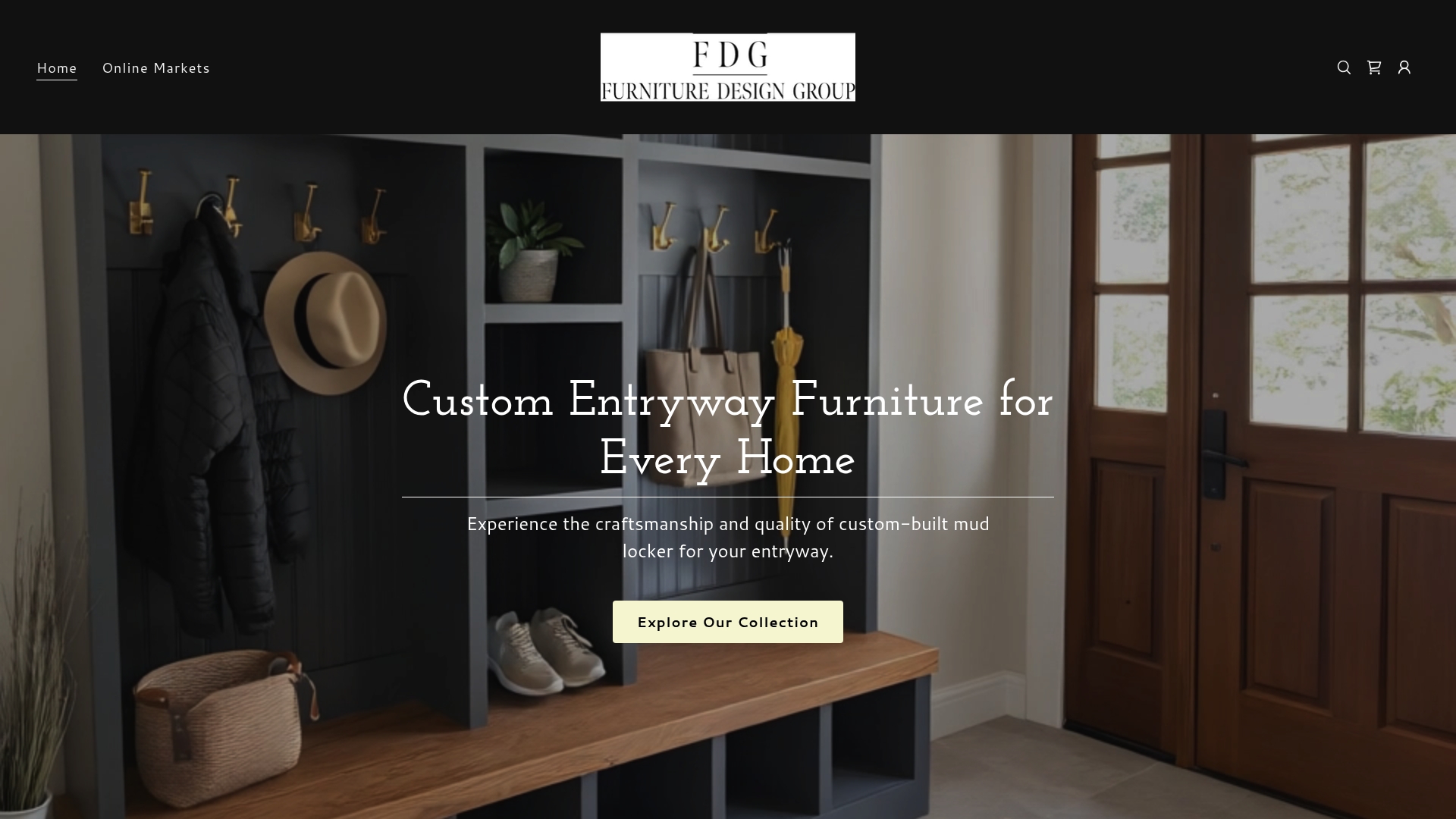
We guide you through every decision, from wood species selection to hardware finishes, ensuring your investment delivers decades of reliable service. Our personalized approach means furniture that fits your exact space dimensions and storage requirements, eliminating the compromises inherent in mass-produced alternatives. Quality craftsmanship isn’t just about aesthetics; it’s about creating furniture that simplifies your daily routine while increasing your home’s value. Contact us to discuss how custom solutions can maximize your entryway’s potential.
Frequently asked questions about entryway design best practices
What furniture materials last longest in Maryland’s climate?
Solid hardwoods like black walnut, cherry, and white oak resist Maryland’s humidity cycles better than any engineered materials. These species naturally repel moisture while maintaining structural integrity through temperature swings. Powder-coated metal hardware and catalyzed lacquer finishes provide additional protection against corrosion and moisture damage.
How high should entryway hooks be for varied household members?
Install primary hooks at 54 inches for average adult use, with secondary hooks at 36 inches for children under 10 years old. This dual-height approach accommodates 90% of household members without requiring step stools or uncomfortable reaching. Space hooks 6 inches apart horizontally to prevent coat overlap and tangling.
Are mud lockers worth the investment for small homes?
Mud lockers justify their cost even in small homes by consolidating five separate furniture pieces (bench, coat rack, shoe storage, cabinet, cubby organizer) into one efficient unit. This consolidation actually saves floor space compared to standalone alternatives while reducing visual clutter. Choose compact 5-foot models specifically designed for smaller entryways.
What customization options are popular for Maryland entryways?
Homeowners frequently request closed lower cabinets hiding messy shoe piles, soft-close drawer slides eliminating noise, and finish colors matching existing trim work. Integrated charging stations for devices and specialized storage for pet supplies rank among top add-ons. Custom dimensions fitting awkward spaces (under stairs, beside doors) solve common layout challenges.
How do I maintain custom hardwood furniture to extend lifespan?
Dust weekly with microfiber cloths and clean spills immediately using barely damp cloths followed by dry buffing. Apply furniture wax or conditioner every 6 months to replenish moisture and maintain finish luster. Avoid harsh cleaners, excessive water, and direct sunlight exposure. Professional refinishing every 10-15 years restores original beauty at fraction of replacement cost.
Can I install entryway furniture myself or should I hire professionals?
Simple benches and hook boards suit DIY installation with basic tools and wall stud knowledge. Large mud lockers and custom cabinetry require professional installation for proper anchoring, leveling, and safety. Improper installation voids warranties and creates tipping hazards, especially in homes with young children. Most custom furniture makers include professional installation in their pricing.