
Designing an entryway that combines style and function can feel overwhelming for Maryland homeowners. You want a space that welcomes guests, corrals daily clutter, and reflects quality craftsmanship, but knowing where to start is half the battle. This comprehensive checklist walks you through 35 detailed steps covering measurements, lighting, storage solutions, and custom furniture options like mud lockers. By following these guidelines, you’ll create an entryway that works beautifully for your family while showcasing the craftsmanship Maryland homes deserve.
Table of Contents
- Key takeaways
- Establishing design criteria for your entryway
- Options for custom mud lockers and furniture in Maryland entryways
- Comparing functional and aesthetic elements in entryway design
- Making the right decisions for your Maryland entryway design
- Explore custom entryway furniture solutions
- Frequently asked questions
Key Takeaways
| Point | Details |
|---|---|
| Precise measurements matter | Measure the entire entryway including door swing and ensure at least 36 inches of clearance to avoid blocking furniture. |
| Traffic flow zoning | Establish three zones for wet area, dry storage, and drop items to guide placement and reduce clutter. |
| Declutter first | Remove unnecessary items to reveal true storage needs and prevent oversized furniture. |
| Mud lockers and benches | Custom mud lockers with built in benches and shoe cubbies fit exact measurements and typically use 17 to 19 inch bench height for comfort. |
| Per person clearance | Allow 18 to 24 inches of width per person in high traffic areas to prevent overcrowding and enable smooth movement. |
Establishing design criteria for your entryway
Before selecting furniture or finishes, you need to establish clear design criteria that prevent costly mistakes. The entryway design checklist includes traffic flow analysis, precise measurements accounting for door swing, and zoning to prevent clutter and poor scale. Start by measuring your entire entryway space, paying special attention to door swing clearance. A door that swings into the entryway needs at least 36 inches of clearance to avoid blocking furniture or creating bottlenecks.
Next, analyze your traffic flow patterns. Watch how family members move through the space during peak times like morning departures and evening arrivals. This observation reveals natural zones for different activities. Most functional entryways benefit from three distinct zones: a wet zone near the door for dripping coats and boots, a dry zone for hanging clean items, and a drop zone for keys and mail. Separating these areas prevents moisture damage and keeps clutter contained.
Decluttering comes before any design work begins. Remove everything currently in your entryway and assess what truly needs storage there. Many homeowners discover they’re storing items that belong elsewhere, which skews their storage needs and leads to oversized furniture choices. Once you’ve pared down to essentials, you can accurately plan for the custom mud lockers and furniture for entryways that fit your actual requirements.
Pro Tip: Allow 18 to 24 inches of width per person in high-traffic areas to prevent overcrowding. This spacing ensures family members can move through the entryway simultaneously without bumping into furniture or each other, which is especially important during busy mornings.
Zoning your entryway also helps you avoid common design afterthoughts. When you plan zones from the start, you can position electrical outlets for task lighting, plan ventilation for damp areas, and ensure furniture placement supports natural movement patterns. Skipping this step often results in furniture that looks good but functions poorly, forcing you to rearrange or replace pieces later.
Options for custom mud lockers and furniture in Maryland entryways
Once you’ve established your design criteria, it’s time to explore furniture options that fulfill those requirements. Custom mud lockers offer distinct advantages over prefabricated units because they’re built to your exact measurements, eliminating gaps and wasted space. Maryland custom mud lockers include built-in benches with shoe cubbies, individual family lockers, board and batten accents, and heavy-duty hooks anchored to framing.
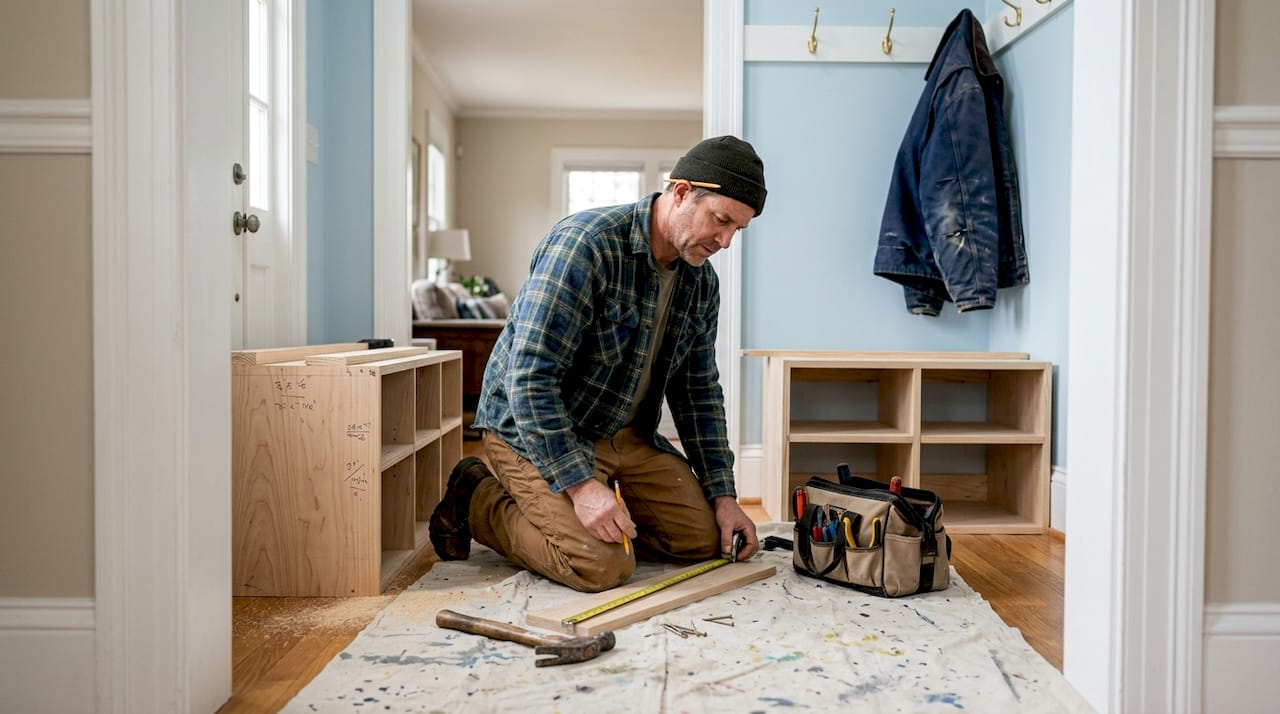
Typical custom mud locker dimensions range from 85 inches high by 50 inches wide by 22 inches deep, though these measurements adapt to your specific space. Bench height matters significantly for comfort and usability. Most custom builders recommend 17 to 19 inches for bench seating, which accommodates adults and children comfortably while providing enough clearance underneath for shoe storage. Benches lower than 17 inches feel awkward for adults, while those above 19 inches make it difficult for children to sit comfortably.
Material selection directly impacts longevity in Maryland’s humid climate. Premium paints and stains create moisture-resistant barriers that protect wood from warping and deterioration. Many custom builders offer catalyzed conversion varnish or water-based polyurethane finishes that resist humidity better than standard paints. These finishes cost more upfront but prevent the refinishing expenses that plague cheaper alternatives.
Design elements like board and batten walls serve dual purposes in entryways. The vertical battens protect walls from scuffs and dings caused by bags and equipment, while the classic styling adds architectural interest. This detail works especially well in Maryland homes with traditional or farmhouse aesthetics. For hardware, heavy-duty hooks anchored directly into wall studs or framing support daily use without pulling loose. Standard drywall anchors fail quickly under the weight of wet winter coats and loaded backpacks.
Custom mud lockers and furniture for entryways also allow you to incorporate specific features your family needs. If you have young athletes, you might add ventilated cubbies for sports equipment. Pet owners often request lower hooks and dedicated storage for leashes and supplies. These personalized touches make your entryway work harder for your specific lifestyle rather than forcing you to adapt to generic furniture layouts.
Comparing functional and aesthetic elements in entryway design
Balancing function with aesthetics requires understanding how different design elements perform in real-world conditions. Optimal lighting is 300-500 lux ambient combined with task lighting, flooring requires porcelain tile with R10-11 slip resistance, and materials must be moisture-resistant adhering to NKBA, IES, and WELL standards. Let’s compare key elements to help you make informed choices.
| Design element | Functional option | Aesthetic option | Best practice |
|---|---|---|---|
| Lighting | 300-500 lux ambient plus task lighting near benches | Decorative fixtures with dimming capability | Layer both for flexibility and mood |
| Flooring | Porcelain tile with R10-11 slip resistance | Luxury vinyl plank with wood appearance | Prioritize slip resistance, then style |
| Storage type | Closed cabinets that hide clutter completely | Open shelving for easy access and display | Mix both based on item visibility needs |
| Ventilation | Exhaust fan or passive vents in damp zones | Decorative grilles that blend with design | Essential in Maryland climate regardless of style |
| Finish durability | Catalyzed conversion varnish for maximum protection | Hand-rubbed oil for natural appearance | Choose based on moisture exposure level |
Lighting deserves special attention because it impacts both usability and ambiance. Ambient lighting between 300 and 500 lux creates a bright, welcoming environment that makes it easy to find items and check your appearance before leaving. Task lighting positioned directly above benches and inside lockers improves functionality for specific activities like tying shoes or searching through bags. Combining these layers gives you flexibility to adjust brightness based on time of day and activity.
Flooring choices affect safety and maintenance equally. Porcelain tile with R10 to R11 slip resistance ratings provides excellent traction even when wet, which matters significantly in Maryland’s rainy springs and snowy winters. These tiles also resist staining and clean easily, making them practical for high-traffic entryways. If you prefer the warmth of wood appearance, luxury vinyl plank offers similar slip resistance with better comfort underfoot.
Storage type decisions depend on your household’s tidiness habits. Open shelving encourages family members to use storage because items remain visible and accessible. However, this approach only works if everyone maintains organization consistently. Closed cabinets hide clutter effectively and create cleaner sightlines, but they require more effort to access items. Most successful entryway designs mix both types, using open storage for frequently accessed items and closed storage for seasonal or occasional use items.
Ventilation is critical for wet climates to preserve craftsmanship, and layered lighting and zoned wet/dry/drop layouts are recommended. Maryland’s humidity levels can damage wood furniture quickly without proper air circulation. Even custom pieces built with premium materials will warp or develop mold if moisture becomes trapped. Installing a small exhaust fan or passive vents in your wet zone protects your investment in custom mud lockers and furniture for entryways.
Pro Tip: Incorporate zoned layouts separating wet and dry areas for better maintenance. Position your wet zone closest to the exterior door where dripping outerwear enters, place the dry zone for clean items in the middle, and locate the drop zone for keys and mail farthest from moisture sources. This arrangement prevents clean items from getting damp and makes cleaning more efficient.
Making the right decisions for your Maryland entryway design
Applying checklist information to your unique situation requires focusing on ongoing usability and lifestyle fit. The checklist includes behavioral resets for maintenance and seasonal adaptability to keep the entryway functional year-round. Here’s how to implement these insights effectively.
-
Establish regular decluttering and resetting habits from day one. Schedule a weekly 10-minute reset where you remove items that don’t belong in the entryway and reorganize what remains. This simple habit prevents the gradual accumulation of clutter that undermines even the best-designed spaces. Many families find Sunday evenings work well because it prepares the entryway for the busy week ahead.
-
Adapt your furniture and storage seasonally to match changing needs. Winter requires more space for bulky coats, boots, and snow gear, while summer needs shift toward lighter jackets and outdoor equipment. If your custom mud lockers include adjustable shelving or removable bins, reconfigure them as seasons change. Store off-season items elsewhere to maximize available space for current needs.
-
Avoid overcrowding by respecting anthropometric guidelines and proper spacing requirements. Each family member needs approximately 12 to 15 inches of locker width for comfortable storage of their belongings. Trying to squeeze more people into less space creates frustration and leads to items being dumped on floors or benches instead of stored properly. If you have a large family and limited space, consider rotating locker assignments or creating overflow storage in an adjacent closet.
Common mistakes to avoid include ignoring traffic flow when placing furniture, which creates bottlenecks during busy times. Avoid afterthought designs by zoning prevents common mistakes like poor scale and clutter. Another frequent error is mixing wet and dry zones, which spreads moisture throughout the entryway and damages furniture unnecessarily. Keep damp items isolated in the wet zone until they dry completely.
Maintaining your cabinetry and ventilation systems protects wood craftsmanship over time. Wipe down surfaces monthly with appropriate cleaners for your finish type. Check ventilation systems quarterly to ensure they’re operating efficiently and not blocked by stored items. Inspect hardware like hooks and hinges annually, tightening any loose screws before they cause damage. These small maintenance tasks extend the life of your custom mud lockers and furniture for entryways significantly.
Scale matters more than many homeowners realize. Furniture that’s too large for your space makes the entryway feel cramped and difficult to navigate, while undersized pieces look lost and fail to provide adequate storage. Use your initial measurements and traffic flow analysis to select appropriately scaled furniture. When in doubt, slightly smaller pieces work better than oversized ones because they preserve the sense of openness that makes entryways feel welcoming.
Explore custom entryway furniture solutions
Now that you understand the detailed checklist for creating a functional and beautiful Maryland entryway, it’s time to bring these insights to life. Furniture Design Group specializes in custom-crafted entryway furniture designed specifically for Maryland homes, with over 20 years of experience creating pieces that balance craftsmanship with practical function.
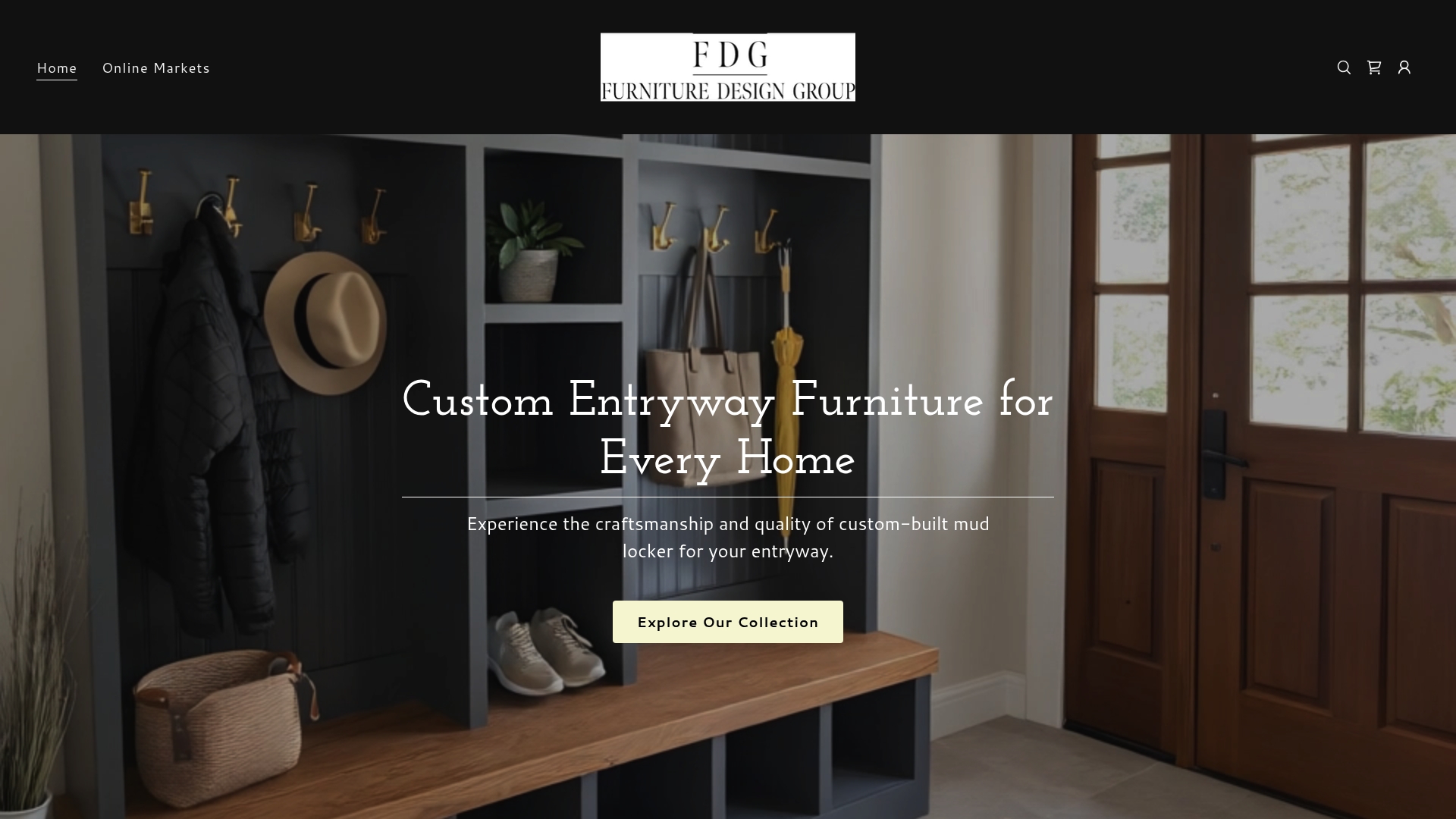
Our custom designs adapt to your exact space measurements and style preferences, eliminating the compromises that come with prefabricated furniture. Expert craftsmanship ensures durable, moisture-resistant finishes that withstand Maryland’s humid climate while maintaining their beauty for decades. Personalized consultations help you implement the checklist strategies covered in this article, from precise measurements to optimal zoning layouts. Visit Furniture Design Group to explore our custom entryway solutions, or create an account to save your favorite designs and receive personalized recommendations.
Frequently asked questions
What is the ideal bench height for custom mud lockers?
Bench height should be between 17-19 inches for ergonomic comfort. This range accommodates both adults and children comfortably while providing adequate clearance underneath for shoe storage. Benches outside this range either feel awkward for adults or make it difficult for children to sit properly.
How do I prevent moisture damage to wooden entryway furniture in Maryland?
Ensure your lockers have proper ventilation to avoid damp buildup, which is especially important in Maryland’s humid climate. Ventilation and moisture-resistant finishes are critical to preserving wood furniture in wet climates. Use premium paint or catalyzed conversion varnish to create barriers that resist moisture penetration and prevent warping.
What lighting levels ensure a functional and welcoming entryway?
Recommended lighting is 300-500 lux ambient with additional task lighting near benches and lockers. This combination creates a bright environment for finding items and checking your appearance while providing focused illumination for specific tasks like tying shoes. Layering both types gives you flexibility to adjust brightness based on time of day and activity level.
How wide should each family member’s locker section be?
Allow 12 to 15 inches of width per person for comfortable storage of daily items like coats, bags, and shoes. This spacing prevents overcrowding and ensures everyone can access their belongings without disturbing others’ items. Families with young children might allocate slightly less space per child initially, then adjust as they grow and accumulate more belongings.
Should I choose open shelving or closed cabinets for entryway storage?
Mix both types based on your household’s organization habits and what you’re storing. Open shelving works well for frequently accessed items and encourages use because everything remains visible. Closed cabinets better suit households that struggle with consistent tidiness or items you prefer to keep hidden. Most successful designs incorporate both, using open storage for daily essentials and closed storage for seasonal or occasional items.