
TL;DR:
- Effective entryways are built around zones, traffic flow, and moisture-resistant materials suitable for Maryland’s climate.
- Custom solutions with proper zoning, durable finishes, and closed storage maximize function and ROI.
- Professional installation and design offer greater durability and long-term performance over DIY or luxury-only approaches.
Every morning, the entryway tells the truth about your home. Shoes piled by the door, coats draped over a stair rail, muddy boots tracking across the floor — it’s a frustrating start to any day. For Maryland homeowners dealing with humid summers, wet winters, and active families, a cluttered entryway isn’t just an eyesore. It chips away at daily comfort and, quietly, at your home’s value. The good news is that a structured, step-by-step design workflow turns that chaos into a space that actually works — one built around your family’s routines, your home’s dimensions, and the specific demands of Maryland’s climate.
Table of Contents
- Assessing your space and needs
- Designing for function and flow
- Selecting materials and finishes
- Installation, customization, and common mistakes
- Evaluating ROI and verifying results
- A smarter workflow for Maryland entryway success
- Ready for your custom Maryland entryway?
- Frequently asked questions
Key Takeaways
| Point | Details |
|---|---|
| 5-step workflow | Maryland entryway projects use a proven 5-step workflow from consultation to customization. |
| Functional zoning | Smart zoning and custom furniture maximize function and comfort in entryways. |
| Durable materials | Choose moisture-resistant materials to withstand Maryland’s climate and daily family traffic. |
| High ROI | Entryway upgrades often deliver ROI of 60–90% and add significant property value. |
| Midrange wins | Midrange custom solutions outperform luxury upgrades for both practicality and return. |
Assessing your space and needs
Before picking a single finish or ordering a custom bench, you need an honest look at what your entryway is doing wrong. Most problems fall into two categories: clutter buildup and traffic bottlenecks. Clutter happens when there’s no designated home for shoes, bags, and seasonal gear. Bottlenecks happen when furniture placement or door swing forces people to squeeze past each other every morning.
Start by measuring your space carefully. Note wall lengths, ceiling height, and exactly how far your door swings open. A door that swings into the room eats up more usable floor space than most homeowners realize. Also check whether you have a coat closet nearby — its presence or absence shapes every storage decision you’ll make.
For Maryland homes specifically, your assessment needs to account for the climate. Humidity levels here regularly push above 70% in summer, and fall and winter bring consistent rain and mud. That means moisture-resistant materials aren’t optional — they’re essential from day one. Think about your family’s daily rhythm too. Do kids come in from sports practice? Does someone work from home and need a clean, calm entry? These routines directly shape what your entryway needs to do.
Here’s what to evaluate during your walkthrough:
- Traffic patterns: Where do people naturally drop things the moment they walk in?
- Seasonal gear: How many coats, boots, and bags need to be stored at once?
- Lighting: Is the space dark or poorly lit at peak morning hours?
- Floor condition: Is the current flooring slippery when wet or hard to clean?
- Vertical space: Are walls being used, or is all storage at floor level?
Pro Tip: Take photos of your entryway at your busiest time of day, usually school or work departure. Those images will reveal clutter patterns and traffic pinch points that you stop noticing when you live with them daily.
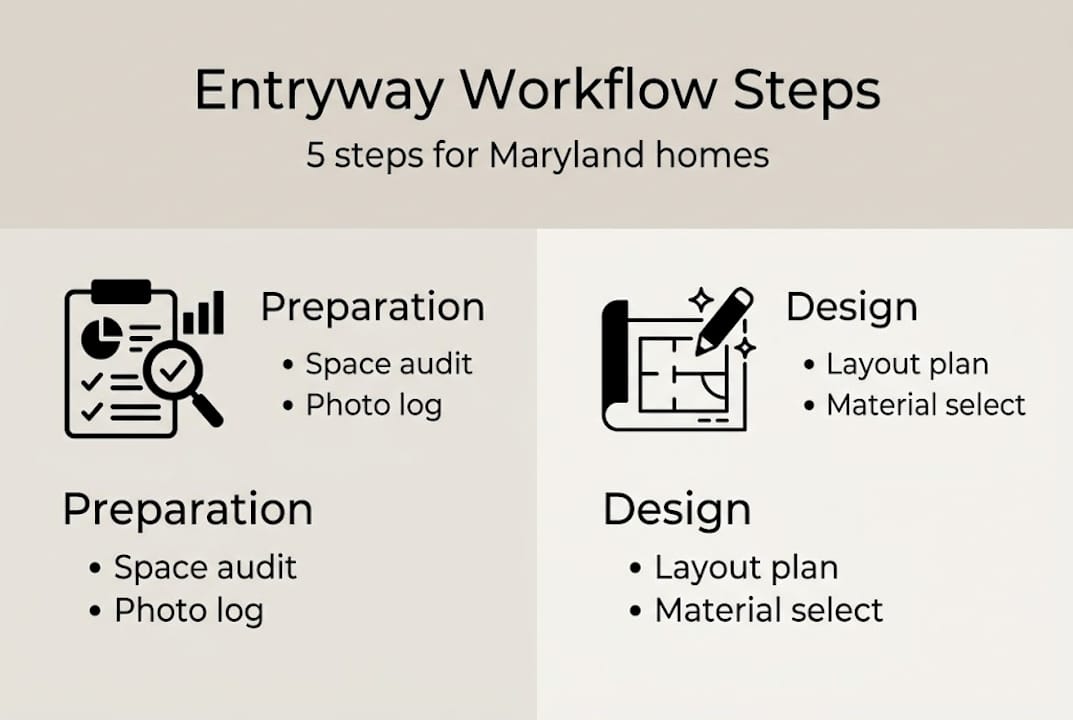
A solid custom furniture design process always starts here, with real data about your space rather than assumptions. The entryway workflow overview typically follows a 5-step process: assess needs, design with models, select materials, permit and fabricate, then install.
Designing for function and flow
After understanding your needs and space, it’s time to design for real-world function and daily routines. The most effective entryways are built around zones, not just furniture pieces placed randomly.
Think of your entryway in three layers. The wet zone sits closest to the door — this is where shoes come off and wet umbrellas land. The dry zone sits just beyond, handling bags, backpacks, and coats. The clean zone transitions into the rest of your home, keeping tracked-in mud from spreading further. Separating these zones, even loosely, dramatically reduces how much cleaning your entryway requires each week.
Traffic flow matters just as much as storage. A well-designed entryway maintains at least 36-inch clearance for comfortable movement, even with furniture installed on both sides. If you have children or elderly family members, wider clearance is worth prioritizing.
Lighting is one of the most overlooked elements. Layered lighting — combining ambient ceiling fixtures, task lighting near the bench or locker area, and accent lighting on shelves — creates a space that feels welcoming rather than institutional. Target between 300 and 500 lux for a functional entryway that’s bright enough for finding keys but warm enough to feel like home.
Here’s a quick comparison of the most common custom entryway features:
| Feature | Recommended spec | Why it matters |
|---|---|---|
| Bench height | 17–19 inches | Comfortable for sitting to put on shoes |
| Bench depth | 15–18 inches | Fits most adults without blocking traffic |
| Adult hooks | 60–66 inches high | Easy reach for coats and bags |
| Kid hooks | 40–44 inches high | Encourages kids to hang their own gear |
| Mud locker type | Full-height with doors | Hides clutter better than open cubbies |
Pro Tip: If you’re designing for both kids and adults, install a double row of hooks at different heights on the same wall panel. It doubles capacity without using any extra floor space.
Exploring custom entryway solutions early in the design phase lets you see what’s possible before you commit to dimensions or layouts.
Selecting materials and finishes
With your layout and features planned, let’s focus on selecting materials and finishes that stand up to Maryland’s climate. The wrong material choice here leads to warped panels, peeling paint, and furniture that looks worn within two years.
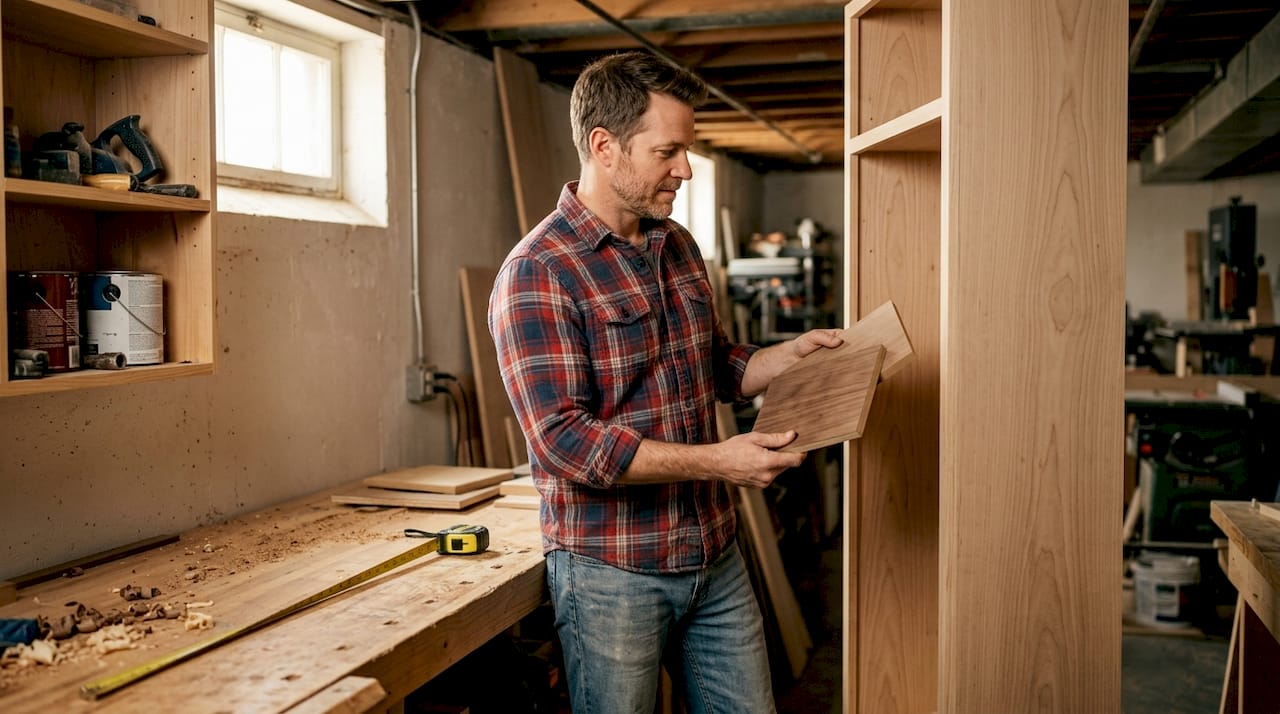
For custom mud lockers and built-in benches, walnut plywood and MDF are the two most reliable base materials. Walnut plywood offers natural grain beauty and structural strength. MDF provides a perfectly smooth surface for painted finishes, which is ideal if you want a clean, modern look that matches existing trim throughout your home.
Here’s how common materials stack up for Maryland entryways:
| Material | Moisture resistance | Best use | Finish options |
|---|---|---|---|
| Walnut plywood | High | Locker frames, benches | Stain or clear coat |
| MDF | Medium (with sealing) | Painted panels, trim | Paint only |
| Beadboard | Medium | Wall paneling, backs | Paint |
| Solid hardwood | High | Bench tops, accents | Stain or paint |
Beyond the base material, the finish coat is your real moisture defense. A quality semi-gloss or satin paint with a primer layer seals MDF against humidity. For plywood, a penetrating oil or polyurethane topcoat protects the grain while keeping the wood looking natural.
Consider these material decisions carefully:
- Closed storage hides clutter and protects contents from humidity fluctuations
- Open cubbies offer fast access but collect dust and show mess immediately
- Beadboard paneling on lower walls protects against scuffs and adds classic character
- Board-and-batten works well for taller walls and gives a more structured, architectural look
Matching your new custom mud lockers to your existing home trim creates a built-in look that feels intentional rather than added-on. Pull paint colors and profiles from the rooms adjacent to your entryway for the most cohesive result.
Installation, customization, and common mistakes
Once you’ve selected materials, the next phase is installation and customization, with a focus on avoiding common pitfalls. Even a well-designed entryway can underperform if installation shortcuts are taken.
Follow these steps for a smooth installation:
- Prep the space — patch walls, check for moisture intrusion, and confirm floor levelness
- Handle permitting — Maryland counties may require permits for built-in cabinetry attached to walls
- Fabricate off-site — custom pieces built in a controlled shop environment fit better than site-built work
- Install in sequence — anchor wall panels first, then set benches, then mount upper lockers
- Final adjustment — level doors, adjust hinges, and add hardware last
For customization, consider adding beadboard to the back interior of open lockers — it protects the wall and adds a finished look. If your home has a covered entry or portico, integrating exterior weather protection with your interior design creates a seamless transition that keeps more mud outside.
Common mistakes Maryland homeowners make:
- Overstuffing storage — too many hooks and cubbies create visual chaos; balance open and closed storage
- Ignoring floor slip rating — wet entries need slip-resistant flooring rated R10 or R11 at minimum
- Poor lighting placement — a single overhead bulb leaves corners dark and makes the space feel cramped
Pro Tip: For entryways under 30 square feet, go vertical. Wall-mounted lockers and floating benches free up floor space and make a small entry feel larger and more organized.
For spaces where DIY feels tempting, custom integration by professionals consistently outperforms budget builds for durability and code compliance, especially in Maryland. Get custom installation advice before committing to a layout you can’t easily change.
Evaluating ROI and verifying results
With your entryway fully installed, evaluate whether the transformation delivers on function, aesthetics, and property value. ROI (return on investment) for entryway work is one of the most underestimated metrics in home improvement.
The numbers are compelling. Entry and curb upgrades deliver 60–90% ROI, with a simple door repaint adding $1,000 to $3,000 in perceived value for a $200 to $400 investment. A full custom mudroom, especially when paired with kitchen or bath updates, can push ROI to 70–85%.
Here’s how quick DIY refreshes compare to full custom builds:
| Approach | Typical cost | Value added | ROI range |
|---|---|---|---|
| One-day DIY refresh | $450–$950 | $2,300–$6,500 | 60–75% |
| Midrange custom build | $3,000–$8,000 | $5,000–$15,000 | 70–85% |
| Luxury custom build | $15,000+ | $10,000–$20,000 | 40–60% |
Midrange projects consistently outperform luxury builds in ROI terms, as one-day entryway refreshes show — fast, targeted improvements often generate outsized returns compared to over-customized luxury finishes.
Verify your results by checking these benchmarks:
- Less daily clutter — the entryway resets to clean within 5 minutes
- Improved curb appeal — neighbors and visitors notice the change immediately
- Reduced cleaning time — mud and moisture stay contained in the wet zone
- Higher appraisal value — document the renovation for your next home appraisal
You can explore measuring ROI on custom furniture projects and compare your results against entryway value benchmarks for the DMV region.
A smarter workflow for Maryland entryway success
Now that you’ve seen the full workflow, let’s step back and examine what truly sets successful Maryland entryways apart — because the answer isn’t always what homeowners expect.
Most people assume that spending more produces a better result. In our experience, that’s simply not true for entryways. Luxury finishes and high-end hardware look impressive in photos, but they rarely solve the core problem: a space that doesn’t match how your family actually lives. A $20,000 entryway with open cubbies and no wet zone will fail faster than a $5,000 midrange build with smart zoning and closed lockers.
Maryland’s climate makes this even more pointed. Humidity warps open shelving, mud tracks further on hard surfaces without a defined wet zone, and decorative-only hooks pull out of walls within a year under real daily load. The weather-resistant designs that integrate with exterior porticos consistently outperform interior-only solutions because they stop the problem before it enters your home.
DIY is tempting, especially with so many online tutorials available. But professional integration wins on durability, code compliance, and long-term fit. Custom-built pieces that are anchored correctly, finished properly, and matched to your home’s existing trim simply last longer and look better. Closed lockers with full-height doors beat open cubbies every single time for families with kids, pets, or any amount of real-world mess.
Ready for your custom Maryland entryway?
If this workflow has shown you what’s possible, the next step is working with people who do this every day. At Furniture Design Group, we’ve spent over 20 years helping Maryland homeowners transform cluttered, frustrating entryways into spaces that genuinely work — built to handle humidity, mud, and busy family life without sacrificing style.
Our team of entryway design experts walks you through every phase of the process, from initial assessment to final installation. Whether you’re starting with a single mud locker or planning a full entryway build, a custom furniture consultation gives you a clear picture of what’s possible within your space and budget. Reach out today and let’s build something that lasts.
Frequently asked questions
What is the typical entryway design workflow for Maryland homeowners?
Most projects follow a 5-step process: assess needs, design with 3D models or sketches, select durable materials, permit and fabricate, then install and customize. Each phase builds on the last to ensure the final result fits your space and lifestyle.
What materials work best for entryways in Maryland?
Walnut plywood and MDF with moisture-resistant finishes are the top choices for Maryland’s damp climate, offering durability and a clean aesthetic that integrates with existing home trim.
How much ROI can I expect from entryway renovations?
Entryway upgrades typically deliver 60–90% ROI, with midrange custom projects often outperforming both budget DIY and high-end luxury builds in actual value added.
Should I choose closed mud lockers or open cubbies?
Closed mud lockers are the stronger choice for most Maryland families because they control clutter more effectively and align better with local building integration standards than open cubbies do.