
TL;DR:
- Proper installation requires measuring, anchoring to studs, and maintaining a 36-inch aisle for safety.
- Combining furniture types like benches, hooks, and cubbies creates a functional, stylish entryway.
- Maryland homeowners should verify local codes and prioritize safety over aesthetic choices.
Your entryway is the first thing you and your guests see, yet it’s often the most neglected space in the house. Shoes pile up, coats land on doorknobs, and bags take over the floor. For Maryland homeowners, the fix isn’t just about buying a bench and calling it done. Smart installation of custom entryway furniture requires attention to dimensions, anchoring, local codes, and design balance. This guide gives you expert-backed measurements, step-by-step instructions, and practical design advice so your entryway works as hard as it looks good.
Table of Contents
- What to know before installing entryway furniture
- Step-by-step guide to installing entryway furniture
- Common mistakes and troubleshooting tips
- Design choices to maximize entryway function and style
- What most Maryland homeowners get wrong about entryway installs
- Unlock Maryland entryway solutions with Furniture Design Group
- Frequently asked questions
Key Takeaways
| Point | Details |
|---|---|
| Check Maryland codes first | Confirm your plan is code-compliant and avoids egress hazards before starting installation. |
| Follow expert dimensions | Use professional benchmarks for bench, cubby, and hook placement to ensure accessibility and comfort. |
| Hybrid designs boost function | Combining benches, consoles, and hooks maximizes storage and keeps entryways organized. |
| Anchor furniture securely | Proper wall anchoring and shimming prevent sliding, uneven installs, and safety risks. |
| Keep aisles clear | Maintain at least 36 inches of aisle space for smooth movement and emergency access. |
What to know before installing entryway furniture
Now that we’ve seen why a functional entryway matters, let’s start by preparing for installation the right way. Before you pick up a drill or order a single piece of furniture, you need to understand what’s required from a safety, code, and spatial standpoint.
Maryland follows the International Residential Code (IRC) and International Building Code (IBC) statewide. The good news is that furniture installs rarely need permits unless your project alters a structural element or blocks an egress pathway. That said, always double-check with your local county office before starting, because some Maryland counties add their own requirements on top of state standards.
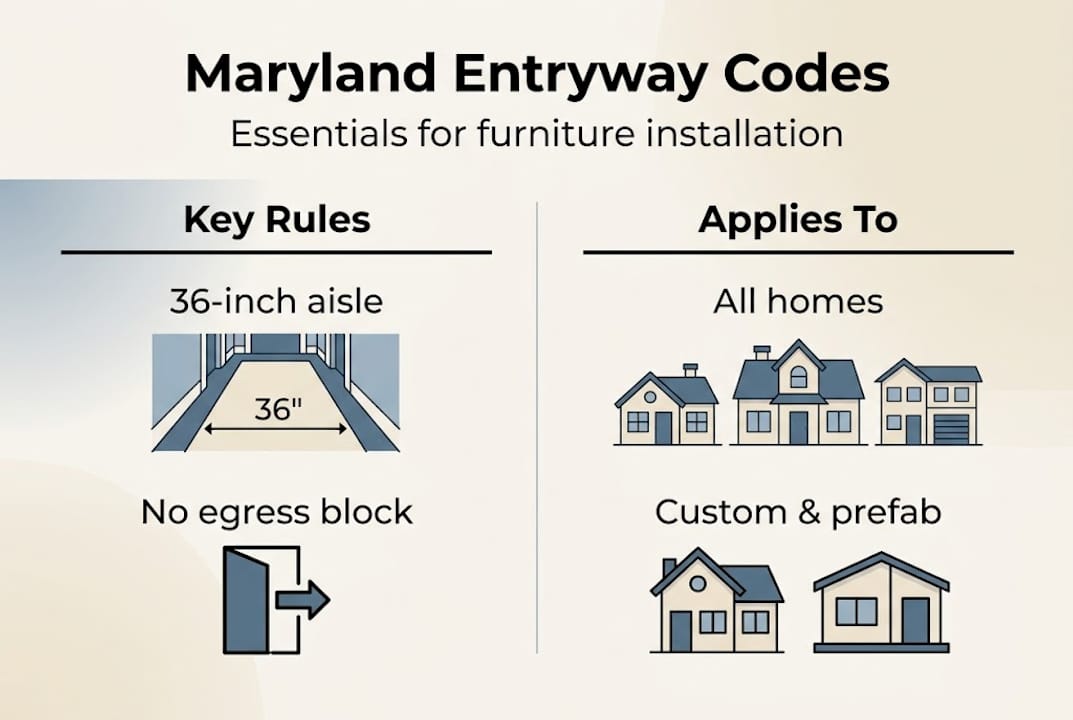
One rule that applies everywhere: keep a 36-inch clear aisle through your entryway at all times. This isn’t just a comfort guideline. It’s a fire and egress safety requirement. Blocking exit paths with oversized furniture is one of the most common and dangerous mistakes homeowners make.
Here’s a quick reference for standard entryway furniture dimensions:
| Furniture type | Recommended width | Recommended depth | Seat/mount height |
|---|---|---|---|
| Entryway bench | 48-60 inches | 17-20 inches | 17-19 inches |
| Cubby unit | 12-15 inches per cubby | 14-16 inches | Varies |
| Wall hooks | 4-6 inches apart | N/A | 60-66 in. (adults) |
| Console table | 36-48 inches | 12-14 inches | 28-32 inches |
Before you start, gather these tools and materials:
- Stud finder
- Level (24-inch or longer)
- Drill with bits
- Wood shims
- Wall anchors and lag screws
- Measuring tape and pencil
- Safety glasses
“A poorly anchored bench doesn’t just wobble. It can tip forward under a child’s weight and cause serious injury. Always anchor to studs, not just drywall.”
For deeper guidance on planning your layout before you buy, custom furniture planning resources can help you visualize the space before committing to a design.
Pro Tip: Use painter’s tape on the floor to mark out your furniture footprint before installation. Walk through the space and check that your 36-inch aisle is truly clear. It takes five minutes and can save you from a full reinstall.
Step-by-step guide to installing entryway furniture
With materials and measurements ready, let’s walk through the exact steps for safe and stylish installation.
Step 1: Measure and mark. Measure your entryway wall width and floor depth. Mark the center of the wall with a pencil, then measure outward for your bench or cubby placement. Use your stud finder to locate and mark studs, typically spaced 16 inches apart.
Step 2: Check for level. Place your level on the floor where the bench will sit. Most floors have slight dips or rises. Note any unlevel spots so you know where shims will be needed.
Step 3: Assemble your furniture. For prefabricated units, follow the manufacturer’s instructions before placing the piece against the wall. For custom built-ins, your carpenter will handle this on-site.
Step 4: Position and shim. Slide the unit into place. Slide wood shims under low corners until the piece sits perfectly level. Carpentry standards consistently emphasize shimming as a non-negotiable step for long-term stability.
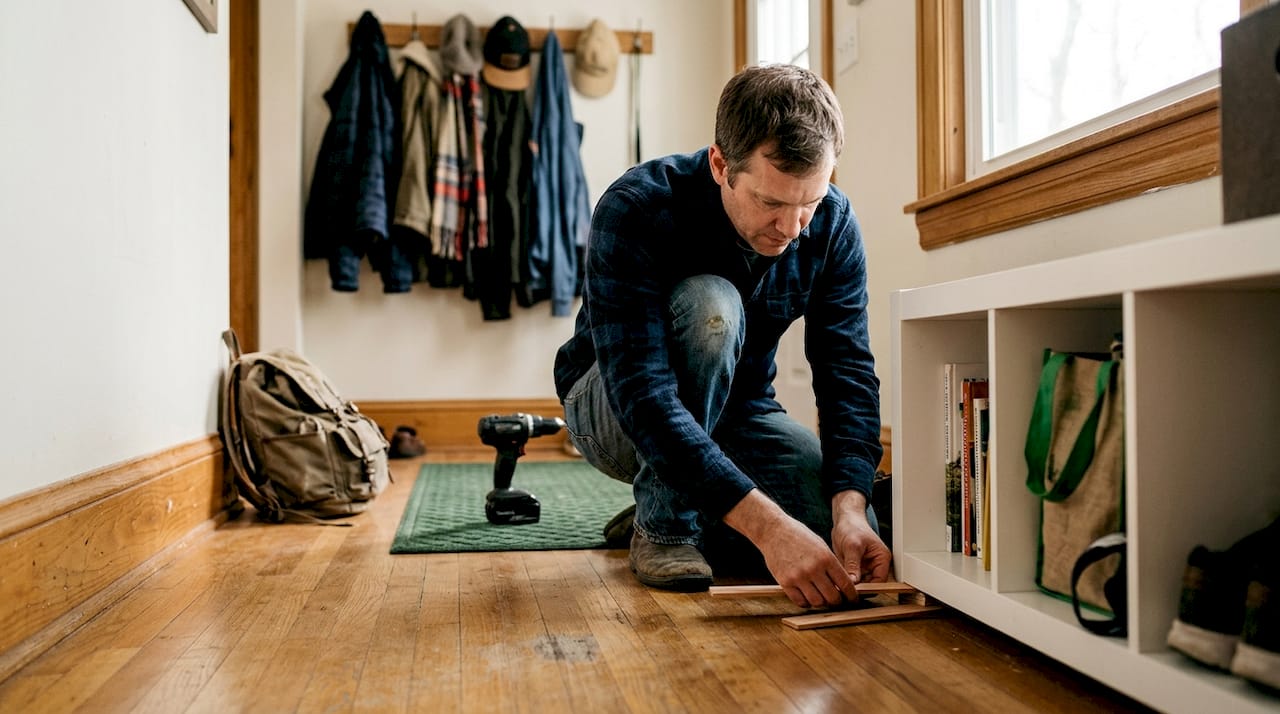
Step 5: Anchor to studs. Drive lag screws through the furniture’s back rail into wall studs. For heavy cubbies or bench units, use at least two anchor points per stud. Never rely on drywall anchors alone for furniture that will bear weight.
Step 6: Install hooks. Mount adult hooks at 60 to 66 inches from the floor. For children’s hooks, 42 to 48 inches is the standard range. Space hooks 4 to 6 inches apart to prevent coat crowding.
Here’s how custom built-ins compare to prefabricated furniture:
| Factor | Custom built-ins | Prefabricated furniture |
|---|---|---|
| Fit | Exact to your space | Standard sizes only |
| Installation time | Longer | Faster |
| Cost | Higher upfront | Lower upfront |
| Durability | Generally higher | Varies by brand |
| Customization | Unlimited | Limited |
For detailed guidance on specific pieces, the bench and console installation guide covers material choices and anchoring methods in depth.
Pro Tip: After anchoring, give the unit a firm push from different angles. It should not move at all. If it shifts, add another anchor point before using the furniture.
Common mistakes and troubleshooting tips
Having followed a careful install process, it’s important to know what pitfalls to avoid and how to fix them if they happen.
Even experienced DIYers run into problems. The most common mistakes come down to measurement errors, skipped anchoring steps, and poor hook placement. Here’s what to watch for:
Measurement mistakes:
- Bench seat height above 19 inches makes it hard for children and shorter adults to sit comfortably
- Bench depth over 22 inches pushes the unit too far into the aisle, shrinking your clearance
- Aisles narrower than 36 inches create accessibility problems and violate egress guidelines
- Hooks placed too close together cause coats to bunch and fall
Anchoring problems:
- Furniture anchored only to drywall will eventually pull free, especially under daily use
- Skipping shims on uneven floors causes rocking, which stresses anchor points over time
- Using screws that are too short means they don’t reach the stud core for a solid grip
Quick fixes:
- If your bench rocks, slide additional shims under the low corner and trim the excess flush with a utility knife
- If a hook pulls out of drywall, locate the nearest stud and remount there, or use a toggle bolt rated for the expected load
- If your aisle feels tight, consider replacing a full bench with a narrower console table to reclaim floor space
“The most overlooked dimension in entryway planning is aisle width. Homeowners focus on the furniture and forget the space around it.”
For more ideas on keeping your entryway organized and functional, organizing entryways is a great starting point for layout inspiration.
Pro Tip: Take photos of your wall before closing it up with furniture. If you ever need to find studs or wiring later, those photos will save you significant time and guesswork.
Design choices to maximize entryway function and style
Now let’s look at how to select and place furniture elements for a clean, comfortable, and stylish entryway.
The most functional entryways combine multiple furniture types working together. A bench alone gives you a place to sit but no storage. Hooks alone leave bags and shoes on the floor. The real power comes from combining elements strategically.
According to expert entryway tips, a hybrid bench and hook setup maximizes utility without overcrowding the space. Here’s how to build that combination effectively:
- Place the bench along the longest wall to preserve floor space in the center
- Mount hooks directly above the bench so coats hang behind the seated user
- Add a cubby unit at one end of the bench for shoes and bags
- Use a narrow console table on the opposite wall for keys, mail, and small items
- Keep the console surface clear by adding a small tray or basket for daily drop items
Statistic callout: Homes with organized entryways report feeling less stressed upon arrival, and a well-designed entry can add perceived value to a home during showings.
For hook placement, adult hooks at 60 to 66 inches work well for full-length coats. Children’s hooks at 42 to 48 inches let kids manage their own gear independently, which is a practical win for busy Maryland families.
Visual balance matters too. Avoid clustering all your furniture on one wall if your entryway is wide enough to use both sides. Spreading elements across two walls creates a more open, intentional feel. Use consistent materials or finishes to tie the pieces together visually, even if the shapes vary.
For creating hybrid entryways that blend storage and style, working with a custom furniture specialist gives you options that prefabricated pieces simply can’t match.
What most Maryland homeowners get wrong about entryway installs
After seeing hundreds of entryway projects across Maryland, one pattern stands out clearly. Homeowners spend hours choosing the right finish and zero minutes checking whether their layout meets basic egress or accessibility standards. Pinterest boards are full of beautiful entryways that would fail a simple safety walkthrough.
Maryland codes require safe egress paths, meaning furniture can never block your exit route. We’ve seen stunning built-in designs that looked perfect in photos but reduced door swing clearance below code minimums. That’s a real liability.
The other thing most people underestimate is the importance of level installs. A bench that’s off by even half an inch will rock under use, and that constant stress loosens anchors faster than you’d expect. Function has to come before aesthetics, every time.
Our honest advice: measure twice, anchor to studs, and check your aisle width before you fall in love with a layout. For best entryway install advice that balances beauty with real-world safety, start with the dimensions and work the design around them, not the other way around.
Unlock Maryland entryway solutions with Furniture Design Group
Ready to take your entryway project further? Here’s how professional help can simplify the process.
At Furniture Design Group, we’ve spent over 20 years crafting custom entryway furniture for Maryland homeowners who want more than a generic solution. We know Maryland homes, local code requirements, and the specific challenges that come with older construction and tight entryways.

Our Maryland furniture solutions are built to your exact dimensions, anchored correctly, and designed to look like they’ve always belonged in your home. Whether you need a mud locker, a bench and cubby combo, or a full entryway system, our team handles every detail. Explore our work and get started with custom furniture expertise that brings your vision to life without the guesswork.
Frequently asked questions
Do I need a permit to install entryway furniture in Maryland?
Permits are not needed unless your installation alters structural elements or affects egress pathways per Maryland code. Always confirm with your local county office before starting.
What is the best height for entryway hooks for children?
Hooks for kids are best installed between 42 and 48 inches from the floor to ensure easy reach and safe daily use.
How deep should my entryway bench be for comfort and accessibility?
Bench depth should be 17 to 20 inches to maximize comfort and meet ADA accessibility guidelines for seated users.
How can I ensure my entryway furniture is anchored safely?
Always anchor furniture to wall studs and shim for level installs, following Maryland carpentry standards for secure, long-lasting results.
Can I combine benches, consoles, and hooks in a single entryway?
Yes, hybrid setups optimize storage and function while preventing overcrowding when designed to expert specifications.