
Choosing the right entryway furniture is often harder than it looks, especially for Maryland homeowners who want both function and artistry. Knowing the specific words and details behind each piece helps you share your vision with skilled craftspeople and find what fits your family’s daily routine. This guide clarifies important terminology and features so you can confidently select and customize entryway furniture that reflects your taste and supports your lifestyle. Artisanal craftsmanship and personal service make all the difference.
Table of Contents
- Defining Entryway Furniture Terminology
- Common Types of Entryway Pieces Explained
- Key Features: Materials and Craftsmanship
- Custom vs. Prefabricated: What to Know
- Avoiding Common Entryway Furniture Mistakes
Key Takeaways
| Point | Details |
|---|---|
| Understand Entryway Terminology | Familiarize yourself with terms like console tables, coat racks, and mud lockers to effectively communicate your needs with furniture specialists. |
| Prioritize Functionality | Choose entryway furniture that addresses specific storage and organizational challenges rather than just aesthetic appeal. |
| Consider Custom Solutions | Custom entryway furniture offers tailored solutions that maximize space and functionality, addressing unique household needs. |
| Evaluate Quality and Durability | Invest in solid wood and quality craftsmanship to ensure longevity and resistance to everyday wear and tear in high-traffic entry areas. |
Defining Entryway Furniture Terminology
Your entryway makes a statement before guests even step inside. Understanding the terminology used to describe entryway pieces helps you communicate your vision to craftspeople, designers, and furniture specialists. It also empowers you to make informed decisions about what works best for your Maryland home.
What Exactly Is Entryway Furniture?
Entryway furniture refers to pieces specifically designed for the transitional space between your front door and interior living areas. These aren’t random decorative items—they serve practical purposes while setting the tone for your home’s aesthetic. The most common pieces include:
- Console tables – Narrow, often wall-mounted surfaces for displaying decor and holding keys
- Entryway benches – Seating pieces where guests can sit to remove shoes
- Coat closets and coat racks – Storage solutions for outerwear and accessories
- Mud lockers – Multi-functional pieces combining seating, storage, and hooks for a complete organizational system
- Accent tables – Additional surfaces for lamps, mirrors, or decorative accents
Furniture design terminology can seem overwhelming at first, but each term describes specific features and functions that matter to your home.
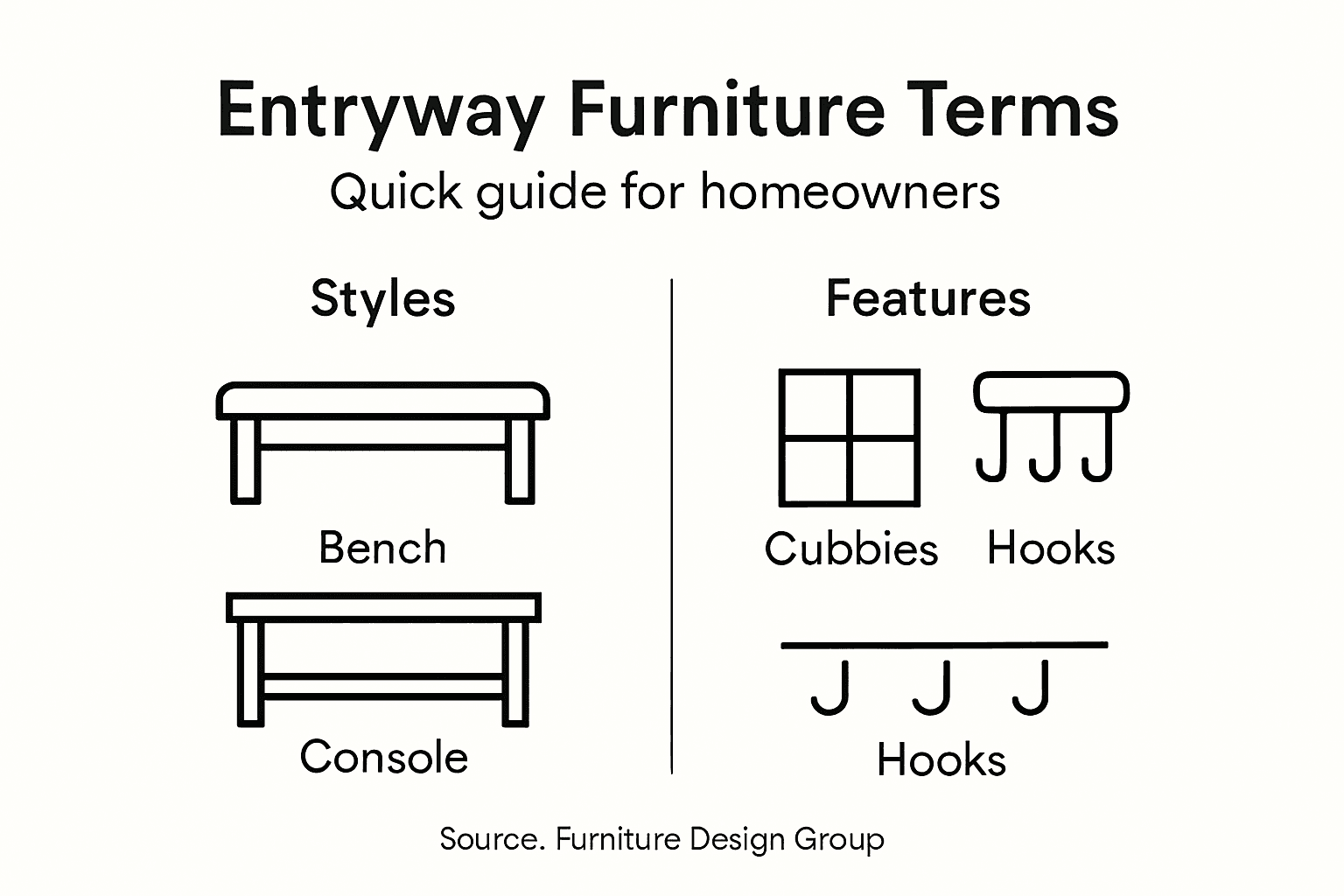
Key Design Elements You’ll Encounter
When selecting entryway furniture, you’ll hear terms that describe how pieces look and function. Craftsmanship terms like mortise-and-tenon joinery, hand-finishing, and solid wood construction indicate quality and durability. Style descriptors such as transitional, contemporary, or rustic tell you about the aesthetic direction.
Measurements matter too. Depth refers to how far the piece extends from wall to front. Height determines if the piece works as a bench or accent table. Width affects how many people can use it or what it can display.
Storage and Organization Vocabulary
Custom entryway furniture often includes specialized storage components. Understanding these terms helps you envision exactly what you’re getting:
- Cubbies – Individual compartments for organizing items by family member
- Hooks – Wall-mounted hardware for hanging coats, bags, and accessories
- Drawers – Enclosed storage for gloves, scarves, and smaller items
- Open shelving – Visible storage for frequently used items or decorative displays
- Cushioned seats – Padded surfaces for seating during boot removal
Custom mud lockers combine multiple storage solutions into one cohesive piece, maximizing function and minimizing clutter in your entryway.
These terms help you communicate with craftspeople about what you need. When you understand that you want cubbies, hooks, and a cushioned seat in one unit, specialists can design precisely what solves your daily challenges.
Material and Finish Terminology
The words used to describe materials tell you about durability and maintenance. Solid wood construction offers longevity and can be refinished over time. Stained finishes show the wood’s natural grain, while painted finishes provide color and protection. Hardware finishes like brushed nickel, oil-rubbed bronze, or polished brass affect both function and appearance.
Pro tip: Write down the specific terms you like when researching—console table, cubbies, open shelving, brushed nickel hardware—and bring this vocabulary to your consultation so craftspeople can create exactly what you envision.
Common Types of Entryway Pieces Explained
Every entryway tells a story about how a family lives. The pieces you choose determine whether your entry works as a functional system or becomes a cluttered catch-all. Maryland homeowners face unique challenges—muddy boots from spring rain, winter coats that need storage, and kids’ gear scattered everywhere. The right furniture solves these problems.
Entryway Benches: Your Foundational Piece
Benches are often the centerpiece of an entryway because they combine seating with practical function. When you’re choosing a bench, consider what matters most to your household. Different bench types serve different purposes, from storage-focused designs to upholstered seating for comfort.
The main bench categories include:
- Storage benches – Lift-top or under-seat compartments for shoes, scarves, and seasonal items
- Open shelf benches – Display-friendly with baskets or open storage below seating
- Upholstered benches – Cushioned seating prioritizing comfort and style
- Wooden benches – Solid wood construction that matches custom cabinetry
- Mudroom benches – Heavy-duty pieces designed for families with active kids
Console Tables: Styling and Display
Console tables add elegance while keeping your entryway organized. These narrow tables sit against walls, typically holding lamps, mirrors, and decorative items. Unlike benches, they don’t offer seating or substantial storage, but they provide valuable display space.
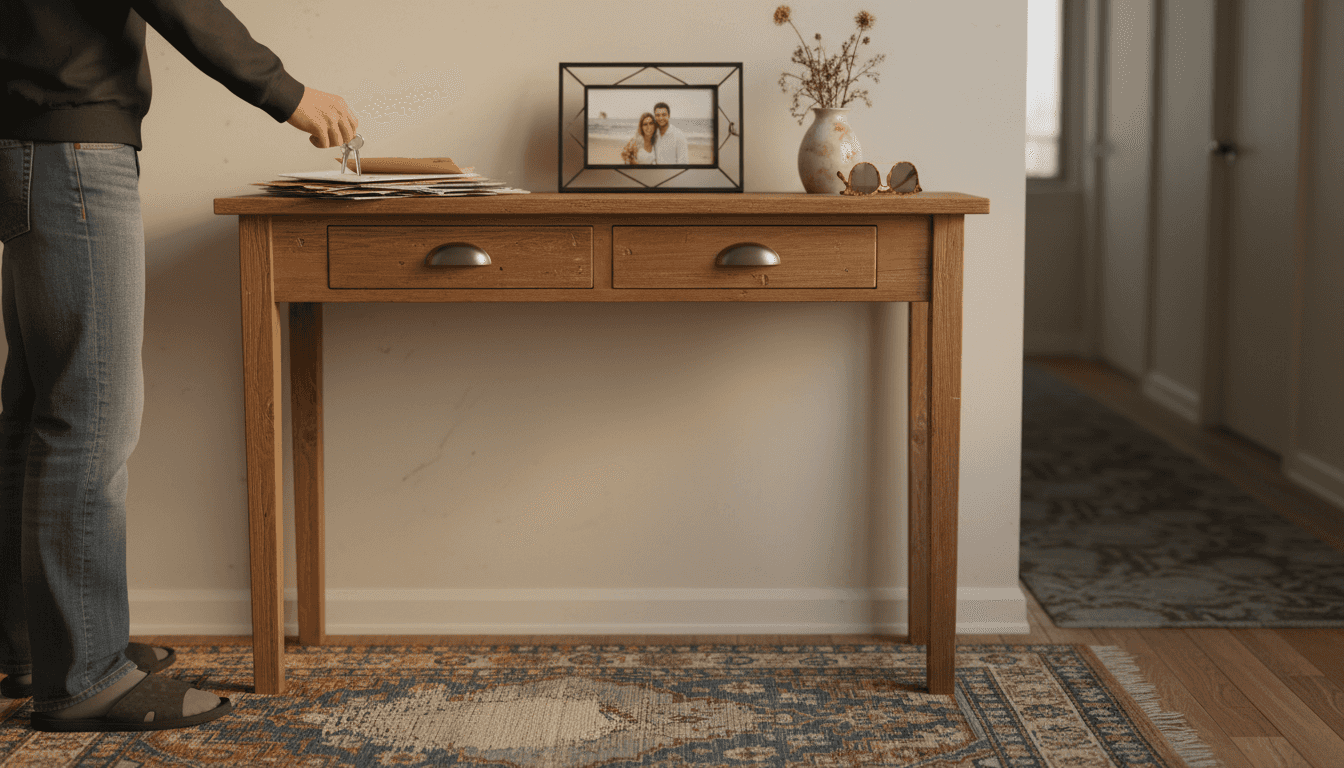
Console tables work best when you have wall space but limited floor depth. They’re ideal for displaying family photos, holiday decor, or a decorative bowl for collecting keys and mail. In Maryland homes, a console table paired with a wall-mounted mirror creates an inviting first impression.
Coat Racks and Coat Closets: Maximizing Vertical Space
Coat racks hang outerwear without taking up much floor space. Coat closets offer enclosed storage, keeping winter coats hidden and protected. The choice depends on your entryway aesthetic and how much clothing you need to store.
Vertical storage solutions work especially well in smaller entryways. A simple coat rack with multiple hooks handles daily outerwear, while a tall closet stores seasonal coats.
Mud Lockers: The Complete Solution
Mud lockers combine everything into one custom system. Seating, hooks, cubbies, shelves, and storage drawers all work together. This approach eliminates the scattered look of multiple separate pieces and keeps every family member’s items organized.
Custom mud lockers shine because they’re built specifically for your space and lifestyle. If your family needs individual cubbies for each child, hooks for backpacks, and a bench for changing boots, a mud locker delivers all of this in one cohesive design.
Custom-designed entryway furniture maximizes function in your specific space rather than forcing standard pieces to fit your needs.
Storage Units and Shelving Systems
Dedicated storage units provide enclosed or open organization beyond what a bench offers. These work well in larger entryways or when you need serious storage capacity for seasonal items, sports equipment, or outdoor gear.
Here’s a summary highlighting how key entryway furniture types address practical household needs:
| Furniture Type | Primary Purpose | Best For | Not Ideal When |
|---|---|---|---|
| Bench | Seating, storage, organization | Homes needing shoe/gear drop zones | No space for sitting |
| Console Table | Display, surface for keys | Small entries with narrow wall space | Need significant storage |
| Coat Rack/Closet | Hanging and storing outerwear | Tall items and saving floor space | Minimal vertical clearance |
| Mud Locker | All-in-one family organizer | Large, active families | Very limited entryway space |
| Storage Unit/Shelf | Bulk storage and display | Organizing seasonal or bulky items | Entryways with low wall space |
Pro tip: Assess your actual daily needs before purchasing—do you need seating, storage, or both?—then choose pieces that address your specific challenges rather than buying everything you think looks good.
Key Features: Materials and Craftsmanship
Quality entryway furniture doesn’t just look good—it performs under real-world conditions. Your mud locker handles wet boots, daily wear, and constant use. The materials and construction methods determine whether your investment lasts 5 years or 25 years.
Solid Wood Construction: The Foundation of Durability
Solid wood remains the gold standard for custom entryway furniture. When craftspeople use solid wood instead of veneer or particle board, you get a piece that can be refinished, repaired, and passed down. Hardwoods like oak, maple, and cherry offer superior durability and aging character.
Solid wood provides several advantages:
- Longevity – Withstands daily use and seasonal moisture changes
- Repairability – Dents and scratches can be sanded and refinished
- Value retention – Quality pieces appreciate or maintain worth over time
- Natural aging – Develops richer color and character with age
- Sustainability – Can be recycled or refinished indefinitely
Joinery: Where Craftsmanship Truly Matters
How pieces connect determines structural integrity. Furniture construction joints like mortise-and-tenon, dovetail, and box joints create strength that screws alone cannot match. These traditional techniques require skill and precision.
Mortise-and-tenon joints lock wood pieces together without fasteners showing. Dovetail joints create interlocking patterns that resist pulling apart. These aren’t shortcuts—they represent genuine craftsmanship that separates heirloom furniture from disposable pieces.
Finishes: Protection and Aesthetics
Finishes protect wood from moisture, scratches, and seasonal humidity swings. Stained finishes highlight natural wood grain and warmth. Painted finishes offer color protection and durability, especially important in mudrooms where splashes happen.
Quality finishes include:
- Oil finishes – Enhance grain while allowing natural aging
- Stain plus polyurethane – Durable protection with wood visibility
- Paint – Solid color with maximum protection against moisture
- Lacquer – Professional-grade finish resistant to daily wear
Hardware and Hardware Finishes
Handles, hinges, and hooks matter more than most homeowners realize. Quality hardware operates smoothly and resists corrosion. Brushed nickel, oil-rubbed bronze, and polished brass finishes each add character while serving functional purposes.
Superior materials and traditional joinery techniques create entryway furniture that improves with age rather than deteriorating.
Water Resistance and Moisture Protection
Maryland’s humidity and seasonal weather demand water-resistant construction. Quality finishes prevent swelling and warping when boots drip water. Sealed joints and properly finished wood edges protect vulnerable areas.
Custom-built pieces use materials and techniques specifically matched to your local climate. A craftsperson familiar with Maryland homes understands how to select and finish wood for your specific environment.
Pro tip: Ask your furniture maker about wood species and joinery methods before ordering—solid hardwood with mortise-and-tenon joints will outlast cheaper alternatives by decades.
Custom vs. Prefabricated: What to Know
Walking into a big box store, you’ll find prefabricated entryway pieces in standard sizes and finishes. They’re affordable and available immediately. But your entryway probably isn’t standard. Custom furniture solves problems that off-the-shelf pieces simply cannot address.
Understanding the Key Differences
Prefabricated furniture is mass-produced in factories using standardized designs and dimensions. Custom furniture is handcrafted to your specific space, needs, and aesthetic preferences. The difference goes far beyond price—it’s about fit, function, and lasting value.
Custom versus prefabricated options each serve different purposes. Prefab works if your space matches standard dimensions and your needs are generic. Custom excels when you have unique challenges or want something that reflects your home’s character.
Prefabricated Furniture: Speed and Affordability
Prefab pieces offer genuine advantages for certain situations. Lower cost makes them accessible to more homeowners. They’re immediately available—no waiting for production. Installation happens quickly since pieces arrive ready to install.
Prefab limitations include:
- Standard sizes – Won’t fit unusual spaces or dimensions
- Limited customization – Choose from existing colors and configurations
- Lower material quality – Often uses veneer or particle board
- Shorter lifespan – Typically replace after 5-10 years
- Generic appearance – Looks like everyone else’s entryway
Custom Furniture: Precision and Personalization
Custom pieces are built specifically for your home. A craftsperson measures your exact space, understands your daily routines, and designs accordingly. You choose wood species, finishes, hardware, and every functional detail.
Custom benefits include:
- Perfect fit – Uses every inch of your available space
- Material quality – Solid hardwood construction throughout
- Design flexibility – Create exactly what you envision
- Longevity – Lasts decades and can be refinished or repaired
- Unique character – No two pieces are identical
The Cost and Timeline Reality
Custom furniture costs more upfront. A quality mud locker built to your specifications typically ranges higher than prefab alternatives. However, the lifespan math changes everything. A custom piece lasting 25 years costs significantly less per year than prefab replaced every 7 years.
Timeline also differs. Prefab arrives in weeks. Custom typically takes 8-12 weeks for design, material sourcing, and handcrafted construction. This timeline allows proper attention to detail that mass production cannot match.
To help you decide between custom and prefabricated entryway furniture, here’s a detailed comparison:
| Aspect | Custom Furniture | Prefabricated Furniture |
|---|---|---|
| Fit & Space Use | Made to exact dimensions | Pre-set sizes only |
| Material Quality | Solid hardwoods, durable joins | Often veneer or particleboard |
| Cost Over Time | Higher initial, lasts decades | Lower upfront, more replacements |
| Aesthetic Options | Fully customizable finish/hardware | Limited styles and colors |
| Installation Speed | 8–12 weeks for build/install | Ready for immediate use |
Custom entryway furniture represents an investment in your home’s functionality and aesthetics that pays dividends across decades, not years.
Making Your Decision
Ask yourself: Does your entryway have unusual dimensions or angles? Do you need specific storage solutions for your family’s lifestyle? Do you value furniture that improves with age? If you answered yes to any of these, custom is worth exploring.
Prefab makes sense if you’re renting temporarily, have a perfectly standard space, or are working with a very limited budget.
Pro tip: Request a consultation to discuss your actual needs and see examples of completed work before deciding—custom furniture investments deserve thoughtful comparison with your long-term vision.
Avoiding Common Entryway Furniture Mistakes
Most entryway problems aren’t mysteries. Homeowners make predictable decisions that create clutter, wasted space, and frustrated mornings. Learning these mistakes beforehand helps you build an entryway that actually works for your family.
Prioritizing Style Over Function
The biggest mistake is choosing pieces that look beautiful but don’t solve real problems. A gorgeous console table might fit your aesthetic vision perfectly. But if your family needs shoe storage and coat hooks, that console sits empty while chaos erupts elsewhere.
Function must come first. Ask yourself these questions before selecting any piece:
- Does this solve an actual daily problem?
- Will my family use this consistently?
- Does it store what we need to store?
- Can someone easily access items without moving other things?
When furniture doesn’t address your real needs, you end up buying more pieces to compensate. That’s how entryways become cramped and dysfunctional.
Overcrowding Your Space
Common entryway design mistakes include stuffing too many pieces into limited square footage. Each additional item competes for floor space and visual attention. Cramped entryways feel chaotic, not welcoming.
Instead, commit to essentials only. Most Maryland entryways function well with:
- One seating or storage piece (bench or mud locker)
- One accent table or wall-mounted storage
- Coat rack or closet space
- Lighting solution
Less truly is more. Every item should earn its place by serving multiple purposes or solving specific needs.
Ignoring Your Space’s Actual Dimensions
Many homeowners buy furniture that technically fits but leaves no room to move. Measure your entryway width, depth, and ceiling height before selecting anything. Account for door swings, traffic flow, and how items will be accessed daily.
A mud locker that’s 2 inches narrower gives you breathing room and makes the space feel larger. Doors should open fully without hitting adjacent furniture. Benches need space in front for sitting and removing boots.
Underestimating Storage Needs
You probably need more storage than you initially think. Winter coats, boots, mittens, scarves, backpacks, umbrellas, and seasonal items accumulate quickly. Choosing a piece with insufficient storage leaves you frustrated and back-shopping within months.
Estimate your family’s actual storage volume. How many coats? How many pairs of shoes? Do you store sports equipment or seasonal decor here? Build in extra capacity. Custom mud lockers solve this perfectly—they’re sized exactly for what you need to store.
Poor Lighting Choices
Dim entryways feel unwelcoming and reduce functionality. Inadequate lighting makes it harder to find what you need and creates a cramped feeling. Layer your lighting with overhead fixtures, wall sconces, or lamps on accent tables.
Thoughtful entryway design starts with function, then adds style—never the reverse.
Neglecting Durability in High-Traffic Areas
Entryways handle wet boots, muddy paws, and constant use. Choosing delicate finishes or weak construction guarantees regret within months. Solid wood with protective finishes stands up to real life far better than veneer or particle board.
This is where custom furniture delivers genuine value. Craftspeople understand that entryway pieces need durability matched to actual usage.
Pro tip: Before purchasing any entryway piece, write down your family’s top three daily pain points—where clutter accumulates, what gets lost, what causes morning frustration—then choose furniture that directly addresses those specific challenges.
Elevate Your Entryway with Custom Solutions from Furniture Design Group
Understanding entryway furniture terms like mud lockers, cubbies, and mortise-and-tenon craftsmanship helps you visualize the perfect organizational system for your Maryland home. If clutter, limited space, or lack of durability frustrate your mornings, you are not alone. Achieving the right balance of function, style, and quality materials is essential to create an entryway that welcomes your family and guests every day.
Transform your entryway challenges into lasting solutions with Furniture Design Group. Our family-owned business specializes in custom-built entryway furniture crafted from solid wood using artisanal joinery techniques. Whether you need a tailored mud locker featuring hooks, cubbies, and cushioned seating or a smart console table setup, we bring your vision to life with precision and care. Browse our offerings and schedule a visit to our showroom today to start designing a space that improves with age and reflects your lifestyle. Take the first step now by exploring our custom furniture collections or reaching out to discuss your needs.
Frequently Asked Questions
What is entryway furniture?
Entryway furniture refers to pieces specifically designed for the transitional space between your front door and interior living areas, serving practical purposes while enhancing your home’s aesthetic.
What are the key components of a functional entryway?
Key components include entryway benches for seating, console tables for display and organization, coat racks for hanging outerwear, and mud lockers that combine multiple storage solutions into a cohesive unit.
How do materials affect the quality of entryway furniture?
Materials like solid wood provide durability and can be refinished, while lower quality options like veneer or particle board may not withstand heavy use. Quality construction techniques, such as mortise-and-tenon joints, also determine longevity.
What factors should I consider when choosing entryway furniture?
Consider your daily needs, available space, and the specific storage solutions required for your household. Additionally, think about the balance between style and functionality to avoid overcrowding or purchasing pieces that don’t address practical issues.