
TL;DR:
- Durability and functionality are key criteria for selecting 2026 entryway furniture.
- Eco-friendly materials like reclaimed wood, bamboo, and low-VOC finishes are trending.
- Smart features such as charging stations and biometric locks enhance convenience and security.
Choosing the right entryway furniture is one of the most underrated decisions a homeowner or interior designer can make. Your entryway is the first room guests see and the last one your family leaves every day. In Maryland, where home styles range from historic Annapolis rowhouses to sprawling suburban builds in Montgomery County, that challenge is even more specific. Getting the balance right between function and style takes real intention. This guide breaks down the 2026 trends shaping custom entryway furniture, from sustainable materials and smart technology to space-saving forms and color palettes, so you can make choices that last.
Table of Contents
- How to identify key entryway furniture trends for 2026
- Sustainable and eco-friendly materials take center stage
- Smart entryway furniture: Technology-driven design
- Multifunctional, space-saving, and personalized designs
- 2026 design palette: Colors, hardware, and finishing touches
- Why Maryland homes deserve entryways that break the mold
- Take the next step with custom entryway furniture
- Frequently asked questions
Key Takeaways
| Point | Details |
|---|---|
| Green materials lead | Sustainable options like reclaimed wood are the top choice for 2026 entryways. |
| Smart features matter | Integrated tech and automation are key elements in modern entryway furniture. |
| Personalization is trend-proof | Custom designs best balance function and Maryland style for every home. |
| Details set the tone | Trending colors, hardware, and finishes bring the 2026 look to life in your entryway. |
How to identify key entryway furniture trends for 2026
Not every trend deserves a spot in your entryway. Before you start shopping or sketching ideas with your designer, it helps to have a clear filter for what actually works. The best 2026 entryway trends share four qualities: durability, functionality, visual appeal, and personalization potential. If a trend checks all four, it belongs on your shortlist.
Maryland homes face specific seasonal demands. Wet winters, humid summers, and muddy springs mean your entryway furniture takes real abuse. That makes durability non-negotiable, especially for families with kids, pets, or active lifestyles. A piece that looks stunning but warps after two seasons is not a trend worth following.
Functionality is equally critical. The 2026 movement in entryway design is not just about looks. It is about pieces that do multiple jobs at once: store shoes, charge devices, hang coats, and greet guests without chaos. Maryland designers are pulling inspiration from modern curb appeal tips that emphasize clean lines and purposeful layouts from the outside in.
Here are the key criteria to use when evaluating any 2026 entryway trend:
- Durability: Can the material handle Maryland’s seasonal humidity and temperature swings?
- Functionality: Does the piece solve at least two storage or organization problems?
- Style longevity: Will this look feel dated in three years, or does it have staying power?
- Customization range: Can a craftsman adapt the design to your specific space and family needs?
- Eco impact: Is the material sourced responsibly, and does it support a healthier indoor environment?
Future-proofing your choices means thinking past the immediate trend cycle. Modular designs, for example, let you reconfigure your entryway as your household changes. A bench with removable cubbies today can become a full locker system in five years without replacing the whole unit.
Pro Tip: Before committing to any entryway design, walk through your daily routine. Count every item that enters and exits with your family. Your furniture needs to handle that volume, not just look good in a photo.
Working with specialists who understand the custom furniture design process from concept to install gives you a major advantage. Generic furniture rarely fits Maryland homes the way a bespoke piece does, and the difference shows immediately.
Sustainable and eco-friendly materials take center stage
Once you understand selection criteria, the next major theme for 2026 is green design. Sustainability is no longer a niche preference. It has become a core expectation for Maryland homeowners and designers who care about both their family’s health and the home’s long-term value.
The most popular eco-friendly materials showing up in 2026 entryway furniture include reclaimed wood, bamboo, cork, and finishes with low or zero VOC content (VOC stands for volatile organic compounds, which are chemicals that off-gas from paints and stains and affect indoor air quality). Each brings distinct benefits.
- Reclaimed wood: Rich character, reduced waste, and natural variation that makes every piece unique
- Bamboo: Harder than most domestic hardwoods, grows quickly, and has a clean modern grain
- Cork: Naturally antimicrobial, great for accent panels or seating pads
- Low-VOC finishes: Protect indoor air quality, especially important in smaller Maryland entryways with limited ventilation
- FSC-certified lumber: Forest Stewardship Council certification ensures responsible harvesting
For Maryland homes, choosing sustainable materials also makes financial sense. Homes with verified green features consistently command higher resale values and attract more serious buyers. Beyond resale, reclaimed and natural materials simply age better, developing character rather than looking worn.
“Eco-friendly furniture materials are on the rise across residential design categories, reflecting a broader cultural shift toward responsible consumption and healthier living environments.”
That shift is real, and it is reshaping what Maryland clients ask for. When we sit down with homeowners to discuss their entryway vision, eco-sourcing comes up in nearly every conversation. People want to know where their wood came from.
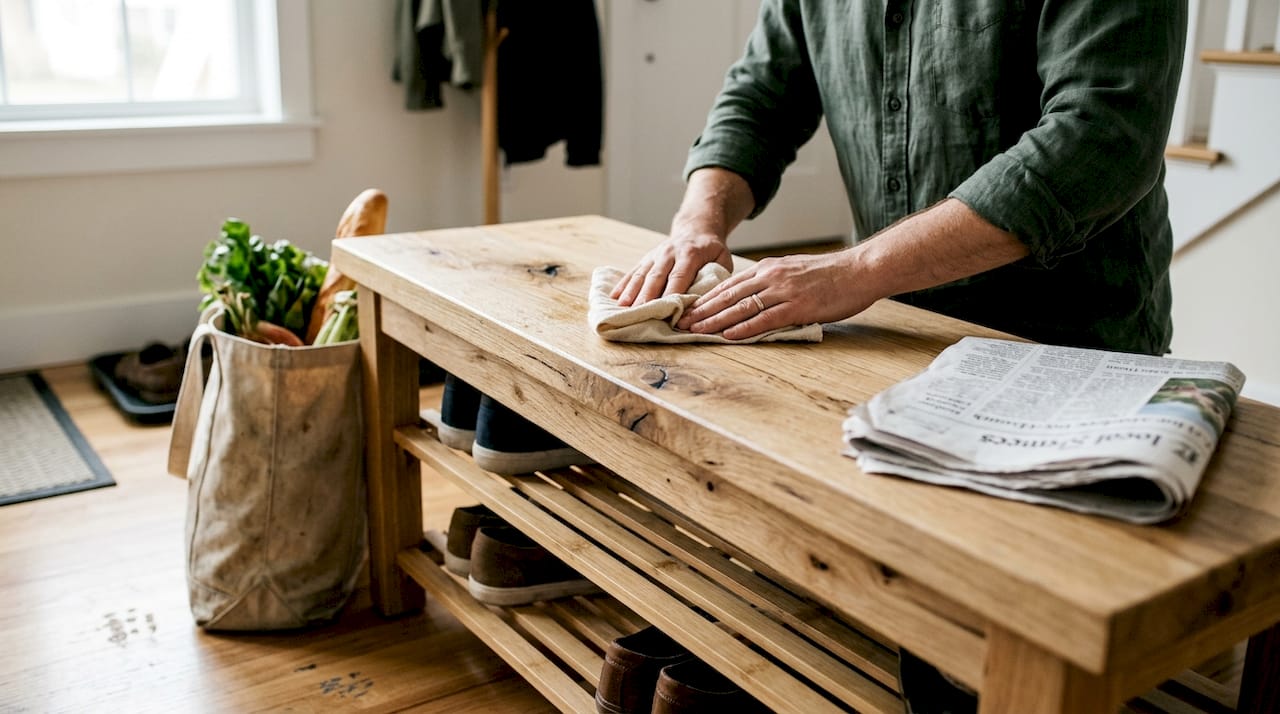
Pro Tip: Ask your furniture maker for material certifications before production begins. FSC certification for wood and GreenGuard certification for finishes are two reliable indicators of genuine sustainable sourcing, not just marketing language.
Choosing sustainable furniture creation methods also allows for more creative combinations, pairing reclaimed oak with bamboo accents, for example, without sacrificing structural integrity.
Smart entryway furniture: Technology-driven design
With sustainability in mind, Maryland designers are also embracing high-tech innovations for modern entryways. The 2026 entryway is not just a place to hang coats. It is increasingly a functional hub that connects your home’s digital ecosystem with your physical routine.
Home automation is increasingly important in entryway design, especially for Maryland households that want seamless security and convenience from the moment they walk through the door. Smart furniture integrates directly with these systems, creating a unified experience.
Here are the top four must-have tech features for 2026 entryway furniture:
- Built-in charging stations: Wireless and wired charging panels integrated into benches or console tops keep devices powered without visible cable clutter
- Motion-activated lighting: Sensor-driven LED strips inside cubbies and lockers make finding gear in the dark effortless and energy-efficient
- Keyless entry storage: Biometric or app-controlled compartments for valuables, keys, and sensitive items add a meaningful layer of home security
- Smart intercom integration: Furniture pieces designed with routing for video doorbell and intercom wiring create a polished, wired-in look instead of a retrofit mess
The appeal for Maryland homeowners is clear. Busy families need their entryway to work without thinking about it. When your bench charges your phone, your cubby locks with a fingerprint, and your lighting turns on automatically, mornings become noticeably calmer.
Pro Tip: Plan your tech integrations before construction begins, not after. Running conduit and routing cables during the build phase is far cleaner and less expensive than retrofitting smart features into finished furniture later.
The best custom makers treat smart entryway features as structural decisions, not accessories. That mindset is what separates thoughtful design from a gadget collection.
Multifunctional, space-saving, and personalized designs
Maryland’s unique spaces and family needs also drive fresh forms and uses for entryway pieces. Whether you have a compact Baltimore rowhouse entry or a wide foyer in a Bethesda colonial, multifunctional furniture is the smartest investment you can make in 2026.
The trend is clear: homeowners want pieces that solve multiple problems without making the space feel crowded. Built-in bench seating with under-seat drawers, modular cubby systems that expand as families grow, and custom coat lockers with individual compartments for each family member are all gaining traction.
Popular multifunctional ideas trending in 2026:
- Bench and storage combos: Lift-top benches that hide shoes, sports gear, and seasonal items below
- Modular locker systems: Individual units that can be rearranged or expanded without starting over
- Built-in mirror panels: Integrated mirrors in cabinet doors that add light and eliminate the need for a separate mirror
- Convertible hooks and rails: Adjustable systems that change configuration for different seasons or family members
- Hidden laundry drop zones: Concealed hamper sections within entryway cabinetry for homes without mudroom access
The custom entryway solutions that work best are the ones built around how your household actually moves. Here is a quick comparison of popular 2026 space-saving options:
| Option | Best use case | Customization potential | Smart features || |—|—|—|—| | Built-in bench with storage | Families with children | High | Charging ports, sensor lighting | | Modular cubby system | Growing households | Very high | Optional smart locks | | Floating console with hooks | Minimalist or small entries | Moderate | Cable management | | Full-height locker unit | Active families, gear storage | Very high | Biometric locks, USB charging |
No single solution fits every Maryland home. That is exactly why custom-built pieces outperform off-the-shelf options every time.
2026 design palette: Colors, hardware, and finishing touches
Having looked at shape and function, the final layer is the finishing details that define the 2026 look. Color, hardware, and texture are the elements that signal whether your entryway feels current or dated, and getting them right takes careful attention.
The 2026 palette for entryway furniture leans into warmth and depth. Earth tones like warm terracotta, aged linen, and sandstone are replacing the cool grays that dominated the 2020s. Deep, saturated colors are also trending: forest green, navy, and midnight blue make a strong statement on locker doors and accent panels without overwhelming a small space.
Popular hardware finishes for 2026 include:
- Brushed brass: Warm without being flashy, pairs well with reclaimed wood and earth-tone palettes
- Matte black: Clean, modern, and highly versatile across traditional and contemporary Maryland home styles
- Mixed metals: Combining two finishes in one piece (brass pulls with black hinges, for example) adds intentional visual interest
- Unlacquered brass: Develops a natural patina over time, which suits the organic, sustainable design direction
Texture plays a bigger role in 2026 than in recent years. Fluted wood panels, woven textile insets, and handcrafted joinery details give custom pieces a tactile quality that flat, mass-produced furniture simply cannot replicate. Maryland designers are also favoring minimalist styling, meaning fewer decorative elements chosen for maximum impact rather than maximum quantity.
Impactful finishing details that define the 2026 entryway look:
- Integrated LED lighting inside cabinets and along baseboards
- Contrast trim using a secondary wood species or metal accent
- Handcrafted dovetail or mortise-and-tenon joinery left visible as a design feature
- Matte or satin topcoats instead of high-gloss finishes
- Coordinated coat hooks in a matching or complementary metal finish
The right finishing details tie every element together and signal quality from the first glance.
Why Maryland homes deserve entryways that break the mold
Here is something we have learned in over 20 years of crafting custom entryway furniture for Maryland homes: the clients who are happiest with their results are almost never the ones who brought in a printed trend board and said “make this.”
The best entryways we have ever built came from conversations, not catalogs. A family in Howard County needed a locker system that could handle lacrosse gear, a dog leash station, and a homework drop zone, all in a six-foot stretch of wall. No trend forecast ever described that piece. But it was exactly right for that household.
Trends are useful as a starting framework. They show you what materials are performing well, what technology is mature enough to integrate reliably, and what colors feel current. But copying a trend wholesale without adapting it to your actual life produces an entryway that photographs beautifully and frustrates you daily.
True personalization through personalized custom projects means your furniture reflects your routine, your family, and your home’s architecture. That is the kind of design that does not go out of style.
Take the next step with custom entryway furniture
If this guide has given you a clearer picture of what your 2026 entryway could look like, the next step is bringing those ideas to life with people who build them every day.
Furniture Design Group is a Maryland-based, family-owned team with over 20 years of experience crafting bespoke entryway furniture, from mud lockers to full custom locker systems. We work with both homeowners and interior designers to build pieces that are functional, trend-forward, and built to last. Whether you are starting from scratch or refining an existing design, we are ready to help. Explore custom furniture options and reach out to schedule your design consultation today.
Frequently asked questions
What is the most popular entryway furniture material for 2026?
Reclaimed wood and bamboo are leading eco-friendly material trends for Maryland entryways in 2026, valued for their durability, sustainability, and visual character.
How can smart technology improve my entryway furniture?
Smart tech features like built-in charging stations, motion-activated lighting, and biometric storage locks make daily routines faster and more secure without adding visual clutter.
Which colors and finishes dominate 2026 entryway furniture?
Earthy tones like warm terracotta and sandstone, paired with matte black or brushed brass hardware, define the 2026 entryway palette for Maryland homes.
How do I customize entryway furniture for a small Maryland home?
Opt for multifunctional pieces like lift-top benches and modular cubby systems that are built to your exact wall dimensions and daily storage needs.