
Maryland homeowners face a daily battle with cluttered entryways that lack proper storage. Shoes, coats, bags, and miscellaneous items pile up, creating chaos right at your front door. This step-by-step guide shows you how custom furniture transforms messy entryways into organized, functional spaces that improve daily flow by over 40%, giving you back time and peace of mind every single day.
Table of Contents
- Prerequisites And Preparation
- Selecting The Right Custom Entryway Furniture
- Step-By-Step Entryway Furniture Installation And Organization
- Common Mistakes And How To Avoid Them
- Expected Results And Maintenance For Lasting Organization
- Elevate Your Entryway With Custom Solutions From Furniture Design Group
- Frequently Asked Questions About Entryway Organization
Key Takeaways
| Point | Details |
|---|---|
| Measure First | Precise measurements including door swing clearance prevent costly sizing errors and ensure proper furniture fit. |
| Choose Quality Materials | Solid hardwood custom furniture resists Maryland’s humidity and temperature fluctuations far better than particleboard alternatives. |
| Follow Systematic Installation | A step-by-step approach reduces setup time by 30% and maximizes organizational efficiency from day one. |
| Avoid Common Pitfalls | Overcrowding storage, skipping floor protection, and inconsistent maintenance lead to rapid organization breakdown. |
| Maintain Weekly Routines | Regular tidying and decluttering sessions ensure your organized entryway stays functional long term. |
Prerequisites and Preparation
Before investing in custom entryway furniture, thorough preparation sets you up for success. Rushing this stage leads to expensive mistakes and frustration down the road.
Start by measuring your entryway dimensions precisely. Record the width, depth, and height of your available space. Don’t forget to account for door swing clearance. A door needs at least 36 inches to open fully without hitting furniture. Mark these measurements clearly on paper or your phone.
Next, clear everything from your entryway completely. This gives you a blank slate to work with. As you remove items, sort them into three categories: daily use items like keys and shoes, seasonal items like winter coats, and things that don’t belong in the entryway at all. This sorting process reveals exactly how much storage capacity you actually need.
Gather your preparation tools before shopping for custom furniture options. You’ll need:
- Measuring tape (25 feet minimum)
- Notebook and pen for dimensions
- Cleaning supplies for the space
- Labels for categorizing items
- Calculator for budget planning
Set a realistic budget early. Most Maryland homeowners spend between $800 and $1500 on quality custom entryway furniture. This range gets you durable pieces that last decades, not cheap particleboard that falls apart in three years. Factor in installation costs if you’re not doing it yourself.
Create a simple floor plan sketch showing where furniture will go. Use your measurements to draw the space to scale. This visual guide prevents you from buying pieces that look great but don’t actually fit your layout.
Finally, consider your household’s specific needs. Do you have young children who need low hooks? Do wet winter boots require drainage features? Does anyone use mobility aids that need extra clearance? Answering these questions now shapes your furniture selection later.
Selecting the Right Custom Entryway Furniture
Choosing custom furniture designed for Maryland conditions ensures your investment lasts. Not all materials and designs handle our humid summers and temperature swings equally well.
Prioritize solid hardwood construction over particleboard or MDF. Custom hardwood mud lockers outperform particleboard by 60% in humidity resistance, making them essential for Maryland’s climate. Oak, maple, and cherry hold up beautifully through seasonal changes without warping or deteriorating.
Modular designs offer flexibility as your needs change. A young family might need low hooks and cubbies now, but teenagers require different storage five years later. Modular systems let you reconfigure without replacing everything. Look for pieces with adjustable shelves, removable dividers, and expandable sections.
Focus on practical features that boost daily function. The best custom entryway furniture styles incorporate these elements:
- Individual labeled bins or cubbies for each family member
- Multiple hook heights accommodating adults and children
- Built-in benches for comfortable shoe changing
- Closed cabinets hiding clutter from view
- Ventilated compartments preventing odor buildup
Pro Tip: Request furniture with sealed backs and bottoms. This simple feature blocks moisture from penetrating the wood, extending lifespan significantly in humid conditions.
Match furniture dimensions carefully to your space. A piece that’s too large creates bottlenecks and frustration. Too small wastes valuable storage potential. Use your earlier measurements to ensure at least 30 inches of walkway clearance remains after installation.
| Feature | Standard Option | Custom Advantage |
|---|---|---|
| Material | Particleboard/MDF | Solid hardwood (60% better humidity resistance) |
| Configuration | Fixed layout | Modular/adjustable components |
| Sizing | Stock dimensions | Precisely fitted to your space |
| Durability | 3-5 years typical | 20+ years with proper care |
Consider finish options that resist daily wear. Hand-rubbed oil finishes highlight wood grain beautifully while offering good protection. Catalyzed varnishes provide superior scratch and moisture resistance for high-traffic entryways. Discuss durability versus aesthetics with your furniture maker, balancing both needs based on your household activity level.
Review material durability insights when comparing wood species and finishes. Understanding how different materials respond to stress helps you make informed choices that match your budget with expected longevity.
Step-by-Step Entryway Furniture Installation and Organization
Proper installation and systematic organization turn your custom furniture into a functional system. A stepwise installation approach reduces setup time by 30% compared to random placement, giving you better results faster.
Follow these installation steps in order:
- Clean the installation area thoroughly, removing dust and debris that could scratch furniture or floors.
- Lay protective padding or moving blankets on the floor to prevent damage during assembly.
- Assemble furniture components following manufacturer instructions precisely, checking that all hardware is tight.
- Position assembled pieces according to your floor plan, ensuring door clearance and traffic flow remain unobstructed.
- Secure furniture to wall studs if taller than 30 inches to prevent tipping hazards.
- Test stability by gently pushing on upper sections before loading with items.
Once installation is complete, organize your items strategically. The goal is intuitive access where everything has a designated home.
Start with daily essentials. Keys, wallets, and phones go in small trays or hooks at eye level near the door. You grab these last when leaving and want them immediately visible when entering. Shoes worn daily belong in open lower cubbies for quick access.
Next, arrange seasonal items. Winter coats and boots take up more space than summer gear. Use upper hooks and back cubbies for off-season storage, keeping current season items front and center. Swap these positions twice yearly during spring and fall.
Pro Tip: Label each cubby or bin with family member names or item categories. This simple step trains everyone to return items to correct spots, maintaining organization automatically.
Implement these organization principles:
- Most frequently used items go in the easiest to reach spots
- Heavy items store low to prevent tipping and make retrieval safer
- Similar items group together (all sports equipment in one section)
- Visual barriers like bins hide small clutter while maintaining access
For mud locker installation tips specific to Maryland homes, consider drainage features for wet boots and ventilated sections preventing mildew in humid months. These details matter for long-term function.
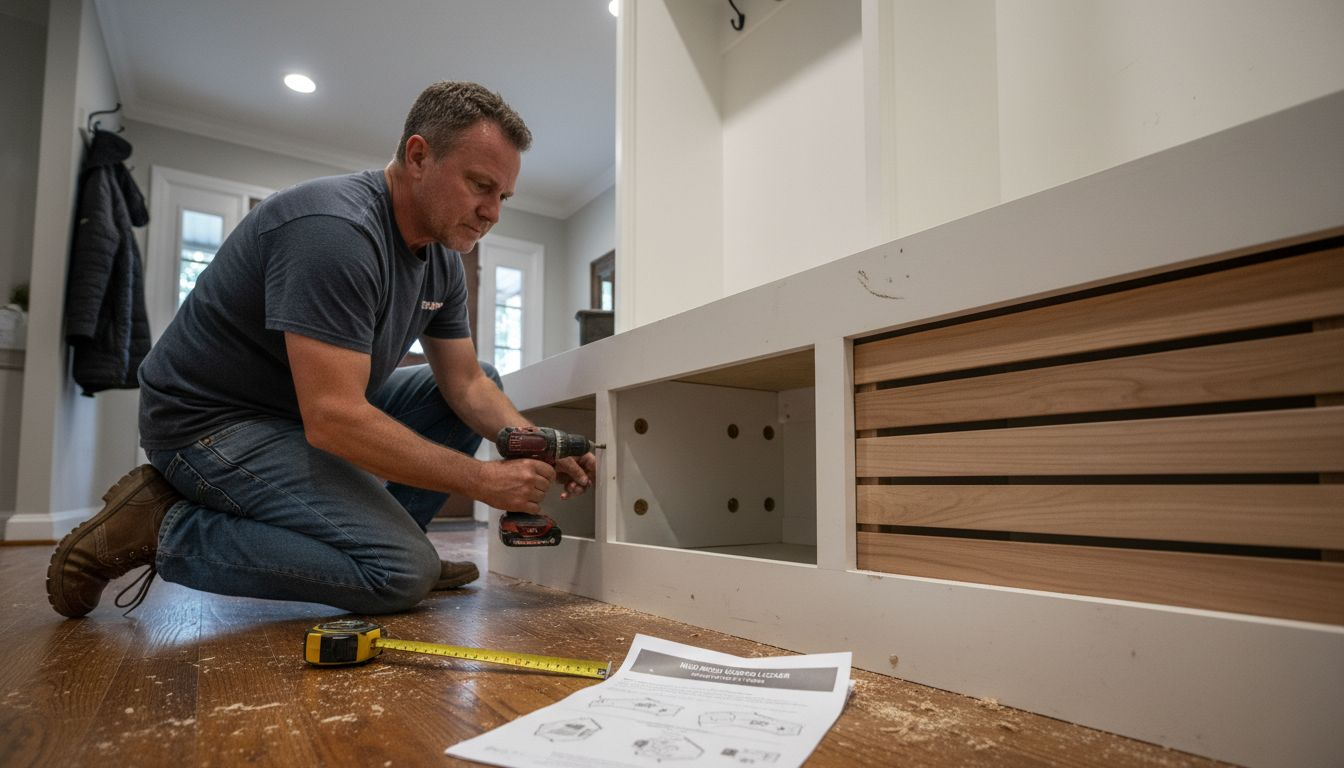
Establish a weekly maintenance routine immediately. Every Sunday evening, spend 10 minutes removing items that migrated to the entryway but don’t belong there. This prevents gradual clutter accumulation that undermines your organized system.
Reference custom joinery installation advice for advanced techniques ensuring furniture remains stable and attractive through years of use.
Common Mistakes and How to Avoid Them
Even well-planned entryway organization fails when common errors creep in. Recognizing these pitfalls early saves you time, money, and frustration.
Overcrowding storage ranks as the number one mistake. Just because furniture has 12 cubbies doesn’t mean you should fill all 12. Leave at least 20% capacity empty for daily flex and preventing that stuffed, chaotic look. Implement a one-in, one-out rule: when you add something new to entryway storage, remove something old.
Floor protection gets overlooked constantly, causing expensive damage. Ignoring floor protection causes 40% faster furniture and flooring wear, significantly decreasing the lifespan of both surfaces. Place felt pads under all furniture legs. Use weatherproof mats in high-traffic zones where wet shoes land. These simple additions extend your investment by years.
Buying incorrectly sized furniture happens when you skip careful measuring. A piece that looked perfect online becomes an obstacle when it blocks your door swing or leaves no walkway. Always verify dimensions against your actual space before purchasing. If measurements feel tight, go smaller. Entryways need breathing room to function properly.
Neglecting regular decluttering allows clutter to creep back gradually. You don’t notice the problem until your organized entryway looks chaotic again. Schedule specific maintenance times rather than waiting until it bothers you:
- Daily: 2-minute evening sweep moving misplaced items
- Weekly: 10-minute deep check removing non-entryway items
- Monthly: 30-minute assessment adjusting storage as needs change
- Seasonally: Full reorganization swapping cold and warm weather items
Expert insight: The most successful entryway organizations treat maintenance as a system, not a chore. Build it into your routine like brushing teeth, and it becomes automatic.
Skipping quality in favor of saving money proves expensive long-term. Cheap furniture fails within years, requiring replacement. Quality custom pieces last decades, making them cheaper per year of use. Calculate cost per year rather than upfront price when making decisions.
For more entryway organization tips addressing Maryland-specific challenges like seasonal weather transitions, consult with local custom furniture experts who understand regional conditions.
Expected Results and Maintenance for Lasting Organization
Understanding realistic outcomes and ongoing care requirements ensures your organized entryway delivers lasting value. Setting proper expectations prevents disappointment and helps you maintain momentum.
Expect significant efficiency improvements immediately. Most homeowners report 40% better daily flow and organization effectiveness after implementing systematic entryway organization with proper furniture. You’ll spend less time searching for keys, shoes, and bags. Morning routines become smoother when everything has a designated, easily accessible spot.
Budget expectations matter for planning purposes. Typical budgets for custom entryway furniture range $800 to $1500 for quality pieces in Maryland. This investment breaks down to roughly $40 to $75 per year over a 20-year lifespan, making custom furniture remarkably cost-effective compared to replacing cheap alternatives every few years.
| Investment Level | Furniture Quality | Expected Lifespan | Annual Cost |
|---|---|---|---|
| $300-500 | Basic particleboard | 3-5 years | $60-167/year |
| $800-1200 | Quality custom hardwood | 15-20 years | $40-80/year |
| $1500+ | Premium custom with features | 25+ years | $60/year or less |
Long-term maintenance requires minimal effort when you establish consistent routines. Weekly tidying takes 10 minutes maximum. This involves:
- Returning misplaced items to proper storage spots
- Wiping down surfaces to remove dust and dirt
- Checking hooks and hardware for looseness
- Removing accumulated mail, receipts, or random papers
Seasonal adjustments keep your system relevant as weather and needs change. Swap winter and summer items twice yearly. Reassess storage allocation as children grow or household routines evolve. Custom modular furniture adapts easily to these shifts without requiring new purchases.
Over 80% of homeowners who implement systematic organization with quality furniture maintain neat, functional entryways long-term. The key difference between success and failure is routine maintenance, not initial setup quality. Treat organization as an ongoing practice rather than a one-time project.
For custom furniture pricing information specific to your space and needs, request quotes that include installation and long-term care guidance. Understanding total cost of ownership helps you make informed decisions balancing immediate budget with lasting value.
Elevate Your Entryway with Custom Solutions from Furniture Design Group
Transforming your entryway from cluttered chaos to organized efficiency starts with the right furniture partner. You’ve learned the steps, now it’s time to make them real in your Maryland home.
Furniture Design Group specializes in expertly crafted custom entryway furniture options designed specifically for Maryland conditions. With over 20 years of experience creating bespoke mud lockers and storage solutions, we understand exactly what works in our humid summers and variable winters. Our solid hardwood construction ensures your investment lasts decades, not years.
Every piece we build balances beautiful craftsmanship with practical function. We work directly with you to design storage that fits your exact space, matches your style preferences, and accommodates your household’s specific needs. From initial measurements through final installation, our guidance ensures everything fits perfectly and functions flawlessly. Visit our showroom to see quality custom furniture in person and discuss how we can transform your entryway into the organized, welcoming space you deserve.
Frequently Asked Questions About Entryway Organization
What are must-have features in custom entryway furniture?
Prioritize individual storage compartments for each family member, multiple hook heights, built-in seating for shoe changes, and ventilated sections preventing odor buildup. Solid hardwood construction and modular design ensure durability and adaptability as your needs evolve over time.
How often should I declutter my entryway to maintain organization?
Perform quick daily sweeps taking 2 minutes to return misplaced items, weekly 10-minute reviews removing non-entryway belongings, and monthly 30-minute assessments adjusting storage allocation. Seasonal deep reorganizations twice yearly keep systems aligned with weather changes.
Can modular furniture adapt to changing storage needs?
Yes, modular designs allow you to reconfigure components, adjust shelf heights, and add or remove sections without replacing entire systems. This flexibility accommodates life changes like growing children, new hobbies, or different seasonal storage requirements while protecting your initial investment.
What is the ideal budget range for custom entryway furniture in Maryland?
Quality custom entryway furniture typically ranges from $800 to $1500 in Maryland, providing solid hardwood construction and features that last 15 to 25 years. This translates to $40 to $80 annual cost, making custom pieces more economical than replacing cheaper alternatives every few years.
Are there specific materials better suited to Maryland’s climate for entryway furniture?
Solid hardwoods like oak, maple, and cherry significantly outperform particleboard in Maryland’s humid conditions, offering 60% better moisture resistance. Sealed backs and bottoms, catalyzed varnish finishes, and ventilated compartments further protect furniture from seasonal temperature and humidity fluctuations throughout the year.