
Your entryway sets the tone for your entire home. Yet most homeowners struggle with cluttered shoes, misplaced keys, and coats piled haphazardly. Disorganized entryways waste precious time and create daily frustration. This guide explores how custom furniture solutions can transform your entryway into an efficient, welcoming space that saves time and reduces stress.
Table of Contents
- Understanding Entryway Organization: Purpose And Benefits
- The Functional Anatomy Of Entryway Organization
- Custom Furniture Craftsmanship: Materials, Design, And Durability
- Practical Storage Solutions For Personalized Entryways
- Common Misconceptions About Entryway Organization
- Comparing Modular And Custom Entryway Furniture Options
- Applying Entryway Organization: Planning Your Custom Furniture Solution
- Discover Custom Entryway Furniture With Furniture Design Group
- Frequently Asked Questions
Key takeaways
| Point | Details |
|---|---|
| Efficiency improvement | Organizing zones improves daily routine efficiency by up to 30% |
| Durability advantage | Custom hardwood furniture lasts 15 to 20% longer than mass produced options |
| Ergonomic design | Proper bench heights and shelf depths reduce physical strain during daily use |
| Personalized storage | Tailored solutions address specific family needs and reduce clutter significantly |
| Common mistakes | Many homeowners underestimate the importance of multi-functional zones |
Understanding entryway organization: purpose and benefits
Entryway organization means creating dedicated zones and storage systems for items you use when entering or leaving your home. This approach transforms chaotic spaces into functional areas that support your daily routines.
Your entryway serves multiple critical functions. It provides quick drop zones for keys and mail, storage for shoes and coats, and space for bags and accessories. When these functions work together seamlessly, your home becomes more efficient and welcoming.
The benefits extend beyond aesthetics. A well organized entryway reduces morning stress, eliminates frantic searches for misplaced items, and creates a positive first impression for guests. Studies show that clutter free spaces improve mood and mental clarity, making your arrival and departure experiences more pleasant.
Key benefits of proper entryway organization include:
- Reduced time spent searching for essentials like keys, wallets, and bags
- Improved household flow with designated spots for each family member
- Enhanced home value through better space utilization and aesthetic appeal
- Lower stress levels from knowing everything has its place
- Protection for flooring and walls from weather related damage
The functional anatomy of entryway organization
Effective entryway organization relies on distinct functional zones that work together. Each zone serves a specific purpose and contributes to overall efficiency.
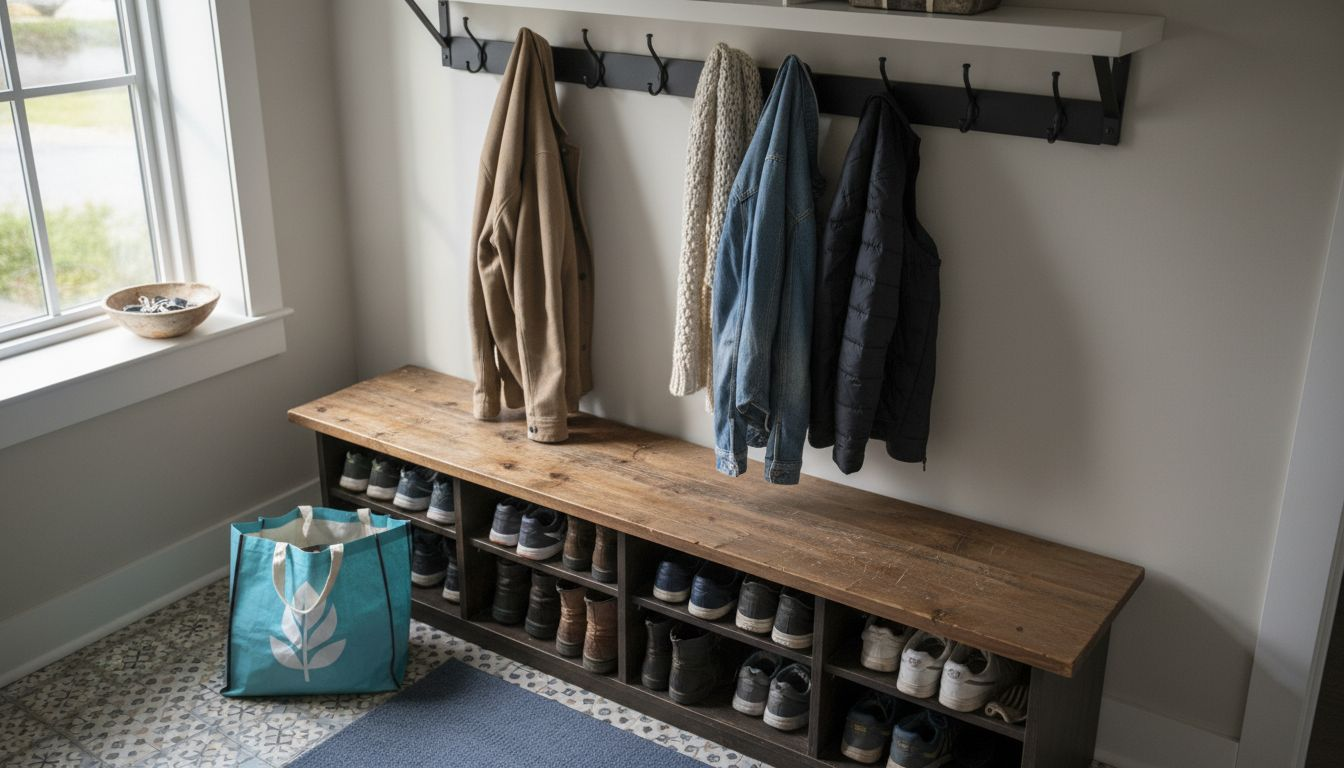
The drop zone handles immediate needs when you walk through the door. This area typically includes a small shelf or tray for keys, mail, and phones. Placing these items in a consistent location saves countless minutes every week.
Shoe storage prevents floor clutter and protects your home from outdoor dirt. Options range from open cubbies for quick access to closed cabinets for a cleaner look. The right choice depends on your family size and preferences.
Coat and bag areas keep outerwear accessible without creating visual chaos. Hooks work well for daily use items, while deeper storage handles seasonal coats and rarely used accessories.
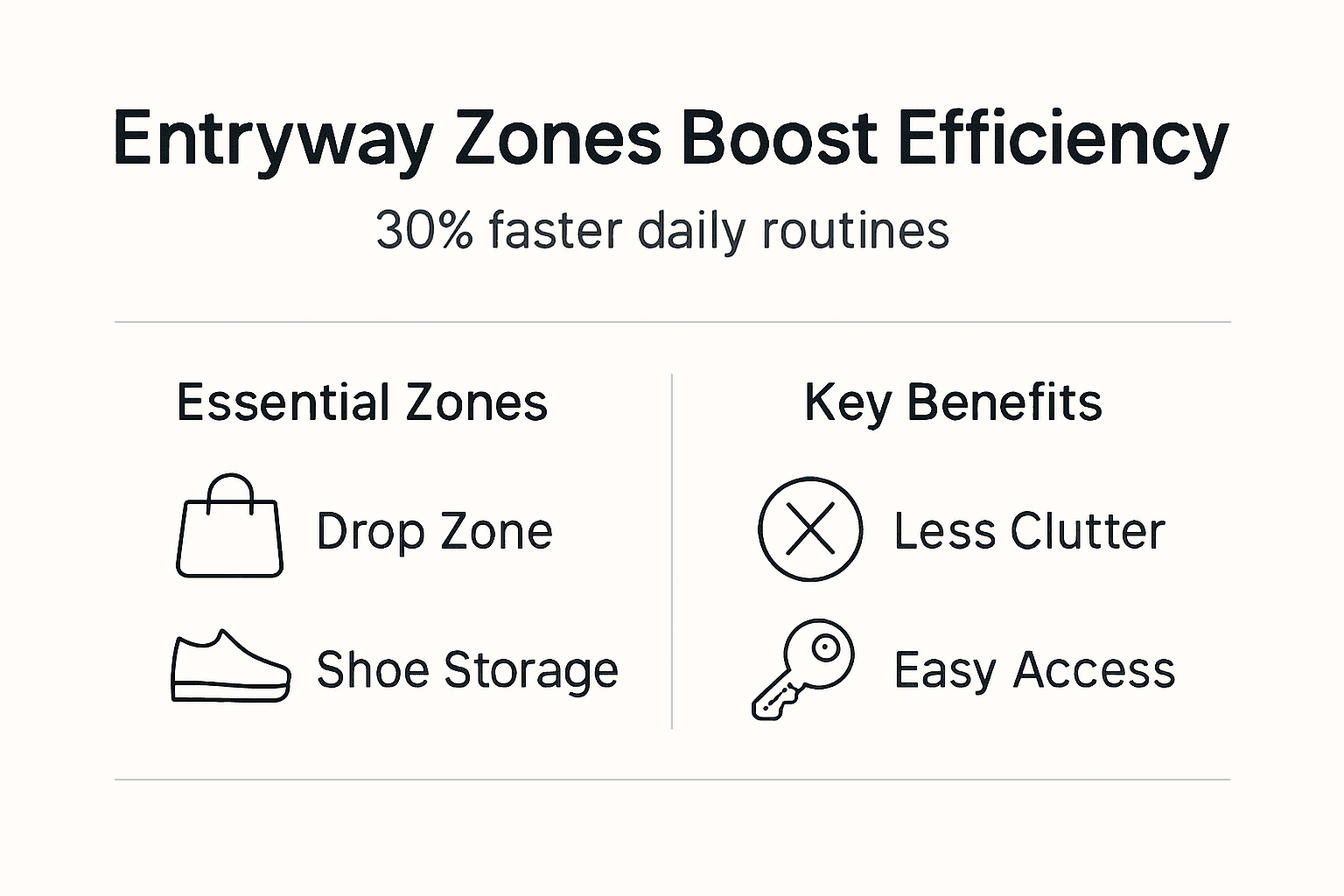
Research confirms that organizing zones improves task efficiency by up to 30% in daily entry and exit routines. This efficiency gain translates to real time savings. A family of four can save 15 to 20 minutes daily by implementing proper zones.
Maryland homeowners benefit particularly from well designed entryways due to seasonal weather changes. Wet coats and muddy shoes require dedicated spaces that prevent damage to your home. Custom furniture craftsmanship addresses these regional needs with durable, weather resistant materials.
Functional zones should include:
- Drop zone for immediate essentials within arm’s reach of the door
- Low level shoe storage that accommodates boots and sneakers
- Mid level hooks and hangers for coats and bags at accessible heights
- Upper shelving for seasonal items and less frequently used accessories
- Bench seating for comfortable shoe removal and putting on footwear
Efficiency Boost: Organizing your entryway into functional zones can reduce daily transition time by 30%, saving your family up to 20 minutes every day.
Custom furniture craftsmanship: materials, design, and durability
Material selection dramatically impacts your entryway furniture’s longevity and functionality. Solid hardwoods like oak, maple, and cherry offer superior durability compared to engineered alternatives.
Research indicates that hardwood furniture durability extends 15 to 20% longer under typical entryway conditions. This extended lifespan justifies the higher initial investment through decades of reliable use.
Custom craftsmanship matters because mass produced furniture rarely fits your exact space or needs. Skilled artisans can adjust dimensions, modify storage configurations, and select finishes that complement your home’s style. This personalization ensures every inch of space works efficiently.
Ergonomic design principles guide proper furniture dimensions. Studies show that bench heights between 17 and 19 inches and shelf depths of 12 to 15 inches optimize usability and comfort. These measurements accommodate diverse body types and reduce strain during daily use.
Finish selection protects your investment. Water resistant polyurethane finishes shield wood from moisture damage, while natural oils enhance grain patterns and provide moderate protection. Your choice should balance aesthetic preferences with practical durability needs.
Quality indicators in custom furniture include:
- Dovetail or mortise and tenon joinery instead of staples or nails
- Full extension drawer slides rated for heavy daily use
- Adjustable shelving that adapts to changing storage needs
- Locally sourced hardwoods that support sustainability
- Hand applied finishes with multiple protective coats
Pro Tip: Request wood samples with different finishes applied to see how they look in your actual lighting conditions before committing to a final selection.
Custom entryway furniture craftsmanship combines these material and design principles to create pieces that serve your family for generations.
Practical storage solutions for personalized entryways
Custom entryway furniture comes in multiple forms, each addressing specific storage challenges. Understanding these options helps you design a solution that matches your lifestyle.
Mud lockers provide comprehensive storage with individual compartments for each family member. These units typically include upper hooks, a mid level shelf, lower cubbies, and a bench. This all in one design keeps everyone’s belongings separate and organized.
Benches with built in storage offer seating plus hidden compartments for shoes, seasonal items, or cleaning supplies. Lift top designs provide easy access while maintaining a clean appearance.
Wall mounted cubbies and hooks maximize vertical space in smaller entryways. These solutions work particularly well in homes where floor space is limited but wall space is available.
Adjustable systems grow with your family’s changing needs. Removable dividers, repositionable hooks, and modular components let you reconfigure storage as children grow or routines evolve.
Maryland’s seasonal climate requires specific considerations. Spring rain, summer humidity, and winter snow all affect entryway needs. Custom solutions can incorporate ventilated shoe storage, waterproof bench cushions, and easy to clean surfaces.
Practical storage features include:
- Individual lockers with nameplates or personalized details
- Pull out bins for pet supplies, sports equipment, or cleaning tools
- Integrated charging stations for phones and tablets
- Mail sorting systems with labeled compartments
- Umbrella stands or holders built into the design
Pro Tip: Include at least one drawer with a lock for storing spare keys, important documents, or valuables you want to keep secure but accessible.
Custom storage solutions address these diverse needs through personalized design that reflects how your family actually uses the space.
Common misconceptions about entryway organization
Several persistent myths prevent homeowners from achieving truly functional entryways. Recognizing these misconceptions helps you avoid common mistakes.
-
A simple coat rack and shoe tray provide sufficient organization. Reality shows that minimal solutions create bottlenecks during busy mornings. Comprehensive systems with dedicated zones for each function prevent conflicts and save time.
-
Any furniture fits all entryway needs without customization. Standard furniture dimensions rarely match actual space constraints. Custom pieces maximize every available inch while addressing your specific storage requirements.
-
Mass produced furniture offers comparable durability to custom options. Manufacturing shortcuts like particle board cores and stapled joints significantly reduce lifespan. Quality custom pieces built with solid wood and traditional joinery last decades longer.
-
Entryway organization only requires storage for coats and shoes. Modern families need space for technology, pet supplies, sports equipment, and more. Multi-functional zones accommodate these diverse items efficiently.
-
Entryway furniture should match other home furniture exactly. Coordinating style is important, but entryway pieces require more durable finishes and practical features than living room furniture. Prioritize function over perfect aesthetic matches.
-
Professional design consultation is unnecessary for simple spaces. Even small entryways benefit from expert space planning. Professionals identify opportunities you might miss and prevent costly mistakes.
Comparing modular and custom entryway furniture options
Choosing between modular and custom furniture requires understanding the trade-offs involved. This comparison helps you make an informed decision.
| Factor | Modular Furniture | Custom Furniture |
|---|---|---|
| Upfront cost | Lower initial investment, typically $300 to $800 | Higher initial investment, typically $1,200 to $3,500 |
| Fit to space | Standard dimensions may leave gaps or not fit properly | Exact fit maximizes every inch of available space |
| Flexibility | Can rearrange or add components over time | Fixed configuration requires planning changes |
| Durability | Shorter lifespan of 5 to 10 years with typical use | Longer lifespan of 20 to 30 years or more |
| Craftsmanship | Machine made with lower quality joinery methods | Hand crafted with traditional joinery techniques |
| Customization | Limited color and configuration options | Unlimited material, finish, and feature choices |
| Lead time | Immediate availability or short shipping wait | 4 to 8 weeks for design and construction |
| Resale value | Minimal resale value after use | Retains value and appeals to home buyers |
Modular systems work well for renters, temporary living situations, or homeowners who frequently relocate. The lower cost and flexibility suit changing circumstances.
Custom furniture makes sense for long term homeowners who want maximum functionality and durability. The higher investment pays dividends through decades of reliable service and enhanced home value.
Consider custom furniture if you have unusual space dimensions, specific aesthetic requirements, or need specialized features like pet feeding stations or technology integration. The upfront cost difference becomes negligible when calculated over the furniture’s lifespan.
Applying entryway organization: planning your custom furniture solution
Transforming your entryway from cluttered to organized requires methodical planning. Follow these steps to create your ideal custom furniture solution.
-
Assess your family’s daily routines and storage needs. Document what items enter and leave through your entryway. Count shoes, coats, bags, and accessories each family member uses regularly. This inventory guides storage capacity requirements.
-
Measure your space accurately including height, width, and depth. Note door swing paths, light switches, outlets, and heating vents. These constraints affect furniture placement and design options.
-
Identify must have features versus nice to have additions. Prioritize elements that solve your biggest frustrations first. You can always add features later if budget allows.
-
Choose materials that balance durability with aesthetic appeal. Consider how different woods and finishes will age in your specific conditions. Select options that coordinate with adjacent rooms.
-
Incorporate ergonomic principles into your design. Ensure bench heights fall between 17 and 19 inches for comfortable seating. Position hooks at appropriate heights for each family member.
-
Plan for future needs and changing circumstances. Include adjustable components that adapt as children grow or family size changes. Build in capacity for guests or seasonal storage fluctuations.
-
Consult with experienced craftsmen who understand both design principles and construction techniques. Their expertise helps you avoid common mistakes and identifies opportunities you might overlook.
Pro Tip: Take photos of your current entryway at different times of day to understand lighting conditions and traffic patterns before finalizing your design.
Custom entryway furniture design professionals guide you through this process, ensuring your final solution perfectly matches your needs and space.
Discover custom entryway furniture with Furniture Design Group
Transforming your entryway vision into reality requires skilled craftsmanship and quality materials. Furniture Design Group brings over 20 years of experience creating custom entryway solutions for Maryland homeowners.
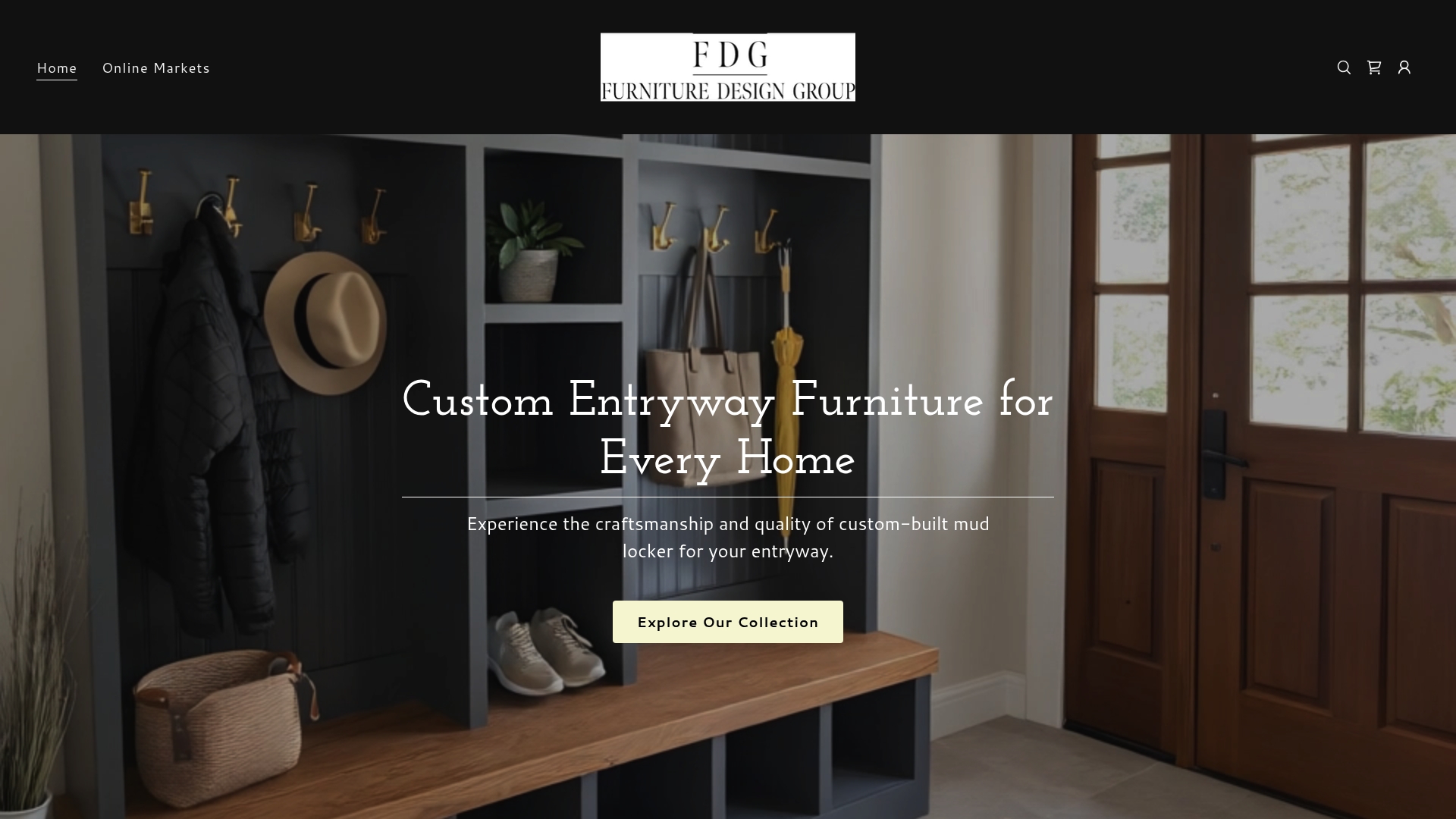
Our family owned company specializes in bespoke mud lockers, benches, and storage systems built to your exact specifications. We use premium hardwoods, traditional joinery techniques, and hand applied finishes that ensure decades of reliable service. Each piece reflects your unique needs and style preferences.
Our craftsmen work directly with you to understand your space constraints, storage requirements, and aesthetic goals. We create detailed plans that maximize functionality while complementing your home’s design. Visit our Maryland showroom to see examples of our work and discuss your custom entryway furniture solutions with our team.
Frequently asked questions
What is entryway organization, and why is it important?
Entryway organization refers to creating designated storage zones and systems for items you use when entering or leaving your home. It improves daily efficiency by reducing time spent searching for essentials and creates a welcoming first impression. Proper organization also protects your home from weather related damage and reduces household stress levels.
How does custom entryway furniture improve home functionality?
Custom furniture fits your exact space dimensions and addresses your specific storage needs rather than forcing you to adapt to standard sizes. It provides superior durability through quality materials and traditional construction methods. Custom pieces also incorporate ergonomic principles that make daily use more comfortable and efficient for your entire family.
What are ergonomic considerations for entryway furniture?
Proper bench heights between 17 and 19 inches allow comfortable sitting while putting on or removing shoes without strain. Shelf depths of 12 to 15 inches provide adequate storage without protruding too far into walkways. Hook placement at varied heights accommodates different family members and coat lengths. These considerations reduce physical stress and improve daily usability.
How can I start planning a custom entryway solution?
Begin by documenting your family’s routines, counting items that need storage, and measuring your space accurately including obstacles like doors and vents. Identify your highest priority needs and preferred materials. Consult with experienced custom entryway furniture design professionals who can translate your requirements into functional, beautiful solutions that serve your family for decades.