
TL;DR:
- Functional entryways reduce daily stress and boost home organization.
- Upgrading entryways in Maryland can add significant value and shorten market time.
- Custom furniture tailored to space and habits ensures long-term practicality and aesthetic appeal.
Your entryway is the first space you enter every morning and the last you leave every night, yet most Maryland homeowners treat it as an afterthought. That’s a costly mistake. Functional entryways reduce daily stress and improve home organization, and the financial upside is just as real. Strategic upgrades to this small but powerful space can add thousands to your resale value, cut days off your time on market, and make every single day run more smoothly. This guide walks you through the evidence, the numbers, and the practical steps to turn your entryway into one of the smartest investments in your home.
Table of Contents
- The overlooked power of a functional entryway
- Boosting home value and market appeal in Maryland
- Custom solutions: Maximizing beauty and organization
- Smart entryway investments: Models for Maryland homes
- The truth about Maryland entryways: Where most homeowners go wrong
- Transform your Maryland entryway with expert-crafted furniture
- Frequently asked questions
Key Takeaways
| Point | Details |
|---|---|
| High ROI upgrade | Functional entryways deliver exceptional resale returns and quicker sales in Maryland homes. |
| Stress-free organization | Smart entryway design reduces daily mess and supports routines for the whole family. |
| Custom solutions win | Tailored furniture and layouts outperform standard options in both style and function. |
| Budget flexibility | Even modest investments yield big gains in value, curb appeal, and home functionality. |
The overlooked power of a functional entryway
Most people think about their kitchen or master bath when they consider home upgrades. The entryway barely registers. But here’s what’s interesting: the entryway is the space that shapes your entire experience of coming home. It sets the tone for guests, it determines whether your mornings are calm or chaotic, and it silently communicates the care you put into your property.
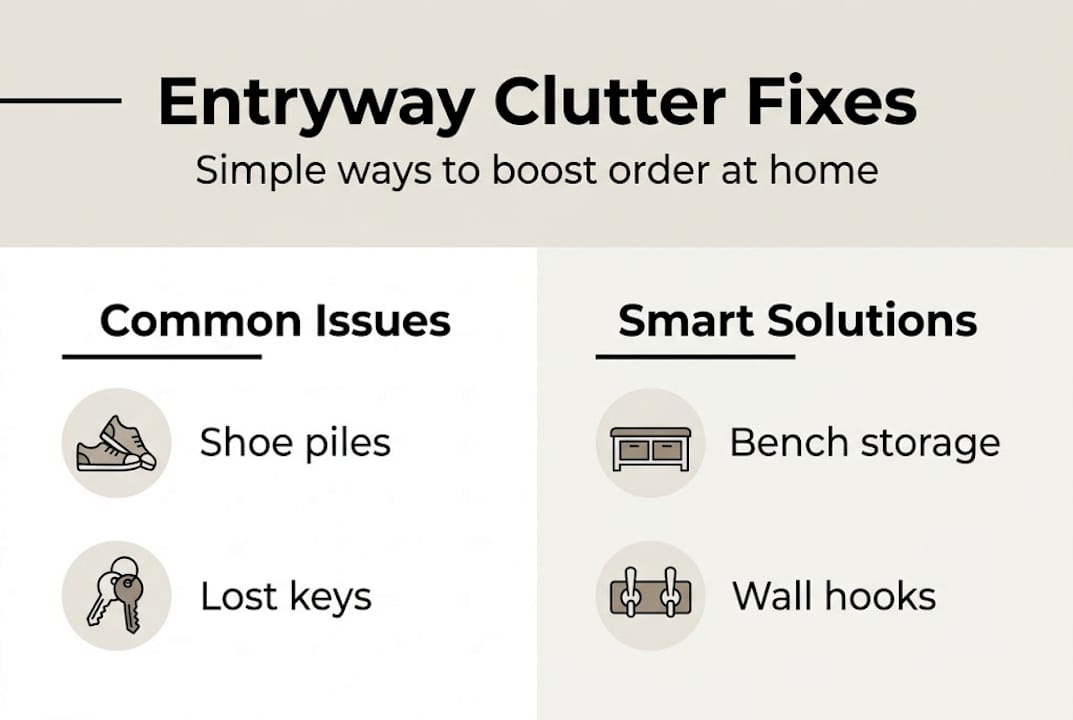
Think about what happens in a poorly designed entryway. Shoes pile up near the door. Bags and coats end up on the floor or draped over a chair in the next room. Keys go missing. Backpacks block the hallway. Every one of those small frustrations adds up. Functional entryways reduce stress, prevent clutter, and boost daily organization by giving every item a designated place.
The psychology behind this is straightforward. When your home’s entry point is organized, your brain registers “order” the moment you walk in. That cue matters more than most people realize. It signals that the rest of the home is under control, and it creates a mental buffer between the outside world and your personal space.
First impressions work the same way for guests and buyers. 75% of people form a lasting opinion about a space immediately, which means your entryway has about three seconds to communicate quality, warmth, and intention. Custom furniture reinforces that message in a way that a coat hook from a big-box store simply cannot.
Here are the core features every functional entryway should include:
- Drop zone: A flat surface for mail, keys, and daily essentials
- Shoe storage: Enclosed or open shelving that keeps footwear off the floor
- Hooks and hanging storage: For coats, bags, and accessories at multiple heights
- Seating: A bench or stool for putting on and removing shoes
- Lighting: Layered light that makes the space feel welcoming and practical
- Compact entryway furniture: Pieces scaled to your actual space, not generic dimensions
“The entryway is the most used and least designed room in the house. Getting it right doesn’t require a large budget. It requires intention.”
When these elements work together, the entryway stops being a dumping ground and starts functioning as a system. That shift is more valuable than any decorative upgrade you could make.
Boosting home value and market appeal in Maryland
Let’s talk numbers, because the financial case for entryway upgrades in Maryland is stronger than most homeowners expect.
A steel entry door replacement delivers 101% ROI in Maryland specifically, with national figures ranging from 100% to 188%. That means you can recoup your full investment and then some when you sell. Entry refreshes in the $450 to $950 range add between $2,300 and $6,500 in home value and can cut your time on market by up to 10 days. In a competitive Maryland market, that’s a significant edge.
Curb appeal amplifies all of this. Strong curb appeal drives 20 to 30% more showings, and your entry is the centerpiece of that first impression. Buyers who are drawn in from the street will judge the interior entry immediately after. If the two don’t match in quality and care, the disconnect creates doubt.
Here’s a quick comparison of what different investment levels typically yield for Maryland homeowners:
| Upgrade type | Avg. investment | Estimated value added | Days saved on market |
|---|---|---|---|
| Basic refresh (paint, hooks, mat) | $450 to $950 | $2,300 to $3,500 | 3 to 5 days |
| Custom storage and bench | $1,500 to $3,500 | $3,500 to $5,500 | 5 to 8 days |
| Full custom entryway build | $4,000 to $8,000 | $5,000 to $6,500+ | Up to 10 days |
The pattern is clear. Every dollar invested in the entryway tends to return more than a dollar in value. That’s not true of every home improvement. Luxury kitchen renovations, for example, frequently return only 50 to 60 cents on the dollar. The entryway is one of the rare spaces where modest spending produces outsized returns.
For Maryland homeowners specifically, the combination of a competitive real estate market, older housing stock (particularly rowhomes and colonials in Baltimore and the suburbs), and buyer expectations around curb appeal makes the entryway even more critical. Buyers touring homes in Bethesda, Annapolis, or Columbia are comparing dozens of properties. A polished, organized entry sets your home apart before they’ve seen a single other room. You can also explore other curb appeal upgrades that complement your entry investment.
Custom solutions: Maximizing beauty and organization
Understanding the value, let’s explore practical strategies for crafting an entryway that truly works for your needs.
The biggest mistake homeowners make when furnishing their entryway is buying generic pieces that don’t fit the space. A bench that’s two inches too wide. A coat rack that’s too tall for the ceiling. A console table that blocks the door swing. These small mismatches create friction every single day, and they make the space feel awkward rather than intentional.
Custom furniture solves this completely. Custom solutions offer long-term maintenance systems with minimal effort, including simple weekly resets that keep the space functioning without constant reorganization. When every piece is built to your exact dimensions and workflow, the system almost maintains itself.
Here’s how custom and store-bought options compare across the factors that matter most:
| Factor | Store-bought | Custom-built |
|---|---|---|
| Fit to space | Approximate | Exact |
| Material quality | Variable | Specified by you |
| Storage capacity | Fixed | Designed for your needs |
| Longevity | 5 to 10 years | 20+ years |
| Design cohesion | Limited | Seamless |
| Resale appeal | Neutral | Positive |
For Maryland rowhomes with narrow entries, regional entryway furniture design often focuses on vertical storage rather than horizontal spread. Floating benches with open storage underneath keep the floor clear. Slim cabinets (10 to 12 inches deep) provide enclosed storage without eating into traffic flow. Hooks mounted at staggered heights serve both adults and children without crowding the wall.
Here are the key steps to design a functional entryway that works for your home:
- Measure your space accurately: Note ceiling height, door swing radius, and the width of the traffic path through the entry
- Identify your daily habits: What do you carry in and out? How many people use the entry daily?
- Prioritize your storage needs: Shoes, coats, bags, mail, pet gear, and umbrellas each require different solutions
- Choose a style that connects to your home’s interior: The entry should feel like a natural transition, not a separate space
- Select durable, easy-to-clean materials: High-traffic areas need finishes that hold up to daily use
- Work with a craftsman who understands your floor plan: Custom builders can solve problems that off-the-shelf pieces simply can’t address
Pro Tip: If your entryway is under 6 feet wide, opt for furniture with a depth of 14 inches or less. This keeps the traffic lane open and prevents the space from feeling cramped.
Smart entryway investments: Models for Maryland homes
Ready to get started? Here are evidence-backed models and practical layouts for Maryland entryways of all shapes and budgets.
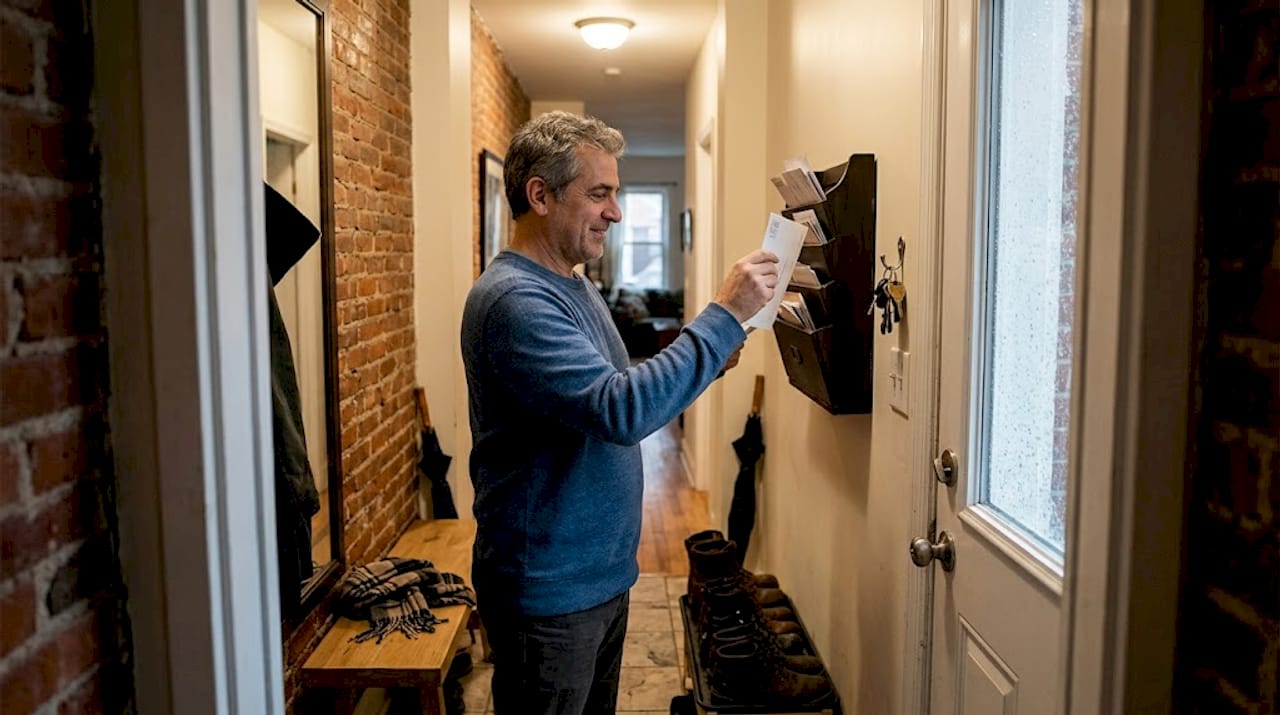
Maryland homes vary widely. You might have a generous foyer in a Potomac colonial, a tight vestibule in a Baltimore rowhome, or a side-entry mudroom in an Annapolis craftsman. Each requires a different approach, but the core principles stay the same: prioritize drop zones, vertical storage, and scale-appropriate furniture, especially for smaller rowhome entries.
For wide entryways (8 feet or more): You have room for a full bench with under-seat storage, a console table with drawers, and a gallery-style coat rack or built-in lockers. A full custom build in this range typically runs $4,000 to $8,000 and creates a statement space that anchors the home’s interior design.
For mid-size entryways (5 to 8 feet): A custom bench with cubbies below and hooks above is the most efficient layout. Add a narrow floating shelf above the hooks for bags and hats. Budget $1,500 to $3,500 for a well-crafted custom solution that fits the space exactly.
For narrow or compact entries (under 5 feet): Focus on maximizing entryway space vertically. A slim wall-mounted cabinet with integrated hooks and a fold-down bench seat can transform even the tightest entry. A basic refresh in this range can start at $450 to $950 and still deliver meaningful improvement.
Here are the must-have features and recommended measurements for any Maryland entryway:
- Bench height: 17 to 19 inches from the floor (standard seat height for comfortable shoe removal)
- Hook height: 60 to 66 inches for adult coats, 48 inches for a secondary row for children or bags
- Cabinet depth: 12 to 16 inches for shoe storage, 10 to 14 inches for coats and accessories
- Traffic lane: Maintain at least 36 inches of clear walking space through the entry
- Lighting: Aim for 50 to 75 foot-candles of illumination for a welcoming, functional space
Pro Tip: Install a small tray or drawer at counter height near the door specifically for keys, cards, and small daily items. This single habit eliminates the most common source of morning stress in most households.
The truth about Maryland entryways: Where most homeowners go wrong
After more than 20 years of designing and building custom entryway furniture for Maryland homes, we’ve seen the same pattern repeat itself. Homeowners invest in their kitchens, their bathrooms, their living rooms, and then leave the entryway to chance. They buy a coat rack from a home goods store, push a bench against the wall, and call it done.
The result is a space that looks okay but never quite works. Clutter returns within days. The bench becomes a surface for piling things rather than a place to sit. The hooks fill up and overflow. The entry that was supposed to set a positive tone for the home becomes a source of low-grade frustration.
What we’ve learned from our furniture design experience is that the entryway only works when it’s designed around real behavior, not idealized behavior. The fix is rarely expensive. It’s almost always a matter of fitting the furniture to the space and the habits of the people who live there. When that alignment happens, the entryway runs itself. And that’s when homeowners tell us it was the best investment they made in the entire house.
Transform your Maryland entryway with expert-crafted furniture
If this guide has shown you anything, it’s that the entryway is worth taking seriously. The right furniture doesn’t just look good. It works every single day, adds measurable value to your home, and makes your daily routine easier.
At Furniture Design Group, we’ve spent over 20 years building custom entryway furniture for Maryland homeowners who want something better than what’s available off the shelf. From compact mud lockers for rowhomes to full foyer builds for larger homes, every piece is crafted to fit your space, your style, and your life. Explore our custom furniture masterpieces or reach out to schedule a consultation. We’d love to help you build something that lasts.
Frequently asked questions
What adds the most value to a Maryland entryway?
Steel doors, organized storage solutions, and custom furniture yield the strongest returns. A steel door delivers 101% ROI in Maryland, making it one of the highest-return upgrades available.
How much should I budget for an effective entryway refresh?
A basic entry upgrade in Maryland typically ranges from $450 to $950. Entry refreshes in this range can add $2,300 to $6,500 in resale value, making them one of the best-value home improvements available.
Is custom furniture worth it for small entryways?
Absolutely. Custom solutions are especially valuable in narrow or awkward spaces. Scale-appropriate furniture avoids blocking flow, which is critical in small Maryland rowhomes where every inch of the traffic lane matters.
Does entryway organization really impact stress levels?
Yes, and the effect is more significant than most people expect. Organized entryways reduce daily stress by eliminating clutter and supporting the consistent routines that make mornings and evenings run smoothly.