
TL;DR:
- True functional furniture balances style, comfort, and purposeful design to solve real daily problems.
- Custom, high-quality craftsmanship ensures durability and adaptability for evolving household needs.
- Prioritizing function-first design leads to more satisfying, long-lasting home solutions than purely decorative pieces.
Most homeowners walk into a furniture showroom expecting to find pieces that are both beautiful and genuinely useful. What they find instead are stunning accent tables with no storage, benches that wobble under real weight, and entryway consoles that look perfect in a catalog but fail completely on a rainy Tuesday morning when three kids are dropping backpacks and muddy boots at the door. The gap between stylish and truly functional furniture is wider than most people realize, and for Maryland homeowners and interior designers, closing that gap is exactly what separates a beautiful home from a livable one.
Table of Contents
- Defining functional furniture
- Key benefits of functional furniture in modern homes
- Functional vs. decorative furniture: What’s the real difference?
- Examples of functional entryway furniture for Maryland homes
- How craftsmanship elevates functional furniture
- Our perspective: Why function-first design should be your top priority
- Bring functional craftsmanship into your space
- Frequently asked questions
Key Takeaways
| Point | Details |
|---|---|
| Form meets function | Functional furniture is thoughtfully designed to be beautiful and useful in daily life. |
| Space-saving solutions | Custom pieces maximize entryway storage and organization for busy Maryland homes. |
| Craftsmanship matters | Quality construction ensures furniture remains durable and attractive for years. |
| Personalized style | Customization allows you to select materials and features that match your unique tastes. |
Defining functional furniture
Functional furniture is not simply furniture that “works.” That definition sells the concept short. True functional furniture balances visual appeal with purposeful design so that every element of the piece serves the people using it daily. It is built to solve real problems: too much clutter, not enough storage, awkward traffic flow, or spaces that look polished but feel chaotic in practice.
As functional furniture explained on the Furniture Design Group website, “Functional furniture combines utility, comfort, and thoughtful design to suit daily living needs.” That definition sets a high bar. It means a piece must look good, feel comfortable, and actively improve how a space operates.
Here are the core characteristics that define genuinely functional furniture:
- Built-in storage that is accessible and appropriately sized for the items people actually store
- Adaptability, meaning shelves that adjust, benches that convert, or configurations that evolve with a family’s needs
- Durability through quality joinery, solid materials, and finishes that hold up to daily wear
- Aesthetic cohesion so the piece fits naturally into the overall design without looking like a utility afterthought
- Ergonomic consideration, such as a bench at the right height for sitting while putting on shoes
“Functional furniture is not about choosing between beauty and practicality. It is about demanding both, and refusing to accept anything less.”
That distinction matters most in entryways, where furniture absorbs the chaos of daily arrivals and departures. A piece that looks wonderful but can’t carry the load of a real household is decorative, not functional.
Key benefits of functional furniture in modern homes
With a working definition in place, let’s explore why functional furniture delivers real value for households and spaces. The benefits go well beyond having a place to sit or store things. Functional furniture actually changes how a home operates on a daily basis, and that impact compounds over years.
Space optimization is the most immediate benefit. Maryland homes, whether colonial-era row houses in Baltimore or newer construction in Howard County, often have limited entryway square footage. A custom piece designed to fit a specific wall or alcove captures every usable inch. According to custom furniture benefits, custom functional furniture increases space efficiency and enhances everyday routines. That is not marketing language. When a mud locker is built to exactly 84 inches tall to reach a specific ceiling height, and its cubbies are sized for your family’s actual coat collection, every square foot earns its place.
Organizational alignment with family routines is the second major benefit. Generic furniture forces families to adapt their habits to the piece. Custom functional furniture does the opposite. If your household has four kids who all come home at 3:15 PM and need a specific hook, cubby, and shoe drawer for each child, a bespoke piece can accommodate exactly that. The result is a system the whole family actually uses because it was designed around how they live.
Aesthetic cohesion rounds out the practical benefits. When a piece is designed specifically for a space, it does not feel like furniture that was placed in a room. It feels like part of the architecture. Homeowners and designers who work with bespoke furniture options report that this integration dramatically elevates the overall feel of the home, even in areas like entryways that are often treated as afterthoughts.
Pro Tip: When planning an entryway, invest in modular or convertible pieces with adjustable shelves and removable components. A family with toddlers today will have teenagers in ten years, and a well-designed functional piece can evolve with those changing storage needs rather than becoming obsolete.
Functional vs. decorative furniture: What’s the real difference?
Understanding the core advantages, it’s helpful to compare functional furniture head-to-head with decorative options you might see in showrooms or catalogs. The differences are more concrete than most people expect.
Consider two entryway benches. The first is an accent bench: upholstered in a beautiful linen fabric, with tapered legs and clean lines. It looks elegant. It can seat one person if they perch carefully. It has no storage, the fabric marks easily, and it slides on hardwood floors. The second is a storage bench: built from solid hardwood with a lift-top seat revealing deep shoe storage, a back panel fitted with hooks, and a finish sealed for moisture resistance. It works harder, and when crafted well, it looks just as sophisticated.
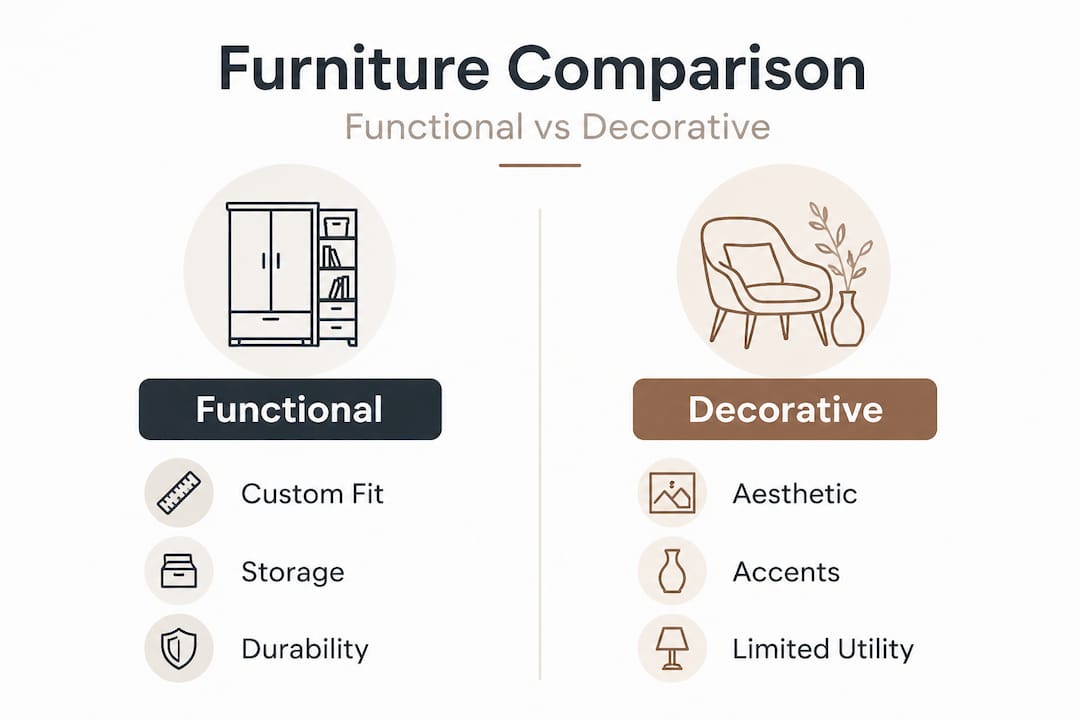
Bespoke vs decorative furniture experts note that “bespoke furniture enhances both beauty and everyday utility, unlike many mass-market decorative pieces.” That distinction is worth examining closely.
| Feature | Functional furniture | Decorative furniture |
|---|---|---|
| Primary purpose | Solves daily organizational needs | Adds visual interest |
| Storage capacity | Built-in, purpose-driven | Minimal or none |
| Durability | High, built for repeated use | Variable, often lower |
| Customization | Tailored to space and lifestyle | Off-the-shelf sizing |
| Long-term value | High, adapts over time | May need replacement |
| Lifestyle fit | Designed around real habits | Requires habit adjustment |
Here is how interior designers typically evaluate a piece when deciding between functional and decorative options:
- Assess daily traffic volume at the point of placement. An entryway that handles six people twice a day needs a different standard than a formal sitting room.
- Identify the top three pain points the piece needs to solve. Storage, seating, hooks, charging? Prioritize before choosing.
- Evaluate material durability relative to the household’s real conditions, including pets, kids, and climate.
- Consider longevity versus trend cycle. A well-built functional piece can outlast three rounds of decorative furniture turnover.
- Review scale and fit within the actual dimensions of the space, not a showroom floor.
Following this process consistently leads most designers to functional, custom solutions rather than decorative alternatives.
Examples of functional entryway furniture for Maryland homes
Now that you can spot the difference, let’s look at real-life solutions designed specifically for Maryland households and lifestyles. Maryland’s climate alone, with humid summers, wet springs, and cold winters, creates specific demands that generic furniture rarely meets.
Custom entryway furniture can resolve clutter, maximize space, and reflect local lifestyle needs in ways that mass-market options simply cannot. Here are the most impactful examples:
- Entryway benches with deep drawers: Designed with two or three pull-out drawers beneath the seat, these pieces give every family member a dedicated shoe zone. Sealed hardwood or moisture-resistant finishes handle wet boots after Maryland rainstorms without warping or staining.
- Built-in cubbies with coat hooks: Open cubby systems give each household member a clearly defined space for coats, backpacks, and sports gear. When cubbies are sized correctly, the system gets used. When they are too small or too generic, things pile up on the floor anyway.
- Console tables with integrated charging: A console table with a discreetly routed power strip and device slots keeps phones, tablets, and keys organized near the door. This is especially popular with Maryland families who want to create a “landing zone” routine.
- Full mud locker systems: These are the gold standard of functional entryway furniture. A mud locker integrates bench seating, upper cabinet storage, hook panels, and shoe drawers into a single cohesive unit. Built floor-to-ceiling, it transforms an entryway into a genuinely organized system.
| Furniture piece | Key feature | Homeowner need it solves |
|---|---|---|
| Storage bench | Deep drawers beneath seat | Shoe and boot storage |
| Cubby with hooks | Individual compartments | Per-person coat and bag organization |
| Console with charging | Hidden power routing | Device and key landing zone |
| Full mud locker | Integrated multi-function system | Total entryway organization |
These solutions are not hypothetical. They represent the kind of practical, Maryland-specific thinking that separates a piece built for real life from one built for a showroom display.
How craftsmanship elevates functional furniture
Behind every beautifully practical piece is a standard of craftsmanship. Let’s explore why this matters for functional furniture specifically, because the gap between well-crafted and poorly built is widest when a piece is used hard every single day.
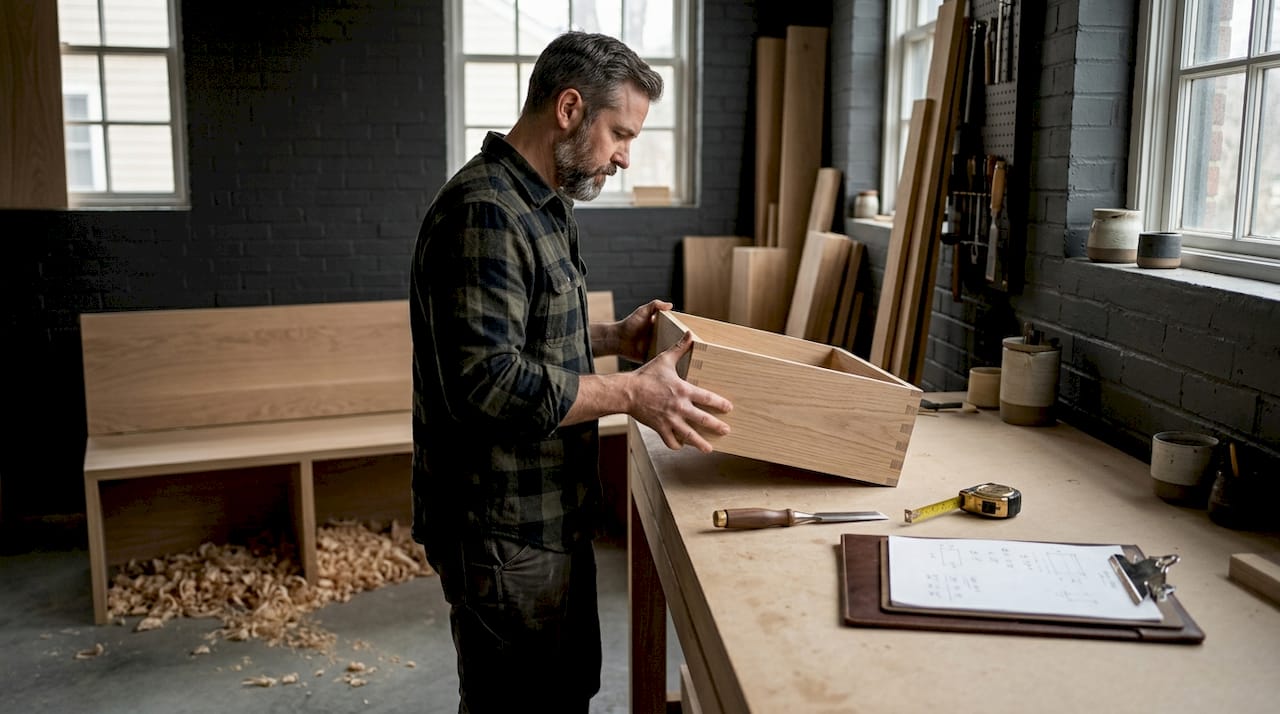
As quality craftsmanship in furniture makes clear, “a craftsman’s attention to detail ensures function does not come at the expense of beauty or longevity.” That attention shows up in specific, tangible ways that homeowners can see and feel.
Here is what superior craftsmanship looks like in practice:
- Joinery quality: Dovetail joints and mortise-and-tenon construction hold up under daily stress far better than staple-and-glue box construction. A drawer that is properly dovetailed can handle years of hard use without loosening.
- Adjustable shelving with reinforced standards: Metal shelf standards set into solid wood panels allow shelves to be repositioned as storage needs change. Reinforced versions hold real weight without flexing.
- Finish selection and application: A properly applied oil or lacquer finish resists moisture, scuffs, and cleaning products better than a thin factory spray. In Maryland entryways, this matters every single season.
- Hardware quality: Soft-close hinges, full-extension drawer glides, and solid hook mounting all affect how a piece feels and functions daily. Cheap hardware wears out. Quality hardware gets better with use.
- Reinforced corners and backs: A piece used as heavily as an entryway organizer needs structural integrity throughout. Reinforced corners and solid back panels prevent racking and wobbling over time.
Pro Tip: When evaluating any custom furniture quote, ask specifically about joinery methods and drawer construction. A builder who can explain their joinery choices clearly is demonstrating the kind of knowledge that produces furniture designed to last decades, not years.
Craftsmanship is not just about pride in the work. It is the reason functional furniture stays functional long after decorative alternatives have been replaced twice.
Our perspective: Why function-first design should be your top priority
Here is a perspective that the furniture industry does not love to share: most furniture trends are optimized for photography, not for living. The pieces that photograph beautifully for design blogs are often the exact pieces that frustrate homeowners six months after purchase. Open shelving looks incredible in a styled photo. In a real Maryland home with two working parents and three kids, open shelving in the entryway becomes a visual of controlled chaos within a week.
We have spent over 20 years building furniture for real families, and the pattern is consistent. Clients who prioritize the look of a piece and treat function as secondary end up back at the drawing board. Clients who start with their actual daily routines, their real clutter problems, and their specific lifestyle demands, and then work toward a beautiful solution within those constraints, end up with furniture they love more after five years than they did on installation day.
The real risk is not choosing something ugly. It is choosing something beautiful that fails you. Lasting furniture value comes from pieces that earn their place in your home every single day, not just on the days you have guests.
Maryland homeowners have a practical streak that we genuinely respect. This is a state where people work hard, move fast, and expect their homes to keep up. Function-first design is not a compromise on style. It is the smarter way to invest in style, because a beautiful piece that solves real problems will always feel more satisfying than a beautiful piece that simply sits there.
Bring functional craftsmanship into your space
If this article has helped clarify what truly functional furniture looks like, the next step is finding a maker who can deliver it with the craftsmanship it deserves.
At Furniture Design Group, we have spent over 20 years building custom furniture masterpieces for Maryland homeowners and interior designers who refuse to choose between beauty and function. Our entryway pieces, including mud lockers, storage benches, and full built-in systems, are designed around your specific space, your family’s routines, and your aesthetic vision. We invite you to visit our showroom, browse our work, or reach out directly to start a conversation. Explore Maryland furniture solutions and see how function-first design can transform your home from the moment you walk through the door.
Frequently asked questions
What makes furniture functional rather than just stylish?
Functional furniture is defined by utility and thoughtful design, built to meet everyday needs like storage, comfort, or adaptability alongside its visual appeal.
Can functional furniture still match my home’s aesthetic?
Absolutely. Bespoke furniture can be tailored to suit both function and aesthetics, allowing you to choose finishes, materials, and details that complement your existing interior style perfectly.
Is it worth investing in custom functional entryway pieces?
Yes. Custom-built furniture maximizes organization for unique spaces, reduces daily clutter, and delivers long-term satisfaction that generic off-the-shelf alternatives rarely match.
How do I maintain quality functional furniture?
Dust regularly, wipe surfaces with a soft damp cloth, and avoid harsh chemical cleaners to preserve both the finish and the hardware over the long term.