
Many homeowners assume handmade furniture is either prohibitively expensive or impractical for everyday use. That misconception keeps families from discovering how custom-built furniture can transform their entryways into functional, beautiful spaces. Maryland homeowners who invest in handmade entryway pieces often find they’ve created not just storage solutions, but distinctive focal points that welcome guests while handling daily wear far better than mass-produced alternatives. This article explores the genuine benefits of handmade furniture, from superior craftsmanship and personalized design to long-term value and local artisan support.
Table of Contents
- Key takeaways
- Understanding handmade furniture: craftsmanship and quality
- Comparing handmade and mass-produced furniture: value and personalization
- How personalized handmade entryway furniture enhances your Maryland home
- Practical considerations and tips for choosing handmade furniture
- Explore custom handmade furniture options in Maryland
- FAQ
Key Takeaways
| Point | Details |
|---|---|
| Craftsmanship quality | Handmade pieces are built by skilled artisans using traditional techniques, delivering superior durability and meticulous detail compared with mass produced options. |
| Premium hardwoods | Artisans select hardwoods like oak, maple, or cherry that resist denting and wear to extend the piece’s lifespan. |
| Tailored reinforcement | High stress areas such as bench seats and coat hooks can be reinforced and features adjusted to fit daily use. |
| Personalized designs | Customization creates unique entryway focal points and enhances function by aligning storage and layout with your family’s needs. |
Understanding handmade furniture: craftsmanship and quality
Handmade furniture represents pieces crafted primarily by skilled artisans using traditional techniques, hand tools, and meticulous attention to detail. Unlike factory assembly lines where workers repeat single tasks, craftspeople build entire pieces from start to finish, making quality decisions at every step. This approach allows artisans to select premium lumber, inspect each board for grain patterns and structural integrity, and adapt joinery methods to maximize strength. The result is furniture that offers superior durability and craftsmanship compared to mass-produced alternatives.
Material quality directly impacts how long your entryway furniture will serve your family. Craftspeople typically source hardwoods like oak, maple, or cherry that naturally resist denting and wear from daily foot traffic. They allow proper drying time and choose boards with stable grain patterns, preventing warping or cracking over years of temperature fluctuations. Mass-produced furniture often relies on particle board, veneer, or lower-grade woods treated with fillers, which deteriorate faster under the constant stress of coats, bags, and shoes.
The joinery techniques used in handmade pieces create structural advantages you can feel. Mortise and tenon joints, dovetails, and carefully fitted dowels distribute stress across multiple contact points, making drawers glide smoothly even after years of use. Factory furniture typically uses staples, nails, or simple butt joints reinforced with glue, which loosen as wood expands and contracts with humidity changes. Your entryway experiences temperature swings every time the door opens, making robust joinery essential for longevity.
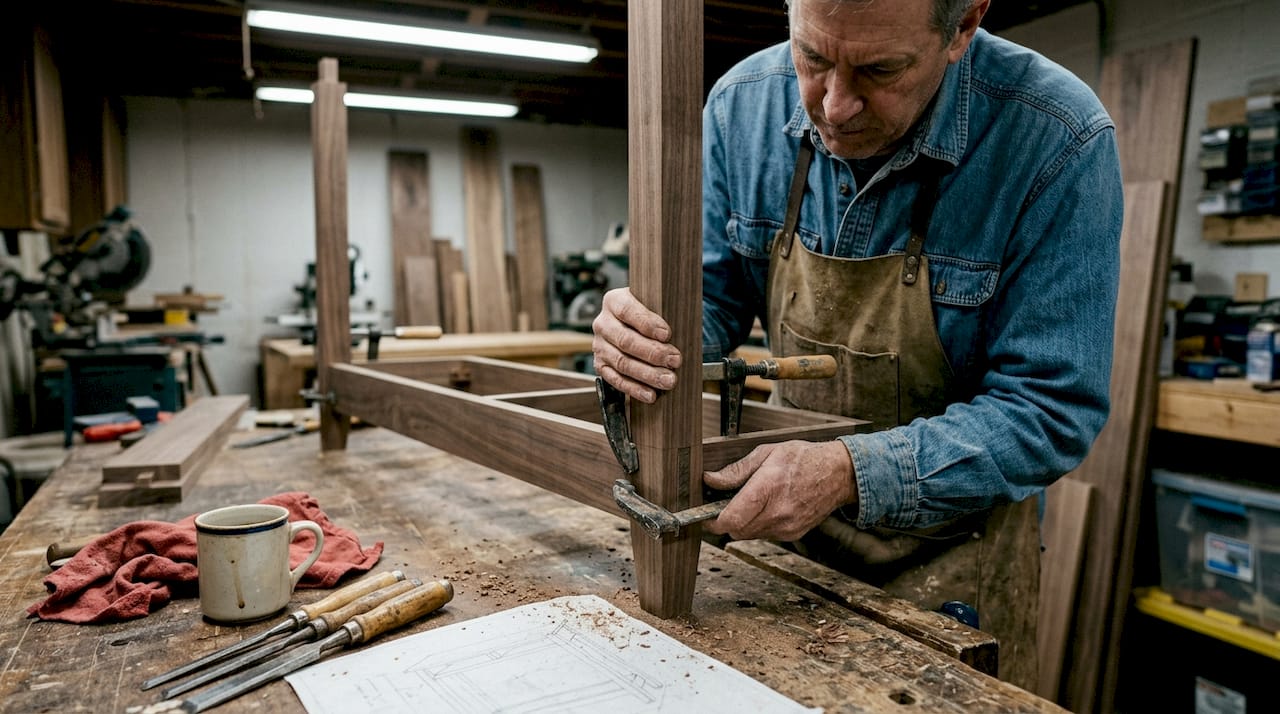
Functional benefits extend beyond durability. Craftspeople can reinforce high-stress areas like bench seats or coat hooks with additional bracing, adjust shelf heights for your family’s specific storage needs, or incorporate features like hidden compartments for valuables. This attention to how you’ll actually use the piece daily creates furniture that works harder and lasts longer.
Key craftsmanship advantages:
- Premium hardwood selection resists dents and wear from daily entryway traffic
- Traditional joinery methods create structural integrity that survives decades of use
- Hand-finished surfaces allow for repairs and refinishing, extending furniture lifespan
- Customizable reinforcement in high-stress areas like bench seats and coat hooks
- Artisan oversight ensures quality control at every construction stage
Pro Tip: Ask your craftsperson to explain the joinery methods they’ll use for your piece. Understanding how drawers are constructed or how shelves attach helps you appreciate the quality you’re investing in and gives you maintenance insights for years ahead.
These quality differences become even clearer when you compare handmade and mass-produced furniture side by side, particularly regarding personalization and long-term value.
Comparing handmade and mass-produced furniture: value and personalization
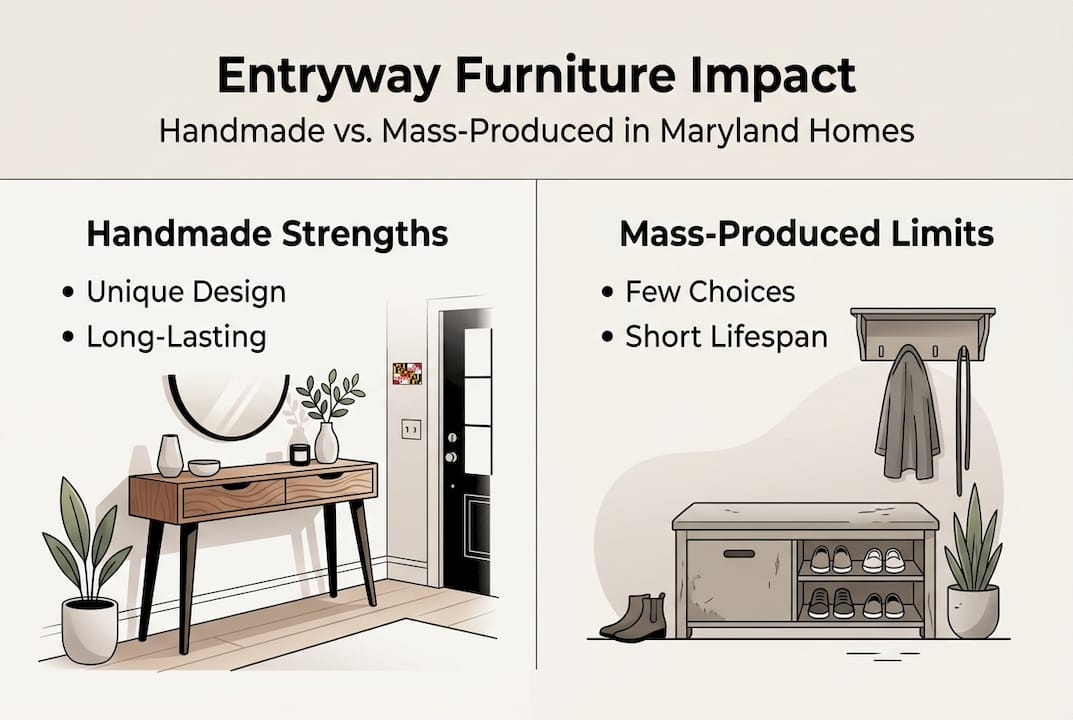
Personalization options separate handmade furniture from factory pieces in ways that directly impact your daily experience. When you commission custom-built furniture, you’re not choosing from preset configurations but collaborating on dimensions, features, and finishes that match your exact needs. That awkward corner in your entryway becomes an opportunity rather than a limitation. Your craftsperson can design a bench that fits perfectly, incorporate storage that matches your family’s gear, and select wood tones that complement your existing trim.
Mass-produced furniture offers limited customization, typically restricted to choosing between a few preset sizes and finish options. You adapt your space to fit the furniture rather than the reverse. This constraint often means wasted space, compromised functionality, or aesthetic mismatches that never quite feel right. The standardization that makes factory production economical also makes it inflexible.
| Factor | Handmade Furniture | Mass-Produced Furniture |
|---|---|---|
| Initial cost | Higher upfront investment | Lower initial price point |
| Material quality | Premium hardwoods, solid construction | Particle board, veneer, lower-grade materials |
| Customization | Fully customizable dimensions, features, finishes | Limited to preset options and sizes |
| Typical lifespan | 30-50+ years with proper care | 5-15 years before replacement needed |
| Repair potential | Easily repaired and refinished | Often not economical to repair |
| Resale value | Retains or increases value | Depreciates quickly |
Long-term value calculations shift dramatically when you factor in replacement costs. A quality handmade entryway bench might cost three times more initially than a factory equivalent, but if it lasts 40 years while you replace the factory piece four times, you’ve saved money while avoiding the hassle of shopping, delivery, and disposal. Many families discover their handmade furniture offers better personalization and lasting value than repeatedly buying disposable alternatives.
Heirloom potential adds another value dimension. Well-crafted furniture becomes part of your family story, passed down to children who remember hanging coats on those same hooks or sitting on that bench to tie shoes. This emotional value compounds over time, making the piece irreplaceable regardless of market value. Mass-produced furniture rarely survives long enough to develop these associations.
Aesthetic uniqueness matters more than many homeowners initially realize. Your entryway creates first impressions for every guest, and distinctive handmade pieces signal thoughtfulness and quality. The grain patterns, hand-rubbed finishes, and custom details become conversation starters. Factory furniture’s uniformity means neighbors might own identical pieces, diluting the sense that your home reflects your individual taste.
Value factors beyond price:
- Elimination of replacement cycles reduces long-term furniture spending
- Custom fit maximizes usable space in challenging entryway layouts
- Heirloom quality creates multi-generational value and family connections
- Unique aesthetic details distinguish your home from standardized interiors
- Repair and refinishing options extend lifespan indefinitely
These personalization and value advantages translate into concrete benefits when you consider how handmade entryway furniture enhances your specific Maryland home.
How personalized handmade entryway furniture enhances your Maryland home
Maryland homes present unique entryway challenges that custom handmade furniture can be tailored to address perfectly. Colonial-era homes often feature narrow, irregularly shaped entry halls where standard furniture simply won’t fit. Craftspeople can design pieces that maximize every inch, incorporating storage vertically when floor space is limited or creating L-shaped configurations that turn corners efficiently. Modern homes with open floor plans benefit from custom pieces that define the entryway zone without blocking sight lines, using design elements that complement adjacent living spaces.
Wood species and finish choices allow you to match existing architectural details seamlessly. If your home features cherry trim and wainscoting, your craftsperson can select cherry lumber with similar grain characteristics and apply stains that blend perfectly. Hardware selections extend this coordination, from traditional brass hooks that echo vintage doorknobs to contemporary matte black pulls that align with modern fixture updates. These details create visual cohesion that makes custom pieces feel like original architectural elements rather than added furniture.
Functional enhancements address your family’s specific routines and storage needs. Families with young children might prioritize low hooks they can reach independently, built-in bench storage for sports equipment, and cubbies sized for backpacks. Empty nesters might emphasize elegant coat storage, a cushioned bench for putting on shoes comfortably, and discrete drawers for dog leashes and mail. Craftspeople can incorporate features like removable drip trays under coat hooks for wet umbrellas, ventilated shoe storage to prevent odors, or charging stations hidden in drawers for devices.
First impressions shape how guests perceive your entire home, and entryways set that tone immediately. A thoughtfully designed handmade piece demonstrates attention to detail and quality that guests subconsciously associate with the rest of your space. The warmth of natural wood, the smooth operation of well-fitted drawers, and the visual interest of unique grain patterns create welcoming moments that mass-produced furniture can’t replicate.
Supporting local Maryland artisans adds community value to your investment. When you commission custom-built furniture, you’re funding skilled trades, keeping craftsmanship knowledge alive, and building relationships with makers who stand behind their work. Local craftspeople remain accessible for future projects, repairs, or modifications as your needs evolve. This accountability and ongoing relationship provide peace of mind that online furniture retailers can’t match.
Personalization benefits for Maryland homeowners:
- Custom dimensions accommodate historic home layouts and modern open floor plans equally
- Wood and finish matching creates seamless integration with existing architectural details
- Feature customization addresses specific family routines and storage requirements
- Seasonal functionality accounts for Maryland’s humid summers and cold winters
- Local artisan relationships ensure ongoing support and future project collaboration
Pro Tip: Photograph your entryway from multiple angles and measure not just width and height, but also depth available for furniture. Share these with your craftsperson along with notes about what frustrates you in your current setup. This context helps them design solutions you might not think to request.
Understanding these benefits prepares you to make informed decisions when selecting and commissioning handmade furniture for your home.
Practical considerations and tips for choosing handmade furniture
Selecting the right handmade furniture and artisan requires research and clear communication. Start by identifying Maryland craftspeople through local woodworking guilds, craft shows, or referrals from interior designers who work in your area. Review portfolios carefully, looking for pieces similar in style and complexity to what you envision. Pay attention to joinery details in photos, finish quality, and whether previous projects show the customization level you need. Request references from past clients and ask specific questions about timeline reliability, communication during the project, and how the furniture has held up over time.
Steps for successful furniture commissioning:
- Define your requirements clearly, including dimensions, must-have features, and budget parameters before contacting craftspeople
- Interview at least three artisans, discussing their process, timeline estimates, and approach to design collaboration
- Request detailed written proposals that specify materials, construction methods, finish options, and payment schedules
- Review wood samples and finish tests on actual lumber rather than relying solely on photos or descriptions
- Establish clear communication expectations for project updates and decision points throughout construction
- Plan for delivery and installation logistics, confirming who handles transport and any on-site adjustments needed
Budgeting for handmade furniture requires understanding what drives costs. Material expenses vary significantly based on wood species, with domestic hardwoods like oak or maple costing less than exotic woods or reclaimed lumber with character marks. Labor represents the largest cost component, reflecting the hours required for design, construction, finishing, and quality control. Complex features like curved elements, inlays, or specialized hardware increase both material and labor costs. Request itemized estimates that break down these components so you understand where your investment goes and where you might adjust specifications to meet budget constraints.
Maintenance practices protect your investment and extend furniture lifespan indefinitely. Dust regularly with soft cloths to prevent abrasive particle buildup that can dull finishes over time. Clean spills immediately using barely damp cloths, avoiding excessive water that can raise wood grain or damage finishes. Apply furniture wax or polish appropriate for your specific finish type once or twice yearly, following your craftsperson’s recommendations. Address minor scratches promptly using touch-up markers or wax sticks in matching colors. For deeper damage or finish wear after years of use, consult your original craftsperson about refinishing services that restore like-new appearance.
Pro Tip: Ask potential craftspeople to show you their workshop if possible. Seeing their tools, works in progress, and organizational systems reveals professionalism and capability that portfolios alone might not convey. Notice whether they maintain equipment well and keep organized material inventories.
“The best furniture projects start with honest conversations about how you live, what frustrates you about your current setup, and what would make your daily routines easier. Clients who share these details get pieces that truly work for their families, while those who just describe what they want visually often miss functional opportunities.” Working with local craftsmen and understanding material choices ensures satisfaction throughout the process and for years afterward.
These practical considerations prepare you to move forward confidently with custom furniture projects that enhance your Maryland home.
Explore custom handmade furniture options in Maryland
If you’re ready to transform your entryway with furniture built specifically for your space and needs, exploring local craftsmanship options is your next step. Furniture Design Group specializes in creating custom-built furniture for Maryland homeowners, with over 20 years of experience designing and crafting entryway pieces that combine beauty with practical functionality. Their family-owned approach means you’ll work directly with experienced craftspeople who understand local home styles and the specific durability requirements Maryland’s climate demands.
Browsing existing designs provides inspiration while consultations help refine ideas into plans tailored to your exact specifications. Whether you’re working with a challenging architectural layout, coordinating with existing décor, or simply want an entryway that finally organizes your family’s daily chaos, custom solutions address problems that off-the-shelf furniture can’t solve. The investment in quality craftsmanship pays dividends in daily convenience, aesthetic satisfaction, and furniture that serves your family for generations.
FAQ
What makes handmade furniture more durable than factory-made?
Handmade furniture uses higher-quality materials and expert joinery techniques that create superior structural integrity. Craftspeople select premium hardwoods, allow proper drying time, and employ traditional joinery like mortise-and-tenon or dovetail joints that distribute stress effectively. Factory furniture relies on particle board, veneer, and simpler fastening methods like staples or butt joints that weaken over time. The artisan’s ability to inspect and adapt throughout construction ensures every component meets quality standards, while factory processes prioritize speed over longevity.
How can I customize entryway furniture to fit my Maryland home’s style?
Customization includes choices in wood species, finishes, hardware, and design details that align with your home’s aesthetic. You can match existing trim wood and stain colors precisely, select hardware that echoes other fixtures, and incorporate design elements like panel styles or decorative moldings that complement your architecture. Craftspeople work with you to understand your style preferences, whether traditional, contemporary, or transitional, and translate those into furniture designs that feel intentionally integrated rather than added as an afterthought.
Is handmade furniture more expensive upfront, and is it worth it?
Yes, handmade furniture costs more initially due to premium materials, skilled labor, and time-intensive construction methods. However, its durability and uniqueness often justify the investment through decades of service that eliminate replacement cycles. When you factor in the cost of replacing mass-produced furniture multiple times, quality handmade pieces often prove more economical long-term. Additional value comes from perfect fit for your space, personalized features that improve daily function, and heirloom potential that creates multi-generational worth beyond simple cost calculations.