
Every Maryland home faces the daily shuffle of shoes, coats, and gear cluttering the entryway. Creating a seamless transition from outdoors to indoors demands thoughtful solutions that honor both style and practical needs. A custom mudroom locker system offers a blend of artisanal craftsmanship and tailored organization, transforming your space into a welcoming, functional entry. Discover how to bring personalized storage and lasting quality to your Maryland entryway with careful planning and expert design.
Table of Contents
- Step 1: Assess Entryway Space And Storage Needs
- Step 2: Sketch Locker Layouts And Dimensions
- Step 3: Select Quality Materials And Hardware
- Step 4: Customize Design Features And Finishes
- Step 5: Review Plans And Prepare For Construction
Quick Overview
| Main Insight | Details |
|---|---|
| 1. Measure Your Entryway | Precise measurements ensure your lockers fit perfectly and meet accessibility requirements. Address floor and wall dimensions carefully. |
| 2. Create Accurate Sketches | Use graph paper or digital tools to draft layouts with proper dimensions and features for functional design. |
| 3. Choose Durable Materials | Selecting robust materials like cold-rolled steel or hardwood ensures longevity and withstands daily use in a mudroom. |
| 4. Personalize Design Features | Incorporate customization options like adjustable hooks and various finishes to match family needs and home aesthetics. |
| 5. Review and Prepare Thoroughly | Examining plans against safety guidelines and building codes minimizes potential construction issues and ensures compliance. |
Step 1: Assess Entryway Space and Storage Needs
Designing custom mudroom lockers begins with a comprehensive evaluation of your entryway’s unique spatial characteristics and storage requirements. This crucial first step determines the functionality and aesthetic integration of your storage solution.
Start by taking precise measurements of your entryway, focusing on floor space dimensions and available wall area. You’ll want to carefully document the width, height, and depth of the space where lockers will be installed. Pay special attention to clearance requirements for accessibility to ensure your design accommodates comfortable movement.
Key measurements to capture include:
- Total floor width available
- Wall height from floor to ceiling
- Depth of potential locker installation zone
- Proximity to doorways and other entry features
- Clearance needed for walking paths
Consider your household’s specific storage needs by evaluating the types of items typically stored in your entryway. This might include:
- Coats and jackets
- Shoes and boots
- Backpacks and school bags
- Sports equipment
- Umbrellas and outdoor accessories
Remember that effective storage design is about balancing available space with practical functionality. Your goal is to create a locker system that not only fits physically but also supports your family’s daily routines.
Careful measurement and thoughtful planning are the foundation of a successful mudroom locker design.
Pro tip: Use painter’s tape to outline potential locker dimensions on your wall, helping you visualize the final design and confirm spatial compatibility before construction begins.
Step 2: Sketch Locker Layouts and Dimensions
Transforming your precise entryway measurements into a functional locker design requires careful planning and visual mapping. This step will guide you through creating a detailed sketch that captures the potential of your custom storage solution.
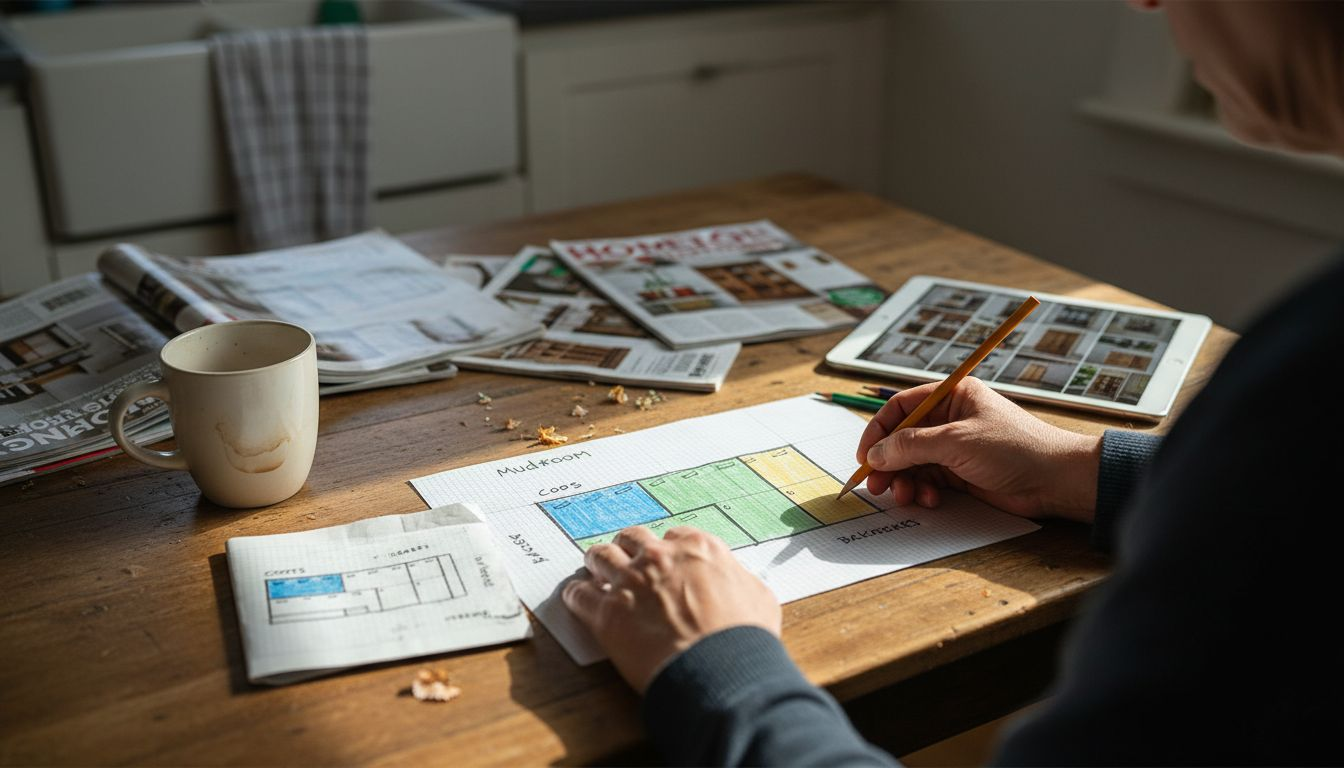
Begin by obtaining graph paper or using digital drafting tools to create accurate floor plan sketches. Your sketch should include exact spatial dimensions and proportional layouts that reflect the measurements you captured in the previous step.
Key elements to include in your locker layout sketch:
- Precise wall and floor measurements
- Proposed locker width and depth
- Location of potential hooks and shelving
- Walking clearance zones
- Proximity to doors and other entry features
Consider the standard locker configuration specifications to help guide your design. Typical mudroom locker dimensions might include:
- Individual locker width: 18-24 inches
- Locker depth: 15-18 inches
- Total height: 72-84 inches
As you sketch, think about how each family member will use the space. Some households prefer individual cubbies, while others might opt for shared storage zones with differentiated sections.
A well-designed mudroom locker sketch balances aesthetic appeal with practical functionality.
Pro tip: Use colored pencils to differentiate storage zones and visually separate each family member’s designated spaces in your initial sketch.
Step 3: Select Quality Materials and Hardware
Choosing the right materials and hardware is critical to creating mudroom lockers that will withstand daily use and look stunning for years to come. Your selections will determine not just the aesthetic appeal, but the long-term durability and functionality of your storage solution.
Start by focusing on robust base materials that can handle the high-traffic nature of entryway storage. Industrial-grade locker materials offer exceptional durability and performance. Consider these primary material options:
- Cold-rolled steel with powder coat finish
- High-quality hardwood with protective sealant
- Moisture-resistant engineered wood
- Aluminum frame with durable panels
Hardware selection is equally important for ensuring smooth operation and security. Look for:
- Heavy-duty hinges with smooth pivot mechanisms
- Rust-resistant hooks and hanging hardware
- Quality drawer slides with full extension
- Secure locking systems
- Adjustable shelving brackets
When selecting materials, also consider sustainable construction practices that balance durability with environmental responsibility. Opt for materials that can be recycled or sourced from sustainable manufacturers.
Here’s a summary of common locker materials and their advantages for mudroom storage:
| Material Type | Durability Level | Moisture Resistance | Typical Appearance |
|---|---|---|---|
| Cold-rolled steel | Very high | Excellent | Industrial, sleek |
| High-quality hardwood | High | Good with sealant | Classic, warm |
| Engineered wood | Moderate | Good if treated | Versatile, modern |
| Aluminum frame | High | Excellent | Contemporary, light |
The right materials transform mudroom lockers from simple storage into lasting functional art.
Pro tip: Request material samples and test their durability by simulating daily wear before making your final selection.
Step 4: Customize Design Features and Finishes
Transforming your mudroom lockers from basic storage to personalized functional art requires thoughtful customization of design features and finishes. This step allows you to infuse your unique style while ensuring practical functionality for your family’s specific needs.
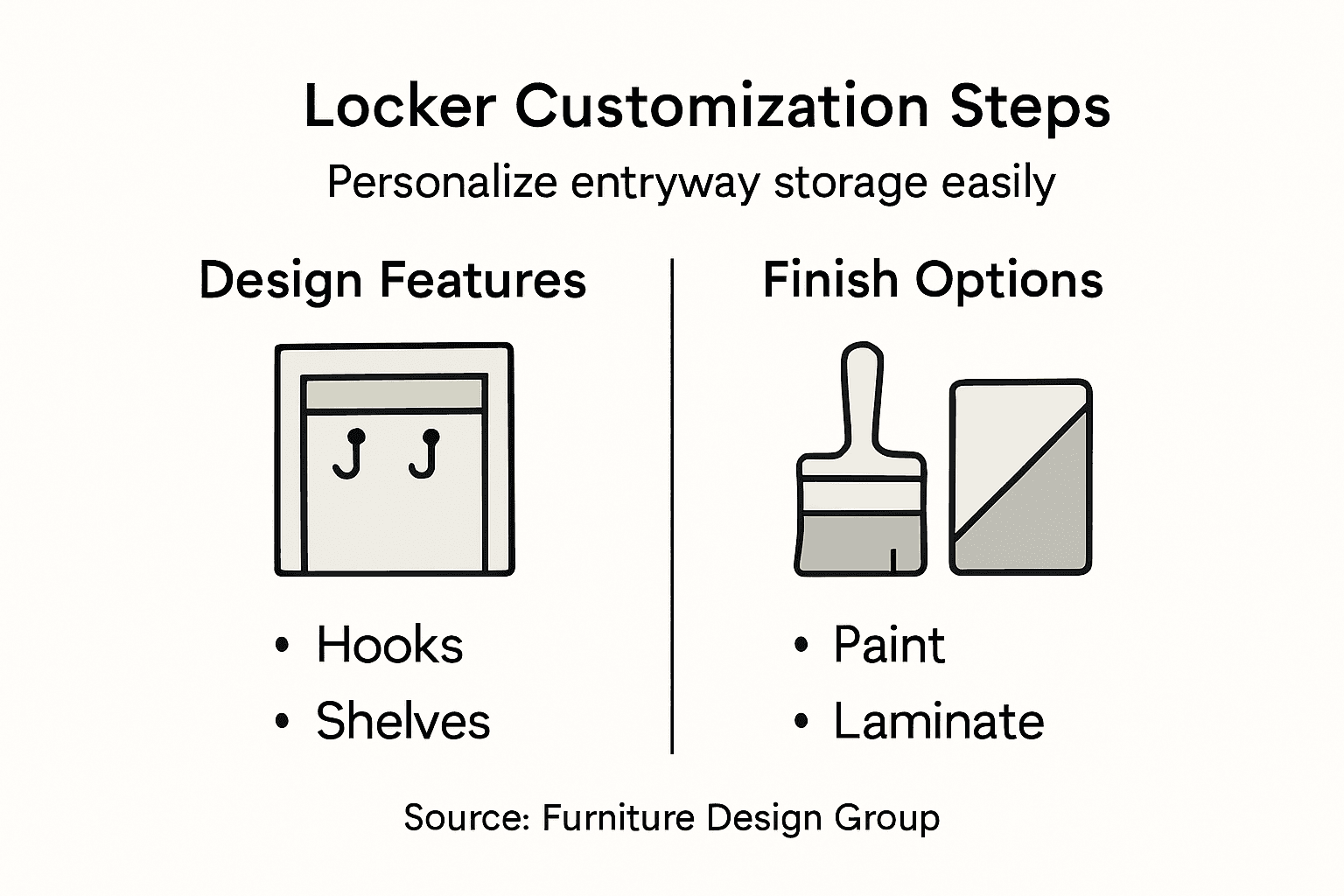
Begin by exploring accessibility design standards to ensure your locker design accommodates all potential users. Consider incorporating ergonomic design elements that make your storage solution comfortable and user-friendly:
Customization options include:
- Adjustable hook heights
- Varied shelf depths
- Integrated seating areas
- Specialized storage compartments
- Adaptable hardware configurations
Next, dive into the aesthetic aspects of your design. Locker customization options offer remarkable flexibility in creating a look that complements your home’s interior:
- Color selections matching your entryway palette
- Vented or solid panel designs
- Sloped or flat top configurations
- Decorative hardware choices
- Optional base plate designs
Pay special attention to the finishes that will withstand daily use. Select materials and coatings that resist moisture, scratches, and wear while maintaining their visual appeal.
Below is a quick reference for mudroom locker customization features and their user benefits:
| Custom Feature | User Benefit | Best For |
|---|---|---|
| Adjustable hooks | Accommodates all ages | Families, children |
| Integrated seating | Adds convenience | Entryways, large homes |
| Specialized compartments | Organizes gear efficiently | Sports equipment, bags |
| Decorative hardware | Personalizes style | Unique home interiors |
Customization is where functional storage becomes a reflection of your home’s unique personality.
Pro tip: Request finish samples and test them in conditions similar to your entryway to ensure long-lasting durability and aesthetic appeal.
Step 5: Review Plans and Prepare for Construction
Before transforming your mudroom locker design from concept to reality, a comprehensive review of your plans ensures smooth execution and prevents potential complications. This critical phase bridges your creative vision with practical implementation.
Begin by carefully examining construction safety guidelines to guarantee your project meets professional standards. Your review should focus on:
Key documentation requirements:
- Detailed dimensional drawings
- Material specifications
- Hardware placement diagrams
- Structural mounting plans
- Electrical considerations (if applicable)
Next, validate your plans against local building codes and permit requirements. Submission and review processes can vary, so anticipate potential compliance challenges early in your planning:
- Verify zoning regulations
- Check accessibility standards
- Confirm structural mounting requirements
- Assess potential permit needs
- Document precise installation specifications
Consult with a professional carpenter or designer who can provide an objective review of your plans, identifying potential issues before construction begins.
Meticulous planning transforms good intentions into exceptional results.
Pro tip: Create a digital and physical backup of all your design plans and measurements to prevent unexpected setbacks during the construction process.
Elevate Your Entryway with Custom Mudroom Lockers that Fit Your Lifestyle
Designing the perfect mudroom lockers requires more than measurements and materials. You need a custom solution that balances space, durability, and personal style while solving everyday storage challenges like keeping coats, shoes, and gear organized. If you find yourself overwhelmed by assessing entryway dimensions or selecting the right materials and features, know that expert craftsmanship can bring your vision to life.
Discover how Furniture Design Group can help you transform your entryway with bespoke mudroom lockers built to your exact specifications. With over 20 years of experience crafting durable, elegant storage that fits your family’s needs and home aesthetic, we take your concepts from careful planning and sketching all the way to flawless construction. Ready to create personalized storage that blends style and function? Visit our website now or contact us to start designing your custom mud lockers today.
Frequently Asked Questions
How do I assess my entryway space for designing mudroom lockers?
To assess your entryway space, take precise measurements of the floor width, wall height, and potential locker depth. Document these dimensions and consider clearance requirements to ensure comfortable movement. Use painter’s tape to outline potential locker dimensions on your wall for visualization.
What dimensions should I consider when sketching mudroom locker layouts?
When sketching mudroom locker layouts, focus on precise wall and floor measurements, along with proposed locker width and depth. Typical individual locker widths range from 18 to 24 inches, and your total height should be between 72 and 84 inches. Create a detailed sketch using graph paper or digital tools to capture these specifications effectively.
Which materials are best for constructing durable mudroom lockers?
The best materials for durable mudroom lockers include cold-rolled steel, high-quality hardwood, moisture-resistant engineered wood, and aluminum. Choose materials that can withstand daily use while also fitting the aesthetic of your home. Request samples to test their durability before finalizing your selection.
How can I customize my mudroom locker design to fit my family’s needs?
To customize your mudroom locker design, consider ergonomic features like adjustable hooks and specialized storage compartments. Choose colors and finishes that match your entryway style to make the design personal and functional. Experiment with different configurations to establish designated spaces for each family member.
What steps should I take before starting construction on my mudroom lockers?
Before starting construction, review your plans to ensure they meet safety guidelines and local building codes. Validate your dimensional drawings and material specifications, then consult with a professional for an objective review. Create backups of your design plans to prevent unexpected setbacks during construction.