
TL;DR:
- Mastering consultative selling involves diagnosing needs, building trust, and guiding clients from curiosity to commitment through strategic questions and visual tools. Effective visual marketing and well-timed in-store engagement significantly increase conversions by fostering emotional investment and guiding decision-making. A focused marketing plan allocates most resources to decision-stage tactics, ensuring higher ROI and more qualified leads.
Furniture client engagement is defined as the deliberate process of building trust, diagnosing needs, and guiding buyers toward confident purchase decisions through consultative selling and visual marketing. Custom furniture professionals who master this process close more sales, reduce price objections, and generate stronger referrals than those relying on transactional tactics. Knowing how to engage furniture clients means combining the right timing, the right questions, and the right visual tools to move buyers from curiosity to commitment. Furnituredesigngroup has spent over 20 years refining this approach with homeowners and interior designers across Maryland.
How to engage furniture clients with consultative selling
Consultative selling is the single most effective framework for furniture client engagement because it shifts the conversation from price to value. Rather than leading with product specs or promotional offers, the consultative approach starts with diagnosis. Sales professionals ask open-ended questions, listen carefully, and frame every product as a solution to a specific lifestyle problem. Consultative selling shifts focus from price and features to discovery and value framing, which improves trust and closing rates.
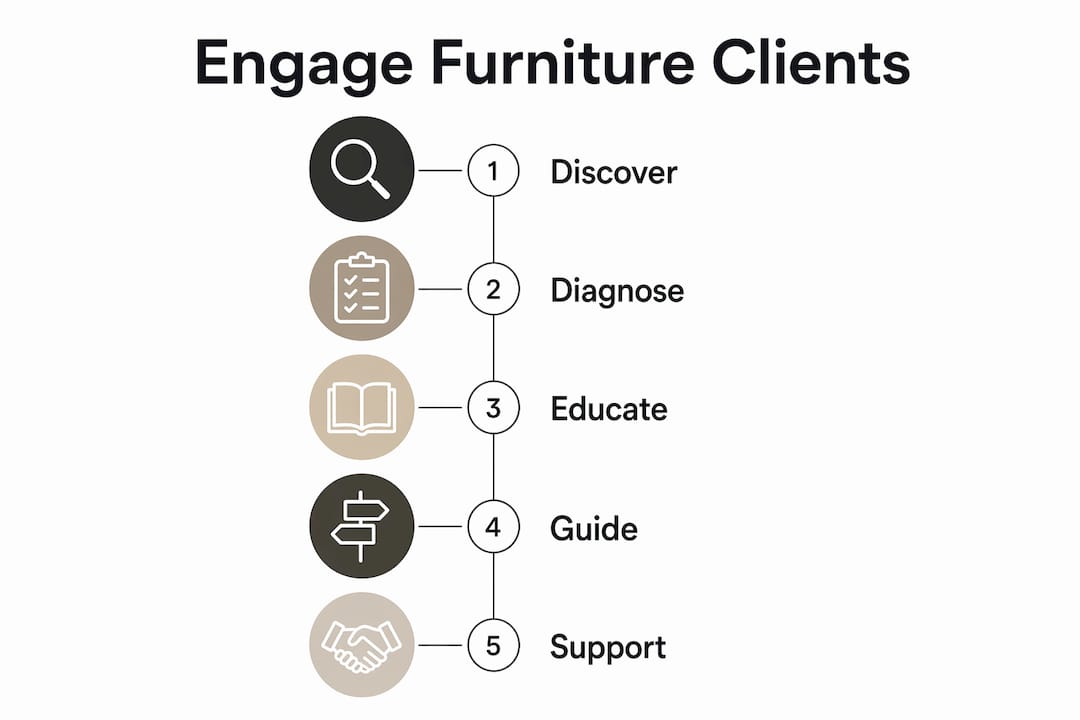
The core sequence runs in five stages: Diagnose, Educate, Guide, Advise, and Support. Each stage serves a purpose. Diagnosing means asking questions like “What’s the biggest frustration with your current entryway setup?” Educating means explaining why a mud locker with adjustable shelving solves that problem better than a generic bench. Guiding means walking the client through options that match their stated needs. Advising means recommending one specific configuration. Supporting means following up after the sale to confirm satisfaction and invite referrals.
Discovery questions are the engine of this sequence. Strong examples include:
- “What room is this going in, and who uses it most?”
- “What’s not working about your current setup?”
- “How important is storage versus aesthetics for this space?”
- “Have you seen a style you loved somewhere else?”
- “What’s your timeline for getting this done?”
These questions do more than gather information. They signal to the client that you are solving their problem, not selling your inventory. Consultative selling reduces price resistance by helping customers see furniture as solving lifestyle or comfort problems rather than as a commodity purchase.
Pro Tip: In bespoke furniture sales, open the first conversation as a discovery session that includes investment range. Framing budget as part of problem-solving removes uncertainty and speeds decisions significantly.
Ongoing product knowledge training for sales staff is non-negotiable. A consultant who cannot explain the difference between mortise-and-tenon joinery and pocket screws cannot credibly justify a price premium. Training should cover materials, construction techniques, lead times, and customization options at minimum.
How can visual-first marketing drive deeper engagement?
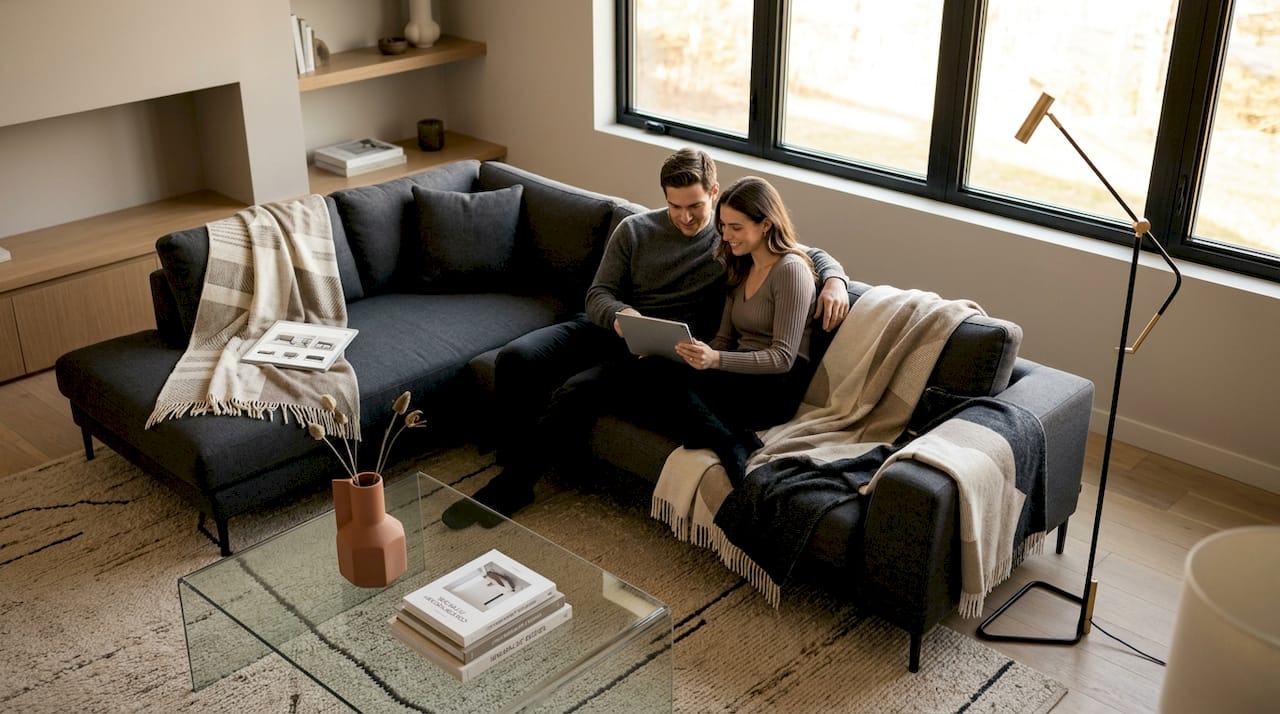
Visual marketing is the fastest way to attract furniture clients online because it triggers ownership visualization before a single conversation takes place. Furniture ads with lifestyle imagery generate 67% more clicks and 3.2x more lead form completions than text-only or plain product shots. That gap is not marginal. It means a lifestyle photo of a custom mud locker in a real Maryland entryway will outperform a white-background product shot in virtually every digital channel.
The table below maps content formats to buyer journey stages for furniture brands:
| Buyer stage | Best content format | Primary goal |
|---|---|---|
| Awareness | Lifestyle photography, Pinterest boards | Inspire and attract |
| Consideration | Style quizzes, AI room scene generators | Qualify and educate |
| Decision | Retargeting ads with lifestyle imagery, testimonials | Convert and close |
Interactive tools like style quizzes and AI room scene generators convert 3 to 5 times better than static lead magnets for furniture brands. The reason is simple: when a prospective buyer can upload a photo of their entryway and see a custom mud locker placed inside it, the psychological distance between browsing and buying collapses. Online engagement improves when interactive visual tools serve as the first contact point rather than standard product photos.
Visual-first email nurture sequences maintain 35 to 42% open rates, which is well above the industry average for home services. A practical sequence looks like this:
- Email 1: Lifestyle gallery of completed projects with a style quiz link
- Email 2: Before-and-after transformation photos with a room scene generator offer
- Email 3: Client testimonial with a specific product recommendation
- Email 4: Limited-time consultation offer with a direct booking link
Pinterest deserves specific attention for furniture brands targeting homeowners and interior designers. Pins have a much longer shelf life than Instagram or Facebook posts, and boards organized by room type or style category drive consistent referral traffic. Retargeting campaigns that serve lifestyle ads to users who visited your site but did not inquire close the loop between awareness and conversion.
Pro Tip: Pair every lifestyle image with a short caption that names the specific problem it solves. “No more lost keys and cluttered entryways” outperforms “Custom mud locker in white oak” every time.
When and how should sales associates engage clients in-store?
The timing of in-store engagement determines whether a client feels helped or pressured. Most furniture shoppers need about 3 to 5 minutes before they are ready to engage, and re-engagement works best with helpful, non-pushy questions. Approaching a customer the moment they walk through the door is one of the most common and costly mistakes in showroom sales.
The right moment to re-engage is signaled by body language, not a timer. Reading behavioral signals like seat testing, measuring space, and taking photos tells a salesperson that the client has moved from casual browsing to active evaluation. These are the moments to approach with a soft discovery question, not a product pitch.
A practical in-store engagement sequence looks like this:
- Greet warmly at the door, then give the client space to settle for 3 to 5 minutes.
- Observe body language for signals: touching materials, measuring, photographing, or lingering in one area.
- Approach with a room-focused opener: “What room are you working on today?”
- Listen fully before introducing any product. Reflect back what you heard.
- Present one or two options that directly address the stated need, not your full catalog.
- Add value on every return visit: new product information, a comparison, or a relevant client story.
- Close by summarizing the solution and confirming the next step, whether that is a quote, a sample, or a showroom appointment.
Timing and observation are crucial because customers want space followed by help at the right moment to feel comfortable engaging. Hovering, interrupting private conversations, and leading with price are the three behaviors most likely to end a sale before it starts.
Showroom sales training that emphasizes lifestyle discovery greetings, room-solution presentations, and protection and financing closings consistently produces higher ticket sales for custom furniture. The greeting sets the tone. The room-solution presentation builds trust. The closing conversation removes the final barrier.
How to structure a furniture marketing plan that supports engagement
A furniture marketing plan that supports client engagement maps every channel and content format to a specific stage of the buyer journey. Without this mapping, budget gets wasted on awareness tactics that never convert and decision-stage buyers who never get retargeted. Aligning spend with buyer journey stages maximizes ROI in furniture marketing, and most professionals allocate budget ineffectively by defaulting to broad awareness spend.
The recommended budget split for custom furniture brands in 2026 allocates 60 to 70% of spend to decision-stage tactics like showroom appointments, retargeting, and referral programs. The remaining 30 to 40% covers awareness and consideration channels like social media, content marketing, and email nurture. A 2026 furniture marketing plan recommends this split because decision-stage buyers convert at dramatically higher rates and lower cost per acquisition than cold audiences.
The comparison below shows how messaging should shift by persona:
| Persona | Primary channel | Core message |
|---|---|---|
| Homeowner | Pinterest, email, retargeting | “Solve your entryway chaos with custom storage” |
| Interior designer | Direct outreach, portfolio sharing | “Bespoke pieces your clients will remember” |
| Retail buyer | Trade shows, B2B email | “Consistent quality, custom specs, reliable lead times” |
AI-generated room scenes are a practical tool for scaling visual content without a full photography budget. A single product can be placed in dozens of room contexts, giving your team fresh creative for retargeting campaigns, email sequences, and social posts without a new photoshoot each time. The key performance indicators to track are lead conversion rate, cost per qualified lead, showroom appointment rate, and customer acquisition cost. These four metrics tell you whether your engagement strategy is working at every stage of the funnel.
Two-sided referral rewards with automated tracking increase post-purchase engagement and repeat business. A structure like $50 store credit for the referrer plus a discount for the new client creates a self-reinforcing loop that turns satisfied buyers into active advocates.
Key takeaways
Effective furniture client engagement requires consultative selling, visual-first marketing, and precise in-store timing working together as a single system.
| Point | Details |
|---|---|
| Consultative selling builds trust | Use the Diagnose, Educate, Guide, Advise, Support sequence to shift focus from price to value. |
| Lifestyle imagery drives conversions | Furniture ads with lifestyle photos generate 67% more clicks than plain product shots. |
| In-store timing is critical | Give clients 3 to 5 minutes to settle, then re-engage using behavioral signals, not a script. |
| Budget allocation determines ROI | Allocate 60 to 70% of marketing spend to decision-stage tactics for maximum conversion efficiency. |
| Interactive tools qualify leads faster | Style quizzes and AI room scene generators convert 3 to 5 times better than static lead magnets. |
What I’ve learned about engagement after two decades in custom furniture
The most common mistake I see furniture professionals make is treating engagement as a single event rather than a sequence. They approach a client once, deliver a pitch, and then either close or lose the sale. Real engagement is a series of small, well-timed interactions that each add value and build trust incrementally.
The shift that changed everything for me was learning to treat the first conversation as a diagnostic session, not a sales call. When you open with “What’s not working in your space right now?” instead of “Can I show you our latest collection?”, the entire dynamic changes. The client stops being a prospect and starts being a collaborator. That shift is what separates custom furniture professionals who compete on craftsmanship from those who compete on price.
Visual tools have genuinely reshaped how buyers make decisions. A client who can see their actual entryway with a custom mud locker placed inside it arrives at the decision conversation already emotionally invested. The custom furniture gallery at Furnituredesigngroup exists precisely for this reason. Showing real completed work in real homes closes the gap between imagination and commitment faster than any sales script.
My honest advice: invest in your observation skills as much as your product knowledge. Knowing when to approach, when to step back, and when to ask the next question is the craft within the craft. No tool or tactic replaces that judgment.
— Donovan
See how Furnituredesigngroup brings these strategies to life
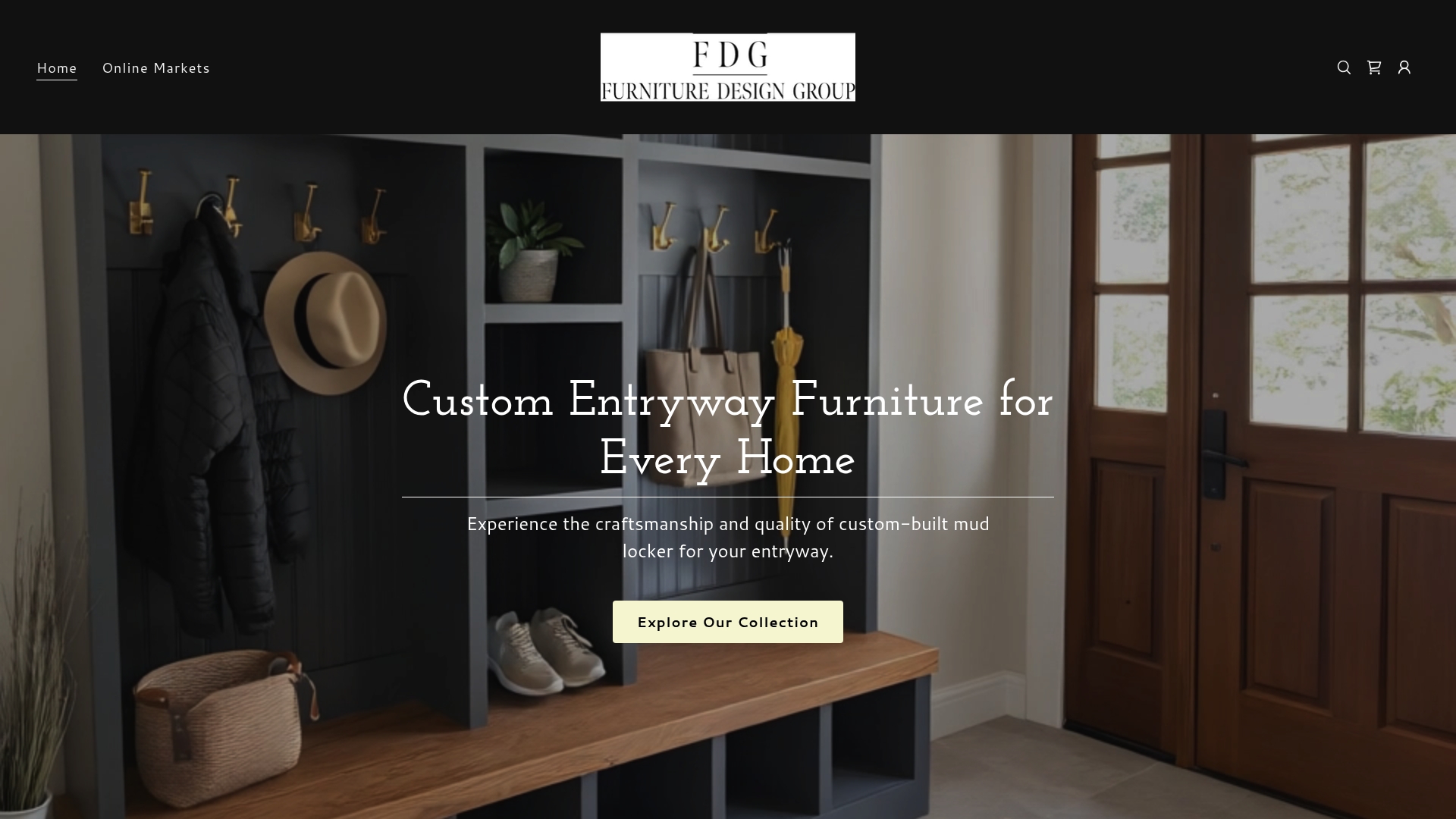
Furnituredesigngroup applies every principle in this article to its own client process, from the first discovery conversation to the final installation. The Maryland-based team specializes in custom-crafted entryway furniture built to solve specific storage and lifestyle problems, not generic catalog pieces. Every project starts with a consultative session that diagnoses the client’s space, style, and budget before a single design recommendation is made. If you want to see the visual marketing approach in practice, the custom furniture portfolio shows completed projects across a range of entryway styles and home types. Reach out directly to start a discovery conversation about your next project.
FAQ
What is the most effective way to engage furniture clients?
Consultative selling is the most effective approach. It uses open-ended discovery questions to diagnose client needs and frames every product as a solution to a specific lifestyle problem rather than a price-point decision.
How does lifestyle imagery improve furniture lead generation?
Furniture ads with lifestyle imagery generate 67% more clicks and 3.2x more lead form completions than plain product photos. Lifestyle images trigger ownership visualization, which is the primary psychological driver of qualified leads.
When should a sales associate approach a customer in a furniture showroom?
Most furniture shoppers need 3 to 5 minutes to settle before they are ready to engage. The right moment is signaled by behavioral cues like touching materials, measuring space, or photographing a piece, not by a fixed timer.
How should a furniture marketing budget be allocated for best results?
Allocate 60 to 70% of your budget to decision-stage tactics like retargeting, showroom appointment campaigns, and referral programs. The remaining spend covers awareness and consideration channels like social media and email nurture.
What interactive tools work best for engaging furniture buyers online?
Style quizzes and AI room scene generators convert 3 to 5 times better than static lead magnets. They work because they let prospective buyers visualize a specific product in their own space before any sales conversation begins.