
Most homeowners assume all custom furniture is built to the same quality benchmarks, but that’s rarely true. Industry standards in furniture design exist to protect consumers and ensure consistent craftsmanship, yet many buyers never ask about them when commissioning entryway pieces. Understanding these standards transforms how you evaluate custom furniture options, helping you distinguish between mediocre work and exceptional craftsmanship. This guide reveals what industry standards mean for your custom entryway furniture and how to apply them when selecting pieces for your Maryland home.
Table of Contents
- What Are Industry Standards In Furniture Design?
- How Industry Standards Impact The Quality Of Custom Entryway Furniture
- Comparing Common Standards And Certifications In Furniture Design
- How To Apply Industry Standards When Selecting Custom Entryway Furniture In Maryland
- Explore Custom Entryway Furniture Designed To Industry Standards
- Frequently Asked Questions
Key takeaways
| Point | Details |
|---|---|
| Standards ensure quality | Industry benchmarks guarantee consistent craftsmanship, safety, and durability in custom furniture |
| Materials matter | Compliance with material standards directly affects how long your entryway furniture lasts |
| Certifications guide choices | Eco-certifications like FSC and GREENGUARD help identify sustainable, health-conscious furniture options |
| Application is practical | Asking the right questions about standards helps you select personalized pieces that endure daily use |
What are industry standards in furniture design?
Industry standards in furniture design establish clear specifications for materials, construction methods, safety protocols, and durability testing. These benchmarks can be regulatory requirements enforced by government agencies or voluntary guidelines adopted by manufacturers committed to quality. Industry standards define specifications that protect consumers from poorly constructed furniture while giving manufacturers a framework for consistent production.
These standards cover multiple critical areas:
- Material selection and quality thresholds for wood, metal, fabrics, and finishes
- Construction techniques including joinery methods, fastener types, and assembly protocols
- Safety regulations addressing stability, load-bearing capacity, and chemical emissions
- Durability testing procedures that simulate years of typical use
- Sustainability criteria for sourcing, manufacturing processes, and recyclability
Standards protect you by ensuring products meet minimum performance thresholds before reaching your home. When you purchase custom entryway furniture, adherence to these benchmarks means the piece won’t collapse under normal use, won’t emit harmful chemicals, and will maintain structural integrity through Maryland’s humidity fluctuations and temperature changes.
Sustainability and eco-certifications have become increasingly relevant in furniture standards. These voluntary programs verify that materials come from responsibly managed forests, that manufacturing processes minimize environmental impact, and that finished products meet strict indoor air quality standards. For custom furniture buyers, these certifications offer transparency about the environmental and health implications of their purchases.
It’s important to distinguish between minimum standards and premium craftsmanship benchmarks. Regulatory standards set the floor for acceptable quality, ensuring basic safety and functionality. Premium craftsmen often exceed these minimums, applying traditional techniques and superior materials that elevate furniture from merely acceptable to exceptional. When commissioning custom entryway furniture, understanding this distinction helps you evaluate whether a designer meets basic requirements or delivers true artisanal quality.
How industry standards impact the quality of custom entryway furniture
Adhering to industry standards directly improves the durability, safety, and satisfaction you’ll experience with custom entryway furniture. These impacts manifest in tangible ways that affect your daily life and long-term investment value.
Material selection standards ensure your furniture uses wood properly dried to moisture content appropriate for Maryland’s climate. Improperly dried wood warps, cracks, and separates at joints within months. Standards specify acceptable moisture ranges, preventing these failures before construction begins.
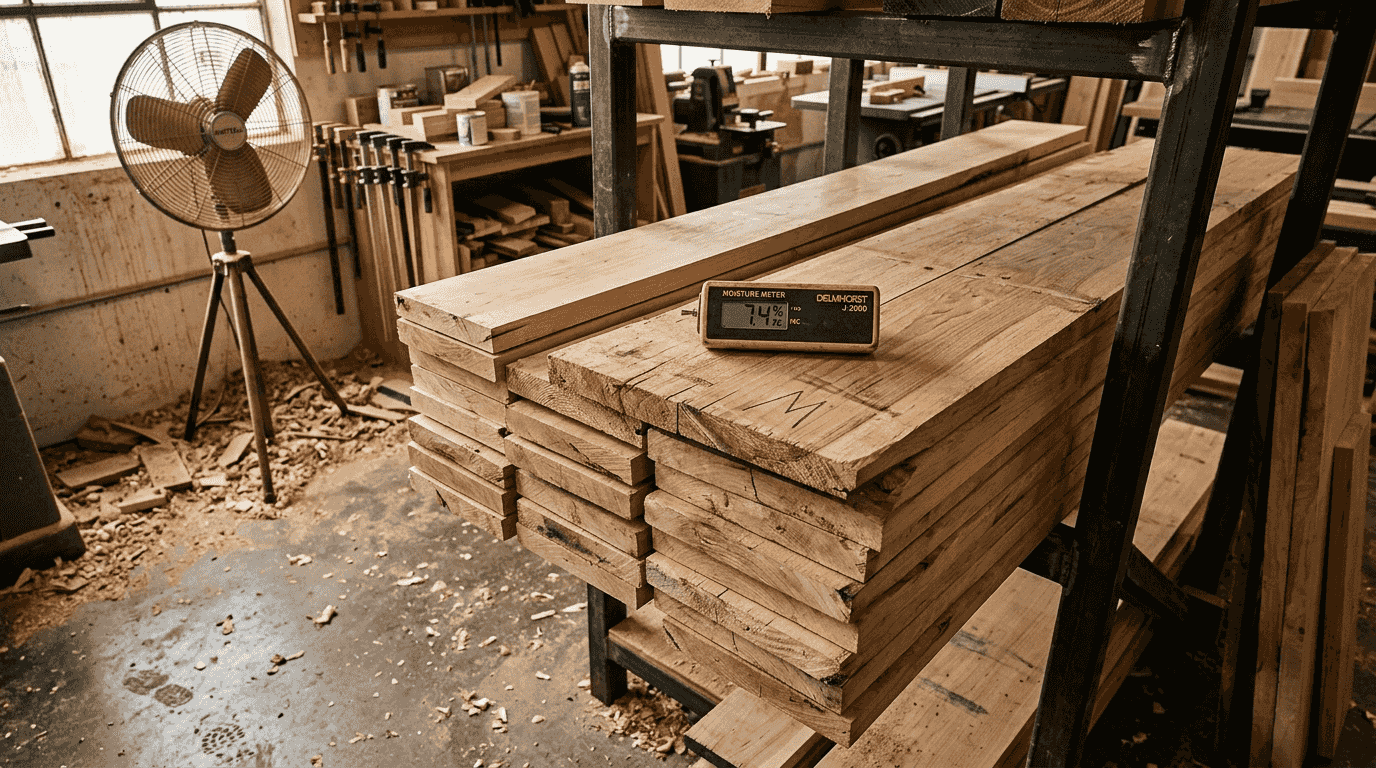
Joinery technique standards govern how pieces connect. Traditional mortise and tenon joints, dovetails, and reinforced corner blocks provide strength that outlasts simple butt joints held with glue and staples. Standards for custom furniture often reference these time-tested methods, ensuring your entryway pieces withstand the stress of coats being hung, bags being tossed, and doors being opened hundreds of times yearly.
Finishing standards protect both aesthetics and health. Low-VOC (volatile organic compound) finishes meet indoor air quality standards, preventing headaches and respiratory irritation while maintaining the beauty of natural wood. These finishes also resist moisture damage, crucial for entryway furniture exposed to wet coats and snowy boots during Maryland winters.
Sizing precision standards ensure drawers glide smoothly, doors close properly, and pieces fit their intended spaces without gaps or binding. Tolerances measured in fractions of an inch separate furniture that functions flawlessly from pieces that frustrate users daily.
Certified eco-friendly materials bring additional benefits beyond environmental responsibility. FSC-certified wood comes from sustainably managed forests, ensuring future availability of quality hardwoods. GREENGUARD-certified materials meet stringent chemical emission limits, protecting your family’s health while supporting responsible manufacturing.
Pro Tip: Before commissioning custom entryway furniture, ask your designer which specific standards and certifications they follow. Request documentation proving compliance with ANSI/BIFMA or ASTM standards, and verify eco-certifications through independent registries rather than relying solely on manufacturer claims.
Standards guide customization without sacrificing durability or safety. You can specify unique dimensions, finishes, and features while ensuring the underlying construction meets proven performance benchmarks. This balance between personalization and reliability defines quality custom furniture.
Comparing common standards and certifications in furniture design
Several major standards and certifications validate quality claims in custom furniture. Understanding their scope helps you evaluate what different certifications actually guarantee.
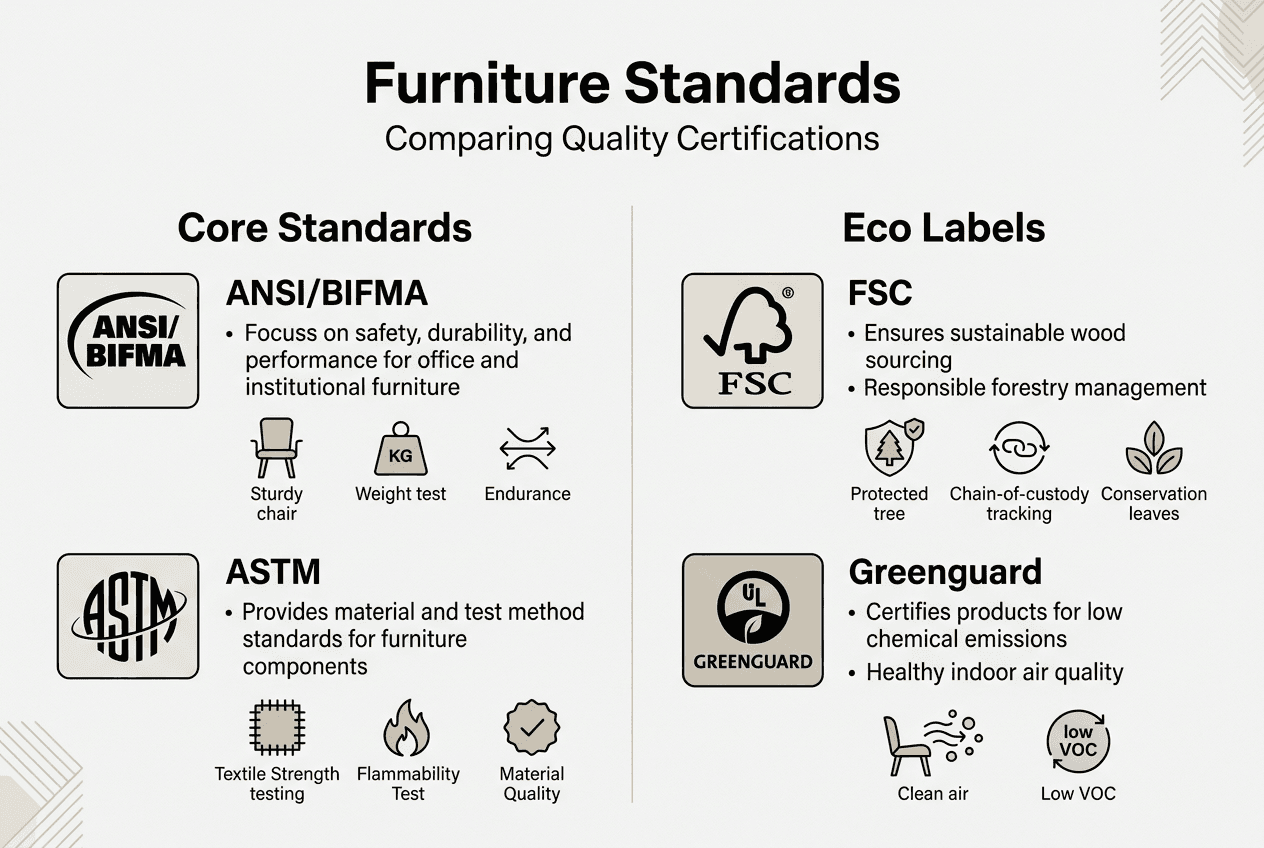
| Standard/Certification | Scope and Focus | Certification Authority | Key Benefits | | — | — | — | | ANSI/BIFMA | Commercial furniture safety, durability, structural performance | Business and Institutional Furniture Manufacturers Association | Ensures furniture withstands heavy use and meets safety thresholds | | ASTM International | Material standards, testing methods, safety specifications | ASTM International (formerly American Society for Testing and Materials) | Provides detailed technical specifications for materials and construction | | FSC (Forest Stewardship Council) | Sustainable forestry, responsible wood sourcing | Forest Stewardship Council | Verifies wood comes from responsibly managed forests | | GREENGUARD | Indoor air quality, chemical emissions limits | UL Environment | Protects health by limiting VOCs and harmful chemical emissions |
ANSI/BIFMA standards primarily address commercial furniture but provide excellent benchmarks for residential custom pieces. These standards specify load-bearing requirements, stability tests, and durability protocols that ensure furniture performs reliably. While not mandatory for residential furniture, craftsmen who voluntarily meet ANSI/BIFMA standards demonstrate commitment to superior construction.
ASTM International develops consensus standards across industries, including detailed specifications for furniture materials and testing methods. Furniture certifications inform buyers about what to expect from different materials and construction approaches. ASTM standards cover everything from wood moisture content to metal fastener strength, providing technical guidance that separates guesswork from proven performance.
FSC certification addresses the environmental and social impacts of forestry. When you choose FSC-certified wood for custom entryway furniture, you support forest management that protects biodiversity, respects indigenous rights, and ensures future timber availability. This certification doesn’t directly address furniture construction quality but guarantees responsible material sourcing.
GREENGUARD certification focuses exclusively on indoor air quality and chemical emissions. Furniture, finishes, and adhesives meeting GREENGUARD standards emit minimal VOCs, reducing health risks especially important in enclosed entryways where air circulation may be limited.
These standards affect several critical factors:
- Material choice: Standards specify acceptable wood species, grades, and treatments that ensure longevity
- Emissions: Certifications limit harmful chemicals in finishes, adhesives, and composite materials
- Recyclability: Sustainability standards encourage designs that facilitate disassembly and material recovery
- Craftsmanship: Performance standards require construction techniques proven through testing and long-term use
Pro Tip: Prioritize standards that align with your specific concerns. If indoor air quality matters most due to allergies or sensitivities, focus on GREENGUARD certification. If environmental impact drives your decisions, emphasize FSC certification and ask about local wood sourcing to reduce transportation emissions.
How to apply industry standards when selecting custom entryway furniture in Maryland
Translating knowledge about standards into practical furniture selection requires a systematic approach. Understanding and applying industry standards helps you choose durable, personalized furniture that performs reliably for decades.
Follow this process when commissioning custom entryway furniture:
- Research designers and request portfolios showing completed projects similar to your vision
- Schedule consultations to discuss your functional needs, aesthetic preferences, and budget constraints
- Ask specific questions about materials, construction methods, and standard compliance
- Request documentation of certifications and verify claims through independent registries
- Review detailed drawings and specifications before authorizing construction
- Inspect completed furniture for quality before final payment and delivery
Use this checklist during designer consultations:
- What wood species do you recommend for Maryland’s climate, and why?
- How do you control wood moisture content before construction?
- Which joinery techniques will you use, and how do they compare to industry standards?
- What finishes do you apply, and do they meet low-VOC or GREENGUARD standards?
- Can you provide FSC certification for wood materials?
- How do you ensure dimensional accuracy and proper fit?
- What warranty covers workmanship and material defects?
- May I visit your workshop to see construction in progress?
Maryland’s climate presents specific considerations for entryway furniture. Humidity fluctuates seasonally, causing wood to expand in summer and contract in winter. Quality construction accounts for this movement through proper joinery, adequate finish protection, and wood selection suited to these conditions. White oak, cherry, and maple perform well in Mid-Atlantic climates when properly finished.
Watch for these warning signs of non-compliance or poor craftsmanship:
- Reluctance to discuss specific construction methods or material sources
- Inability to provide certification documentation or verifiable references
- Prices significantly below market rates for comparable custom work
- Rushed timelines that don’t allow for proper wood acclimation and finishing
- Generic designs lacking personalization to your space and needs
- Visible gaps, misalignments, or rough surfaces in portfolio examples
Selecting eco-friendly and locally sourced materials offers multiple benefits. Local hardwoods reduce transportation emissions while supporting Maryland’s forestry economy. Reclaimed wood from regional sources adds character while preventing waste. Water-based finishes provide durability with minimal environmental impact. Ask designers about relationships with local sawmills and salvage operations to access these sustainable options.
Customization should enhance functionality without compromising structural integrity. Specify features like adjustable shelving, removable coat hooks, and modular components that adapt as your needs change. Ensure custom dimensions account for wall irregularities, baseboards, and door swings. Quality designers welcome these personalization requests and incorporate them while maintaining compliance with safety and durability standards.
Explore custom entryway furniture designed to industry standards
You now understand how industry standards protect your investment and ensure lasting quality in custom furniture. Applying this knowledge requires partnering with craftsmen who share your commitment to excellence and sustainability.
Furniture Design Group brings over 20 years of experience creating custom entryway furniture solutions for Maryland homeowners and interior designers. Our family-owned workshop emphasizes traditional joinery techniques, premium materials, and finishes that meet the highest indoor air quality standards. Every piece starts with personalized consultation to understand your functional needs, aesthetic vision, and space constraints.
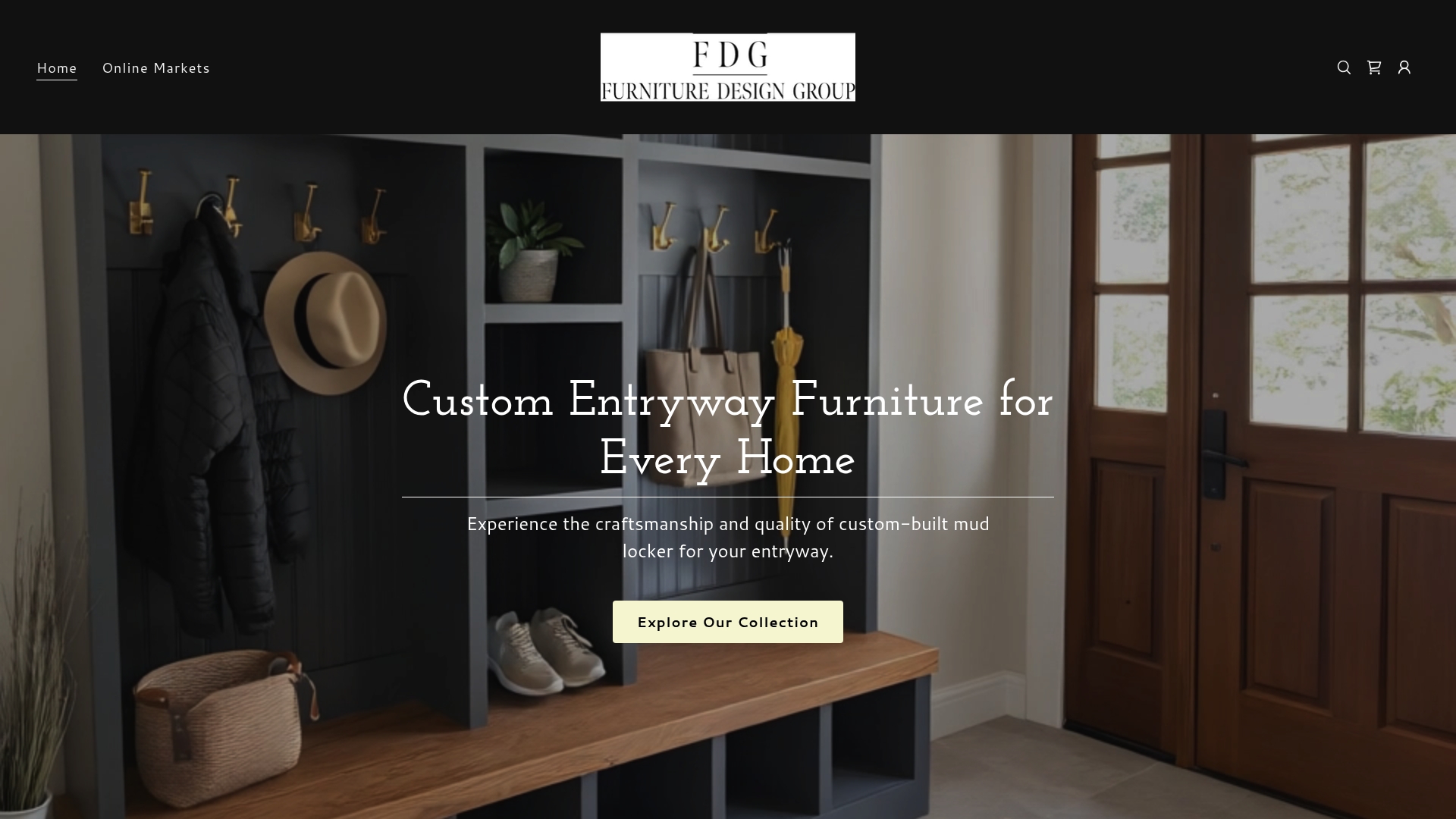
We source sustainably harvested hardwoods and offer reclaimed materials for environmentally conscious clients. Our construction methods exceed industry minimums, applying time-tested techniques that ensure your entryway furniture withstands decades of daily use. Visit our showroom to see craftsmanship firsthand, or contact us to begin designing furniture that reflects your style while meeting the standards that matter most. Manage your project details conveniently through customer account management tools that keep you informed throughout the design and construction process.
Frequently asked questions
What materials meet industry standards for entryway furniture?
Hardwoods like oak, maple, cherry, and walnut meet ASTM standards for furniture construction when properly dried to 6-8% moisture content. These species offer strength, durability, and attractive grain patterns suitable for custom entryway pieces. Plywood and MDF can meet standards when manufactured to specific density and emission requirements, though solid hardwood generally provides superior longevity. Metal components should comply with ASTM fastener standards, ensuring screws, hinges, and brackets withstand repeated stress without failing.
Certification importance varies by material type. FSC certification verifies wood comes from responsibly managed forests, addressing environmental and social impacts of harvesting. For finishes, GREENGUARD certification confirms low chemical emissions that protect indoor air quality. These certifications don’t guarantee craftsmanship quality but ensure materials meet defined environmental and health standards. Request documentation proving certification rather than accepting verbal claims, and verify certifications through independent registries online.
How do eco-certifications impact custom furniture choices?
Eco-certifications provide verified information about environmental impact and ethical sourcing that helps you make informed decisions. FSC certification ensures wood harvesting doesn’t contribute to deforestation or habitat destruction. GREENGUARD certification protects your family’s health by limiting exposure to VOCs and other harmful chemicals common in conventional finishes and adhesives. These certifications add transparency to supply chains, revealing impacts often hidden from consumers.
Choosing certified sustainable materials benefits both environmental health and indoor air quality. Sustainably harvested wood ensures future availability of quality hardwoods while protecting forest ecosystems. Low-emission finishes reduce headaches, respiratory irritation, and long-term health risks associated with chemical exposure. For families with allergies, asthma, or chemical sensitivities, GREENGUARD certification provides measurable protection. Environmental benefits extend beyond your home, supporting forestry practices that maintain biodiversity and combat climate change through carbon sequestration.
Can industry standards guarantee craftsmanship in custom furniture?
Industry standards establish minimum quality thresholds but don’t replace artisan skill and attention to detail. Standards ensure furniture won’t fail basic safety and durability tests, protecting consumers from dangerous or poorly constructed pieces. However, exceptional craftsmanship goes beyond these minimums, applying traditional techniques, superior materials, and meticulous finishing that elevate furniture from adequate to extraordinary. Standards provide a floor, not a ceiling, for quality.
Vetting furniture makers requires examining portfolios, checking references, and visiting workshops when possible. Look for clean, organized workspaces with quality tools and materials. Request contact information for previous clients and ask about their satisfaction with both the finished product and the collaboration process. Examine completed pieces for tight joints, smooth finishes, and thoughtful details that reveal pride in workmanship. A maker’s reputation, built through years of satisfied clients, offers better assurance of quality than standards compliance alone.