
TL;DR:
- Mud lockers are custom-designed entryway storage units that organize coats, shoes, and gear, protecting homes from dirt and clutter. They provide space-efficient, durable solutions that enhance home aesthetics and increase property value in Maryland. Unlike full mudrooms or basic solutions, mud lockers offer personalized, long-lasting organization tailored to families’ needs.
Maryland homes face a daily battle at the front door. Coats, boots, sports bags, and umbrellas pile up fast, especially through the region’s wet springs, snowy winters, and humid summers. That chaos doesn’t just look bad — it spills into the rest of your living space and sets a stressful tone the moment you walk in. Mud lockers offer a smart, stylish answer to this problem, giving every family member their own dedicated storage zone right where they need it most. This article walks you through what mud lockers are, their real advantages, how they stack up against other options, and how to find the right fit for your Maryland home.
Table of Contents
- What are mud lockers and why are they useful?
- The main advantages of mud lockers in Maryland homes
- Comparing mud lockers with other entryway storage options
- How to choose the best mud locker for your Maryland home
- Why conventional entryway storage solutions fall short
- Custom mud lockers for Maryland homes: Next steps
- Frequently asked questions
Key Takeaways
| Point | Details |
|---|---|
| Superior organization | Mud lockers provide efficient, tailored storage for entryways, reducing clutter. |
| Enhanced home value | Custom mud lockers boost property appeal and market value. |
| Easy customization | Mud lockers can be designed to fit any space and style, matching Maryland homeowners’ needs. |
| Healthy routines | Mud lockers encourage hygienic habits like removing shoes and storing gear neatly. |
What are mud lockers and why are they useful?
A mud locker is a built-in or freestanding storage unit designed specifically for entryways. Think of it as a personal locker for each household member, with hooks for coats, cubbies for shoes, shelves for bags, and sometimes a bench for sitting while you put on or take off your footwear. Unlike a basic coat rack or open cubby shelf, a mud locker typically features enclosed compartments, doors or panels, and a more finished look that blends with your home’s interior.
Mud lockers differ from a full mudroom in one important way: a mudroom is an entire room or dedicated space built for this purpose, which requires significant square footage and construction work. A mud locker, by contrast, fits into an existing entryway, hallway, or garage transition zone. You get most of the same organizational benefits without gutting a room or adding square footage.
Their primary use cases cover everything your entryway deals with daily:
- Coats and jackets: Enclosed hooks keep outerwear from landing on the floor or draped over chairs.
- Shoes and boots: Deep lower cubbies or pull-out drawers store footwear neatly without blocking the path.
- Backpacks and bags: Mid-height hooks or shelves keep school bags and work totes off the floor.
- Sports gear: Taller compartments easily hold helmets, shin guards, lacrosse sticks, and similar items common in active Maryland families.
- Seasonal gear: Gloves, scarves, hats, and sunscreen all find a logical home in smaller upper compartments.
Customization is where mud lockers really shine. You can work with custom furniture solutions to configure compartment sizes, finishes, door styles, and hardware that match your existing trim, paint colors, or flooring. A standard off-the-shelf unit rarely accounts for the dimensions of your hallway, your family’s actual gear, or the architectural details that make your Maryland home feel like yours.
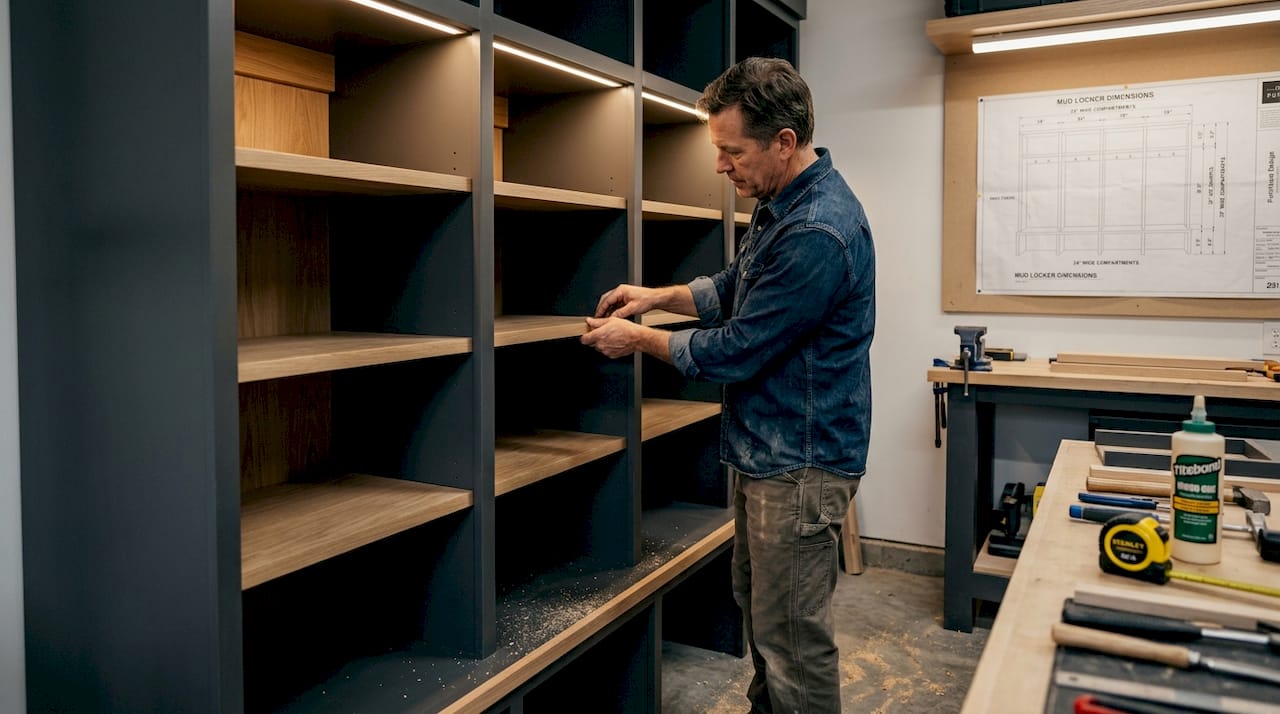
Pro Tip: When choosing materials for your mud locker, prioritize wood species that handle moisture well, like white oak or hard maple with a sealed finish. Maryland’s humidity swings can cause inferior woods to warp or swell over time, weakening joints and warping doors. Pairing good wood with efficient entryway storage design makes your investment last for decades.
The main advantages of mud lockers in Maryland homes
With a clear understanding of mud lockers, let’s explore their key advantages for Maryland families. These benefits go deeper than just “tidying up.” They affect how your home feels, how your family functions, and even what your property is worth.
-
Maximizes space and streamlines organization. A thoughtfully designed mud locker turns a narrow hallway into a functional storage hub. Each family member gets their own space, which eliminates the daily argument over whose boots are blocking the door. Vertical storage design means you’re using wall height rather than floor space, which is crucial in smaller Maryland townhomes or older colonial-style homes with compact entryways.
-
Protects your home’s interior from dirt and weather. Maryland weather is relentless. Rainy springs, slushy winters, and pollen-heavy falls all track inside on shoes and coats. A mud locker creates what designers call a “transition zone,” a defined area where outdoor gear stays before anyone moves deeper into the home. Floors, rugs, and upholstery all benefit from this buffer, and cleaning becomes significantly easier.
-
Increases property value through custom craftsmanship. Built-in storage is a known selling point in residential real estate. Tailored mud locker solutions that are well-made and visually integrated into a home’s architecture are viewed as permanent improvements, similar to custom cabinetry in a kitchen. Buyers recognize quality craftsmanship and often factor it into their offers.
-
Enhances entryway aesthetics and creates a welcoming feel. Your entryway is the first impression guests have of your home. A well-crafted mud locker with a coordinated finish, clean lines, and thoughtful design looks intentional and inviting. Compare that to a jumble of hooks screwed into drywall and shoes scattered across the floor. The visual difference is immediate and significant.
-
Encourages healthy household routines. When removing shoes has a designated spot and putting away your coat takes two seconds because there’s a hook at the right height, people actually do it. Mud lockers make the right behavior the easy behavior. For families with young children, this is especially impactful. Kids learn to take ownership of their personal space from an early age, building habits that stick.
“The entryway sets the tone for the entire home. When it’s organized and beautiful, everything inside feels more intentional.” — Design principle followed by craftsmen at Furniture Design Group with over 20 years of experience building custom entryway furniture in Maryland.
Comparing mud lockers with other entryway storage options
Now that you know the main benefits, it’s helpful to see mud lockers in context alongside other common entryway solutions. Not every home has the same needs, and choosing the right option depends on your space, budget, and lifestyle.
| Feature | Mud locker | Full mudroom | Basic cubby or bench |
|---|---|---|---|
| Space required | Small to medium | Large (dedicated room) | Very small |
| Storage capacity | High (per person) | Very high | Low to medium |
| Customization | High | High | Low |
| Aesthetic integration | Excellent | Excellent | Poor to average |
| Installation complexity | Medium | High (construction) | Low |
| Cost range | Moderate to high | High to very high | Low |
| Best for | Most Maryland homes | Larger new builds | Apartments or rentals |
| Durability | High with quality materials | High | Low with mass-produced units |
The comparison tells a clear story. A full mudroom is the gold standard for storage, but it requires the right floor plan and a significant construction budget. Basic cubbies and benches are affordable and easy to install, but they rarely solve the real problem — they just shift the clutter from the floor to a shelf.
Mud lockers sit in the sweet spot for most Maryland homeowners. They deliver serious, personalized storage in a footprint that works in existing spaces, without requiring you to add a room to your home. For a family of four, a mud locker unit typically spans six to eight feet wide with four individual sections, each 15 to 18 inches wide, which is enough to store gear for active Maryland family life without overwhelming a standard entryway.
Browse the custom mud lockers gallery to see real examples of how different configurations work in different types of homes, from narrow urban rowhouses in Baltimore County to spacious suburban homes in Howard County.
How to choose the best mud locker for your Maryland home
You’ve seen how mud lockers compare — here’s how to select the ideal option for your space and lifestyle. The right mud locker isn’t just about aesthetics. It’s about understanding your entryway’s physical constraints, your family’s actual gear load, and the materials that will hold up in Maryland’s climate.
Start with accurate measurements. Before you think about style or finish, measure your entryway width, height from floor to ceiling, and depth from wall to the nearest obstruction like a door swing or stair railing. A mud locker that looks perfect in a showroom can block traffic flow or prevent a door from opening fully if the dimensions aren’t right. Note where outlets, light switches, or vents are located, since these affect where and how a unit can be positioned.
Evaluate your family’s actual gear. Do you have hockey players, cyclists, or gardeners in the house? Those activities require taller or wider compartments than a standard locker. School-age kids need lower hooks so they can independently hang their own coats. If you have a dog, a pull-out drawer at the base for leashes, waste bags, and muddy paws towels is a game-changer. Think through a full week’s worth of comings and goings before settling on a layout.
Here’s a quick reference for standard mud locker configurations and how they typically map to family size:
| Family size | Recommended width | Sections | Key features |
|---|---|---|---|
| 1 to 2 people | 3 to 4 feet | 2 | Upper shelf, hooks, shoe cubby |
| 3 to 4 people | 5 to 7 feet | 3 to 4 | Per-person sections, bench, enclosed upper |
| 5 or more | 8 to 10+ feet | 5 or more | Full height doors, deep lower storage, seating |
Choose materials that match Maryland’s climate. Humidity is the enemy of poorly finished wood. Solid hardwoods like white oak, cherry, or hard maple, paired with a water-resistant topcoat, hold up well over time. MDF (medium-density fiberboard) can be used for painted panels but should always be sealed on all sides to prevent moisture absorption. Avoid veneer-over-particleboard construction in high-traffic, high-humidity zones, since these tend to swell, peel, and fail within a few years.
Think about visual integration with your existing decor. A mud locker that looks like it grew with the house feels very different from one that looks added on. Matching your mud locker customization to existing trim profiles, paint colors, and hardware finishes makes the whole entryway feel cohesive rather than patchwork.
Pro Tip: Plan for where your family will be in five years, not just where you are today. If you’re expecting another child, adding a section now costs far less than expanding later. If your kids will soon hit high school and start carrying more gear, build in taller compartments from the start. A custom mud locker is a long-term investment, and the incremental cost of planning ahead is minimal compared to the value it delivers.
Why conventional entryway storage solutions fall short
After more than 20 years building custom furniture for Maryland homeowners, we’ve seen a consistent pattern. Families buy a flat-pack cubby system or install a few hooks from a big-box store, feel relief for about two weeks, and then watch the chaos slowly return. The hooks get overwhelmed. The cubbies don’t fit anyone’s actual stuff. The finish chips after one winter. And the whole thing ends up either hidden behind a coat rack or hauled to the curb.
The problem isn’t the homeowners. It’s the product. Mass-produced entryway furniture is designed to appeal to the widest possible range of buyers, which means it’s optimized for no one in particular. The shelf heights assume average proportions. The compartment depths assume generic bags. The materials assume indoor-only conditions, not the mud, sleet, and salt that Maryland winters deliver right to your front door.
What surprises most people is how little the price difference matters when you factor in replacement costs. A family that buys a $200 cubby, replaces it at year three, tries a different solution at year five, and lands on another temporary fix has easily spent $600 to $800 without ever solving the problem. A well-built, custom piece of custom entryway furniture built to your exact needs, in materials chosen for your climate, typically lasts 20 to 30 years without needing replacement.
The deeper issue is that generic solutions treat organization as a product you can buy rather than a system you design. Real organization in a busy household comes from furniture that matches how your family actually lives, not a hypothetical family on a catalog cover. That’s why custom matters, not as a luxury, but as the practical choice for anyone who wants the problem actually solved.
Custom mud lockers for Maryland homes: Next steps
Tired of fighting your entryway every single day? A custom mud locker from Furniture Design Group is designed around your home, your family, and your lifestyle, not a generic floor plan. With over 20 years of experience building bespoke entryway furniture for Maryland homeowners, we know exactly what it takes to create a piece that works beautifully for decades.
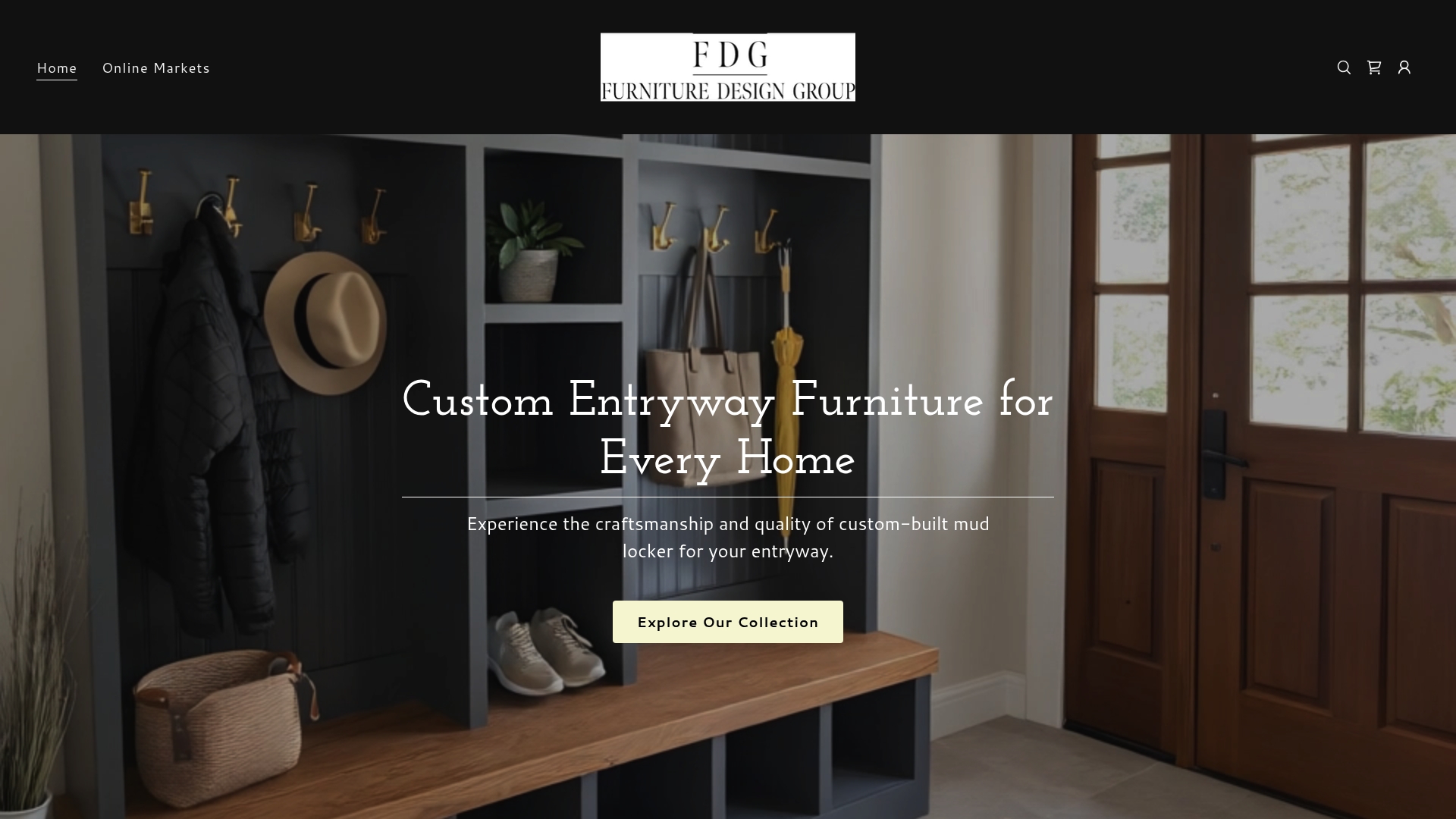
Whether you’re starting from scratch or replacing a solution that never quite worked, we’re here to help. Get custom mud lockers built to your specifications, or view mud locker gallery to see the range of styles, materials, and configurations we’ve created for Maryland homes just like yours. Reach out today to schedule a consultation and take the first step toward an entryway that actually works.
Frequently asked questions
What makes a mud locker different from a mudroom?
A mud locker is a built-in or freestanding storage unit placed within an existing entryway, while a mudroom is an entirely separate room dedicated to managing outdoor gear, shoes, and coats. Mud lockers deliver similar organizational benefits without requiring a room addition or major construction.
Can mud lockers be customized for small entryways?
Yes, mud lockers are one of the best storage solutions for compact spaces because they can be sized precisely to fit narrow hallways or small foyers. Custom configurations with vertical storage and slim-profile doors make them practical even in tight Maryland homes.
What materials are best for durable mud lockers?
Solid hardwoods like white oak, maple, or cherry with moisture-resistant finishes are ideal for mud lockers in Maryland’s humid climate. These materials resist warping, stand up to daily wear, and hold their finish far longer than MDF or particleboard alternatives.
Do mud lockers help increase my property value?
Custom mud lockers are considered built-in improvements that add both functional and aesthetic value to a home. Well-crafted entryway storage, particularly in move-in-ready condition, is a selling point that buyers notice and real estate professionals recognize as a value-add feature.