
Every Maryland homeowner knows the feeling: you walk through the front door and immediately trip over a pile of shoes, a backpack, and a jacket that missed the hook by three feet. The entryway is the first thing you see when you come home and the first thing guests notice. A dedicated drop zone for shoes, coats, and outdoor gear keeps dirt and clutter from spreading into your living areas. Mud lockers are the solution most homeowners overlook until they finally install one and wonder how they ever lived without it. This guide walks you through everything you need to know.
Table of Contents
- What is a mud locker and why does it matter?
- Design essentials: Ergonomics, sizing, and smart layouts
- Choosing features: Ventilation, materials, and child/family considerations
- How mud lockers add value: Cost, ROI, and Maryland market appeal
- Discover your custom entryway solution
- Frequently asked questions
Key Takeaways
| Point | Details |
|---|---|
| Purpose-built storage | Mud lockers are custom-designed to keep Maryland entryways organized and mess-free. |
| Ergonomic design matters | Proper sizing and layout enhance comfort, accessibility, and everyday use. |
| Ventilation prevents mold | Design features like louvered doors and slatted shelves stop moisture buildup inside lockers. |
| Boosts resale value | Adding mud lockers increases a home’s appeal and functionality, making it more marketable. |
What is a mud locker and why does it matter?
A mud locker is not just a cabinet with a hook on it. It is a purpose-built storage unit designed specifically for the chaos that comes through your front or back door every single day. Think of it as a personal locker for each family member, built right into your entryway or mudroom.
Mud lockers are custom-built storage units that serve as dedicated drop zones for shoes, coats, backpacks, and outdoor gear, preventing dirt and clutter from entering your living areas. A typical unit includes a tall upper section for hanging coats, a middle zone with hooks, a bench for sitting while you pull off boots, and lower cubbies or drawers for shoes and smaller items. The whole system works together to give every item a home the moment it comes through the door.
For Maryland families dealing with four distinct seasons, this matters more than you might think. Muddy spring boots, heavy winter coats, summer sports gear, and fall backpacks all need somewhere to go. Without a system, they end up on the floor, on the stairs, or draped over furniture.
Here is what a well-designed mud locker does for your household every day:
- Stops dirt and mud at the door before it reaches your floors
- Gives every family member a personal, clearly defined storage space
- Reduces the time you spend searching for lost keys, gloves, and shoes
- Makes your entryway look intentional and put-together instead of chaotic
- Protects your floors and walls from scuffs, moisture, and wear
If you are ready to explore what this looks like in practice, custom mud locker solutions can be tailored to fit your exact space and family size.
Design essentials: Ergonomics, sizing, and smart layouts
Now that you understand the value of mud lockers, let’s look at what goes into designing the perfect system for your family’s needs. Getting the sizing right is the single most important decision you will make. A locker that is too shallow will not hold a winter coat without it falling off the hook. A bench that is too narrow makes sitting down to tie your shoes awkward and uncomfortable.
2026 ergonomic standards recommend a stepped-depth design: upper lockers should be 14 to 16 inches deep, mid-lockers 18 to 20 inches deep to accommodate hangers and hooks, and the bench should be 20 to 24 inches deep for comfortable seating without head clearance issues. These numbers exist for a reason. When the depth is right, coats hang freely, bags sit without tipping, and the bench feels like a real seat rather than a narrow ledge.
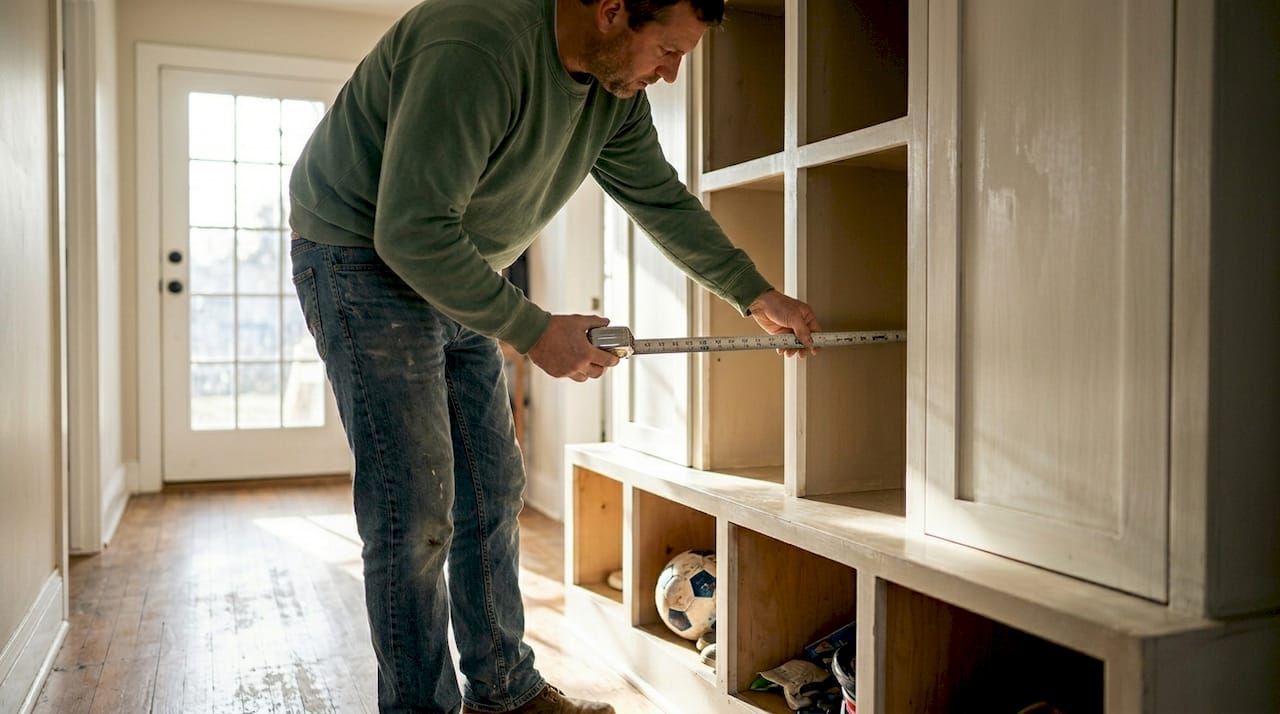
Here is a quick reference for standard mud locker sizing:
| Zone | Recommended depth | Primary purpose |
|---|---|---|
| Upper locker | 14 to 16 inches | Hats, folded items, seasonal gear |
| Mid locker | 18 to 20 inches | Hanging coats, hooks, bags |
| Bench | 20 to 24 inches | Seating, shoe storage below |
| Lower cubby | 12 to 16 inches | Shoes, boots, small bins |
To plan your layout effectively, follow these steps:
- Measure your entryway width and ceiling height before anything else.
- Count the number of family members who will use the space daily.
- Assign one locker section per person, plus one extra for guests.
- Position the bench at a height of 17 to 19 inches from the floor for comfortable seating.
- Leave at least 36 inches of clear walking space in front of the lockers.
- Plan for lighting inside or above the locker sections if the entryway is dim.
Pro Tip: The most common sizing mistake is going too shallow on the mid-locker section. If your coats are bulky or you store sports bags, go to the full 20 inches. A few extra inches of depth prevents a lot of daily frustration.
Working with an ergonomic mud locker design specialist ensures these measurements are dialed in for your specific home layout, not just a generic template.
Choosing features: Ventilation, materials, and child/family considerations
With the bones of your mud locker in place, it is time to choose the right features and materials to ensure durability, safety, and long-term usefulness. This is where a lot of homeowners make decisions they later regret, usually because they prioritized looks over function.
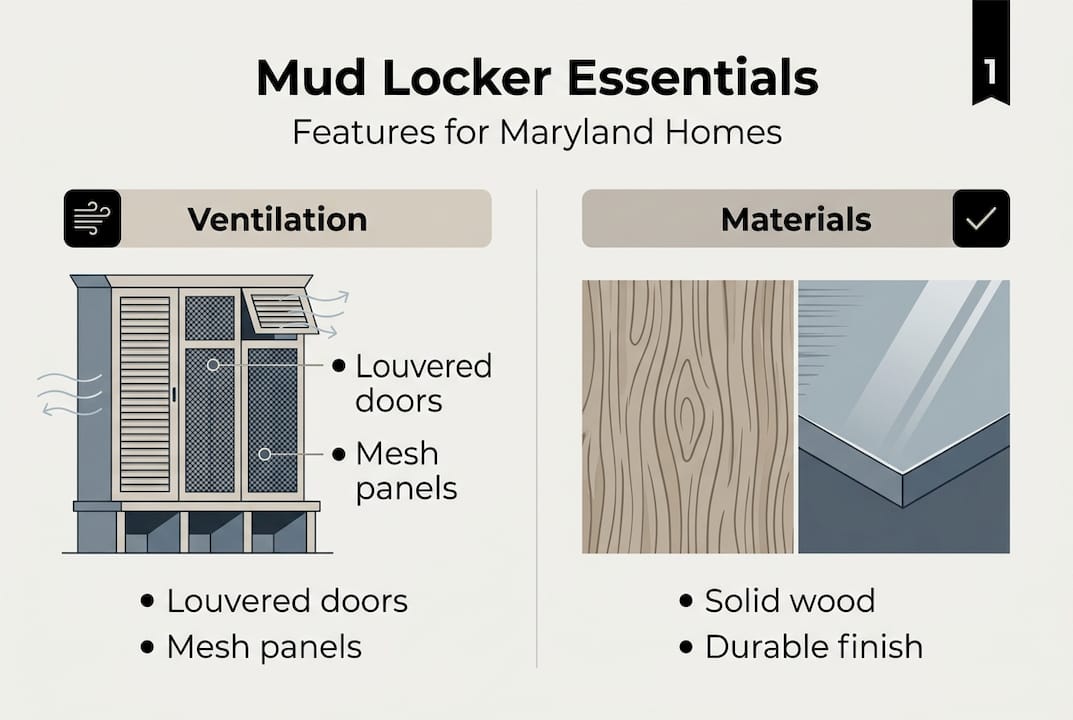
Ventilation is critical to prevent mold from wet gear. Use louvered doors, mesh inserts, slatted shelves, or boot trays for airflow, and avoid sealed boxes that trap moisture. Maryland winters mean wet boots and damp coats are a regular occurrence. Without airflow, you will notice a musty smell within weeks.
Here is a comparison of the most common ventilation options:
| Ventilation type | Airflow level | Best for | Aesthetic |
|---|---|---|---|
| Louvered doors | High | Wet coats, boots | Classic, traditional |
| Mesh inserts | Medium to high | Sports gear, bags | Modern, industrial |
| Slatted shelves | Medium | Shoes, general storage | Clean, minimal |
| Boot trays | Low (floor only) | Muddy boots, wet shoes | Practical, utilitarian |
For materials, solid wood with a durable painted or stained finish is the most popular choice for Maryland homes. It holds up to daily use, cleans easily with a damp cloth, and looks great for decades. MDF (medium-density fiberboard) is a budget-friendly option but is more vulnerable to moisture, so it needs proper sealing in entryway environments.
When it comes to families with kids, the design choices shift. Small spaces benefit from sliding or louvered doors, hooks over hangers, and active-depth sections for sports gear. Avoid blocking vents or doors, and never go shallower than 14 inches or items will constantly fall out.
Key features to consider for family-friendly custom entryway furniture:
- Open cubbies at lower heights so young kids can reach their own gear
- Rounded edges on bench corners to prevent bumps and scrapes
- Durable, washable paint finishes that handle handprints and scuffs
- Labeled or color-coded sections so each child knows their space
- Hooks at two heights: one for adults, one for children
Pro Tip: Mix closed upper lockers with open lower cubbies. Adults tend to prefer the clean look of closed storage, while kids are more likely to actually use their space if it is open and easy to access.
How mud lockers add value: Cost, ROI, and Maryland market appeal
With functional and stylish features in place, let’s look at the real-world financial and lifestyle impact of installing mud lockers in your Maryland home. This is not just about convenience. It is about making a smart investment in your property.
Mud locker ROI benchmarks show costs of $50 to $100 per square foot for conversions and up to $300 per square foot for new builds, with the addition enhancing home value through organized, durable functionality that appeals to buyers. In Maryland’s competitive real estate market, a well-designed entryway is a genuine selling point. Buyers notice it immediately, and it signals that the home has been thoughtfully maintained.
“A mud locker system communicates to buyers that this home was designed for real life. It is organized, durable, and functional from the moment you walk in.” This kind of first impression carries real weight in a home showing.
Here is how mud lockers boost home value and marketability in Maryland:
- They create a strong first impression that sets the tone for the entire home tour
- They signal quality craftsmanship and attention to detail to potential buyers
- They solve a universal problem that every family with kids or outdoor hobbies faces
- They reduce wear and tear on the rest of the home by containing mess at the entry point
- They photograph well, which matters enormously in online real estate listings
Beyond resale, the daily lifestyle value is significant. Families report spending less time searching for lost items, less frustration during morning routines, and a genuine sense of calm when they walk through the door. That is hard to put a dollar figure on, but it is real.
Discover your custom entryway solution
After learning how mud lockers can organize, beautify, and add tangible value to your home, the next step is turning your vision into reality with expert guidance.
At Furniture Design Group, we have spent over 20 years helping Maryland homeowners design and build custom mud lockers that fit their space, their family, and their style. We do not sell off-the-shelf units. Every piece is crafted to your exact measurements, with the materials, finishes, and features that make sense for how your household actually lives. Whether you are starting from scratch or upgrading an existing entryway, our team walks you through every decision. Connect with our Maryland mud locker experts today to schedule a consultation and see what a truly custom entryway solution looks like in person at our showroom.
Frequently asked questions
What makes a mud locker different from regular storage cabinets?
Mud lockers are built with stepped-depth zones, integrated benches, and ventilation features specifically designed to handle outdoor gear and entryway mess, which standard cabinets are not built to manage.
How can I keep my mud locker from getting musty or moldy?
Build in louvered doors or mesh inserts to keep air moving through the locker, and use boot trays on the floor to catch moisture from wet shoes and boots.
What’s the best mud locker layout for families with kids?
A mix of open lower cubbies for easy kid access and closed upper lockers for adult storage works best, giving everyone a usable space without sacrificing the clean look of the entryway.
Are mud lockers a good investment for home resale in Maryland?
Yes. They increase perceived home value by making the entryway feel organized and intentional, which appeals directly to buyers in Maryland’s competitive housing market.