
Cluttered entryways frustrate Maryland homeowners daily, with shoes piling up, coats sprawled everywhere, and backpacks blocking pathways. Mastering the mudroom storage planning process transforms chaos into organized, functional spaces tailored to your family’s needs. This comprehensive guide walks you through every step, from assessing your requirements and designing layouts to selecting durable materials and completing professional installation, ensuring your entryway becomes a practical, stylish asset to your home.
Table of Contents
- Step 1: Assess Your Mudroom Storage Needs And Space
- Step 2: Design Your Mudroom Layout And Choose Durable Materials
- Step 3: Account For Unique Maryland Home Entryway Challenges
- Step 4: Professional Installation And Final Verification
- Explore Custom Mudroom Solutions With Furniture Design Group
- FAQ
Key takeaways
| Point | Details |
|---|---|
| Conduct a thorough needs assessment | Evaluate family size, daily habits, and items requiring storage before designing your mudroom to ensure functionality. |
| Prioritize closed storage and durable materials | Aim for at least 60% closed cabinets using moisture-resistant finishes to maintain aesthetics and longevity. |
| Customize features for Maryland homes | Integrate bench seating, charging stations, and solutions for irregular spaces to maximize usability. |
| Hire professional installers | Expert installation ensures proper anchoring, electrical work, and material quality for lasting value. |
| Plan for evolving needs | Use modular components and adjustable shelving to accommodate changing family requirements over time. |
Step 1: Assess your mudroom storage needs and space
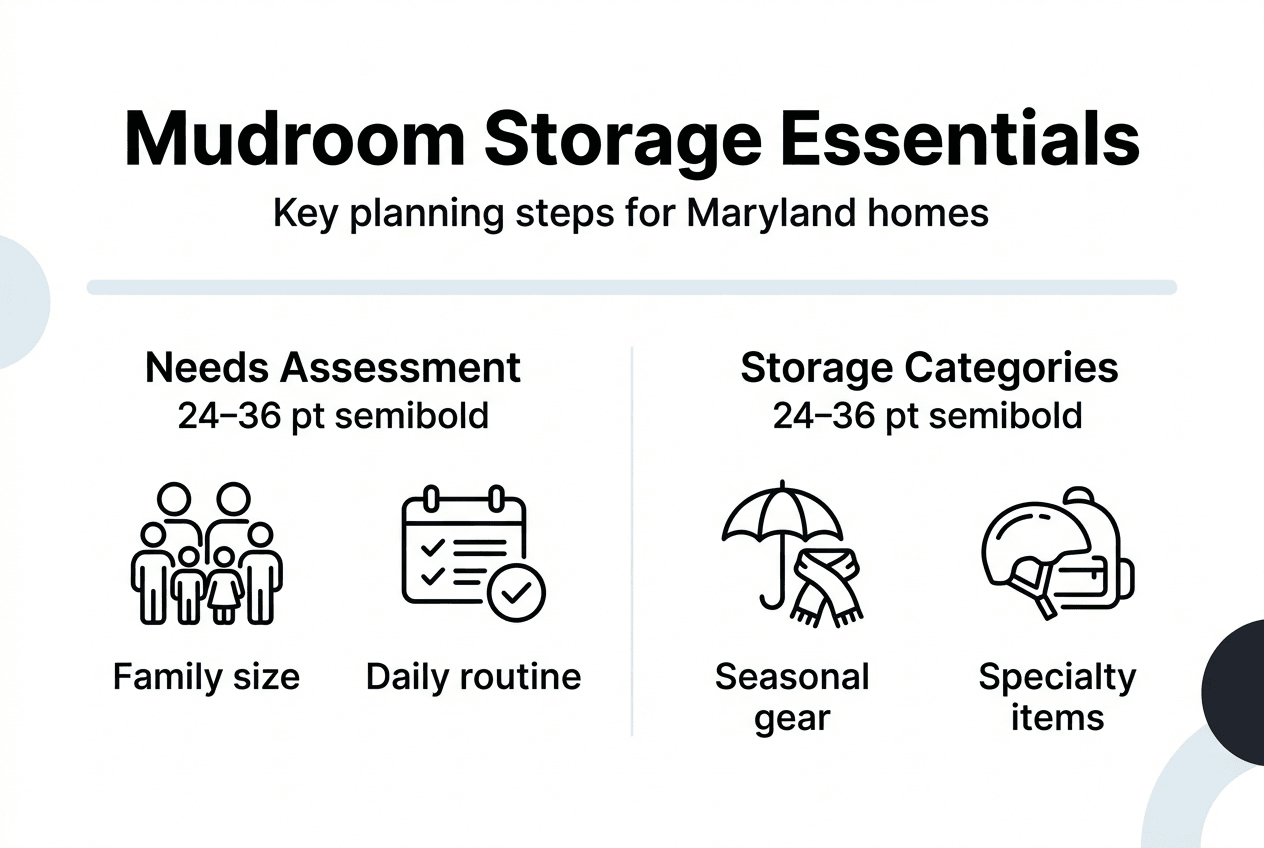
Before sketching designs or selecting materials, understand exactly what your mudroom must accomplish. Conduct a detailed lifestyle audit by counting family members and tracking daily routines. Do school-aged kids arrive home with backpacks, sports equipment, and lunch bags? Does your household include pets requiring leash storage and cleaning supplies?
Identify every category of items needing storage: coats, boots, shoes, umbrellas, keys, mail, and seasonal gear like snow shovels or gardening tools. The optimal mudroom storage planning process begins with this needs assessment, ensuring your design addresses real-world usage patterns rather than generic templates. Custom solutions account for specific family needs, creating targeted storage zones that prevent clutter from migrating into living areas.
Measure your entryway space meticulously, recording length, width, and ceiling height at multiple points. Note any unusual angles, sloped ceilings, or architectural features like radiators, windows, or doorways that impact layout options. Consider traffic flow patterns, observing how family members naturally move through the space during peak times like morning departures or evening arrivals.
Natural light availability influences both design aesthetics and functionality. Windows provide visual appeal but may limit wall-mounted storage options, requiring creative solutions like lower cabinetry or corner installations. Document where electrical outlets currently exist and where you’ll need new ones for charging stations or task lighting.
Pro Tip: Create a categorized list dividing storage needs into daily use items, seasonal gear, and specialty equipment. This prioritization helps designers allocate premium, accessible storage to frequently used items while placing seasonal items in higher or deeper compartments, maximizing efficiency and satisfaction with your mudroom design ideas.
Step 2: Design your mudroom layout and choose durable materials
Translating your needs assessment into an actionable design requires balancing aesthetics with functionality. Plan for a strategic mix of storage types, dedicating at least 60% to closed cabinets and drawers to minimize visual clutter and maintain a clean appearance. Open cubbies work well for frequently accessed items like daily shoes or backpacks, but excessive open storage creates the chaotic look you’re trying to eliminate.
Incorporate popular custom features that significantly boost usability and homeowner satisfaction. Bench seating with integrated under-bench storage provides a comfortable spot for putting on shoes while hiding seasonal items or cleaning supplies. Install electrical outlets at counter height for creating dedicated charging stations where phones, tablets, and rechargeable devices can power up overnight. Consider hooks at varying heights to accommodate both adults and children, ensuring everyone can independently manage their belongings.
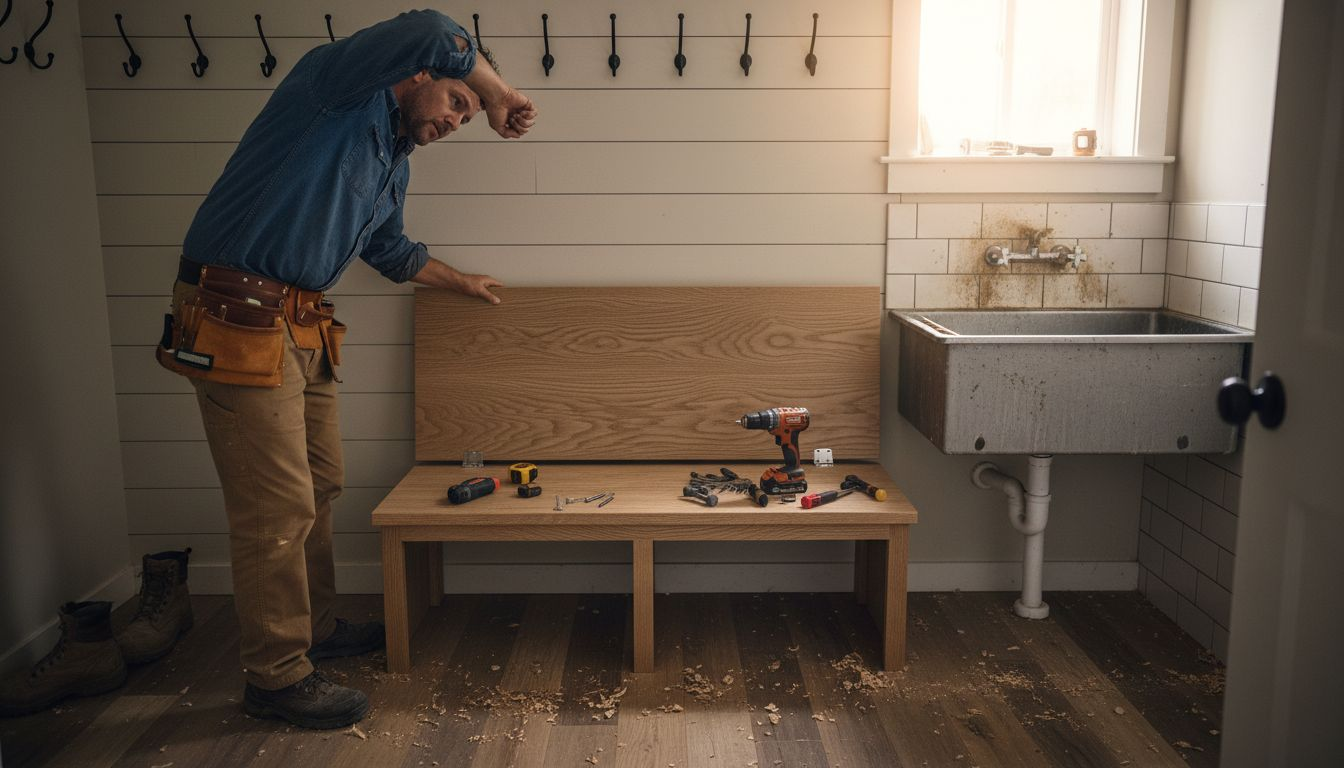
Material selection directly impacts longevity and maintenance requirements in Maryland’s humid climate. Choose engineered wood with proper sealing and moisture-resistant finishes, which increases lifespan by 15% compared to untreated materials. Tile or luxury vinyl flooring handles constant foot traffic, wet boots, and muddy paws far better than carpet or standard hardwood. Premium finishes anchored to wall framing last 20% longer, justifying the initial investment through reduced repair and replacement costs.
| Material Type | Durability Rating | Maintenance Cost | Best Use |
|---|---|---|---|
| Engineered wood with sealing | High | Low | Cabinets, shelving |
| Solid hardwood | Medium | Medium | Bench tops, decorative elements |
| Tile flooring | Very High | Low | High-traffic floor areas |
| Luxury vinyl | High | Very Low | Budget-friendly flooring |
| Laminate | Medium | Low | Cabinet doors, cost-effective solutions |
Closed storage was the top-rated feature, with 85% of homeowners prioritizing it to maintain clean aesthetics. Position closed cabinets near openings to living spaces, creating visual barriers that hide clutter from view. Use open storage sections farther from main sightlines or in corners where quick access matters more than appearance.
Pro Tip: Plan closed storage zones nearest to living areas to maintain tidy sightlines from adjoining rooms. Reserve open cubbies for the actual entry wall where family members need immediate access to grab-and-go items like keys, sunglasses, or dog leashes, balancing convenience with the organized look that makes custom mudroom storage solutions so valuable.
Step 3: Account for unique Maryland home entryway challenges
Maryland homes present distinctive spatial and functional challenges that generic mudroom designs fail to address. Identify architectural quirks like angled ceilings in Cape Cod-style homes, narrow galley-style entryways in rowhomes, or awkward alcoves in colonial layouts. 35% of custom mudrooms required design modifications specifically due to irregular entryways like sloped ceilings or unusually positioned doorways, making adaptability essential rather than optional.
Consider multi-function designs that maximize limited square footage common in older Maryland construction. Combined mudroom and laundry spaces gain popularity as homeowners recognize efficiency benefits. Families combining these functions report a 25% reduction in laundry task time by eliminating trips between floors and consolidating sorting, washing, and storage in one dedicated zone. Custom cabinetry can conceal appliances behind matching panels, maintaining aesthetic consistency throughout the space.
Plan specialized storage for items unique to your lifestyle. Active families need custom storage solutions for bulky sports equipment like lacrosse sticks, soccer balls, and hockey gear that standard shelving can’t accommodate. Pet owners require designated zones for leashes, grooming supplies, and food storage. Install adjustable shelving and modular components that adapt as children age, hobbies change, or family size grows, protecting your investment from obsolescence.
Integrate proper lighting and ventilation to improve overall space usability and comfort. Task lighting under upper cabinets illuminates work surfaces where you sort mail or organize belongings. Ventilation fans or operable windows prevent moisture buildup from wet coats and boots, protecting materials and preventing musty odors that plague poorly planned mudrooms.
Incorporate charging stations with sufficient outlets and USB ports for modern device-dependent households. Designate a countertop area or shallow drawer specifically for corralling phones, smartwatches, and wireless earbuds overnight. Consider specialized sports equipment storage solutions with adjustable racks and hooks that keep gear organized and accessible while protecting expensive items from damage.
Plan for seasonal storage rotation by including higher cabinets or deeper drawers where winter boots and heavy coats can disappear during summer months. This flexibility prevents overcrowding and maintains the organized appearance that makes your mudroom renovation options worthwhile year-round, not just during peak usage seasons.
Step 4: Professional installation and final verification
Selecting qualified contractors experienced in custom mudroom projects protects your investment and ensures proper execution. Professional remodeling is crucial due to plumbing, electrical, and layout complexities that DIY approaches often underestimate. Research contractors with portfolios demonstrating similar projects, verifying their licensing, insurance, and references from recent Maryland clients.
Request detailed proposals outlining materials, timelines, and payment schedules before committing. Quality contractors provide transparent breakdowns showing where your budget goes, from premium hardware to skilled labor costs. Compare proposals on value rather than price alone, recognizing that mudrooms with premium finishes last 20% longer when properly installed.
Create a verification checklist covering critical quality indicators to review during installation:
- Cabinet doors align perfectly with consistent gaps and smooth operation
- Drawers slide effortlessly on full-extension glides rated for expected loads
- All anchoring points secure to wall framing, not just drywall
- Electrical outlets function properly and meet code requirements
- Finish quality matches approved samples without visible defects
- Measurements match approved plans within acceptable tolerances
The installation process typically follows these numbered stages:
- Site preparation including protecting adjacent areas and removing existing fixtures
- Framing modifications and electrical rough-in for outlets and lighting
- Installation of base cabinets, securing to wall studs at multiple points
- Upper cabinet installation with proper leveling and anchoring
- Countertop installation, bench assembly, and hardware mounting
- Finishing touches including trim work, paint touch-ups, and hardware adjustment
- Final walkthrough, punch list completion, and client approval
Pro Tip: Schedule a detailed walkthrough with your contractor before issuing final payment. Test every drawer, door, and electrical component personally. Verify that finishes match approved samples and that all custom features function as designed. Document any concerns immediately while contractors remain on-site and motivated to resolve issues quickly.
Professional installation transforms quality materials and thoughtful designs into mudroom storage systems that function flawlessly for decades. Proper anchoring, precise measurements, and expert craftsmanship ensure your investment delivers the organized, beautiful entryway you envisioned rather than a collection of expensive components that never quite work right.
Verify that contractors provide warranty documentation covering both materials and workmanship. Understand what situations void coverage and maintain records of any maintenance performed. Quality professional mudroom installation services stand behind their work, offering reassurance that minor adjustments or unforeseen issues receive prompt attention without additional charges.
Explore custom mudroom solutions with Furniture Design Group
Transforming your entryway from cluttered chaos to organized efficiency requires expertise that Furniture Design Group brings to every Maryland project. With over 20 years of experience crafting custom mudroom storage solutions, this family-owned company understands the unique challenges facing local homeowners, from irregular architectural features to Maryland’s demanding climate conditions.

Their tailored approach begins with understanding your specific lifestyle needs, family size, and aesthetic preferences before designing storage systems that maximize both functionality and visual appeal. Using moisture-resistant materials and premium finishes, their skilled craftsmen create mudroom installations that withstand daily wear while maintaining beauty for decades. Professional installation ensures proper anchoring, precise measurements, and seamless integration with your home’s existing architecture.
Contact Furniture Design Group today for a personalized consultation where expert mudroom design services transform your entryway planning into reality. Their showroom welcomes Maryland homeowners ready to experience the quality craftsmanship and customization that turns ordinary entryways into organized, inviting spaces your family will appreciate every single day.
FAQ
What is the ideal balance of open and closed storage in a mudroom?
At least 60% of your mudroom storage should consist of closed cabinets or drawers to minimize visual clutter and maintain a clean, organized aesthetic. Open storage works well for frequently accessed items like daily shoes or backpacks but should be balanced with closed options that hide seasonal gear and less attractive necessities from view.
How do I measure my mudroom space accurately for custom storage?
Use a tape measure to record length, width, and ceiling height at multiple points throughout your entryway, noting any variations caused by settling or construction irregularities. Document slopes, angles, architectural obstructions like radiators or vents, and existing electrical outlets that affect storage placement. For complex layouts with unusual features, consult a professional who can identify challenges DIY measurements might miss.
What materials are best for durable mudroom storage in Maryland?
Engineered wood with proper sealing and moisture-resistant finishes performs exceptionally well in Maryland’s humid climate, increasing lifespan by 15% compared to untreated alternatives. Tile or luxury vinyl flooring handles constant moisture, foot traffic, and debris better than carpet or standard hardwood. Premium finishes and quality carpentry anchored directly to wall framing rather than just drywall extend longevity significantly.
How long does a custom mudroom renovation typically take?
Most custom mudroom projects require 2 to 6 weeks from initial demolition through final installation, depending on space size, design complexity, and custom feature requirements. Installations involving electrical upgrades, plumbing modifications for combined laundry spaces, or extensive framing changes extend timelines. Discuss realistic schedules with contractors during planning to set appropriate expectations.
Can mudroom and laundry room functions be combined effectively?
Combining mudroom and laundry functions maximizes limited square footage while improving household efficiency significantly. Families report 25% reduction in laundry task time by consolidating sorting, washing, and storage in one dedicated zone. Custom layouts seamlessly incorporate both storage cabinetry and laundry appliances, often concealing machines behind matching cabinet panels for aesthetic consistency.