
Finding entryway furniture that matches your family’s daily routines and Maryland’s seasonal demands often feels impossible. Your entryway is more than a passage—it sets the tone for your home and tackles real challenges. By combining thoughtful threshold design and custom craftsmanship, you can create a space that is both functional and personal. This guide reveals design principles and material choices that help your entryway handle traffic, weather, and style while reflecting your home’s character.
Table of Contents
- Defining Modern Entryway Design Principles
- Types of Modern Entryway Furniture Solutions
- Key Features For Style And Functionality
- Custom Craftsmanship And Material Choices
- Common Mistakes In Modern Entryway Design
Key Takeaways
| Point | Details |
|---|---|
| Functionality Over Aesthetics | Effective modern entryway design prioritizes functionality, ensuring solutions accommodate daily family needs while maintaining visual appeal. |
| Customized Solutions | Opt for custom-crafted furniture to meet the unique demands of your space and lifestyle rather than relying on mass-produced options. |
| Material Durability | Select high-quality materials and finishes that withstand daily wear and environmental factors, particularly in regions with variable climates. |
| User Behavior Consideration | Analyze how your family uses the entryway to ensure that design choices facilitate rather than hinder daily routines and movements. |
Defining Modern Entryway Design Principles
Your entryway sets the tone for your entire home. It’s where guests form their first impression and where your family transitions between the outside world and your personal space. Modern entryway design goes far beyond aesthetics—it’s about creating a functional, welcoming threshold that serves real purposes.
At its core, modern entryway design balances three essential elements:
- Functionality that accommodates daily traffic and storage needs
- Visual harmony that reflects your home’s character and style
- User experience that makes arriving home feel intentional and organized
The concept of thoughtful threshold design extends beyond museums—it applies directly to residential spaces. Your entryway functions as a transitional zone where people shift their mindset and adjust their environment. This liminal space requires intentional design choices.
Modern entryway design treats the entrance as a hardworking zone, not just a decorative afterthought.
Effective design principles address real-world challenges. Maryland homeowners deal with seasonal weather changes, muddy shoes from outdoor activities, and the need to manage coats, bags, and everyday items. Your entryway must handle these practical demands while maintaining visual appeal.
Key design principles for modern entryways include:
- Clear visual flow - visitors should understand how to move through the space naturally
- Defined zones - separate seating, storage, and circulation areas from each other
- Appropriate scale - furniture proportions that match your entryway’s dimensions
- Quality materials - durable finishes that withstand daily wear and seasonal changes
- Personalized storage - custom solutions that fit your family’s specific needs
Design principles serve as the foundation for solving complex problems. Rather than copying trends, you apply established design frameworks to create solutions tailored to your space and lifestyle. This approach ensures your entryway remains functional and beautiful for years to come.
The most successful entryway designs reflect how you actually live. A family with young children needs different solutions than empty nesters. Someone who gardens regularly needs muddy-shoe accommodations. Someone who works from home might prioritize a calm, organized entry.
Custom-crafted entryway furniture supports these principles in ways mass-produced pieces cannot. Artisanal construction allows you to optimize dimensions, materials, and finishes specifically for your entryway’s unique challenges and your household’s actual routines.
Pro tip: Before selecting any entryway furniture, map out exactly how your family uses the space—where shoes go, how coats are stored, what surfaces collect mail and keys—then design around those real behaviors, not imagined ones.
Types of Modern Entryway Furniture Solutions
Modern entryway furniture comes in various styles and configurations, each designed to solve specific challenges in your home’s transition space. The right pieces depend on your space size, family needs, and aesthetic preferences.
Mud lockers and entry benches are workhorses in contemporary entryways. These combined seating and storage units let you sit while removing shoes, then store items like boots and bags in integrated compartments. They’re ideal for families managing seasonal gear and daily clutter.
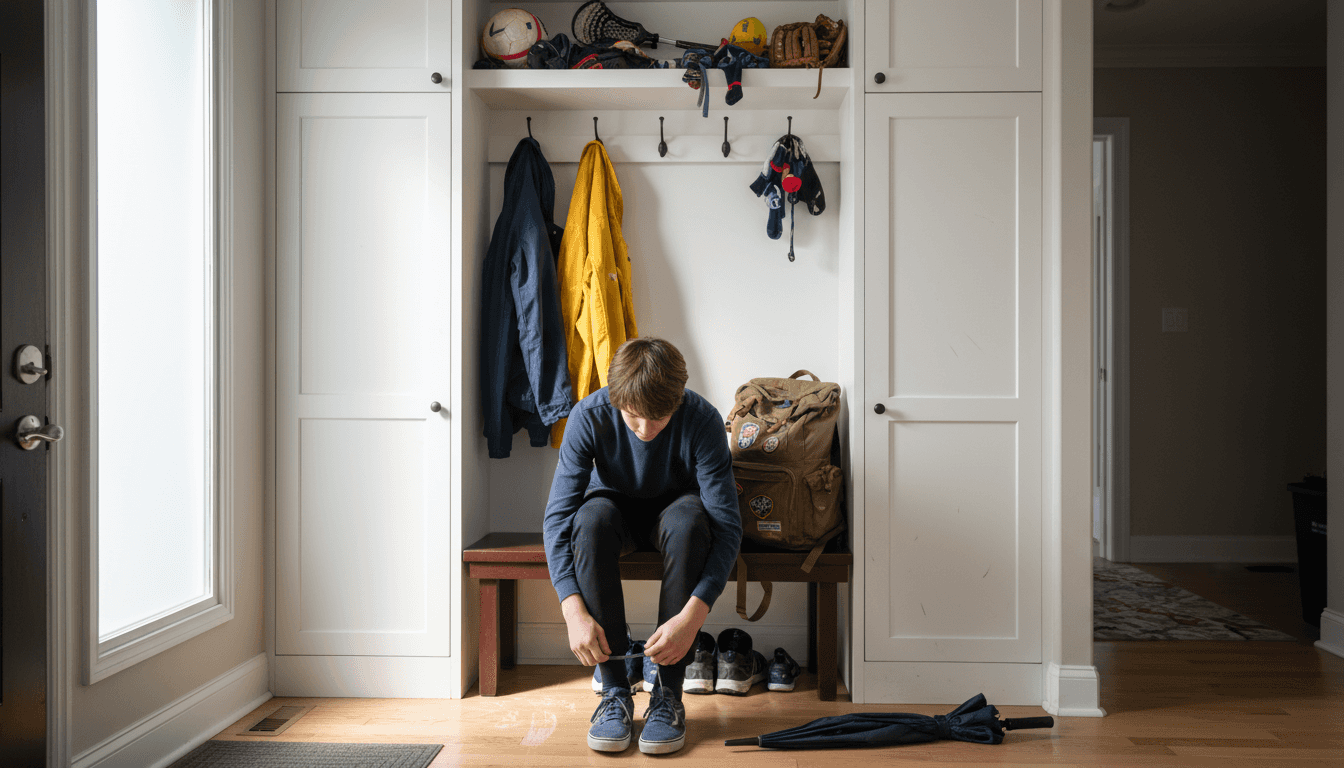
Coat racks and wall-mounted systems maximize vertical space when floor area is limited. Wall-mounted solutions work particularly well in narrower entryways where a full bench would feel cramped. They keep outerwear visible and accessible while maintaining an open feel.
Shoe storage solutions range from simple racks to sophisticated closed cabinets. Modern designs include pull-out drawers, tilted shelving for visibility, and ventilation options to manage moisture from wet footwear—critical in Maryland’s humid climate.
Console tables and narrow sideboards serve dual purposes. They provide a landing spot for keys, mail, and daily items while offering storage in drawers or shelves. These work well for homeowners wanting a more refined, less utilitarian aesthetic.
Key furniture categories for modern entryways include:
- Built-in storage solutions that integrate seamlessly with walls and architecture
- Freestanding pieces offering flexibility if you rent or plan to relocate
- Multi-functional furniture combining seating, storage, and display surfaces
- Modular systems allowing you to customize and expand as needs change
The best entryway furniture solves multiple problems at once: storing items, providing seating, and looking intentional.
Material selection matters significantly. Durable furniture materials withstand daily foot traffic, weather changes, and frequent use. Quality wood, metal accents, and professional finishes ensure your investment lasts years rather than months.
Custom-crafted entryway furniture offers advantages mass-produced alternatives cannot match. Artisanal builders can optimize dimensions for your specific space, choose materials matching your home’s character, and incorporate personalized storage solutions addressing your family’s actual needs.
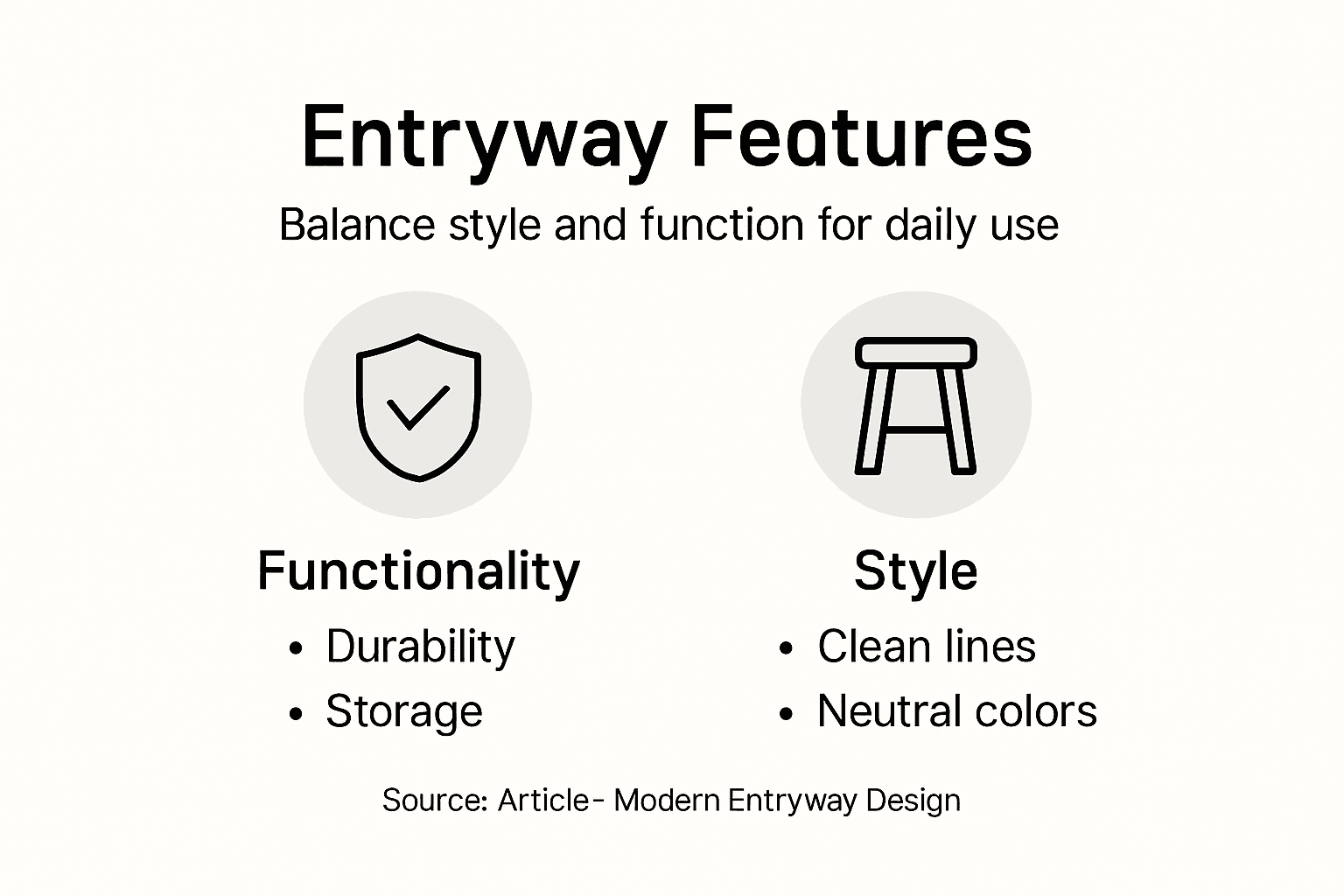
Colorway and finishing also define modern entryway solutions. Contemporary designs favor clean lines, neutral palettes, and quality finishes that complement rather than dominate the space. The goal is creating an inviting threshold that feels intentional.
Pro tip: Measure your entryway width, depth, and ceiling height before selecting furniture, then photograph the space in different lighting conditions to ensure your chosen pieces will actually fit and enhance the area.
Key Features for Style and Functionality
Your entryway furniture must work as hard as it looks. The best pieces balance visual appeal with practical performance, handling daily wear while maintaining their beauty for years.
Durability is non-negotiable in an entryway. This space experiences constant foot traffic, temperature fluctuations, and exposure to moisture from wet shoes and seasonal weather. Quality construction using solid materials withstands these demands without deteriorating or becoming an eyesore.
Storage capacity ranks among the most important features. Effective entryway furniture keeps clutter hidden rather than pushing it into living areas. Look for pieces offering compartments for shoes, closed storage for seasonal items, and drawer space for smaller essentials like keys and mail.
Ease of maintenance directly impacts long-term satisfaction. Finishes should resist scuffing and staining, while materials should clean easily without specialized products. Maryland’s humid climate means choosing pieces that won’t warp or develop moisture issues.
Key features that enhance both style and functionality include:
- Solid wood construction that ages beautifully and lasts decades
- Integrated seating combining benches with storage in one footprint-efficient piece
- Ventilation systems managing moisture from wet footwear
- Metal hardware adding visual interest while providing durability
- Thoughtful finishes resisting wear, moisture, and temperature changes
Durable material selection supports both aesthetics and performance. Quality materials trap contaminants at the threshold, protect indoor air quality, and maintain their appearance despite daily use.
The most successful entryway pieces look intentional while solving real problems your family faces daily.
Spatial efficiency matters equally. Your furniture should maximize storage without consuming floor space, especially important in smaller Maryland homes. Multi-functional pieces serving seating, storage, and display purposes deliver better value than single-purpose items.
Design details reveal quality craftsmanship. Look for smooth drawer glides, properly aligned doors, and joinery that shows care. Custom-crafted furniture demonstrates attention to these details, ensuring pieces function flawlessly for years.
Personalization transforms functional furniture into reflective pieces. Custom dimensions, finish options, and hardware choices let your entryway reflect your home’s character while solving practical challenges.
Pro tip: Before finalizing your furniture selection, spend a week observing exactly what happens in your entryway during different times of day and weather conditions, then ensure your chosen pieces address those actual activities and challenges.
Custom Craftsmanship and Material Choices
Custom-crafted entryway furniture represents a fundamental shift from mass-produced alternatives. When artisans build your pieces, they apply decades of skill and knowledge directly to solving your specific challenges.
Craftsmanship matters because it compounds over time. A well-built mud locker functions flawlessly for twenty years. A factory-produced version might deteriorate in five. The difference lies in material selection, joinery techniques, and attention to details that prevent warping, wobbling, and failure.
Material choices define both aesthetics and longevity. Solid hardwoods like oak, cherry, and walnut age beautifully while resisting the moisture and temperature swings Maryland homeowners experience. These woods develop character over time rather than deteriorating.
Wood selection impacts performance directly. Certain species resist moisture better than others. Others hold finishes longer. Experienced craftspeople choose materials based on how they’ll perform in your specific environment, not just cost or availability.
Quality finishes protect your investment. Hand-applied stains and topcoats penetrate wood more thoroughly than spray-booth applications, creating protection that lasts. Digital design combined with traditional craftsmanship allows artisans to achieve precision while maintaining handcrafted quality.
Custom craftsmanship transforms functional furniture into heirloom-quality pieces reflecting both skill and intention.
Material choices extend beyond wood. Quality hardware, metal accents, and hardware finishes matter equally. Stainless steel hardware resists corrosion better than plated alternatives. Solid brass develops patina that enhances character.
Key material and craftsmanship considerations include:
- Solid wood joinery using mortise-and-tenon construction rather than dowels
- Hand-selected lumber chosen for grain, color, and performance characteristics
- Multi-coat finishing processes building protection gradually rather than spraying once
- Quality hardware that functions smoothly for decades
- Moisture management through design and finish selection
Personalization through material choices sets custom furniture apart. You select wood species, finishes, hardware styles, and construction details reflecting your preferences. This level of customization remains impossible with factory-produced pieces.
Craftsmanship shows in invisible places too. Drawer glides operate smoothly because builders select quality mechanisms. Doors align perfectly because skilled hands adjust them. Back panels fit tightly because joints were cut precisely.
Investing in custom craftsmanship means investing in longevity. Your entryway furniture becomes a setting piece rather than something you replace every few years.
Here’s a comparison of custom-crafted versus mass-produced entryway furniture:
| Aspect | Custom-Crafted Furniture | Mass-Produced Furniture |
|---|---|---|
| Durability | Lasts decades with proper care | Often wears out in five years |
| Material Options | Wide selection, client-driven | Limited to standard options |
| Design Flexibility | Made to fit unique spaces | One-size-fits-most sizing |
| Personalization | Full choice of finishes and details | Minimal customization possible |
| Long-Term Value | Becomes an heirloom-quality piece | Needs regular replacement |
Pro tip: Ask potential craftspeople about their wood sourcing, finishing processes, and hardware selections, then request samples of finishes in your home’s lighting to ensure colors complement your space before committing.
Common Mistakes in Modern Entryway Design
Many homeowners invest in entryway furniture without considering how their family actually uses the space. This assumption-driven approach leads to pieces that look good but fail functionally. Understanding common pitfalls helps you avoid expensive mistakes.
The biggest mistake is ignoring actual user behavior. You buy a beautiful console table, then realize your family dumps shoes on it instead of the storage bench below. Designs that neglect real-world user needs fail regardless of aesthetics or craftsmanship.
Overestimating your entryway’s capacity ranks second. Maryland homes vary dramatically in size, and forcing oversized furniture into compact spaces creates congestion rather than order. Measure twice. Actually visualize furniture placement before purchasing anything.
Poor traffic flow design creates daily frustration. If your coat rack blocks the path to the kitchen, people won’t use it. Effective entryway design anticipates movement patterns and accommodates them.
Common design mistakes homeowners make include:
- Choosing style over function and regretting it within months
- Ignoring seasonal needs like space for winter coats and muddy boots
- Selecting finishes without testing in your home’s actual lighting
- Forgetting about maintenance and picking materials requiring constant upkeep
- Disconnecting entryway design from your home’s overall aesthetic
Rushed entryway decisions waste money and create daily frustration in the space you use multiple times every day.
Another prevalent error involves insufficient storage planning. You might calculate closet space but forget about accommodating keys, mail, bags, and seasonal items. Effective storage requires honest assessment of what actually accumulates in your entryway.
Underestimating moisture and humidity problems causes premature deterioration. Maryland’s climate creates real challenges. Materials suited to dry climates may warp or develop issues here. Choose finishes and materials specifically selected for moisture exposure.
Lack of communication with designers or craftspeople leads to disappointment. Being vague about your needs, budget, or aesthetic preferences results in pieces missing the mark. Clear collaboration prevents costly errors.
Personalization oversights damage both function and beauty. Entryway furniture reflecting your home’s character works better than generic pieces. This means engaging thoughtfully with design choices rather than copying trends.
Here’s a summary of common entryway mistakes and how to avoid them:
| Mistake | Why It Happens | How to Avoid |
|---|---|---|
| Ignoring actual user habits | Assumes ideal behavior | Observe real entryway routines |
| Overestimating space | Inadequate measuring | Use accurate room dimensions |
| Poor traffic flow | No pathway planning | Map circulation routes first |
| Neglecting maintenance needs | Focus on looks only | Select easy-to-clean materials |
| Disconnected design choices | Forgetting home’s style | Match with home aesthetics |
Pro tip: Write down exactly how your family uses the entryway for one week, noting traffic patterns, what gets stored where, and pain points, then bring this documentation when consulting with furniture designers to ensure custom solutions address real challenges.
Elevate Your Entryway with Custom Solutions Crafted for Your Lifestyle
Modern entryway design calls for furniture that not only looks intentional but solves real daily challenges like storage, durability, and flow. If you find yourself struggling with cluttered mudrooms, uneven traffic patterns, or furniture that wears down quickly due to Maryland’s climate, our expert craftsmanship can provide the perfect answer. Furniture Design Group specializes in custom-built mud lockers and entryway furniture that fits your home’s unique space and reflects your personal style.
Discover how our artisans combine thoughtful design principles with durable materials and tailored storage options to transform your entryway from a chaotic zone into a welcoming, functional retreat. Visit our website today for personalized assistance, explore our collections, or schedule a visit to our showroom to see quality craftsmanship in person. Take the next step toward an entryway designed for lasting beauty and everyday ease.
Frequently Asked Questions
What are the key principles of modern entryway design?
Modern entryway design focuses on three essential elements: functionality, visual harmony, and user experience. It emphasizes creating a practical and inviting space that accommodates daily traffic and storage needs while reflecting your home’s character.
How can I maximize storage in a small entryway?
To maximize storage in a small entryway, consider using multi-functional furniture such as mud lockers and entry benches. Wall-mounted coat racks and shoe storage solutions can also help utilize vertical space effectively, keeping your entry tidy and organized.
What materials should I use for entryway furniture to ensure durability?
For durability, select solid wood materials such as oak, cherry, or walnut, as these resist moisture and temperature changes. Quality finishes and metal hardware can also enhance longevity, ensuring your entryway furniture withstands daily wear.
How can I personalize my entryway design?
You can personalize your entryway design by choosing custom-crafted furniture that reflects your style and needs. Selecting unique finishes, hardware options, and dimensions tailored to your space will create a cohesive look that aligns with your home’s character.