
Shoes piled by the door. Coats draped over the stair rail. Backpacks dropped wherever there’s floor space. If this sounds like your Maryland entryway, you’re not alone. Most homes simply weren’t designed with the daily chaos of coming and going in mind. A mud locker is a specialized storage unit that combines lockers, benches, hooks, and cubbies into one organized system built specifically for entryways. In this article, we’ll walk you through exactly what a mud locker is, how it’s built, what size and ventilation features matter most, and how to decide if one is right for your home.
Table of Contents
- What is a mud locker?
- Key features and construction of mud lockers
- Why size and ventilation matter
- Expert tips: Getting the most out of your mud locker
- Is a mud locker right for your Maryland home?
- Ready to design your custom mud locker?
- Frequently asked questions
Key Takeaways
| Point | Details |
|---|---|
| Mud locker definition | A mud locker is a specialized entryway solution combining bench seating, lockers, hooks, and cubbies for organized storage. |
| Sizing essentials | Choose bench and locker depths between 18 and 22 inches for comfort and practicality. |
| Ventilation importance | Proper airflow prevents mold and extends the life of your mud locker. |
| Customization value | Tailor your mud locker to fit your space, style, and family’s storage needs. |
| Expert installation advice | Work with local Maryland experts for a personalized, long-lasting entryway solution. |
What is a mud locker?
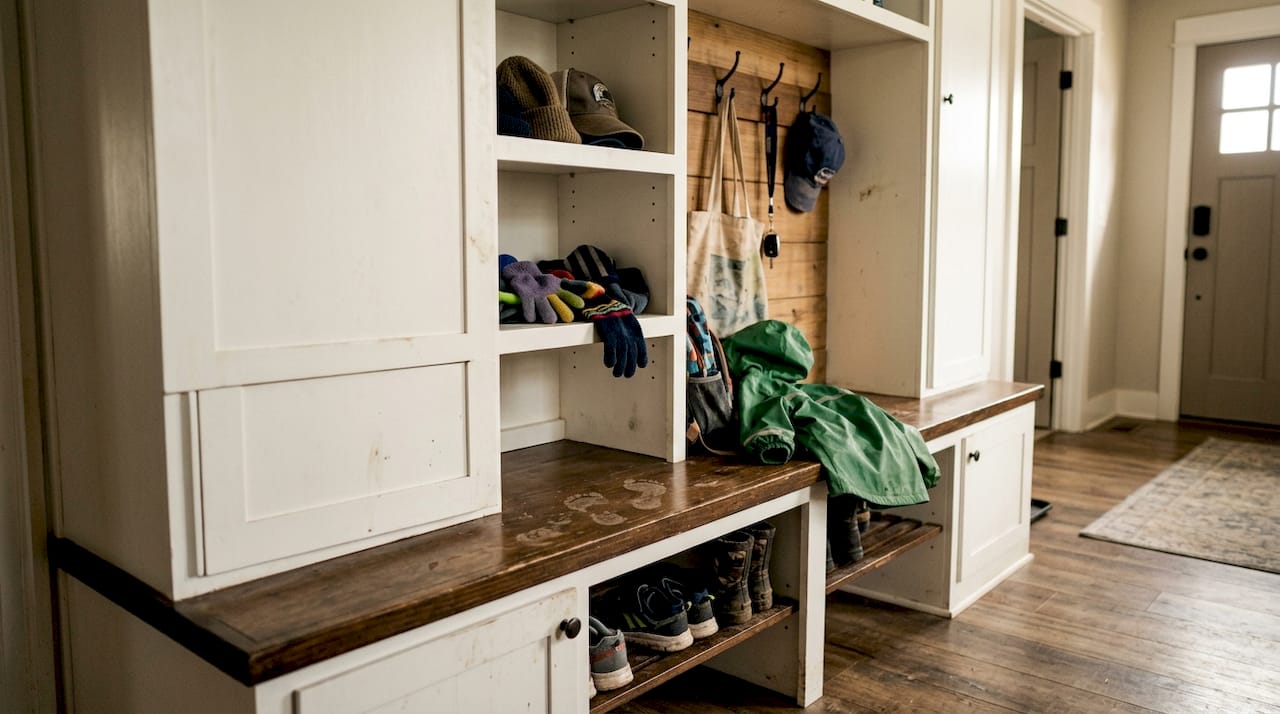
A mud locker isn’t just a fancy coat rack. It’s a purpose-built piece of furniture designed to handle everything that comes through your front or back door every single day. Think of it as a personal station for each family member, where shoes, coats, bags, and outdoor gear each have a dedicated spot.
According to furniture and home organization experts, a mud locker is a specialized storage unit for mudrooms or entryways, typically a freestanding or built-in hall tree combining lockers, benches, drawers, hooks, and cubbies to organize shoes, coats, bags, and outdoor gear. That’s a lot of function packed into one piece of furniture.
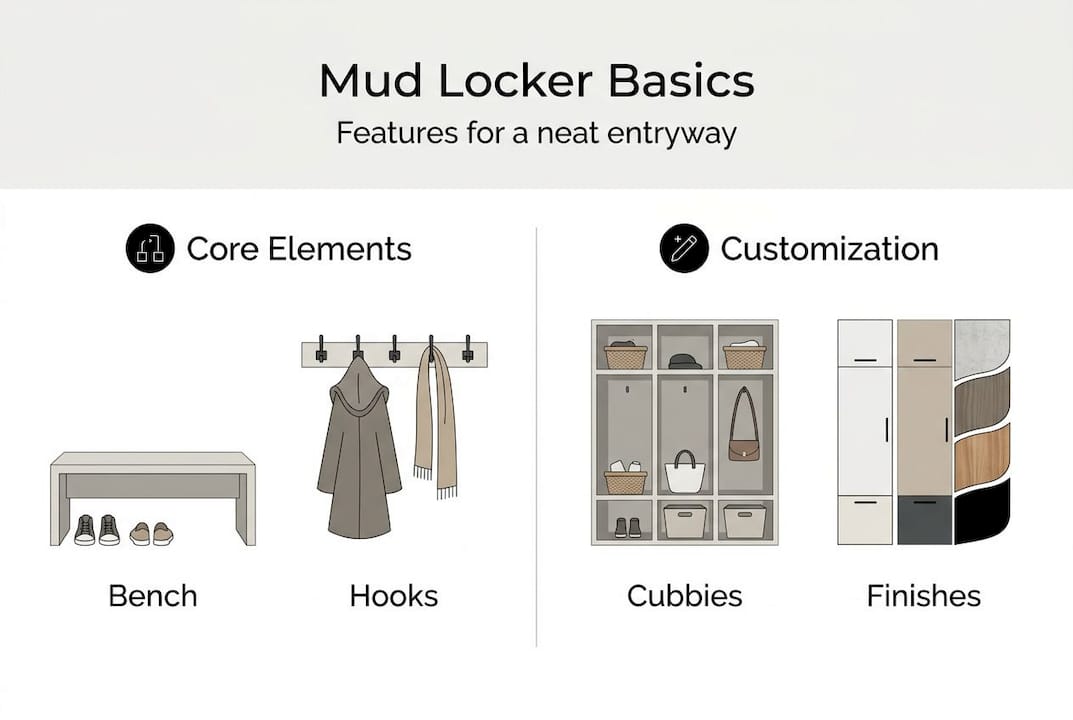
Here’s what a well-designed mud locker typically includes:
- Upper locker or cubby section for hats, helmets, and seasonal items
- Middle hook rail for coats, bags, and scarves
- Lower bench for sitting while putting on or removing shoes
- Drawers or cubbies below the bench for shoe storage or small accessories
- Optional doors for a cleaner, more polished look
What separates a mud locker from a regular closet or a basic storage unit is the combination of open access and dedicated zones. A closet hides everything behind a door with no real system. A mud locker puts everything within reach while keeping it organized.
“A mud locker transforms a chaotic entryway into a functional, welcoming space where every item has a home.”
For Maryland homeowners, this matters even more. With four distinct seasons, you’re dealing with muddy boots in spring, sandy gear in summer, wet rain jackets in fall, and heavy winter coats all year long. Explore different mud locker styles to find the right fit for your home’s layout and your family’s daily routine.
Key features and construction of mud lockers
With a clear definition in mind, let’s break down what makes a mud locker both functional and long-lasting. The difference between a mud locker that holds up for decades and one that falls apart in two years comes down to construction details.
Dimensions matter more than most people realize. Standard mud locker measurements include upper lockers or cubbies at 11.5 to 15 inches deep for hooks and baskets, middle hook sections for coats, a lower bench at 18 inches deep and 19.75 inches high, and drawers at 15 inches deep with soft-close hardware. These aren’t arbitrary numbers. They’re based on real ergonomic use.
| Component | Standard depth | Standard height |
|---|---|---|
| Upper cubby or locker | 11.5 to 15 inches | Varies by design |
| Middle hook rail | 11.5 to 15 inches | 60 to 72 inches from floor |
| Lower bench | 18 inches | 19.75 inches |
| Bench drawers | 15 inches | Below bench seat |
Material choice is just as important as size. Solid wood is the gold standard for mud lockers because it handles moisture, weight, and daily wear far better than engineered alternatives. Quality hardware, including hinges, drawer slides, and hooks, should be rated for heavy use.
Soft-close mechanisms are worth every penny. They protect the furniture from the kind of repeated slamming that happens in a busy household, especially with kids. Sturdy construction also means mortise-and-tenon joinery or dovetail drawer boxes rather than staples and glue.
Pro Tip: When choosing hooks for your mud locker, go heavy-duty from the start. Cast iron or solid brass hooks rated for 25 to 50 pounds each will outlast lightweight alternatives by years, especially in a family home where backpacks and winter coats are hung daily.
Customization is where a mud locker really shines. You can adjust bench depth, add more hooks, choose open cubbies versus closed doors, or mix drawers with open shelving. Browse custom mud locker designs to see how these options translate into real finished pieces.
Why size and ventilation matter
Knowing what goes into the construction, let’s focus on why the right size and ventilation can make or break your mud locker. Getting these two things wrong is the most common reason homeowners end up unhappy with their entryway storage.
Size affects usability in direct ways. A locker that’s too shallow won’t hold a winter coat without it falling off the hook. One that’s too deep in a narrow hallway will block traffic flow and make the space feel cramped. Narrow entryways need 14 to 18 inch depths and step-back designs to keep walkways clear, while standard spaces can accommodate the full 18 to 20 inch depth for maximum storage.
| Locker type | Depth range | Best for |
|---|---|---|
| Narrow locker | 14 to 18 inches | Tight hallways, apartments |
| Standard locker | 18 to 20 inches | Most Maryland homes |
| Deep locker | 20 to 24 inches | Large mudrooms, gear-heavy families |
Ventilation is the feature most people overlook until they notice a smell. Wet coats, muddy boots, and damp gear create the perfect conditions for mold and mildew inside a closed locker. Louvered doors allow air to circulate without exposing the contents. Small hidden fans can be added in built-in designs for high-moisture situations.
Common mistakes homeowners make with sizing and ventilation:
- Choosing a depth under 12 inches, which makes the locker nearly unusable for coats
- Skipping ventilation features because they seem unnecessary at first
- Using particle board on floor-level components where moisture contact is likely
- Ignoring walkway clearance, which should be at least 42 inches for comfortable movement
- Buying a pre-fab unit without measuring the actual entryway dimensions first
Solid wood resists moisture far better than particle board, which swells and warps when it gets wet. For Maryland homes where wet seasons are real and frequent, this is not a detail to cut corners on. Check out entryway organization solutions that are built with these real-world conditions in mind.
Expert tips: Getting the most out of your mud locker
With the essentials covered, let’s see how homeowners can go beyond the basics for comfort and personalized value. A mud locker that’s designed around your family’s actual habits will serve you far better than a generic unit off a showroom floor.
For 2026, ergonomic recommendations favor 18 to 20 inch depths for primary locker sections, ventilation features for drying wet gear, and heavy-duty hooks made from cast iron or brass that can handle family loads without bending or pulling out of the wall.
Personalization goes beyond just picking a wood stain. You can size each locker bay differently for adults versus kids, add a charging drawer for devices, choose soft-close doors in a painted finish to match your trim, or incorporate a mirror panel for a last-minute check before heading out.
Top 4 mistakes Maryland homeowners make with mud lockers:
- Buying based on looks alone without checking if the dimensions fit the space and the family’s actual storage needs
- Skipping soft-close hardware to save money, then dealing with damaged doors and drawers within a year
- Choosing particle board construction for a high-traffic, high-moisture area where solid wood is the only practical choice
- Not planning for growth by forgetting to account for future kids, pets, or seasonal gear that will need space
Maintenance is simple when the locker is built right. Wipe down surfaces monthly, check hardware tightness twice a year, and treat solid wood surfaces with a quality furniture oil annually. A well-maintained mud locker built from solid wood can last 20 to 30 years without needing replacement.
Pro Tip: In Maryland’s narrow colonial-style hallways, a step-back design where the upper section is shallower than the lower bench creates visual breathing room and keeps the walkway clear. Pair this with louvered upper doors for ventilation during the wet spring and fall seasons.
Working with a custom designer means you can get personalized mud locker solutions that account for your exact wall dimensions, ceiling height, and family size rather than forcing a standard unit to fit a non-standard space.
Is a mud locker right for your Maryland home?
Now that you know all the essentials and expert advice, consider how a mud locker fits your unique Maryland entryway. Not every home needs the same solution, and the right mud locker starts with an honest look at your space and your family’s habits.
Start with these questions. How wide is your entryway? Is there a dedicated mudroom or are you working with a hallway? How many people use the entry daily? Do you have kids with sports gear, or adults with work bags and seasonal coats?
Ideal walkway clearance is 42 inches or more, and locker depths under 12 inches won’t give you the functionality you’re paying for. These two numbers alone can help you quickly assess whether your space can support a full mud locker or needs a more compact solution.
Maryland-specific considerations worth thinking through:
- Seasonal weather means you need storage for both heavy winter gear and summer outdoor equipment
- Older Maryland homes often have narrower entryways that require custom sizing rather than pre-fab units
- Local craftsmanship gives you access to builders who understand regional home styles and can match existing trim and millwork
- Humidity and moisture from Maryland’s climate make solid wood and ventilation features non-negotiable
- Resale value in Maryland’s competitive housing market is positively influenced by well-designed, built-in entryway storage
Pre-fab solutions can work for renters or temporary situations, but for homeowners who want something that fits perfectly and lasts for decades, working with a custom designer is the smarter investment. Explore custom entryway furniture designs to see what’s possible when the piece is built specifically for your home.
Ready to design your custom mud locker?
If you’ve decided a mud locker is the right addition for your home, here’s how you can get started with a truly custom solution. At Furniture Design Group, we’ve spent over 20 years building bespoke entryway furniture for Maryland homeowners who want more than what a big-box store can offer.

We work directly with you to measure your space, understand your family’s storage needs, and craft a mud locker from solid wood with the hardware, finishes, and features that fit your home perfectly. No guessing, no forcing a standard size into a non-standard space. Every piece we build is made to last and designed to feel like it was always part of your home. Visit Furniture Design Group custom entryways to browse our work, get in touch with our team, or stop by our Maryland showroom to see the craftsmanship in person.
Frequently asked questions
How deep should a mud locker bench be?
The ideal bench depth is 18 to 22 inches, which gives adults and children enough room to sit comfortably while putting on or removing shoes.
Do mud lockers require ventilation?
Yes, ventilation prevents mold from building up inside the locker, especially when wet coats and muddy gear are stored regularly. Louvered doors are the simplest solution.
Can I fit a mud locker in a narrow hallway?
Yes, narrow spaces work best with 14 to 18 inch depths and a step-back design that keeps the walkway open and comfortable.
What materials last longest for mud lockers?
Solid wood and quality metal hardware outlast all alternatives. Avoid particle board on floor-level components where moisture contact is most likely.
How do mud lockers compare to traditional closets?
Mud lockers offer open access, bench seating, and dedicated hooks and cubbies, while traditional closets typically lack seating, airflow, and any real organizational system for daily gear.