
Your entryway is the first thing you touch when you walk through the door, and for most Maryland households, it’s also the first place chaos takes hold. Coats pile on chairs, shoes scatter across the floor, and backpacks land wherever gravity takes them. A mudroom solves this problem by acting as a transitional buffer zone between the outdoors and your main living space, containing dirt, moisture, and clutter before they spread. This guide breaks down exactly how mudrooms work, who benefits most, and how to design one that fits your Maryland home perfectly.
Table of Contents
- Why mudrooms matter: Function and value revealed
- Essential elements of a high-functioning mudroom
- Designing for Maryland homes: Layouts, zones, and custom solutions
- Style vs. function: Balancing practicality and aesthetics
- See what custom mudroom furniture can do for your home
- Frequently asked questions
Key Takeaways
| Point | Details |
|---|---|
| Mudrooms boost home value | A well-designed mudroom can raise resale value and speed up sales. |
| Cleaner and organized living | Proper mudrooms trap dirt and keep household clutter under control. |
| Design flexibility | Custom features and layouts can adapt mudrooms for any home size or family need. |
| Prioritize durability | Materials like porcelain tile and sturdy benches ensure longevity and easy maintenance. |
| Balance style and function | Great mudrooms combine practical layouts with attractive finishes for everyday use. |
Why mudrooms matter: Function and value revealed
Most homeowners think of a mudroom as a luxury. It’s not. It’s one of the most practical investments you can make in your home, especially in Maryland where wet winters, muddy springs, and humid summers mean your entryway takes a beating year-round.
“Mudrooms serve as transitional buffer zones between outdoors and indoors, containing dirt, moisture, and clutter to keep main living areas clean.” This single function alone reduces the time you spend cleaning your floors, furniture, and carpets every week.
The numbers back this up. According to research on mudroom ROI, 67% of families report less household clutter after adding a mudroom, and homeowners see energy savings of 10 to 15% because the space acts as a thermal buffer. For families with kids or pets, the benefit is even more immediate. Muddy paws and wet boots stay contained, not tracked through your kitchen.
From a real estate perspective, the case is just as strong. Homes with mudrooms sell faster and command higher prices. Buyers with children and pets actively seek them out. If you’re thinking about resale, a well-designed mudroom is one of the smartest upgrades you can make.
Here’s a quick look at what a mudroom delivers:
- Cleaner living spaces by stopping dirt at the door
- Reduced household clutter with dedicated storage for every family member
- Energy efficiency through thermal buffering between inside and outside
- Higher resale appeal for buyers with active families
- Pet and kid-friendly organization that keeps daily chaos manageable
If you’re ready to explore what’s possible, inspiring and functional mudroom design solutions can show you how other Maryland homeowners have transformed their entryways.
Essential elements of a high-functioning mudroom
Understanding mudroom value is only half the story. Here’s what makes a mudroom genuinely effective and comfortable in practice.
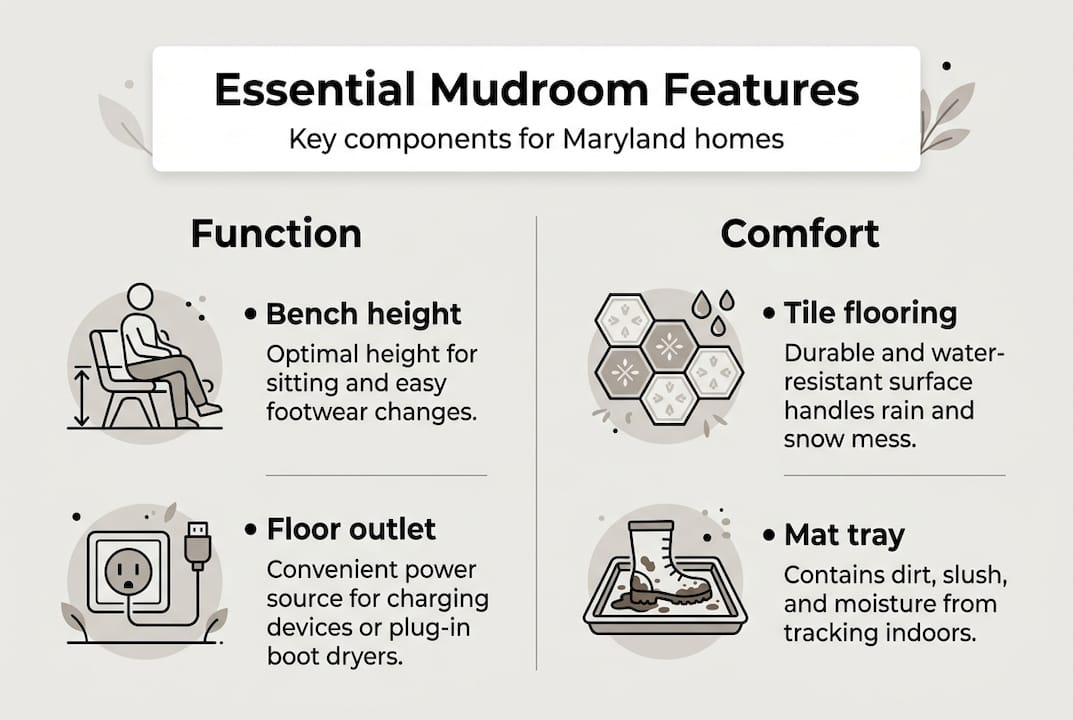
The physical components of a mudroom are more specific than most people realize. Getting the dimensions right is the difference between a space that works and one that frustrates you every single day. Mudroom design standards recommend benches at 17 to 19 inches high, cubbies 12 to 15 inches deep, and hooks placed between 40 and 66 inches from the floor. Ambient lighting should hit 300 to 500 lux for practical visibility.
Here’s a breakdown of the core elements and what to prioritize:
| Element | Recommended spec | Why it matters |
|---|---|---|
| Bench height | 17 to 19 inches | Comfortable for sitting to remove shoes |
| Cubby depth | 12 to 15 inches | Fits boots, bags, and helmets |
| Hook height | 40 to 66 inches | Accessible for adults and older kids |
| Flooring | Porcelain tile, R10-11 slip resistance | Durable and safe in wet conditions |
| Ambient lighting | 300 to 500 lux | Practical visibility for daily use |
Beyond the basics, a few additions make a big difference. Power outlets and charging docks keep phones and devices off kitchen counters. Task lighting above the bench helps on dark winter mornings. If you have young children or elderly family members, lower hooks and a wider walkway (minimum 36 inches) make the space accessible for everyone.
Flooring deserves special attention. Porcelain tile with R10 to R11 slip resistance is the gold standard for Maryland mudrooms. It handles moisture, resists staining, and cleans up fast. Avoid carpet or wood in this zone entirely.
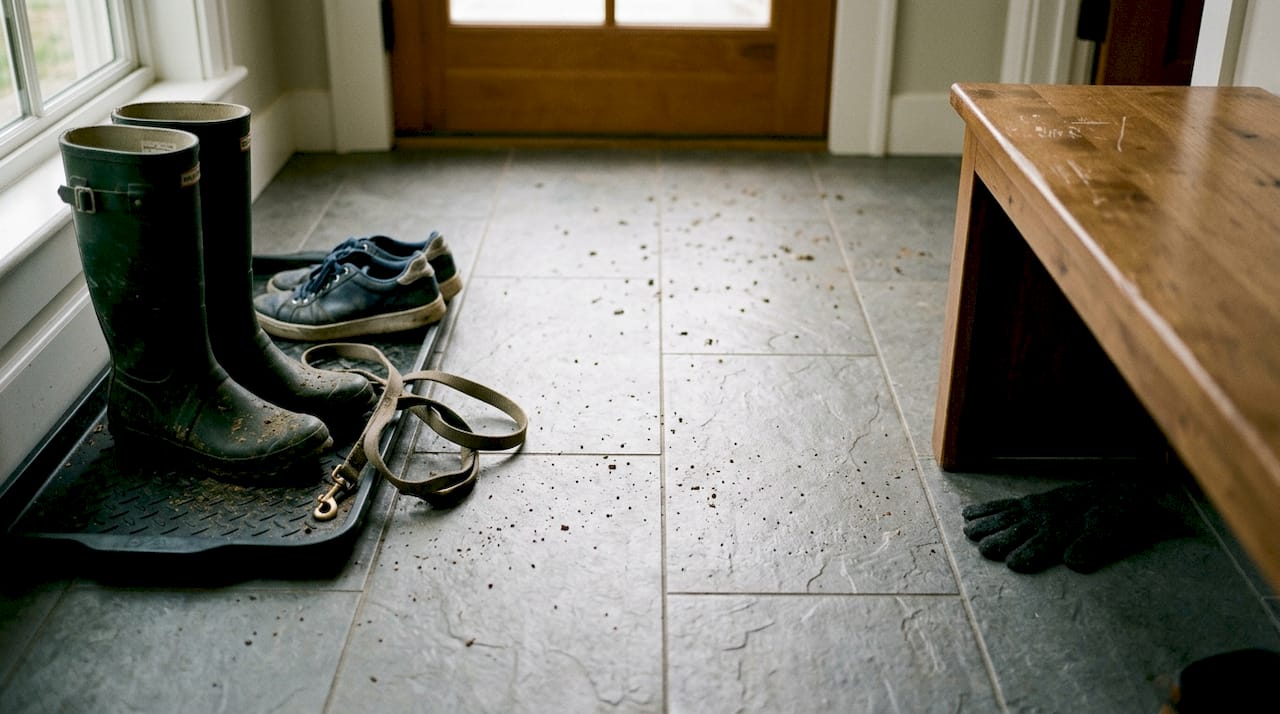
Pro Tip: Install a floor drain or waterproof mat tray under the bench area. Maryland winters mean wet boots are a constant, and a tray saves your floor and your sanity.
When you invest in custom entryway furniture, you get pieces built to these exact specifications rather than forcing standard sizes to fit your space.
Designing for Maryland homes: Layouts, zones, and custom solutions
With the physical components in place, it’s time to plan the layout, organization, and style for your specific Maryland home.
The most effective mudrooms divide the space into three distinct zones. Mudroom zoning strategies show that separating wet, dry, and clean areas prevents cross-contamination and keeps the space feeling organized even on the busiest mornings. The wet zone handles boots, umbrellas, and rain gear. The dry zone holds coats, bags, and everyday items. The clean zone transitions into the rest of the home.
Here’s how different layout approaches compare:
| Layout type | Best for | Key advantage |
|---|---|---|
| Single-wall | Narrow spaces, apartments | Maximizes limited square footage |
| L-shaped | Corner entryways | Separates wet and dry zones naturally |
| U-shaped | Larger dedicated rooms | Maximum storage and zoning flexibility |
| Retrofit closet | Existing homes | Low cost, uses what you already have |
For smaller Maryland homes, shallow lockers (12 to 14 inches deep), fold-down benches, and vertical storage make a big impact without eating up floor space. Pocket doors instead of swing doors can save another 10 to 15 square feet in tight layouts.
Here’s a step-by-step approach to planning your mudroom layout:
- Measure your available space and map the traffic flow from your entry door.
- Identify your wet zone closest to the door and your clean zone farthest from it.
- Assign storage to each family member, including pets if applicable.
- Plan for seasonal reorganization by leaving flexible shelf space.
- Add a laundry station or pet wash area if your layout allows.
Pro Tip: Color-code storage by family member using labeled bins or painted cubby backs. It takes five minutes to set up and saves ten minutes of searching every morning.
If you’re working with an existing home, a retrofit is almost always possible. Custom mudroom solutions can be built to fit odd dimensions, sloped ceilings, or awkward corners that off-the-shelf products simply can’t accommodate.
Style vs. function: Balancing practicality and aesthetics
Even a smartly arranged mudroom can be undermined without the right balance of function and visual harmony. Here’s how to strike the right balance.
The debate between style and function in mudroom design is real, but it’s also a false choice. The best mudrooms look great because they work well, not in spite of it. That said, there are clear priorities to follow.
Designers consistently recommend leading with durability and function, then layering in style. Mudroom function and style experts note that hooks beat closets for quick daily access, and a mix of open and closed storage serves most families better than one or the other alone. Open cubbies work for kids who need to grab things fast. Closed cabinets keep the space looking clean when guests arrive.
“The most functional mudrooms are the ones that get used correctly every single day, not just when company is coming.”
Here’s where style decisions actually matter:
- Color and finish: Lighter colors make small mudrooms feel larger. Darker finishes hide scuffs and wear better over time.
- Statement furniture: A custom bench with a bold finish or unique hardware becomes a design feature, not just a utility piece.
- Seasonal flexibility: Use removable hooks and adjustable shelves so you can reconfigure for summer gear versus winter coats.
- Lighting as design: Pendant lights or sconces add personality while improving visibility.
Common pitfalls to avoid include overstuffing the space (always maintain that 36-inch walkway minimum), under-lighting dark corners, and skipping ventilation. Maryland humidity means a poorly ventilated mudroom will smell musty within weeks. A simple exhaust fan or operable window solves this completely.
The goal is a mudroom that inspiring mudroom design ideas can help you visualize: one that handles the worst of Maryland’s weather while still feeling like a natural, attractive part of your home.
See what custom mudroom furniture can do for your home
At Furniture Design Group, we’ve spent over 20 years helping Maryland homeowners turn chaotic entryways into organized, beautiful spaces that actually work. Every piece we build is crafted to your exact dimensions, your family’s specific needs, and your home’s style.

Whether you’re starting from scratch or retrofitting an existing space, our team designs and builds custom mud lockers, benches, cubbies, and entryway systems that no big-box store can match. We use quality materials and artisanal construction techniques because your entryway deserves better than flat-pack furniture that wobbles after six months. Visit our showroom, browse our collections, or reach out directly to start a conversation about your project. Your perfect mudroom is closer than you think.
Frequently asked questions
What is the main purpose of a mudroom in a Maryland home?
A mudroom keeps outdoor dirt, moisture, and clutter from entering your main living space while organizing daily essentials like coats, shoes, and bags. It acts as a buffer zone that protects the rest of your home.
Does a mudroom add value or help a house sell faster?
Yes. Homes with mudrooms can sell up to 20% faster and see a property value increase of 5 to 10%, with 60 to 78% of buyers actively preferring homes that include one.
How can I customize a mudroom for pets, kids, or small spaces?
Use lower hooks for children, shallow lockers (12 to 14 inches deep) for tight spaces, fold-down benches to save floor area, and a dedicated pet wash station if your layout allows. The key is designing around how your family actually moves through the space.
Which flooring is best for Maryland mudrooms?
Porcelain tile with R10-11 slip resistance is the top choice for Maryland mudrooms. It handles moisture and mud from all four seasons, cleans easily, and holds up for decades without warping or staining.