
TL;DR:
- Proper entryway design balances functionality, privacy, and local weather considerations.
- Custom furniture optimizes space, durability, and style tailored to Maryland homes.
- Proper organization and safety measures prevent clutter and hazards in entry areas.
The entryway is the first impression your home makes, yet most layouts fail to balance beauty, practicality, and privacy. Shoes pile up near the door, coats drape over chairs, and bags land wherever there’s space. For Maryland homeowners, seasonal weather adds another layer of challenge, bringing mud, rain, and snow gear into the mix. This guide walks you through every step of optimizing your entryway layout, from measuring your space and identifying your needs to commissioning custom furniture that fits perfectly. Whether you’re working with a compact hallway or a generous foyer, you’ll find actionable strategies and design ideas that genuinely work.
Table of Contents
- Assess your entryway needs and space
- Plan your layout and select key features
- Implement custom and bespoke design elements
- Troubleshooting and common mistakes
- Why custom entryways unlock value in Maryland homes
- Get custom solutions for your entryway
- Frequently asked questions
Key Takeaways
| Point | Details |
|---|---|
| Assess entryway needs | Always evaluate your entryway space, traffic, and privacy before starting any redesign. |
| Plan layout zones | Use focused design zones for storage, seating, and decor to maximize both function and flow. |
| Prioritize custom solutions | Custom furniture and bespoke features unlock greater utility and style in Maryland entryways. |
| Avoid common mistakes | Reduce clutter, secure heavy furniture, and maintain clear walkways for safety and efficiency. |
Assess your entryway needs and space
Before you rearrange a single piece of furniture or browse any catalogs, you need to understand exactly what you’re working with. Grab a tape measure and note the width, depth, and ceiling height of your entry area. Also map where the door swings, where windows sit, and where foot traffic naturally flows. These details shape every decision that follows.
Once you have your measurements, think about what your entryway actually needs to do. Most entryways serve several functions at once: storing outerwear, holding bags and keys, welcoming guests, and creating a visual transition from outside to inside. Ranking these priorities helps you allocate space wisely.
Common entryway purposes to consider:
- Coat and bag storage for daily use
- Footwear organization (especially critical in Maryland winters)
- A landing spot for mail, keys, and everyday items
- A visual focal point that reflects your home’s style
- A privacy buffer between the front door and living areas
One of the first structural decisions you’ll face is whether your space functions as a foyer or an open entryway. Foyers offer privacy and buffer, while open entryways maximize flow for smaller spaces. A foyer gives guests a defined arrival zone and keeps your living room out of immediate view. An open layout, on the other hand, makes a compact home feel larger and more connected.
| Feature | Foyer layout | Open entryway |
|---|---|---|
| Privacy level | High | Low |
| Space required | More | Less |
| Storage options | Built-in cabinetry | Hidden/multifunctional |
| Visual separation | Clear | Minimal |
| Best for | Larger Maryland homes | Condos, townhomes |
For Maryland homes specifically, weather is a real design factor. Mudrooms or dedicated drop zones near the entry are popular here because they contain the mess from rain and snow before it spreads through the house. If you don’t have a dedicated mudroom, you can create a functional equivalent with the right furniture placement and storage.
Pro Tip: Before committing to any layout, walk through your entry at your busiest time of day, like a school morning or after work. Notice where bottlenecks form and where items naturally land. That real-world data is more useful than any floor plan.
If you’re unsure where to start, exploring entryway redesign services can give you a professional framework tailored to your specific home. You can also find professional entryway advice to supplement your initial planning.
Plan your layout and select key features
With a clear picture of your space and priorities, you can start mapping out zones and choosing the features that will make your entryway both beautiful and functional. Think of your entryway as a series of small zones rather than one open area. Each zone handles a specific task, and together they create a smooth, organized experience.
Here’s a practical sequence for planning your layout:
- Define your focal point. This could be a statement bench, a piece of artwork, or a built-in storage unit. The focal point anchors the space visually and sets the tone.
- Create a footwear zone. Position a bench, boot tray, or cubby system near the door where shoes can be removed and stored without blocking traffic.
- Designate a coat and bag area. Hooks, a coat closet, or a locker-style unit should be within arm’s reach of the door.
- Add a landing surface. A small console table or shelf gives you a spot for keys, mail, and daily essentials.
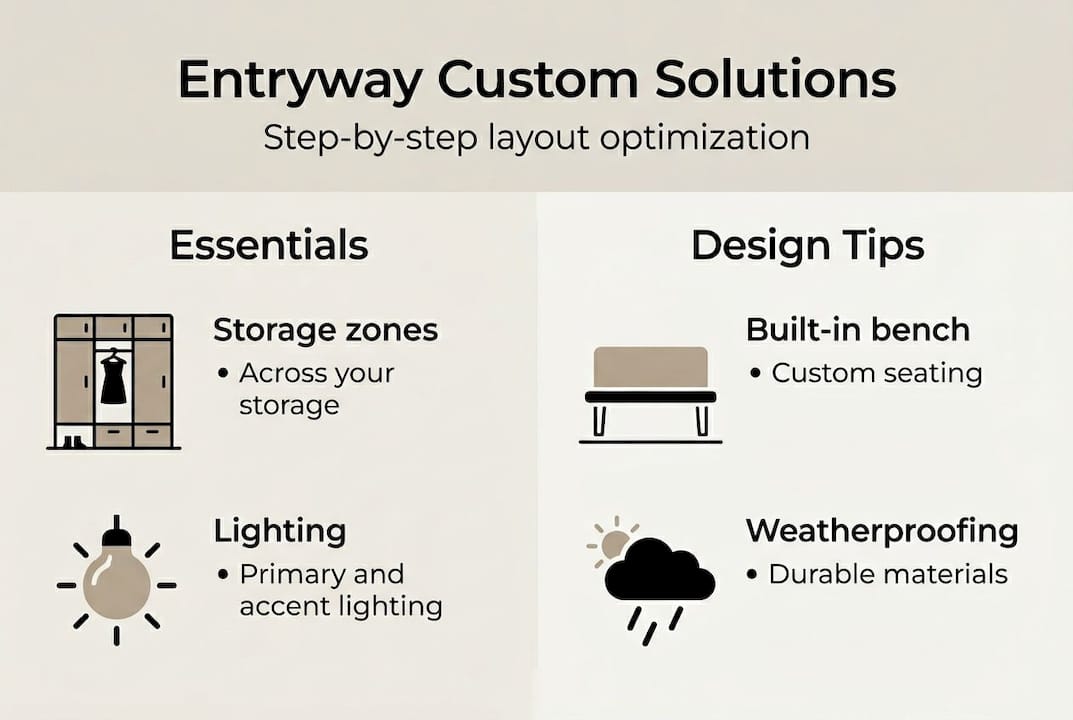
- Consider lighting. Good lighting makes the space feel welcoming and ensures safety, especially in Maryland’s darker winter months.
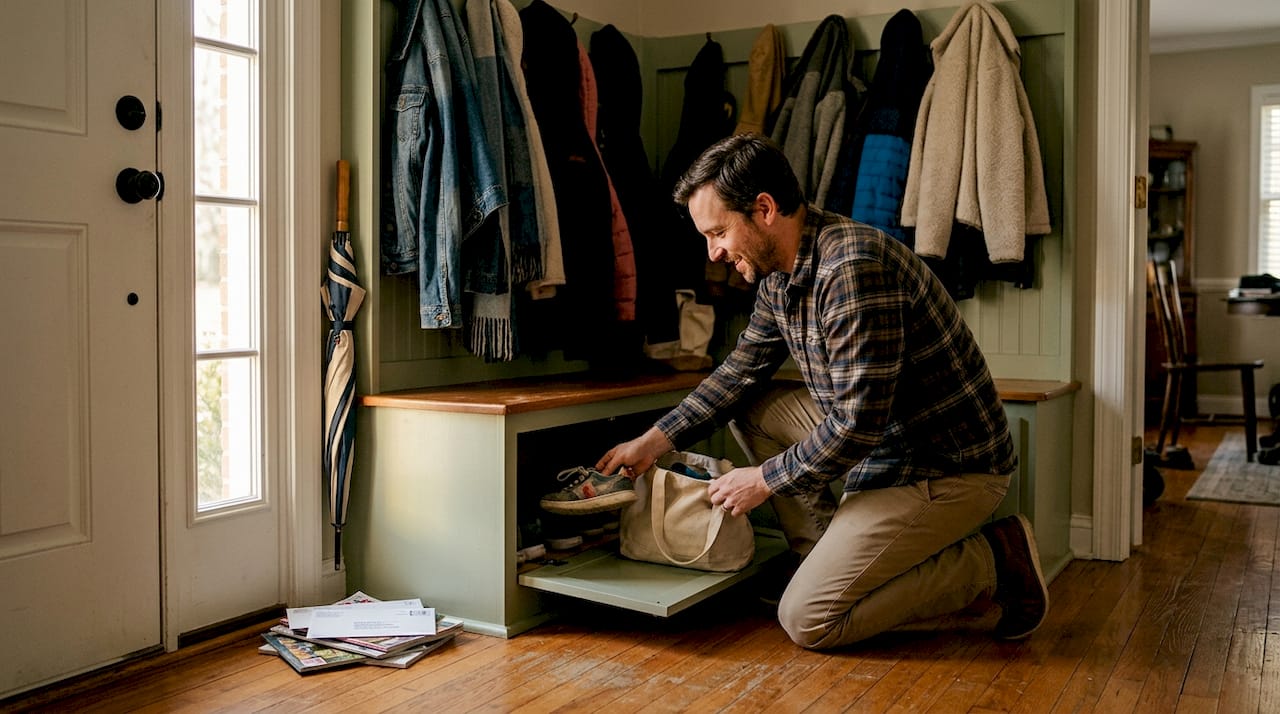
When it comes to storage solutions, hidden storage in open layouts maximizes flow, while foyers benefit from built-in separation for added privacy. This distinction matters a lot when you’re choosing between a floating shelf system and a full mud locker unit.
| Solution type | Best for | Pros | Cons |
|---|---|---|---|
| Open hooks and shelves | Small entryways | Easy access, affordable | Can look cluttered |
| Built-in cabinetry | Foyers with wall space | Clean look, high storage | Higher cost |
| Mud locker units | Maryland mudrooms | Organized, weatherproof | Needs planning space |
| Multifunctional bench | Any size entry | Seating plus storage | Limited capacity |
For Maryland homeowners, weatherproofing your entry zone is non-negotiable. That means choosing materials that handle moisture, designating a spot for wet boots and umbrellas, and using washable surfaces near the door. A custom bench with a lift-top storage compartment, for example, can hold winter gear without letting it spill into the rest of the entry.
Pro Tip: Keep your most-used items at eye level and within easy reach. Items you use daily should never require opening a cabinet or bending down. Reserve lower and upper storage for seasonal gear.
Exploring custom furniture options lets you see how bespoke pieces can be designed to fit your exact dimensions and match your home’s aesthetic.
Implement custom and bespoke design elements
With your layout planned, it’s time to bring in custom design elements that truly transform your space. Off-the-shelf furniture rarely fits an entryway perfectly. Walls are oddly sized, ceilings vary, and standard pieces often waste usable inches. Custom furniture solves all of that.
When choosing materials for a Maryland entryway, durability and moisture resistance should be top priorities. Here’s what to look for:
- Solid hardwoods like oak or maple for structural pieces. They handle humidity changes well and last decades.
- Moisture-resistant finishes on any surface near the door. Matte or satin lacquers tend to hold up better than high-gloss in high-traffic areas.
- Metal hardware in stainless or powder-coated finishes to prevent rust from wet coats and gloves.
- Easy-clean upholstery for bench cushions. Look for performance fabrics rated for heavy use.
When commissioning a custom piece, come prepared. Bring your measurements, photos of your space, and examples of styles you like. A good craftsman will ask about your household size, daily routines, and storage needs before drawing up a design. The more context you provide, the better the result.
“Bespoke furniture enables seamless integration and maximizes entryway utility, turning awkward spaces into organized, welcoming arrivals.”
Lighting and smart home features are often overlooked in entryway design, but they make a real difference. Motion-activated lights near the door are practical and energy-efficient. A smart lock or keypad entry eliminates the need for a key hook altogether. Under-cabinet lighting in a built-in unit adds warmth and helps you find items quickly.
Pro Tip: Ask your furniture maker to include integrated charging stations or USB ports in your custom unit. It’s a small addition during build that would be expensive to retrofit later.
Working with custom furniture services that specialize in entryways means every detail, from drawer depth to hook placement, is designed around how you actually live.
Troubleshooting and common mistakes
Even with a great plan, certain mistakes crop up as you optimize your entryway. Knowing what to watch for saves you time, money, and frustration.
The most common entryway mistakes include:
- Overcrowding the space. Adding too many pieces makes even a large entry feel cramped. Stick to what you truly need.
- Ignoring traffic flow. Furniture placed too close to the door creates a bottleneck every time someone enters or exits.
- Poor lighting choices. A single overhead fixture often leaves corners dark and makes the space feel unwelcoming.
- No dedicated spots for daily items. Without a consistent home for keys, bags, and shoes, clutter returns within days.
- Choosing style over function. A beautiful console table with no storage doesn’t solve the real problem.
“Lack of hidden storage and poor layout flow are among the most common errors homeowners make when designing an entryway.”
If your current entryway feels chaotic, start by reorganizing zones before buying anything new. Often, the problem isn’t a lack of storage but a lack of assigned places. Give every category of item its own spot and enforce it for two weeks. You’ll quickly see what’s working and what still needs a solution.
Safety is another area where entryways fall short. Heavy mirrors or shelving units must be anchored to wall studs, not just drywall. Rugs near the door should have non-slip backing, especially in Maryland where wet boots are common from fall through spring. Keep pathways at least 36 inches wide to allow comfortable movement.
Pro Tip: If you have young children or elderly family members, round-edged furniture and lever-style door handles are much safer than sharp corners and round knobs. These details are easy to specify when ordering custom pieces.
For more ideas on avoiding design pitfalls, browsing entryway remodeling tips can help you see what experienced designers prioritize when working with real Maryland homes.
Why custom entryways unlock value in Maryland homes
After more than 20 years of crafting entryway furniture for Maryland families, we’ve noticed something that surprises most homeowners: the entryway consistently delivers a stronger return on investment than many other rooms people spend heavily on. Kitchens and bathrooms get all the attention, but the entryway is where every single visitor forms their first impression, and where your household starts and ends every day.
Maryland’s climate makes this room more demanding than in milder states. The freeze-thaw cycle, humid summers, and heavy precipitation mean your entryway takes a beating. Generic furniture warps, finishes peel, and hardware rusts. Custom pieces built with the right materials for this climate simply last longer and look better doing it.
We also see a persistent myth that custom means expensive without payoff. The reality is that a well-designed, durable custom mud locker or entryway unit often costs less over ten years than replacing budget furniture twice. It also fits your space so precisely that it adds perceived square footage rather than consuming it.
The contrarian truth is this: most homeowners underinvest in their entryways and overspend on rooms guests rarely see. Flipping that priority, especially with Maryland custom furniture advice from specialists who understand local conditions, is one of the smartest design decisions you can make.
Get custom solutions for your entryway
If you’re ready to stop working around a poorly organized entry and start walking into a space that actually works, we’re here to help. At Furniture Design Group, we’ve spent over 20 years building custom entryway furniture for Maryland homeowners and interior designers who want pieces that fit perfectly and last for decades.
From bespoke mud lockers to built-in benches and full entryway storage systems, our custom entryway furniture is designed around your exact dimensions, lifestyle, and aesthetic. Every piece is crafted by hand in Maryland, delivered, and installed by our team. Reach out to our entryway design experts to schedule a consultation and see how a truly custom solution can transform the way your home welcomes you home.
Frequently asked questions
How do I choose between a foyer and an open entryway?
Foyers work best for larger homes where privacy and a defined arrival zone matter, while open entryways maximize flow and are ideal for smaller spaces that benefit from hidden storage solutions.
What custom options can make my entryway more functional?
Built-in benches, bespoke cabinetry, and hidden storage compartments are the most impactful upgrades because bespoke furniture maximizes utility while keeping the space visually clean and organized.
What safety hazards should I avoid in entryway design?
Secure all heavy items to wall studs, use non-slip rug backing, and maintain clear pathways. Poor layout flow and unsecured furniture are the most common safety risks in residential entryways.
Are there Maryland-specific considerations for entryway layouts?
Yes. Maryland’s seasonal weather demands moisture-resistant materials, dedicated mudroom zones for wet gear, and durable finishes that hold up through humid summers and cold winters.