
TL;DR:
- Well-designed entryways can boost home value by up to 24,000 dollars.
- A cluttered entry triggers stress and negatively impacts first impressions.
- Custom, purposeful layouts enhance daily function and market appeal in Maryland homes.
Your entryway is the most underestimated room in your house. Most homeowners pour their budgets into kitchens and master baths, while the first space guests and appraisers actually see sits neglected. A well-designed entryway can increase home value by up to $24,000, a figure that rivals the return on a mid-range bathroom remodel. This guide walks you through the real financial stakes, the psychology behind great entryway design, and the practical steps Maryland homeowners can take to turn a forgotten hallway into a genuine asset.
Table of Contents
- The surprising impact of entryways on home value
- The psychology of first impressions and decompression zones
- Key principles for optimizing entryway layouts
- Practical steps for Maryland homeowners: From inspiration to implementation
- Why most entryway layouts fail—and what Maryland homeowners can do differently
- Bring your entryway vision to life with local experts
- Frequently asked questions
Key Takeaways
| Point | Details |
|---|---|
| Entryways boost value | Optimizing your entryway can add significant resale value to your Maryland home. |
| First impressions matter | A well-organized entryway sets a welcoming tone and improves every arrival experience. |
| Custom solutions work best | Tailoring your entryway layout to your lifestyle delivers the highest function and style. |
| Start with simple upgrades | Even modest changes like better lighting or smart storage make an immediate impact. |
The surprising impact of entryways on home value
Most renovation conversations skip straight to countertops and bathroom tiles. But here’s what the numbers actually say: attractive entryways can increase home value by up to $24,000. That’s not a rounding error. That’s the kind of return that makes a real difference when you’re listing your Maryland home in a competitive market.
Real estate appraisers pay close attention to first impressions. When a buyer walks through the front door, they’re making dozens of subconscious judgments in the first eight seconds. A polished, organized entryway signals that the rest of the home was cared for too. A cluttered, dim, or generic one does the opposite. It plants a seed of doubt that’s hard to uproot, no matter how beautiful your kitchen is.
“The entryway sets the psychological and aesthetic tone for the entire home experience. Buyers and appraisers respond emotionally before they respond rationally.”
Think of your entryway as a preview trailer. It tells visitors what kind of story your home tells. In Maryland, where older colonial and craftsman-style homes are common, a well-considered entryway that matches the home’s architectural language can increase your property value far beyond what a fresh coat of paint alone would accomplish.
Comparing entryway renovations to other high-ROI spaces puts things in perspective:
| Renovation type | Average ROI | Estimated value added |
|---|---|---|
| Minor kitchen remodel | 77% | $18,000 to $22,000 |
| Mid-range bathroom remodel | 70% | $12,000 to $17,000 |
| Entryway optimization | Up to 85% | Up to $24,000 |
| Basement finish | 63% | $10,000 to $15,000 |
The data makes a strong case. Entryway upgrades cost less than full kitchen renovations and can deliver a comparable or better return. The reason is simple: the entryway influences perception across the entire home visit.
Beyond resale value, consider how a well-designed entry changes your daily lived experience. Walking into a calm, organized space at the end of a long commute is a different experience from stepping over shoes and sorting through mail piled on a chair. That difference adds up every single day you live there.
The psychology of first impressions and decompression zones
Building on the tangible impact on value, let’s look at what makes entryways so powerful from a human perspective. The psychological research here is fascinating and directly relevant to how you design your space.
A cluttered entryway does more than look messy. It triggers a low-level stress response the moment you walk in. Visual clutter competes for your attention, signals unfinished tasks, and creates a sense of being overwhelmed before you’ve even taken off your shoes. The benefits of a tidy home extend well beyond appearances, touching mood, focus, and even sleep quality.
A well-organized entry, by contrast, acts as a decompression zone. It gives your brain permission to shift gears from the outside world to your home life. That’s a powerful function for a small space.
Here’s how different entryway types tend to affect mood and perception:
- Open and airy: Signals spaciousness and calm. Guests feel welcomed immediately.
- Cluttered and chaotic: Raises stress, creates a negative first impression that carries through the visit.
- Minimalist: Clean and modern, but can feel cold if not balanced with warmth and texture.
- Personalized and organized: The gold standard. Feels lived-in without feeling messy. Guests feel at home right away.
As design research confirms, entryways create a psychological decompression zone and set the tone for everything that follows inside your home.
“A thoughtfully designed entryway gives residents and guests a moment to arrive, not just enter.”
Pro Tip: Adding a small bench or a single upholstered seat to your entryway does more than provide a place to put on shoes. It slows people down just enough to shift from “outside mode” to “home mode.” Natural light amplifies this effect significantly.
When you invest in custom furniture solutions designed for your entryway’s specific dimensions and your family’s actual habits, you’re not just solving a storage problem. You’re designing a daily ritual of arrival.
Key principles for optimizing entryway layouts
With an understanding of psychology, we now turn to the most effective ways to rethink your home’s entryway layout. Smart design here isn’t about making things look prettier. It’s about making the space work for you.
Start by comparing where most entryways are versus where they could be:
| Feature | Standard entryway | Optimized entryway |
|---|---|---|
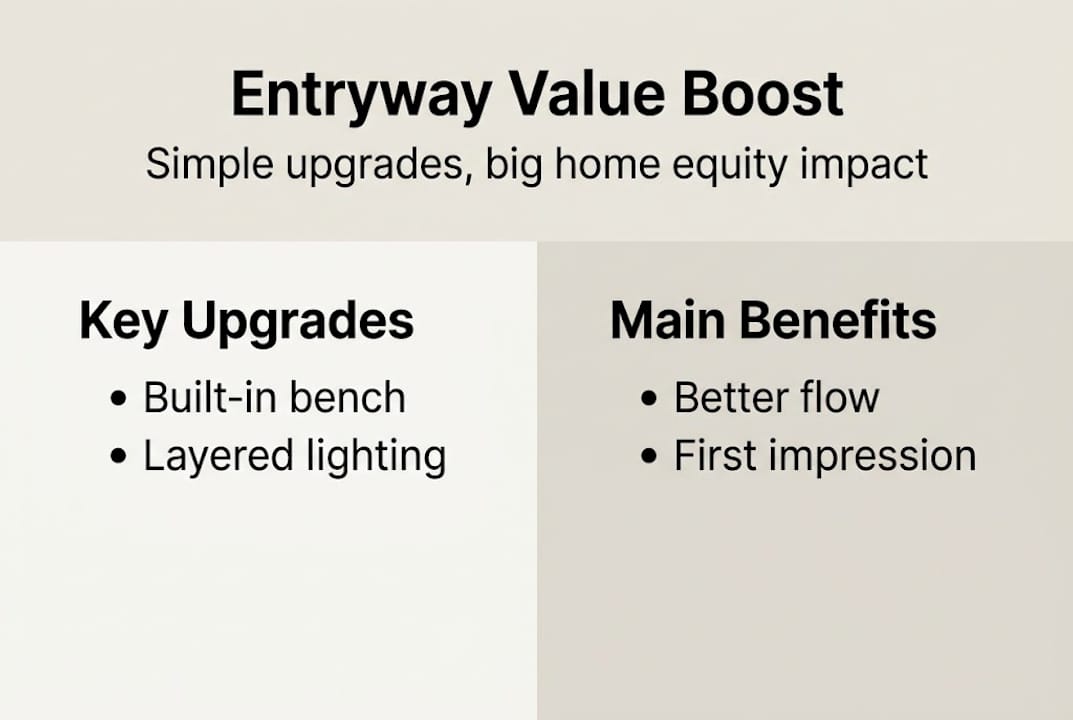
| Storage | Coat hooks, maybe a shelf | Built-in lockers, cubbies, benches with storage |
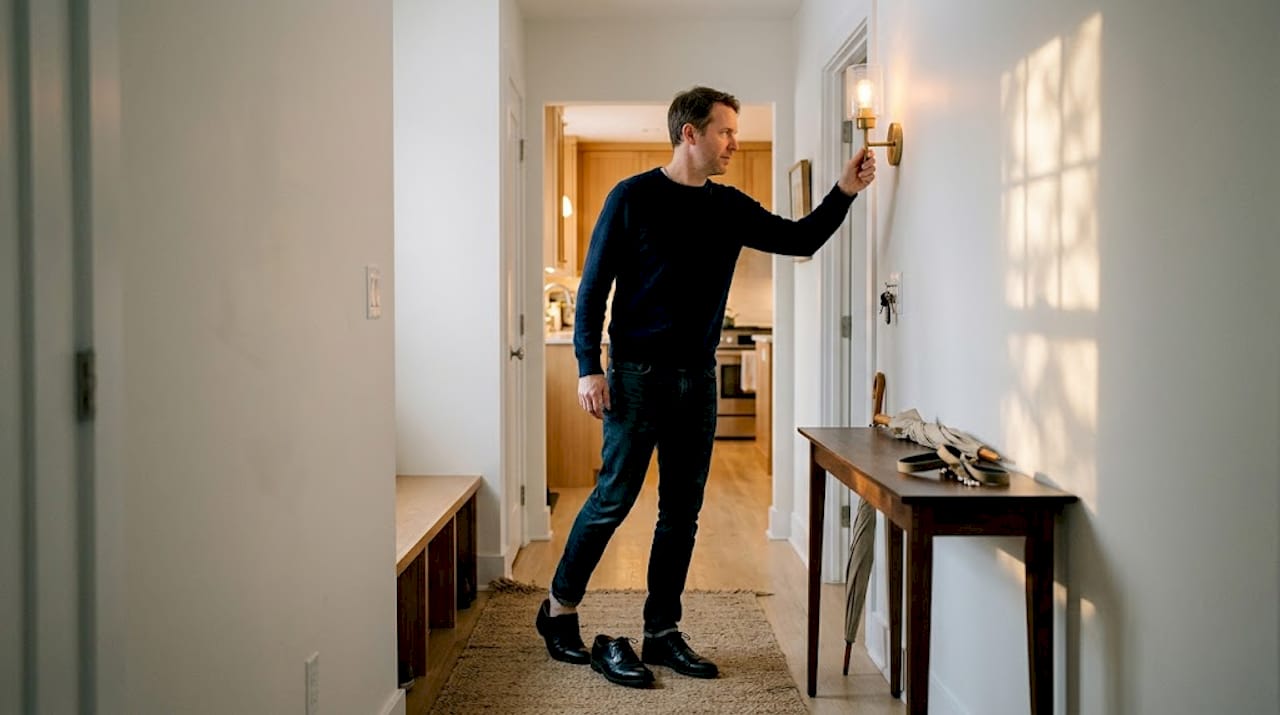
| Lighting | Single overhead fixture | Layered: ambient, task, and accent lighting |
| Traffic flow | Narrow, often blocked | Clear pathways, designated zones |
| Aesthetics | Mismatched pieces | Unified design that reflects the home’s style |
| Personalization | Generic | Built around the household’s actual daily routines |
Here’s a practical sequence to assess and plan your entryway upgrade:
- Observe your current habits. Watch how your household actually uses the space for one week. Where do bags land? Where do shoes pile up? Design should follow reality, not the other way around.
- Measure your traffic flow. Identify pinch points where people bump into each other or furniture blocks movement. Clear pathways make a space feel twice as large.
- Audit your storage needs. Count coats, shoes, bags, sports equipment, and seasonal items. Then design storage for that real number, not an idealized version.
- Plan your lighting layers. Overhead light handles general visibility. A mirror or sconce adds warmth. Natural light from a sidelight window is worth preserving at all costs.
- Choose a design language. Your entryway should feel like it belongs to the same house as your living room. Matching wood tones, hardware, and color palettes creates cohesion.
For entryway organization tips that go deeper into storage strategy, look beyond generic solutions. The most functional spaces are designed around the people using them.
Pro Tip: A modular bench with lift-top storage solves two problems at once. It gives you a place to sit while managing footwear, and hides clutter inside. When matched to custom entryway storage units built to your wall dimensions, the result is seamless and functional.
Lighting and traffic flow are often the last things homeowners think about and the first things visitors notice. Getting these right transforms how a space feels without changing a single piece of furniture.
Practical steps for Maryland homeowners: From inspiration to implementation
Once you know what to optimize, here’s how to move from ideas to a finished, customized entryway. Maryland homes come in a wide range of styles and sizes, from Cape Cods in the suburbs to rowhouses in Baltimore and farmhouses on the Eastern Shore. Each presents different constraints and opportunities.
Start with clear project goals:
- Define the primary problem you’re solving. Is it storage? Aesthetic cohesion? Resale prep?
- Set a realistic budget range before you start browsing. Custom projects can range from $1,500 to over $10,000 depending on scope.
- Decide whether you’re optimizing for daily function, resale value, or both. This affects every material and design choice.
- Gather inspiration from homes similar to yours in style and square footage, not aspirational spaces that don’t match your reality.
- Consult a local expert early. Getting professional eyes on your space before you commit to any purchases saves money and avoids costly mistakes.
When sourcing solutions locally, keep these options in mind:
- Custom furniture makers: Built-to-measure pieces fit your exact space and reflect your home’s style.
- Local showrooms: Seeing materials and finishes in person matters more than you’d expect.
- Design consultation services: Many local firms offer in-home visits that make planning far more accurate.
- Maryland-specific contractors: Local professionals understand regional home styles and can recommend materials suited to Maryland’s climate and humidity.
The tips to increase home value that real estate professionals recommend most often include entryway improvements because buyers notice them immediately. As research confirms, entryway optimization can enhance both property value and household comfort in measurable ways.
Working with a local design group that understands Maryland homes means your solution will fit your actual space rather than a generic floor plan. For Maryland custom furniture built to your specifications, local expertise makes all the difference.
Why most entryway layouts fail—and what Maryland homeowners can do differently
Here’s the uncomfortable truth we’ve seen over 20 years of working on Maryland homes: most entryways fail not because of budget, but because of intention. Homeowners treat the entryway as a leftover space, a place to handle with whatever’s left after the “real” rooms are done. That mindset produces generic drop zones that serve no one well.
The best entryways we’ve built were designed around a specific family’s specific habits. One client had three kids in sports. Another worked from home and needed a clear decompression ritual. Another was prepping for resale and wanted maximum visual impact. None of those solutions looked the same, and that’s the point.
A custom furniture approach grounded in how you actually live produces results that off-the-shelf solutions simply can’t match. The unified design language, the purpose-built storage, the right materials for Maryland’s humidity, all of it adds up to something that feels intentional rather than assembled.
Dare to treat your entryway as a destination. Not just a passage.
Bring your entryway vision to life with local experts
Ready to turn your entryway into a space that genuinely works for your family and adds real value to your home? At Furniture Design Group, we’ve spent more than 20 years crafting custom entryway furniture for Maryland homeowners who want more than generic solutions.
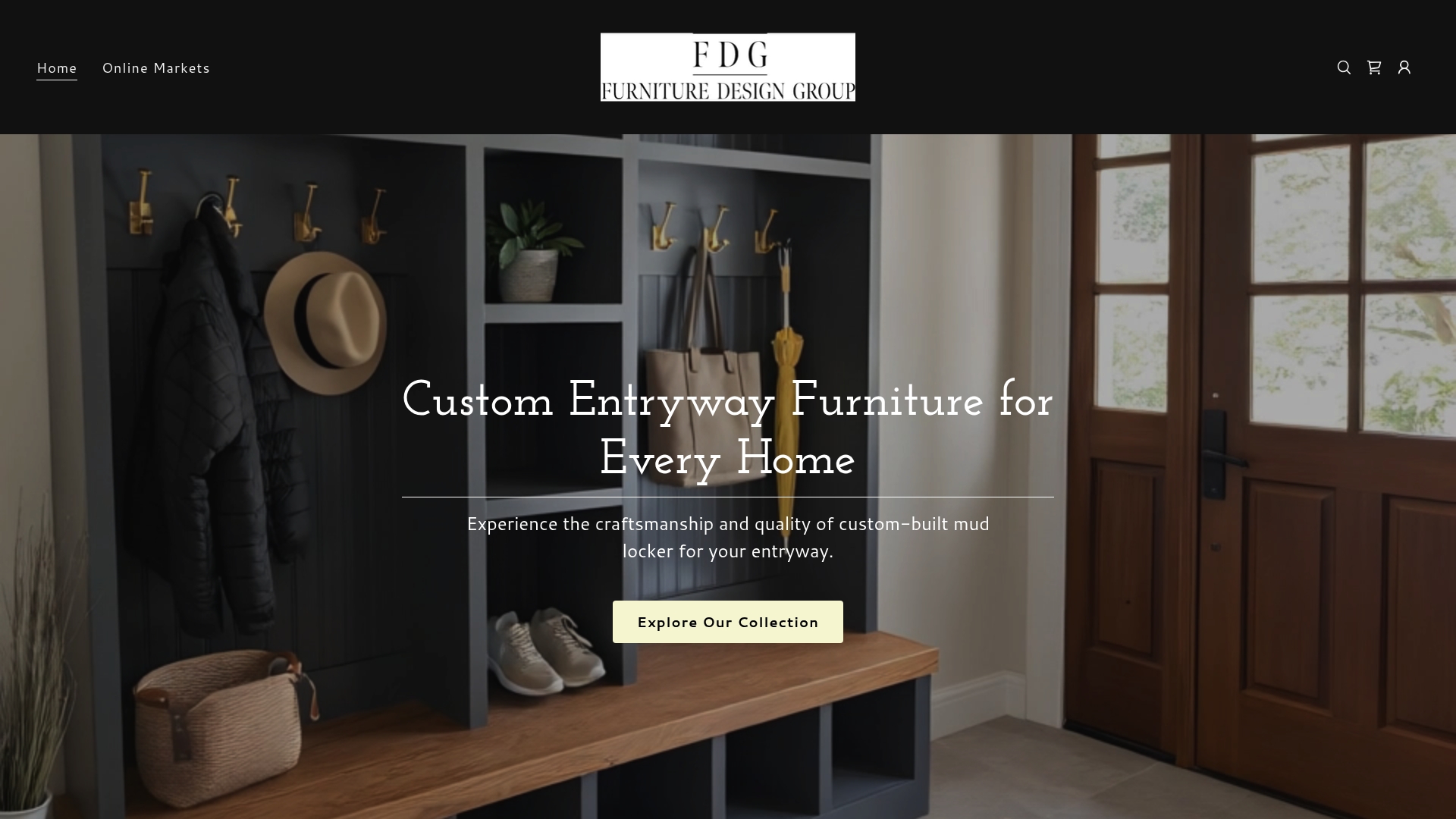
We build around your space, your habits, and your style. From mud lockers and built-in benches to full entryway systems designed to fit your exact dimensions, every piece is crafted by hand with quality materials. If you’re ready to create your custom entryway, we’d love to hear what you’re envisioning. Visit our showroom or reach out directly to start the conversation.
Frequently asked questions
How does an optimized entryway increase property value?
A well-designed entryway improves first impressions and can raise your home’s value by up to $24,000 according to industry studies, making it one of the highest-ROI renovations available.
What makes an entryway layout psychologically comforting?
An entryway with clear organization and good flow helps residents and guests decompress when entering the home, with research confirming it creates a decompression zone that reduces stress and sets a calm tone.
Which entryway upgrades deliver the best return on investment?
Combining storage, layered lighting, and custom-built furniture typically yields the highest ROI for Maryland homes, especially when the design matches the home’s existing architectural style.
How do I budget for a custom entryway furniture project?
Start by defining your primary goals, whether storage, aesthetics, or resale value, then consult with a local design group for tailored recommendations and transparent pricing before committing to any purchases.