
Maryland homeowners know the daily chaos of a cluttered entryway. Coats pile on benches, wet boots scatter across floors, and backpacks block pathways. A poorly planned mudroom creates bottlenecks during morning rushes and after-school returns. Yet with intentional layout optimization, your mudroom can transform into a streamlined hub that supports your family’s routines. This guide walks you through assessing your space, selecting durable materials, implementing smart storage, and budgeting for a functional mudroom that brings lasting order and style to your Maryland home.
Table of Contents
- Assess Your Space And Plan The Right Layout
- Choose Durable Materials And Smart Storage To Enhance Function
- Lighting And Design Aesthetics To Balance Form And Function
- Budgeting And Expected Results: Sizing And ROI Considerations
- Discover Custom Mudroom Solutions With Furniture Design Group
- Frequently Asked Questions About Mudroom Layout Optimization
Key takeaways
| Point | Details |
|---|---|
| Zone your mudroom | Dividing space into wet, dry, drop, and clean areas manages clutter and improves traffic flow. |
| Choose durable materials | Water-resistant flooring and moisture-resistant cabinetry ensure your mudroom withstands Maryland weather year-round. |
| Maximize vertical storage | Wall-mounted hooks, shallow shelves, and tall cabinets optimize small spaces without sacrificing floor area. |
| Layer your lighting | Combining ambient and task lighting with motion sensors enhances usability during dark winter months. |
| Budget based on household size | Optimal mudroom dimensions and costs vary by family needs, with ROI reaching 50-85% on well-designed spaces. |
Assess your space and plan the right layout
Before selecting furniture or paint colors, measure your existing mudroom area carefully. Use a tape measure to record the length, width, and height of the space, noting door swing directions, window placements, and any structural obstacles like radiators or electrical panels. Accurate dimensions prevent costly mistakes when ordering custom cabinetry or built-in benches.
Next, identify functional zones that align with your household’s daily habits. Effective mudroom design relies on zoning into wet, dry, drop, and clean areas to manage traffic and clutter. The wet zone handles dirty boots and wet outerwear, typically positioned nearest the exterior door. The dry zone stores clean coats, hats, and scarves on hooks or in closets. The drop zone provides a landing spot for keys, mail, bags, and phones, often featuring a small shelf or tray. The clean zone, if space permits, includes a sink for hand washing or pet cleanup.
Maintain circulation paths of at least 36 inches between furniture pieces and walls. This clearance allows comfortable movement even when multiple family members use the mudroom simultaneously. Narrow pathways create frustration and safety hazards, especially during rushed mornings.
Consider household size when planning dimensions. A family of two may function well in a compact 40 square foot mudroom, while a family of five benefits from 80 to 100 square feet to accommodate individual storage cubbies and gear.
| Household Size | Recommended Square Footage | Typical Features |
|---|---|---|
| 1-2 people | 40-50 sq ft | Single bench, 4-6 hooks, small shelf |
| 3-4 people | 60-75 sq ft | Double bench, 8-10 hooks, cubbies, drop zone |
| 5+ people | 80-100 sq ft | Built-in lockers, sink, extensive storage |
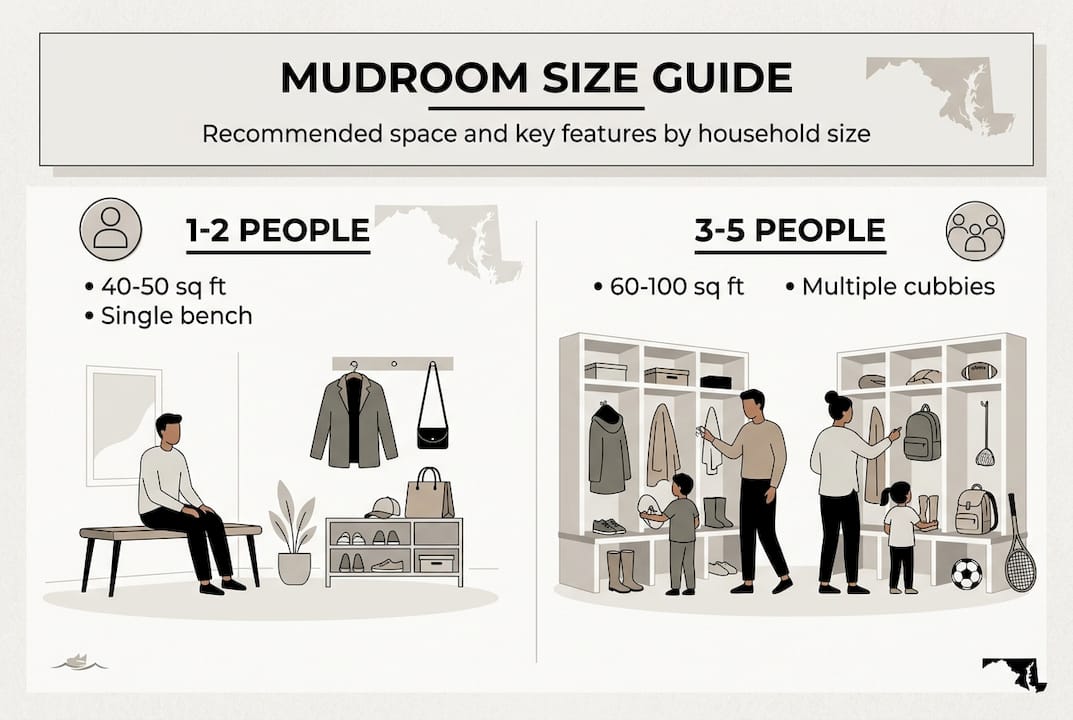
Pro Tip: Observe your family’s mudroom habits for one week before finalizing your layout. Notice where coats naturally get tossed, where shoes pile up, and which items cause the most clutter. Design your zones around these real behaviors rather than idealized routines, and explore mudroom furniture solutions that adapt to your specific needs.
Once you understand your space and habits, sketch a floor plan showing each zone. Mark electrical outlets for future lighting and charging stations. Identify where natural light enters and where additional task lighting will be necessary. This planning phase sets the foundation for material selection and storage decisions.
Choose durable materials and smart storage to enhance function
Mudrooms endure moisture, dirt, and heavy foot traffic, so material selection directly impacts longevity and maintenance. Flooring bears the brunt of this wear. Porcelain tile with PEI rating 4-5 and slip resistance R10+ delivers exceptional durability for wet areas while minimizing slip hazards during rainy Maryland springs and snowy winters. Luxury vinyl plank offers a softer feel underfoot and excellent water resistance at a lower price point than porcelain. Avoid hardwood or laminate in mudrooms, as moisture causes warping and staining over time.
| Flooring Type | Pros | Cons |
|---|---|---|
| Porcelain Tile | Extremely durable, waterproof, easy to clean, slip-resistant options | Cold underfoot, hard surface, professional installation recommended |
| Luxury Vinyl Plank | Water-resistant, comfortable, DIY-friendly, realistic wood look | Can dent under heavy furniture, lower resale perception than tile |
| Sealed Concrete | Industrial aesthetic, highly durable, customizable stains | Requires periodic resealing, very hard surface |
Cabinetry and built-ins must resist humidity and temperature fluctuations common in entryways. Choose moisture-resistant finishes like thermofoil, marine-grade plywood, or powder-coated metal for longevity. Avoid particleboard or MDF without proper sealing, as these materials swell and deteriorate when exposed to dampness.
Vertical storage transforms cramped mudrooms into efficient spaces. Wall-mounted hooks and floor-to-ceiling cabinets maximize storage without consuming valuable floor area. Install heavy-duty hooks at varying heights to accommodate adult coats and children’s backpacks. Position hooks 60 to 65 inches from the floor for adult use and 40 to 48 inches for kids.
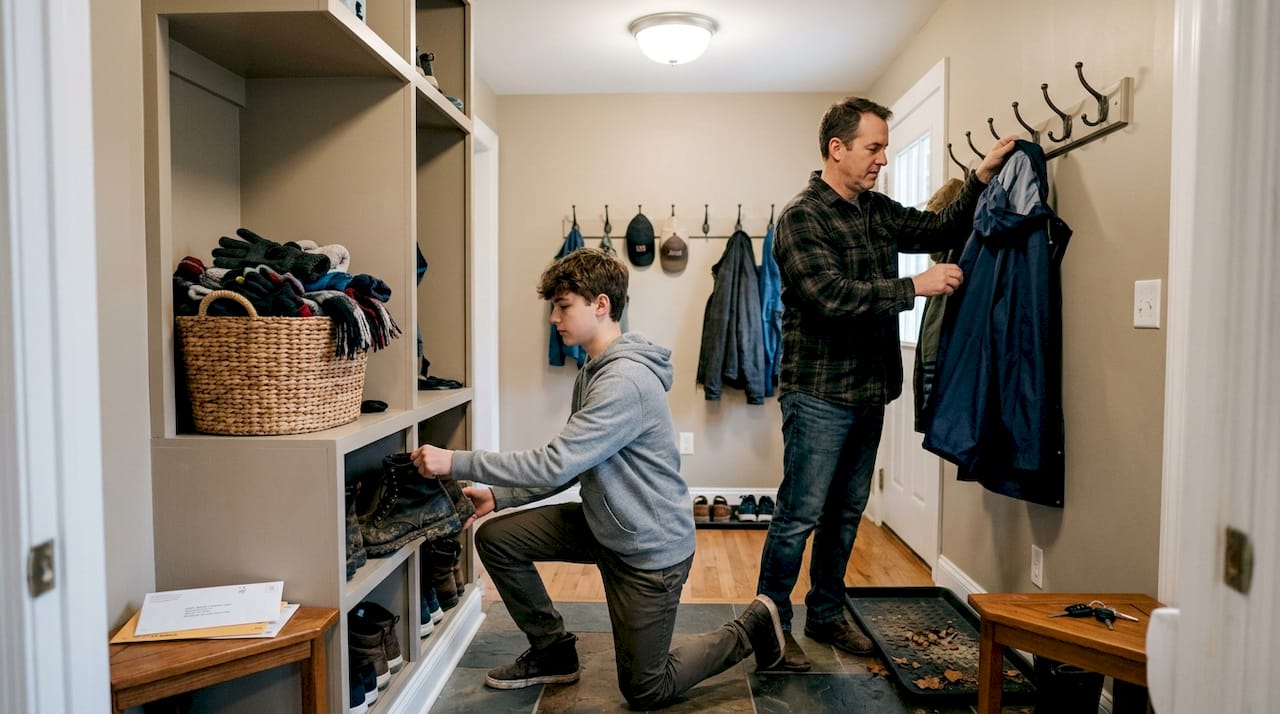
Shallow shelves measuring 10 to 15 inches deep provide storage for hats, gloves, and small items without protruding into circulation paths. Tall cabinets reaching the ceiling house seasonal gear like winter boots or beach bags, keeping them accessible yet out of daily sight. Consider pull-out baskets or bins within cabinets to organize smaller accessories and prevent clutter from accumulating.
Pro Tip: Incorporate fold-down benches in tight mudrooms where permanent seating consumes too much space. These hinged benches mount to the wall and flip up when not in use, providing flexible seating for putting on shoes without permanently reducing your floor area. Pair them with custom storage furniture designed to fit your exact dimensions.
Built-in cubbies offer personalized storage for each family member. Assign one cubby per person, complete with hooks for coats, a shelf for hats, and a lower compartment for shoes. This system prevents territorial disputes and teaches children organizational responsibility. Label each cubby with names or photos to reinforce ownership and accountability.
Lighting and design aesthetics to balance form and function
Poor lighting turns functional mudrooms into dark, uninviting spaces. Layered lighting with 300-500 lux ambient and task lighting creates a welcoming environment while ensuring visibility for detailed tasks like tying shoelaces or checking mail. Ambient lighting provides overall illumination through ceiling-mounted fixtures or recessed cans. Task lighting targets specific work areas such as benches, cubbies, and sinks.
Select LED bulbs with 3000-3500K color temperature to balance warmth and clarity. Cooler temperatures above 4000K feel clinical and harsh, while warmer temperatures below 3000K reduce visibility and make dirt harder to spot. Motion sensor lighting adds convenience and energy efficiency, automatically illuminating the space when you enter with arms full of groceries or when children rush in after school.
“Proper mudroom illumination requires layered lighting systems that combine ambient fixtures delivering 300-500 lux with focused task lighting over functional zones. LED sources in the 3000-3500K range optimize color rendering while motion sensors enhance energy performance and user convenience, aligning with IES and WELL v2 standards for residential transition spaces.”
Color choices impact both aesthetics and practicality. Dark colors help hide dirt from muddy boots and wet paws, making maintenance easier during messy seasons. Charcoal grays, deep navies, and rich browns camouflage scuffs and stains between cleanings. Conversely, light neutrals make spaces feel larger, an advantage in compact Maryland rowhomes or townhouses where square footage is limited. Whites, soft grays, and beiges reflect light and create an airy atmosphere.
Balance open storage with closed cabinetry based on your tolerance for visual clutter. Hooks promote quick access to frequently used items like everyday coats and school backpacks, supporting efficient morning routines. However, exposed hooks display clutter prominently. Closets reduce visual clutter by hiding items behind doors, creating a calmer aesthetic that appeals to minimalist sensibilities. Many homeowners find success combining both approaches: open hooks for daily essentials and closed cabinets for seasonal gear or less attractive items.
Incorporate durable, easy-to-clean materials for walls and trim. Satin or semi-gloss paint finishes wipe clean more easily than flat paint, essential in high-traffic areas prone to fingerprints and scuffs. Beadboard wainscoting adds traditional charm while protecting walls from boot kicks and bag bumps. Tile or stone backsplashes behind sinks prevent water damage and simplify cleanup.
Consider adding a mirror to your mudroom design. Mirrors serve practical purposes like last-minute appearance checks before leaving home, and they reflect light to brighten dim spaces. Position mirrors opposite windows or light sources to maximize this brightening effect. Explore custom mudroom lighting options that integrate with your overall design vision.
Budgeting and expected results: sizing and ROI considerations
Budgeting for mudroom optimization requires evaluating multiple cost factors. Size represents the primary driver, as larger spaces demand more materials, labor, and built-in furniture. Material quality significantly impacts price, with premium options like custom hardwood cabinetry or natural stone flooring commanding higher costs than stock solutions. Built-in furniture, especially custom pieces tailored to unusual dimensions, adds expense but delivers superior functionality and aesthetic cohesion.
Optimal mudroom size ranges from 40-60 sq ft for small households to 60-100 sq ft for families, with construction and finishing costs averaging $150-300 per sq ft. These figures include flooring, cabinetry, lighting, paint, and basic built-ins. High-end custom solutions with premium materials can exceed $400 per square foot.
| Household Size | Recommended Size | Cost Range (at $150-300/sq ft) | Expected ROI |
|---|---|---|---|
| 1-2 people | 40-50 sq ft | $6,000-$15,000 | 50-65% |
| 3-4 people | 60-75 sq ft | $9,000-$22,500 | 60-75% |
| 5+ people | 80-100 sq ft | $12,000-$30,000 | 70-85% |
Calculate your personalized budget and size needs with these steps:
- Count household members and assess their storage requirements, including seasonal gear, sports equipment, and pet supplies.
- Measure your available space and determine realistic square footage based on existing home layout and structural constraints.
- Prioritize must-have features like benches, hooks, and cubbies versus nice-to-have additions like sinks or charging stations.
- Research material costs for your preferred flooring, cabinetry, and lighting options, obtaining quotes from local suppliers.
- Add 15-20% contingency budget for unexpected expenses like electrical upgrades or structural modifications.
- Compare DIY versus professional installation costs, considering your skill level and available time.
Well-designed mudrooms deliver substantial returns on investment. ROI ranges from 50-85% depending on project scope, material quality, and local real estate markets. Functional improvements include reduced cleaning time, faster morning routines, and better organization throughout your home as clutter stops migrating into living areas. Aesthetic improvements enhance your home’s first impression, creating a polished entryway that welcomes guests and residents alike.
Plan for future needs when sizing your mudroom. Young families should anticipate growing children who will accumulate more gear, sports equipment, and personal belongings. Consider adaptable storage solutions that adjust as needs change, such as adjustable shelving or modular cubbies. Maryland’s distinct seasons require storage flexibility, accommodating bulky winter coats and boots in January and lightweight rain jackets in April. Design with this seasonal rotation in mind, perhaps including overhead storage for off-season items.
Working with experienced designers ensures your investment delivers maximum value. Professionals understand local building codes, optimal material selections for Maryland’s climate, and space-planning strategies that balance aesthetics with function. Discover how custom mudroom design services can transform your vision into reality while staying within budget.
Discover custom mudroom solutions with Furniture Design Group
Transforming your mudroom from chaotic catchall to organized oasis requires more than generic storage bins and standard hooks. Custom mudroom furniture delivers personalized organization that adapts to your family’s unique rhythms and Maryland home’s specific dimensions. Furniture Design Group brings over 20 years of craftsmanship experience to create bespoke entryway solutions that combine lasting durability with timeless style.

Our family-owned company specializes in handcrafted mud lockers, built-in benches, and tailored storage systems designed specifically for Maryland homes. Whether you’re working with a compact rowhome entryway or a spacious suburban mudroom, our artisans craft furniture that maximizes every inch while reflecting your aesthetic preferences. We understand the moisture challenges and seasonal demands unique to our region, selecting materials and finishes that withstand years of daily use.
Explore our showroom to see quality craftsmanship firsthand and discuss your mudroom vision with our design team. We offer personalized consultations to assess your space, understand your household’s needs, and develop custom solutions that bring order and beauty to your home’s busiest transition zone. Visit custom mudroom furniture to view our collections and start your transformation today. Need assistance with your account or have questions? Our account management tools provide easy access to support.
Frequently asked questions about mudroom layout optimization
What is the ideal mudroom size for a Maryland family of four?
A Maryland family of four functions best in a mudroom measuring 60 to 75 square feet. This size accommodates individual storage cubbies for each family member, a bench for putting on shoes, hooks for daily coats, and a designated drop zone for keys and bags. Smaller spaces feel cramped during busy mornings, while larger spaces may encourage clutter accumulation.
How do I keep my mudroom organized year-round with seasonal gear?
Rotate seasonal items using overhead storage or closed cabinets for off-season gear. Store winter boots and heavy coats in bins during summer months, freeing prime hooks and cubbies for rain jackets and light shoes. Label storage containers clearly and schedule seasonal swaps in April and October to maintain organization. Assign each family member responsibility for rotating their own gear to build consistent habits.
What flooring options are best for moisture-prone mudroom areas?
Porcelain tile with PEI rating 4 to 5 and slip resistance R10 or higher performs exceptionally in wet mudrooms. Luxury vinyl plank offers a softer, warmer alternative with excellent water resistance at lower cost. Both options withstand Maryland’s wet springs and snowy winters while simplifying cleanup. Avoid hardwood, laminate, or carpet, as moisture causes irreversible damage to these materials.
How can lighting improve mudroom usability during winter months?
Layered lighting combining ambient ceiling fixtures with task lighting over benches and cubbies ensures visibility during dark winter mornings and evenings. Motion sensor activation provides hands-free convenience when entering with arms full of groceries or sports equipment. LED bulbs in the 3000 to 3500K range deliver warm, clear light that makes finding items easier while creating a welcoming atmosphere.
Are wall-mounted storage solutions effective in small mudrooms?
Wall-mounted hooks, shallow shelves, and vertical cabinets maximize storage in small mudrooms without consuming valuable floor space. Installing storage from floor to ceiling utilizes often-wasted vertical area for seasonal gear and less frequently used items. Heavy-duty hooks at multiple heights accommodate both adult coats and children’s backpacks, while shallow shelves provide accessible storage for hats, gloves, and small accessories without protruding into pathways.