
TL;DR:
- Consumers increasingly expect personalized furniture options for better fit and function. Custom entryway furniture offers tailored sizes, materials, and features that enhance practicality and emotional value. Digital tools and local craftsmanship improve design accuracy, quality, and homeowner satisfaction.
A striking 71% of consumers now expect personalized options when shopping for furniture, and that expectation is reshaping how Maryland homeowners think about their entryways. Your front hallway is the first thing guests see and the last thing you touch before heading out the door. It deserves more than a generic bench from a big-box store. Custom-crafted entryway furniture is no longer reserved for luxury estates. With the right craftsman and a clear vision, any homeowner can have a piece built specifically for their space, their family, and their daily routine.
Table of Contents
- Why personalization matters in entryway furniture
- How collaborative design brings your vision to life
- Digital tools and modern personalization techniques
- Quality craftsmanship and personalization: What matters most
- Pitfalls, tradeoffs, and smart personalization for your Maryland home
- Our perspective: Personalization is about partnership, not just product
- Create your perfect Maryland entryway with our custom solutions
- Frequently asked questions
Key Takeaways
| Point | Details |
|---|---|
| Personalization boosts satisfaction | Customized entryway furniture greatly increases homeowner satisfaction and sense of ownership. |
| Collaboration is key | Working closely with a designer or craftsman ensures your unique needs and style are met. |
| Digital tools minimize errors | 3D configurators and AR make custom furniture more accessible and reduce costly mistakes. |
| Craftsmanship and materials matter | Quality build and materials ensure personalized furniture is durable, sustainable, and beautiful. |
| Choose wisely for value | Balance full customization with practical modular or tiered solutions to maximize value and satisfaction. |
Why personalization matters in entryway furniture
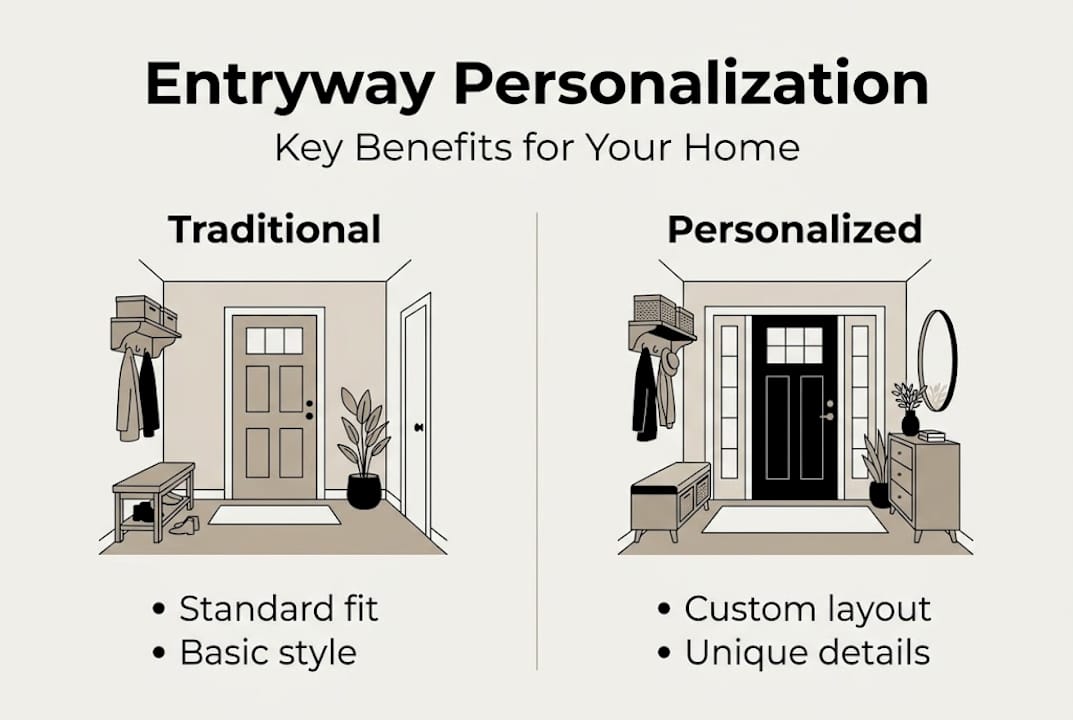
Now that you see the growing interest in personalization, let’s explore why it’s so impactful for your own entryway. Most off-the-shelf furniture is designed for an imaginary average home. The problem? Your home isn’t average. Your entryway might be narrow, oddly shaped, or flooded with natural light. A mass-produced console table won’t solve your storage problem, and a generic coat rack won’t survive four kids and two dogs.
Personalized entryway furniture changes that equation entirely. When a piece is built around your specific measurements, lifestyle, and aesthetic preferences, it fits the way a tailored suit fits. It doesn’t just look better. It works better.
“Personalization enhances customer satisfaction and sense of ownership, creating deeper emotional connections between homeowners and their spaces.”
Think about what a truly custom mud locker can do for a busy Maryland family. Built-in hooks at the right height for kids. A bench with hidden storage for sports gear. Cubbies sized for backpacks, not generic boxes. These aren’t luxury features. They’re practical solutions that only custom work can deliver.
Here’s what personalization actually gives you that standard furniture can’t:
- Exact dimensions that fit your wall, corner, or niche without gaps or awkward overhangs
- Material choices that match your existing trim, flooring, or cabinetry
- Functional features like built-in charging stations, hooks, or bench seating with lift-top storage
- Finishes and colors that reflect your personal taste rather than what was trending two seasons ago
Learning about the custom furniture benefits of bespoke design helps you understand why so many homeowners are moving away from mass production. Just as custom window treatments outperform standard blinds in both fit and finish, custom entryway furniture outperforms store-bought options in almost every measurable way.
The emotional value is real, too. When you walk into a space designed specifically for you, it feels different. That sense of ownership isn’t just psychological. It translates into how you care for the piece and how long it lasts.
How collaborative design brings your vision to life
Understanding the benefits leads to an important next step: the collaborative design process. You don’t need to be an interior designer to get a custom piece built. You just need to communicate clearly and work with someone who listens. That’s where the collaborative process becomes essential.
Collaborative design is preferred by 40% of customers seeking custom furniture, and for good reason. When both parties are aligned from the start, the result reflects your actual needs rather than a best guess.
Here’s how a well-run custom furniture process typically unfolds:
- Initial consultation — You describe your space, lifestyle, and goals. A good craftsman asks questions about how you actually use the entryway, not just what you want it to look like.
- Concept sketches — Early drawings or digital mockups let you react before any wood is cut. This is where ideas get refined.
- Materials selection — You choose wood species, hardware, finishes, and any special features. This stage is where your piece truly becomes yours.
- Approval and sign-off — You review final plans and dimensions before production begins. No surprises.
- Build and delivery — Skilled craftspeople construct the piece to spec, and installation is handled with care.
The key to making this process work is being specific about your needs, not just your preferences. Don’t just say you want something “rustic.” Tell your designer that you have three kids under ten, a dog, and a narrow hallway with a radiator on the left wall. That context shapes every decision.
Pro Tip: Bring photos of your entryway and inspiration images to your first consultation. Visual references communicate faster and more accurately than descriptions alone.
The entryway design expertise at a dedicated custom furniture studio makes a real difference here. Craftspeople who specialize in entryway pieces know the common pitfalls, the space constraints, and the functional demands that general furniture makers might overlook.
Digital tools and modern personalization techniques
While traditional collaboration is foundational, digital tools now make personalization practical and scalable for more homeowners. Technology has quietly transformed how custom furniture gets designed, approved, and built. You don’t have to rely entirely on imagination anymore.
3D configurators and AI reduce guesswork, boost conversions, and lower return rates by letting homeowners visualize exactly what they’re ordering before production starts. That’s a significant shift from the old model of trusting a sketch and hoping for the best.
Here’s a quick look at how digital tools compare to traditional methods:
| Feature | Traditional process | Digital tools || |—|—|—| | Visualization | Sketches and samples | 3D renders and AR previews | | Error rate | Higher (measurement gaps) | Lower (digital precision) | | Revision speed | Days to weeks | Hours | | Client confidence | Moderate | High | | Accessibility | Requires in-person visits | Available remotely |
Augmented reality (AR) tools let you place a virtual version of your custom bench or console directly into your entryway using your phone camera. You can check proportions, test finishes, and confirm the piece works in your actual space before committing. That kind of confidence used to be reserved for people who could afford a professional interior designer.
Pro Tip: When using a digital configurator, take a photo of your entryway in natural light first. Upload it as a reference image so color and finish selections are as accurate as possible.
The practical impact is real. Fewer measurement mistakes mean fewer costly remakes. Faster revisions mean shorter timelines. And better visualization means you’re far less likely to be disappointed when the finished piece arrives. Exploring entryway solutions that incorporate these tools gives Maryland homeowners a smoother, more confident path to a finished piece they love.
Quality craftsmanship and personalization: What matters most
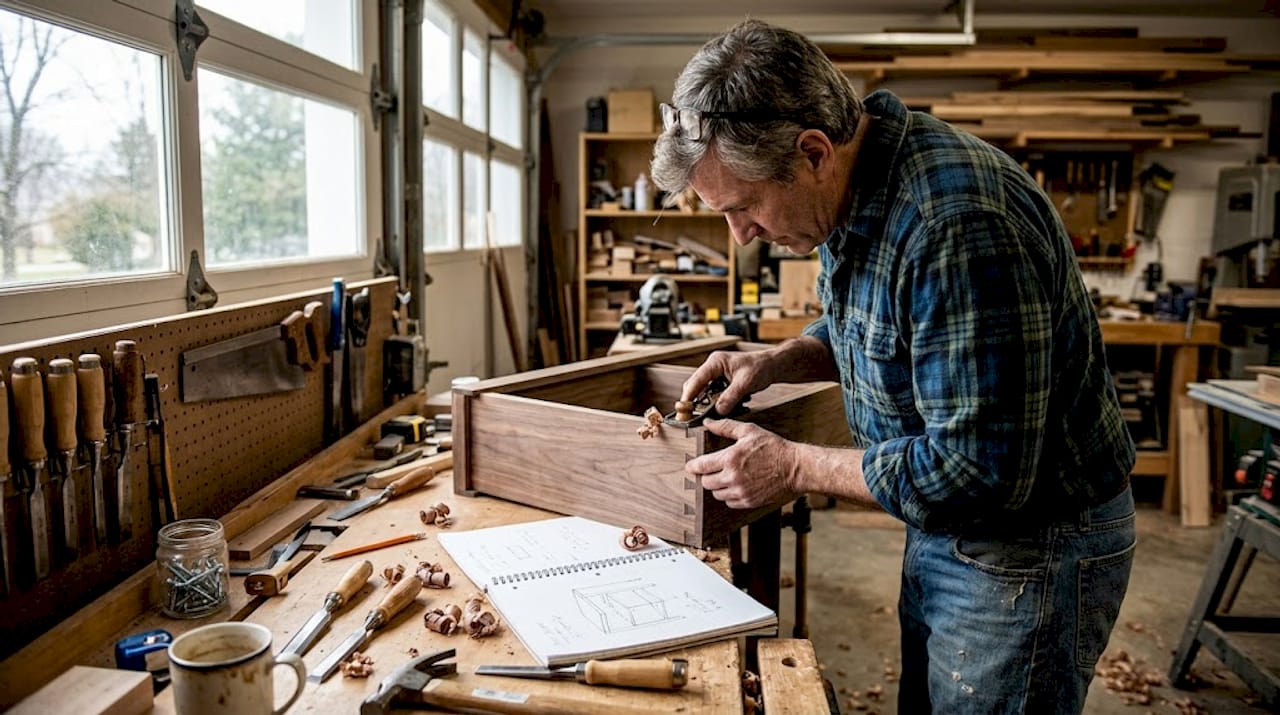
With new tools available, it’s essential not to lose sight of what sets custom-crafted furniture apart: lasting quality. A beautiful design rendered in 3D is only as good as the hands that build it. Craftsmanship is what separates a piece that lasts 30 years from one that wobbles after 18 months.
Quality craftsmanship including grain matching and precise joinery ensures durability and sustainability, making custom pieces a smarter long-term investment than repeated replacements.
Here’s what to look for when evaluating craftsmanship in a custom entryway piece:
- Joinery — Dovetail and mortise-and-tenon joints hold up far better than staples or dowels under daily stress
- Grain matching — Panels where the wood grain flows naturally across seams signal careful material selection
- Finish quality — Even coats without drips, bubbles, or rough patches show attention to detail
- Hardware — Soft-close hinges and drawer slides that feel solid rather than flimsy
Now compare your main options:
| Option | Cost | Lead time | Customization | Durability |
|---|---|---|---|---|
| Full bespoke | High | 8 to 16 weeks | Complete | Excellent |
| Semi-custom | Moderate | 4 to 8 weeks | Significant | Very good |
| Modular | Lower | 1 to 4 weeks | Limited | Good |
Sustainability is another reason craftsmanship matters. A well-built piece made from responsibly sourced hardwood will outlast three or four mass-produced alternatives. That’s better for your wallet and better for the environment. The craftsmanship qualities that define truly custom work are also what give a piece its character over time. Just as custom drapes age better than off-the-shelf window coverings, custom furniture built with quality materials improves with time rather than deteriorating.
Pitfalls, tradeoffs, and smart personalization for your Maryland home
After understanding what to look for in craftsmanship, it’s important to realistically assess the potential tradeoffs and make smart personalization choices. Custom furniture is rewarding, but it isn’t risk-free. Knowing the pitfalls ahead of time puts you in a much stronger position.
Miscommunications or unclear scope can result in wasted materials, long delays, and unexpected costs. That’s not a reason to avoid custom work. It’s a reason to go in prepared.
Common risks to watch for:
- Measurement errors — Always measure twice and have your craftsman verify dimensions independently
- Scope creep — Adding features mid-project inflates cost and extends timelines significantly
- No returns policy — Custom pieces are built for you, so changes after production begins are expensive
- Vague briefs — “I’ll know it when I see it” is the most expensive phrase in custom furniture
- Unverified credentials — Always ask for references and photos of completed projects before signing anything
Important: Personalization boosts loyalty, but full bespoke can strain budgets and timelines. Hybrid models that combine custom elements with semi-standard components offer the best balance for most homeowners.
For Maryland homeowners specifically, working with a local craftsman carries real advantages. Regional experts understand the architectural styles common to Maryland homes, from colonial rowhouses to suburban split-levels. They know which wood species hold up in the Mid-Atlantic humidity and which finishes resist the wear of four-season living.
The hybrid personalization options available through experienced local studios let you get the look and function of full custom at a more manageable investment. Sometimes the smartest move is choosing semi-custom for the main structure and going fully bespoke only on the visible details that matter most to you.
Our perspective: Personalization is about partnership, not just product
Having covered all angles, here’s a hard-won perspective on what really makes personalized furniture succeed in practice. After more than 20 years building custom entryway furniture for Maryland homeowners, we’ve seen one pattern repeat itself: the projects that turn out best aren’t the ones with the biggest budgets. They’re the ones built on honest, ongoing communication.
Homeowners sometimes arrive expecting to hand over a Pinterest board and receive a finished piece. That approach rarely produces the best outcome. The magic happens when you treat the process as a genuine partnership. Tell your craftsman what frustrates you about your current entryway. Explain how your mornings actually work. Share the things you’re embarrassed to admit, like the fact that shoes end up on the floor no matter how many hooks you have.
Technology helps, but it doesn’t replace that conversation. A 3D render can show you dimensions and finishes. It can’t tell your craftsman that your youngest child is left-handed or that your dog jumps on the bench every single day. Those details shape the custom furniture insights that turn a good piece into a great one. Prioritize craftspeople who ask more questions than they answer in the first meeting. That curiosity is the clearest signal that your vision will actually be heard.
Create your perfect Maryland entryway with our custom solutions
Ready to transform your own entryway? Here’s how we can help bring your vision to life.
At Furniture Design Group, we’ve spent over 20 years crafting bespoke entryway furniture for Maryland homeowners who want something built to last and built for them. From custom mud lockers to tailored console tables, every piece we make starts with a real conversation about how you live.
We combine traditional craftsmanship with modern design tools to make the process smooth and the results exceptional. Whether you’re starting from scratch or refining an idea, our team guides you from first sketch to final installation. Explore our custom masterpieces to see what’s possible, or reach out today to schedule your consultation. Your entryway deserves better than off-the-shelf.
Frequently asked questions
How does personalization differ from simply choosing furniture styles?
Personalization tailors both the function and physical fit of a piece to your specific space and lifestyle, not just the visual style. It means custom dimensions, materials, and features chosen around how you actually use the room.
What are the risks of custom entryway furniture?
The most common risks are mismeasurement and unclear briefs, which can lead to costly remakes and delays. Clear documentation, verified measurements, and a detailed written scope minimize these risks significantly.
Are digital configurators and AR really useful for customizing furniture?
Yes. Digital tools reduce errors and increase buyer confidence by letting you visualize finishes, proportions, and placement before production begins. They’re now standard practice among quality custom furniture studios.
How can I balance budget and customization?
Modular or semi-custom options give you most of the benefits of bespoke design at a lower cost and shorter lead time. Reserve full bespoke for the elements that matter most visually or functionally.
Why choose a local Maryland craftsman for entryway furniture?
Local craftspeople understand Maryland’s regional home styles, humidity conditions, and common layout challenges, which means better-fitting solutions and more responsive service throughout the process.