
TL;DR:
- Scandinavian furniture design emphasizes functionality, simplicity, and natural materials over ornamentation. It features light woods, neutral palettes, and clean silhouettes to create warm, clutter-free entryways. Success relies on purposeful organization, minimalism, and customizing solutions to fit specific space and lifestyle needs.
Scandinavian furniture design gets misread constantly. Most people assume it just means stark white rooms, flat-pack boxes, and a complete absence of personality. That impression barely scratches the surface. Scandinavian design prioritizes function over decoration, meaning every piece earns its place by doing a real job beautifully. This article unpacks what that philosophy actually looks like in practice and, more importantly, shows you how to apply it specifically in your entryway, one of the most high-traffic, high-chaos spaces in any home.
Table of Contents
- What defines Scandinavian furniture design?
- Materials and color palette: Creating warmth through simplicity
- Functionality first: How Scandinavian principles inform entryway furniture
- Scandi or not? Distinguishing Scandinavian design from lookalike styles
- Customizing Scandinavian design for your entryway space
- Why true Scandinavian entryways succeed: Practical lessons from real homes
- Bring Scandinavian design home with custom furniture solutions
- Frequently asked questions
Key Takeaways
| Point | Details |
|---|---|
| Function shapes form | Scandinavian design prioritizes usefulness, resulting in simple and purposeful furniture. |
| Natural materials matter | Light woods and natural textiles help create warm, bright entryway spaces. |
| Uncluttered layout is key | Choose dual-purpose pieces and vertical storage to maintain open, calming entryways. |
| Stay true to the style | Distinguish Scandinavian from similar trends by palette and material warmth. |
| Customization enhances function | Tailoring Scandinavian principles to your entryway delivers optimal comfort and efficiency. |
What defines Scandinavian furniture design?
With a clear understanding that Scandinavian design is more than just a trend, let’s explore its foundational principles.
The single idea at the heart of every Scandinavian furniture piece is simple: a chair should be a great chair before it is a beautiful chair. Beauty comes from solving the problem well, not from ornament added on top. This mindset emerged from Nordic countries where long winters pushed craftsmen to build things that genuinely worked indoors, day after day, for decades.
“Form follows function” — the guiding principle behind Scandinavian design, meaning a piece’s shape should be dictated entirely by its purpose.
The clean, streamlined silhouettes you see in Scandinavian furniture are not laziness or budget cuts. They are the result of stripping away everything that doesn’t contribute to the object’s job. A bench without carved flourishes is easier to wipe down, easier to sit on, and visually quieter. That quietness is intentional.
Telltale signs of Scandinavian furniture:
- Clean, straight or gently tapered legs with no heavy carving
- Smooth, unfussy surfaces that let grain or texture do the work
- Proportions calibrated for comfort, not grandeur
- Subtle curves that follow the human body rather than historical styles
- Minimal hardware, or hardware chosen to blend in rather than decorate
- Neutral finishes that age gracefully without showing wear dramatically
Understanding these markers helps you shop and design with real precision. When something claims to be “Scandinavian inspired” but loads the piece with decorative molding or oversize hardware, you can spot the mismatch immediately.
Materials and color palette: Creating warmth through simplicity
Now that you know the design ideals, let’s look at the materials and hues that bring Scandinavian warmth to life.
One of the biggest misconceptions about Scandinavian interiors is that they feel cold. Walk into a well-executed Scandi space and you feel the opposite. The warmth comes directly from the use of natural materials, particularly light woods like beech, pine, oak, and ash, paired with textiles in wool, linen, and cotton. These materials carry a tactile richness that painted MDF or metal simply cannot replicate.
Color in Scandinavian design is purposefully restrained. Walls and large furniture pieces tend to stay within whites, light grays, and soft warm neutrals. Accents come through textile colors, small decorative items, or the natural variation in wood grain. This approach keeps the space visually calm even when life gets messy, which is exactly what an entryway needs. You can keep an eye on 2026 interior art trends to see how Scandinavian palettes are evolving without losing their core identity.
Comparison: Scandinavian vs. other popular furniture styles
| Feature | Scandinavian | Industrial | Traditional | Bohemian |
|---|---|---|---|---|
| Primary wood tone | Light (beech, pine, oak) | Dark or reclaimed | Dark (mahogany, walnut) | Mixed, eclectic |
| Metal use | Minimal, matte | Heavy, raw | Ornamental | Minimal |
| Textile palette | Neutral, natural fibers | Absent or minimal | Rich jewel tones | Bold, layered patterns |
| Visual weight | Light, airy | Heavy, raw | Heavy, formal | Busy, layered |
| Ornamentation | None to minimal | None | Heavy carving, moldings | Pattern-driven |
| Mood | Calm, functional | Edgy, urban | Formal, historical | Expressive, relaxed |
Material and color do’s and don’ts for Scandinavian entryway furniture:
- Do choose light wood tones for benches, consoles, and shelving
- Do add a wool runner or linen seat cushion for softness
- Don’t mix too many wood tones, it fragments the calm
- Don’t use heavy dark stains that pull the space toward a different aesthetic
- Do keep wall colors neutral to let natural light do real work
- Don’t overload accent colors, keep them to textiles and small objects only
Functionality first: How Scandinavian principles inform entryway furniture
With materials and colors in mind, it’s time to see how Scandinavian principles solve real-world entryway challenges.
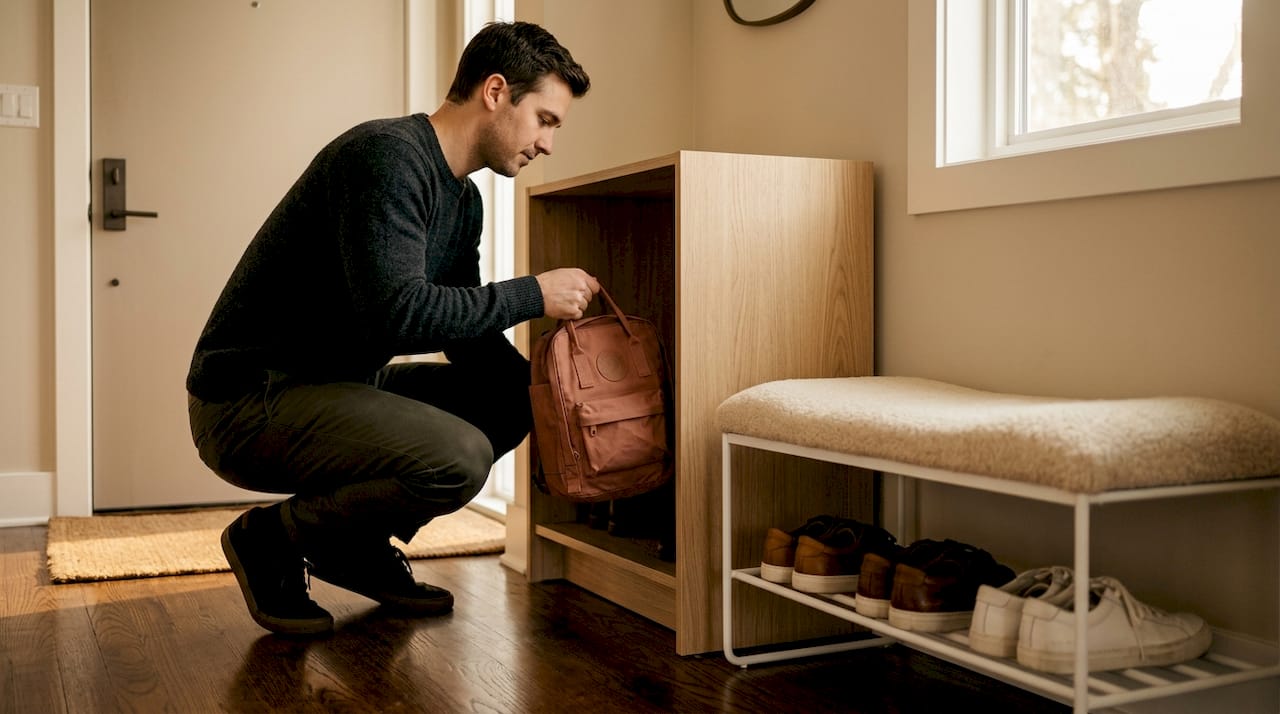
An entryway is asked to do a lot. It catches coats, shoes, bags, mail, keys, dog leashes, and whatever else arrives with you at the door. Practical storage and multipurpose pieces are at the core of Scandinavian design, which makes this philosophy almost perfectly suited for that specific room.
How to set up a Scandinavian entryway in four steps:
-
Identify your real storage needs first. Count the coats, shoes, bags, and daily-use items that land in your entryway. This honest inventory determines every piece you choose. Buying furniture before knowing what it needs to hold is the single most common entryway mistake.
-
Anchor the space with one primary piece. A storage bench with compartments below the seat or a slim console with drawers serves as the organizational center. Benches with compartments, narrow shoe storage, and slim consoles are the workhorses of a Scandi entryway setup.
-
Add vertical storage above eye level. Wall-mounted hooks or a rail system handle coats and bags without eating floor space. Keeping the floor clear is a non-negotiable part of the Scandinavian look and feel.
-
Edit relentlessly before calling it done. Once the furniture is placed, remove every item that doesn’t have a specific home. Surfaces should hold almost nothing permanently. A small tray for keys is fine. A pile of accumulated objects is not.
Good custom furniture design tips can help you think through how proportions and configurations translate from a showroom floor to your actual hallway dimensions, which rarely match standard sizes perfectly.
Pro Tip: Anchor your entryway layout with one key furniture piece and keep the floor as clear as possible. A clear floor makes even a compact entry feel spacious, and it reinforces the “uncluttered but warm” quality that defines the Scandinavian aesthetic. Pair this with vertical custom storage solutions to maximize every inch without visual chaos.
Scandi or not? Distinguishing Scandinavian design from lookalike styles
As you start furnishing your entryway, it’s easy to get confused — let’s clarify how Scandinavian really stands apart.
Scandinavian furniture shares visual territory with several other popular design movements. If you don’t know exactly what separates them, you can easily end up with a space that drifts into mid-century modern or generic contemporary without delivering the warmth and function you were aiming for.
Separating Scandi from adjacent aesthetics comes down to two specific calls: palette (light neutrals and light woods) and material warmth (wool, linen, leather used alongside wood, not just wood alone). Mid-century modern shares clean lines but favors darker, richer wood tones and deliberately sculptural forms. Minimalism shares the uncluttered quality but is colder and less tactile. Contemporary design borrows from everything and commits to nothing in particular.
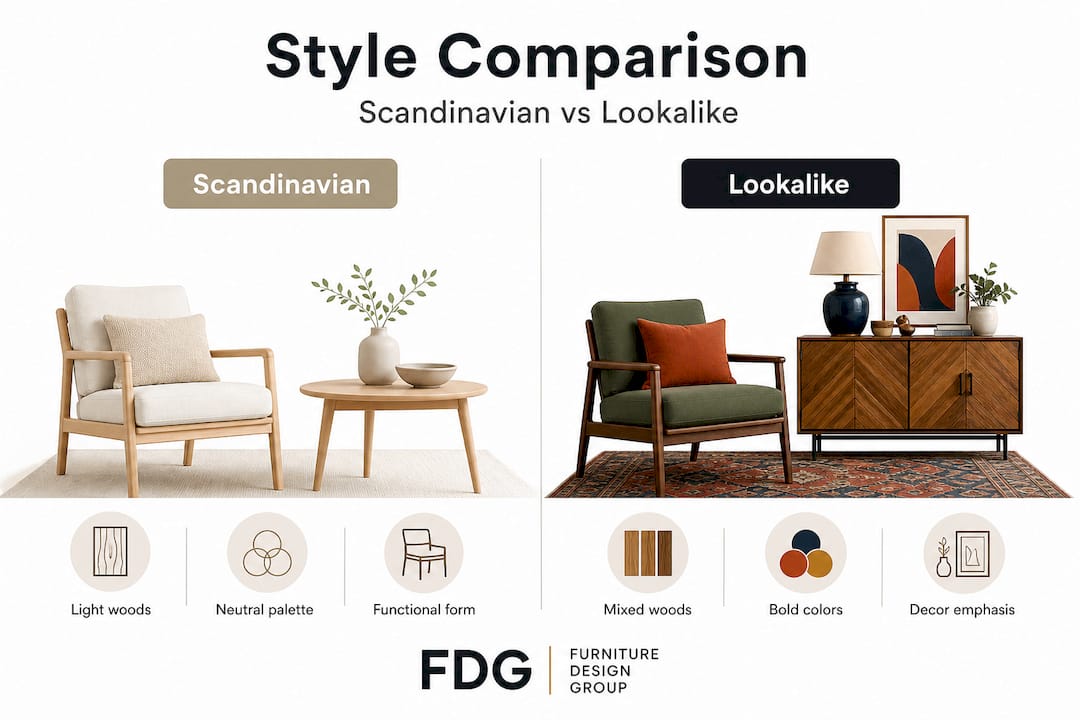
Comparison: Scandinavian vs. adjacent styles
| Style | Wood tone | Color palette | Key materials | Functional focus | Mood |
|---|---|---|---|---|---|
| Scandinavian | Light (beech, oak, pine) | Soft whites, pale grays, muted pastels | Wood, wool, linen, cotton | Very high | Warm, calm, practical |
| Mid-century modern | Medium to dark (walnut, teak) | Warm oranges, mustards, olive | Wood, leather, metal | Moderate | Retro, stylish, bold |
| Minimalist | Any or none | Pure white, black, gray | Metal, glass, concrete | Moderate | Cool, stark, spare |
| Contemporary | Mixed | Bold accents, high contrast | Mixed, trend-driven | Variable | Polished, current |
Lookalike pitfalls to avoid in entryway design:
- Choosing dark walnut finishes because they feel “clean,” which reads as mid-century modern, not Scandinavian
- Going all white with no natural texture, which slides into cold minimalism rather than warm Scandi
- Adding too many metal accents, particularly in black or brass, which shifts the mood toward industrial or contemporary
- Using bold geometric patterns on cushions or runners instead of subtle textures
- Forgetting that modern minimalist wall art and Scandinavian art have real tonal differences — Scandi wall pieces tend toward natural subjects, simple typography, or folk motifs, not hard-edged geometry
Customizing Scandinavian design for your entryway space
With a clear identity for Scandinavian style, you can adapt these principles for any entryway, even highly personalized or compact spaces.
Most real entryways don’t come with ideal proportions. They’re narrow, oddly shaped, shared with a staircase, or split awkwardly around a door swing. The Scandinavian principle of function-first design actually makes custom solutions more effective here, not less. When you know exactly what a piece needs to do and how much space it has to work with, you can specify a built-to-fit unit that a stock product simply can’t match.
Prioritizing one anchored storage-and-seating piece combined with vertical hooks or rails is the most reliable formula for tight entryways. Keep sightlines and floor space open and the result feels both uncluttered and genuinely warm, even in a very small footprint.
Ways to tailor a Scandinavian entryway for your specific space:
- Use wall-mounted units rather than freestanding cabinets when floor area is limited
- Choose a storage bench with a low profile to preserve visual openness, even if it means fewer compartments
- Select a finish that matches your specific light conditions. A north-facing entry benefits from the warmest, lightest wood tone available
- Consider concealed storage (closed cabinet doors) over open shelving when your household generates visible clutter quickly
- Scale hooks to your actual coat count, four hooks for four people, not ten hooks for two
- Use art for small spaces to add personality without consuming physical space
You can browse real examples of how these principles translate into finished pieces at our Scandinavian entryway projects gallery, where you’ll see how custom dimensions, material choices, and storage configurations work together in real homes.
Pro Tip: After placing your furniture, do a ruthless edit pass. Remove every object that doesn’t have a specific, intentional home. Visual calm in a Scandinavian entryway is not about owning fewer things. It’s about giving every thing its place so none of them shout at you when you walk through the door.
Why true Scandinavian entryways succeed: Practical lessons from real homes
After more than two decades of crafting custom entryway furniture, we’ve noticed something consistent. Homeowners who fall in love with the idea of a Scandinavian entryway but focus only on aesthetics end up disappointed within a year. The ones who treat design as a system for how the space gets used every morning come back to tell us their entryway still works perfectly five years later.
The difference is almost always about prioritizing the system of use first. A design approach that reads as truly Scandi means selecting furniture by its role in the household routine (storage, seating, circulation flow) and then constraining the visual noise through clean lines, light materials, and restrained detailing. That sequence matters. Get the system right, then let the beauty emerge from the resolution.
The “edit ruthlessly” mindset is the hardest part for most people to sustain. Entryways accumulate things naturally. The Scandinavian solution isn’t decorative discipline for its own sake. It’s accepting that every item you allow to stay permanently should earn that spot by making your daily routine easier.
A well-designed Scandinavian entryway doesn’t ask you to own less. It asks every object you own to have a clear, intentional place. That distinction is what makes it liveable, not just pretty.
What we consistently see in entryway project inspirations is that the most satisfying outcomes come from pairing genuinely functional furniture with a deliberate decision about what belongs in the space. The material warmth and clean proportions do their job. But the system underneath is what gives those qualities somewhere to shine.
Bring Scandinavian design home with custom furniture solutions
Inspired to transform your entryway? Understanding Scandinavian principles is the foundation, but translating them into a space that actually fits your home’s dimensions, your family’s habits, and your personal aesthetic is where custom craftsmanship makes all the difference.
At Furniture Design Group, we’ve spent over 20 years helping Maryland homeowners and interior designers bring Scandinavian principles to life in real entryways. Our custom furniture services are built around exactly this: furniture sized to your space, configured for your storage needs, and finished in materials that deliver genuine warmth. Browse our real customer projects to see how these principles come together in finished, lived-in spaces, then reach out to start your own.
Frequently asked questions
What materials are best for Scandinavian entryway furniture?
Light woods like beech, pine, and oak, plus natural textiles such as wool and linen, are ideal for Scandinavian entryways because they add warmth and tactile interest without visual weight.
How do you keep a Scandinavian entryway uncluttered?
Combine one storage-and-seating unit with vertical hooks or rails and keep surfaces clear. Slim, storage-oriented pieces like benches with compartments and narrow shoe cabinets do the organizational work without creating visual chaos.
What color palettes best suit Scandinavian furniture in entryways?
Opt for light, neutral palettes such as white, pale gray, or muted pastels. A light, bright palette reflects whatever natural light your entry receives and keeps the space feeling welcoming rather than cramped.
How do Scandinavian and mid-century modern entryway furniture differ?
Scandinavian uses lighter woods and warmer textiles, while mid-century modern favors darker woods and bolder colors. The palette difference is the fastest way to distinguish them when shopping or specifying furniture for a project.