
TL;DR:
- Up to 76% of a furniture’s environmental impact occurs during raw material extraction.
- Certifications like FSC and Cradle to Cradle provide verified evidence of sustainable practices.
- Choosing locally crafted, durable furniture with disassemblable design extends lifespan and reduces waste.
Up to 76% of environmental impact from a piece of furniture happens before it ever arrives at your door. That means the wood species chosen, the adhesives used, and where the raw materials came from all matter far more than whether you recycle the packaging. Most Maryland homeowners focus on what furniture looks like or how it’s priced, overlooking the deeper story of how it was made. This guide cuts through the noise to help you recognize genuinely sustainable entryway furniture, understand the certifications that matter, and make choices that serve your home and your values for decades to come.
Table of Contents
- Defining sustainable furniture design: Life cycle, principles, and impact
- Recognizing sustainable furniture: Certifications and material choices
- Artisanal craftsmanship and local sourcing: The heart of Maryland sustainable entryway furniture
- Designing for longevity, health, and closed-loop sustainability
- The uncomfortable truth: Real sustainability is about durability, not trends
- Start your sustainable entryway with Maryland’s custom furniture experts
- Frequently asked questions
Key Takeaways
| Point | Details |
|---|---|
| Full life cycle matters | Sustainable furniture considers material sourcing, production, use, and disposal for minimal environmental impact. |
| Certifications prevent greenwashing | Verified certifications like FSC and GREENGUARD help Maryland homeowners ensure entryway pieces are truly sustainable. |
| Local craftsmanship adds value | Choosing Maryland artisans and local materials enhances durability, reduces transport emissions, and supports sustainable forestry. |
| Healthy finishes improve indoor air | Opting for low-VOC, non-toxic finishes reduces health risks and contributes to sustainability. |
| Durability beats trends | Investing in custom, durable furniture prevents waste and offers genuine eco benefits. |
Defining sustainable furniture design: Life cycle, principles, and impact
Sustainable furniture design is not just about using reclaimed wood or slapping a green label on a product. It means thinking about a piece’s entire journey, from the moment raw materials are extracted from the earth to the day it’s eventually retired or recycled. This approach is called life cycle thinking, and it’s the foundation of any honest sustainability claim.
The life cycle of a furniture piece moves through five key stages:
- Material extraction: Logging, mining, or harvesting raw inputs
- Manufacturing: Cutting, joining, finishing, and assembling
- Transport: Moving materials and finished goods across supply chains
- Use phase: How the piece performs and ages in your home
- End of life: Whether it gets recycled, composted, donated, or sent to a landfill
Sustainable furniture design considers all of these stages and prioritizes recycled, renewable, or upcycled materials at every point. The goal is to minimize harm at each step, not just one.
Here’s where the numbers get surprising. Pre-production impact constitutes 76% of a piece’s total environmental footprint. That means the material choices made before a single board is cut carry more weight than anything else in the process.
| Life cycle stage | Approximate share of environmental impact |
|---|---|
| Pre-production (raw materials) | 76% |
| Manufacturing and finishing | 14% |
| Transport and distribution | 6% |
| Use and maintenance | 3% |
| End of life | 1% |
The core principles guiding sustainable furniture design include using healthy, non-toxic materials, minimizing waste during production, reducing the carbon footprint of transport, and designing for longevity. A life cycle assessment, or LCA, is the formal methodology used to measure all of this. Think of an LCA as a full audit of a product’s environmental story.
“The greenest piece of furniture is the one you never have to replace.” This is the quiet logic behind every decision a skilled artisan makes when selecting materials and joinery methods.
For Maryland homeowners investing in entryway furniture, this means asking the right questions before you buy. Where was the wood sourced? What finishes were applied? Can the piece be disassembled at the end of its life? These are not niche concerns. They are the practical application of life cycle thinking in your own home.
With the scope of sustainability clarified, let’s look at the standards and certifications that help consumers verify sustainable claims.
Recognizing sustainable furniture: Certifications and material choices
Certifications exist because words like “eco-friendly” and “natural” are not regulated. Any manufacturer can print them on a tag. Third-party certifications, on the other hand, require independent verification and ongoing compliance. They are the difference between a promise and proof.
The most credible certifications for sustainable furniture include:
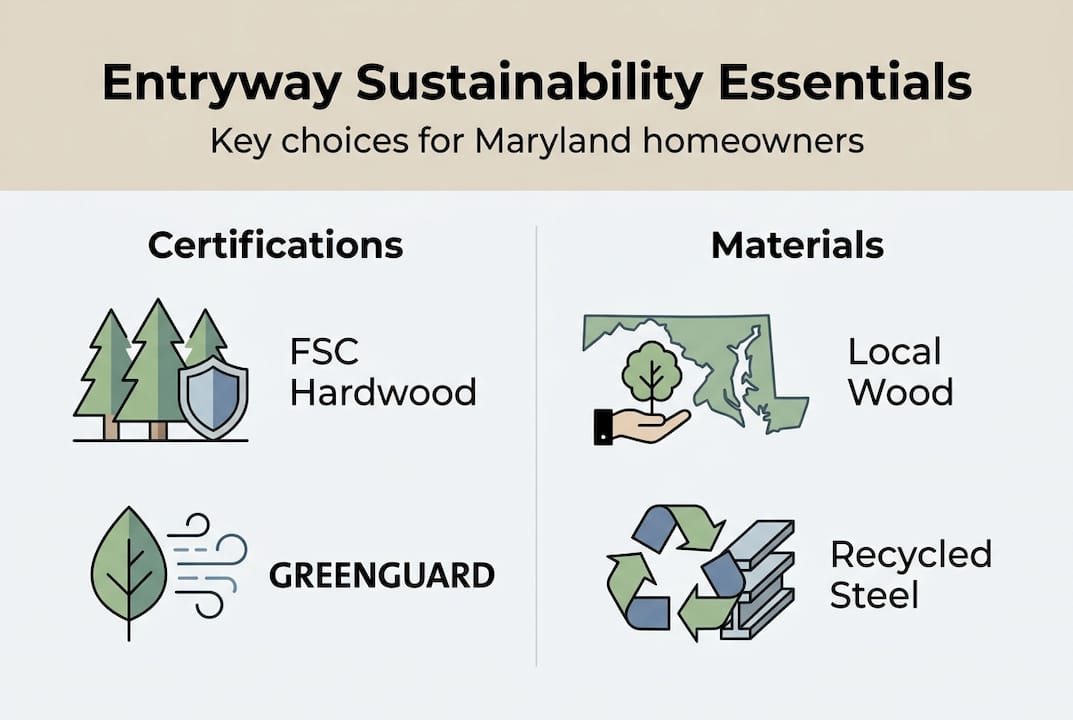
- FSC (Forest Stewardship Council): Verifies that wood came from responsibly managed forests
- Cradle to Cradle: Evaluates material health, recyclability, and social responsibility across five categories
- OEKO-TEX: Focuses on textiles and upholstery, certifying that fabrics are free from harmful substances
- LEVEL by BIFMA: A multi-attribute standard for commercial furniture covering environmental and social performance
- GREENGUARD: Certifies low chemical emissions for indoor air quality
Material choices matter just as much as certifications. FSC-certified hardwoods are among the strongest options for Maryland entryways because they come from forests where replanting and ecosystem health are monitored. Bamboo grows fast and sequesters carbon efficiently, making it a strong renewable choice. Recycled plastics, when used in hardware or accent components, divert waste from landfills without sacrificing durability.
| Material | Key benefit | Best use in entryways |
|---|---|---|
| FSC-certified hardwood | Responsible sourcing, long lifespan | Frames, shelving, locker panels |
| Bamboo | Fast-renewable, strong | Accent panels, drawer faces |
| Recycled metal hardware | Diverts waste, durable | Hinges, hooks, pulls |
| Low-VOC finishes | Protects indoor air quality | All surface coatings |
Greenwashing is widespread in the furniture industry. Verify third-party certifications rather than trusting marketing language alone. Red flags include vague claims like “sustainably inspired,” certifications you cannot look up on an official registry, and brands that cannot name their material suppliers.
Pro Tip: Before purchasing, ask the maker to show you the actual certification number. Legitimate certifications are searchable in public databases, and any reputable artisan will be happy to provide that documentation.
Certifications are foundational, but material sourcing and craftsmanship also play a pivotal role in sustainability.
Artisanal craftsmanship and local sourcing: The heart of Maryland sustainable entryway furniture
When you buy furniture made by a local Maryland artisan using regionally sourced wood, you are making a choice that ripples outward. Shorter supply chains mean lower transport emissions. Supporting local forestry operations keeps Maryland’s woodland economy healthy. And the quality of hand-crafted joinery simply outlasts anything assembled from flat-pack components.
The benefits of choosing locally crafted entryway furniture include:
- Reduced transport emissions from shorter material and product journeys
- Support for regional FSC-certified forestry in Maryland and neighboring states
- Traditional joinery techniques like mortise and tenon that eliminate the need for toxic adhesives
- Repairability because a local artisan can service what they built
- Personalized fit that reduces waste from off-the-shelf sizing mismatches
According to expert analysis on fast furniture, prioritizing durability, solid wood, artisanal joinery, and local sourcing are the defining factors of genuinely sustainable furniture. These are not premium extras. They are the baseline for doing it right.
Here’s a figure worth holding onto: 80% of a product’s environmental impact is determined at the design stage. That means the decisions made before a single cut is taken lock in most of the environmental outcome. A skilled craftsman who designs with longevity and repairability in mind is making a sustainability decision every time they pick up a pencil.
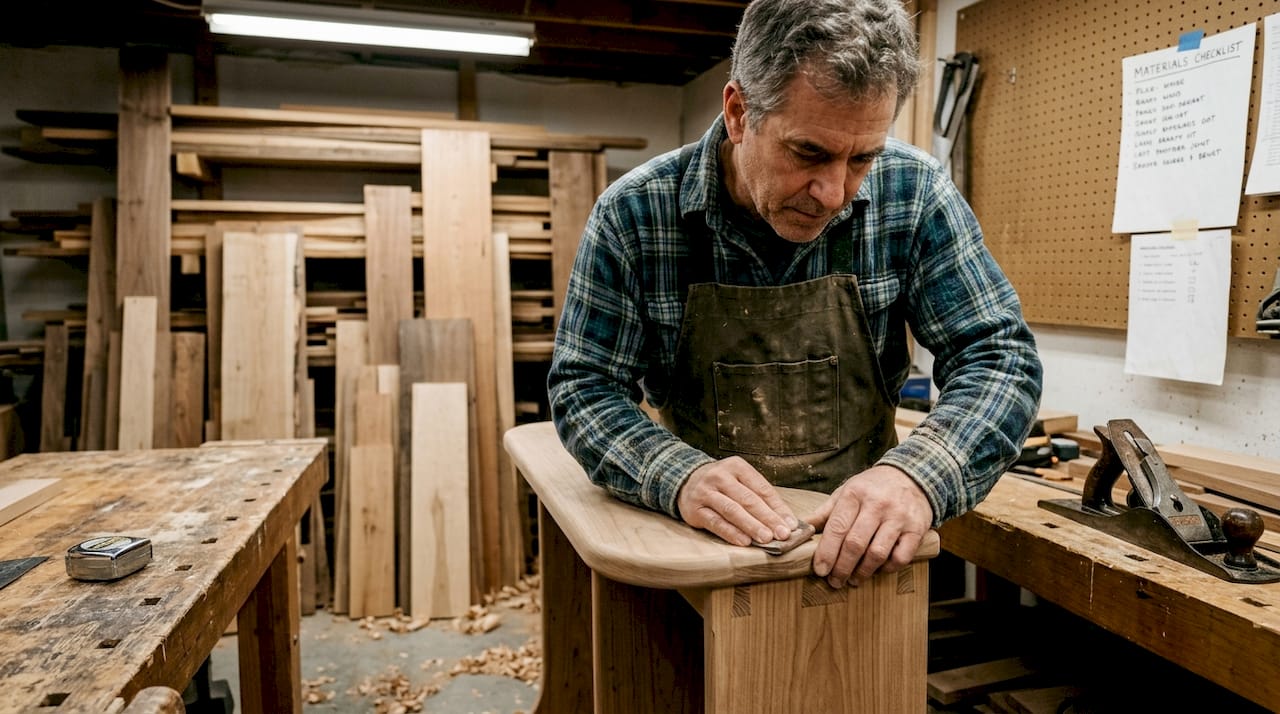
The Maryland craftsmanship approach we practice at Furniture Design Group reflects this thinking. Every mud locker and entryway piece we build starts with a conversation about how you live in your space, what wood species will age best in your home’s conditions, and how the piece can be maintained or repaired rather than replaced.
Pro Tip: Ask your furniture maker which specific wood species they use and where it was harvested. A maker who sources locally will know the answer immediately. One who cannot tell you is likely buying from a commodity supply chain.
When creating custom pieces, the design process itself becomes a sustainability tool. Precise measurements mean less offcut waste. Joinery chosen for strength means the piece does not wobble loose after a few years. These details compound into a dramatically lower lifetime footprint.
Craftsmanship and sourcing are essential, but practical design choices also affect sustainability in home settings.
Designing for longevity, health, and closed-loop sustainability
A sustainable entryway piece is not just built from good materials. It is designed to last, to keep your indoor air clean, and to have a responsible exit plan when its life eventually ends. Here is a practical step-by-step approach to selecting furniture that meets all three criteria.
- Start with material transparency. Ask for a full list of materials, including adhesives, finishes, and hardware. If a maker cannot provide this, move on.
- Prioritize low-VOC or water-based finishes. Volatile organic compounds off-gas into your home’s air for months or years. Water-based finishes perform beautifully and protect your family’s health.
- Choose solid construction over veneers on particleboard. Solid wood can be sanded, refinished, and repaired. Particleboard with a thin veneer cannot.
- Look for modular or disassemblable design. Furniture that can be taken apart at the end of its life is far easier to recycle or repurpose than glued-together assemblies.
- Plan for end of life. Research eco-friendly disposal options in your area before you buy, so you know the piece has a responsible exit path.
Non-toxic finishes, modular design, and closed-loop recycling are recognized as core methods for sustainable furniture design. These are not aspirational ideals. They are practical specifications you can request from any skilled furniture maker.
“Designing for disassembly is designing for respect. It says: this material has value beyond this single use, and we plan to honor that.”
For Maryland entryways specifically, consider how the piece will interact with moisture, mud, and seasonal temperature swings. A well-finished solid wood mud locker with brass or stainless hardware will handle those conditions for generations. A laminate unit from a big-box store will not survive five Maryland winters without warping or delaminating.
With a clear understanding of how to select sustainable furniture, let’s examine the broader implications and potential pitfalls homeowners should consider.
The uncomfortable truth: Real sustainability is about durability, not trends
After more than 20 years of building entryway furniture in Maryland, we have watched the word “sustainable” get stretched until it barely means anything. Brands slap it on products made with a single recycled component while the rest of the piece is built to fail in three years. That is not sustainability. That is marketing.
The fast furniture industry increases waste precisely because it is designed around replacement cycles, not lifespans. Every time a cheap entryway bench warps and gets thrown out, that is another piece in a landfill, another round of raw material extraction, another hit to the environment that no recycled packaging can offset.
Real sustainability is quieter. It looks like a Maryland family still using the same mud locker their grandparents had built, now refinished and fitted with new hooks for a new generation. It looks like authentic custom design that was thought through carefully at the start, built to outlast trends, and made from materials that were sourced with integrity.
Demand evidence. Ask for certification numbers. Ask where the wood came from. If a maker hesitates, that hesitation is your answer.
Start your sustainable entryway with Maryland’s custom furniture experts
If this guide has shifted how you think about your next entryway piece, you are already ahead of most buyers. The next step is connecting with craftsmen who can turn these principles into something built specifically for your home.
At Furniture Design Group, we have spent over 20 years building Maryland sustainable furniture using locally sourced hardwoods, traditional joinery, and finishes that protect your family’s health. Every piece we make is designed to last and built to be repaired, not replaced. Explore our approach to custom entryway furniture and reach out to start a conversation about what your entryway needs. We would love to show you what genuine craftsmanship looks like in person.
Frequently asked questions
How do I verify if entryway furniture is truly sustainable?
Check for certifications like FSC, Cradle to Cradle, and GREENGUARD, and ask the maker for specific material sourcing details including supplier names and certification numbers.
What materials are best for Maryland sustainable entryways?
Locally sourced FSC wood, bamboo, and recycled materials are the strongest choices because they minimize transport impact and support regional forestry health.
Why should I avoid fast furniture, even if it claims ‘eco-friendly’?
Fast furniture increases waste through short replacement cycles and cheap materials, while artisanal craftsmanship delivers the longevity that genuine sustainability actually requires.
Are non-toxic finishes important for sustainable entryway furniture?
Yes. Low-VOC and water-based finishes protect your indoor air quality and reduce chemical runoff during production, making them a core requirement for any truly sustainable piece.