
TL;DR:
- A furniture showroom is a curated space designed to help customers visualize, feel, and plan their home furnishings with expert support. Unlike standard stores, showrooms emphasize styled displays, customization options, and relationship-based purchasing to ensure confident decisions. Visiting involves tactile engagement, consulting with design professionals, and selecting tailored pieces that suit both style and practical needs.
Most people assume a furniture showroom is just a fancier version of a furniture store. Walk in, look at a couch, buy it, go home. But that assumption costs shoppers time, money, and decisions they later regret. A furniture showroom is something significantly more layered than a standard retail floor. It’s a curated space designed to help you see, feel, and plan your home purchases with real design support behind them. This guide breaks down what a furniture showroom actually is, how it differs from a regular store, and how to get the most out of every visit.
Table of Contents
- Key Takeaways
- What is a furniture showroom, exactly?
- Types of furniture showrooms and what they offer
- What to expect when visiting a furniture showroom
- How to choose the right furniture showroom
- My honest take on what most shoppers miss
- See what custom furniture can do for your space
- FAQ
Key Takeaways
| Point | Details |
|---|---|
| Showrooms are curated spaces | They display furniture in styled room settings, not just rows of product on a warehouse floor. |
| Design support is central | Most showrooms offer access to design consultants who guide purchasing decisions and customization. |
| Types vary widely | From high-end trade-only centers to hybrid public showrooms, the experience depends on the format. |
| Customization is the real value | Showrooms unlock fabric, finish, and configuration options you won’t find on any retail shelf. |
| Choose based on your needs | Match your style, timeline, and need for support to the right showroom type before visiting. |
What is a furniture showroom, exactly?
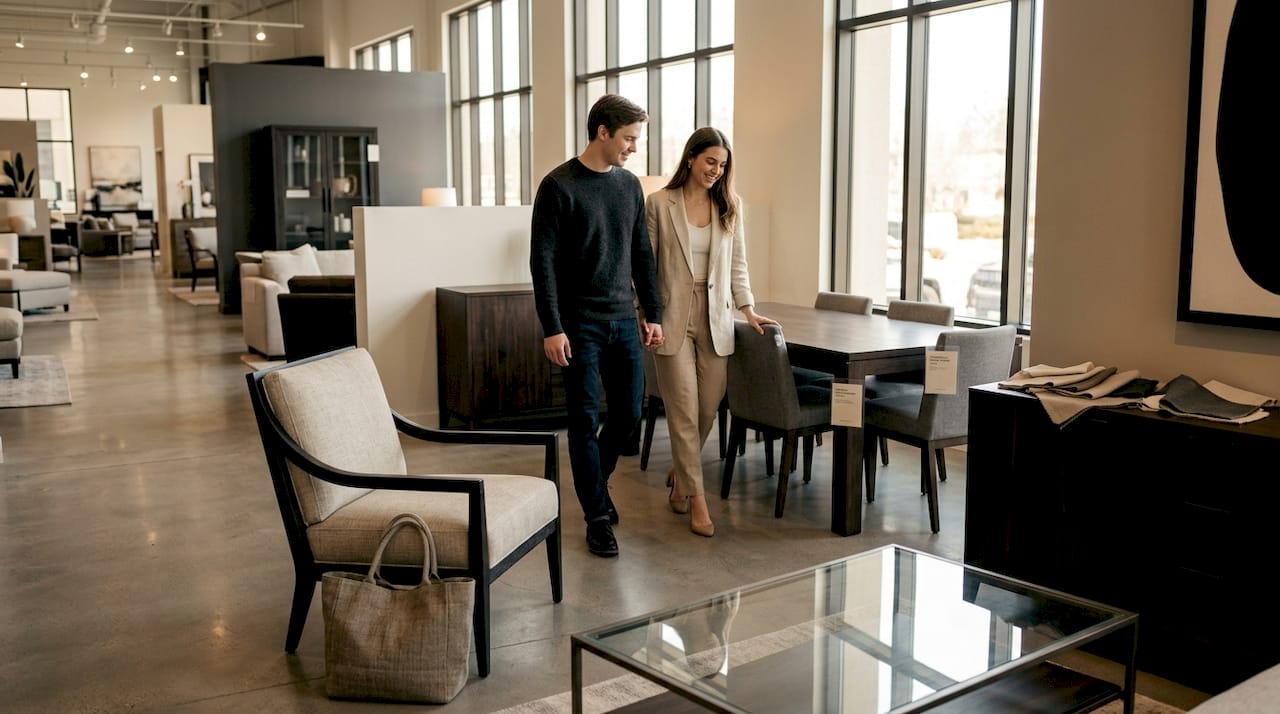
A furniture showroom is a dedicated display space where furniture manufacturers, retailers, or designers present their products in fully styled, realistic room settings. Unlike a warehouse store where pieces are lined up for volume browsing, a showroom is deliberately composed. Each vignette is arranged to help you picture that dining table in your actual home, not just under fluorescent lights on a concrete floor.
The primary purpose of a showroom goes beyond selling. Immersive styled displays show furniture, textiles, and accessories together so customers can evaluate proportion, texture, and color in context. That’s a fundamentally different experience from scrolling through product photos online or walking past a wall of sofas sorted by price tag.
Here’s where the furniture store definition gets more nuanced. A furniture store prioritizes transaction. A furniture showroom prioritizes relationship. Many showrooms assign design consultants to help clients configure pieces, select materials, and plan spaces. You’re not just picking a sofa off the floor. You’re working with someone who understands scale, finish options, and lead times.
The key distinctions between a furniture showroom and a typical furniture store include:
- Curated display over volume inventory. Showrooms present a carefully selected edit of products, not every SKU a brand carries.
- Styled room vignettes. Pieces are arranged together the way they’d appear in a real home, making visualization far easier.
- Design consultation. Many showrooms include staff trained to assist with layout, customization, and material selection.
- Custom order capability. What you see on the floor is often just the starting point. Most showrooms can order pieces in different fabrics, finishes, and configurations.
- Relationship-based buying. The transaction is built around the client’s needs, not just what’s available to take home today.
This last point matters most. Showrooms are built for confident, considered purchases. That’s the fundamental difference shoppers often miss before their first visit.
Types of furniture showrooms and what they offer
Not every showroom operates the same way. Understanding the different formats saves you a wasted trip and sets realistic expectations before you walk through the door.
High-end and to-the-trade showrooms are the most exclusive format. These spaces primarily serve interior designers, architects, and professional buyers. Public access is typically restricted, but many offer “Access to Design” programs that allow homeowners to purchase through a consultant or buying service. Some design centers house over 60 to 100 individual showrooms under one roof, representing thousands of manufacturers. The San Francisco Design Center is one widely recognized example of this model.
Public access showrooms are the most familiar format for most shoppers. These are open to anyone and blend aspirational display with direct retail. You can touch the furniture, speak with staff, and often place a custom order the same day.
Hybrid showrooms are where the industry is clearly heading. These spaces blend curated display with logistical efficiency, supporting an online discovery phase followed by a tactile, in-person experience. Many now offer flexible delivery and even same-day carry-out for select pieces.
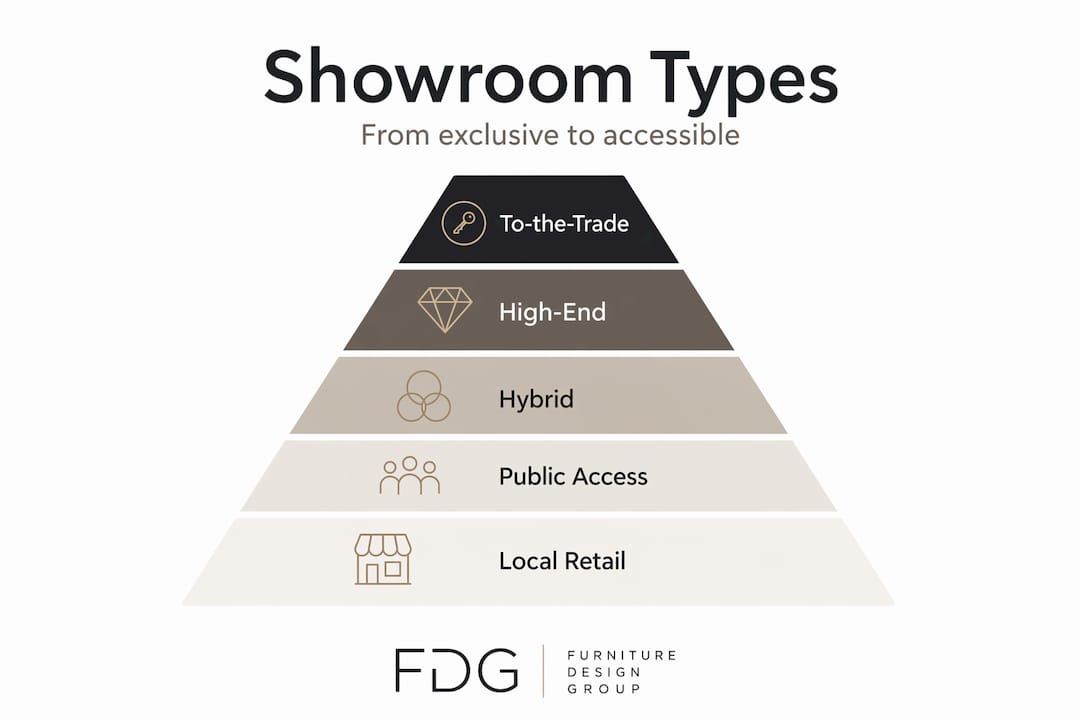
Smaller, localized showrooms have become a serious competitor to large-format stores. These spaces carry curated assortments tailored to local tastes, local climate, and neighborhood demographics. Fewer choices, done better. Shoppers who feel overwhelmed by giant furniture retailers often find localized showrooms far easier to navigate.
Here’s a quick comparison of the main showroom types:
| Showroom type | Who it serves | Access | Key benefit |
|---|---|---|---|
| To-the-trade | Designers, architects | Restricted or via consultant | Premium brands, deep customization |
| Public retail showroom | General shoppers | Open to all | Hands-on browsing, direct purchase |
| Hybrid showroom | All shoppers | Open to all | Combines inspiration with fast fulfillment |
| Localized showroom | Community shoppers | Open to all | Curated regional relevance, less overwhelm |
| Specialized showroom | Niche buyers | Varies | Focus on specific style (modern, outdoor, etc.) |
Pro Tip: If you’re shopping a to-the-trade showroom, ask about their design consultation program before assuming you can’t access it. Many luxury showrooms will work with you directly through an in-house consultant at no extra fee.
What to expect when visiting a furniture showroom
Walking into a showroom for the first time feels different from any other furniture shopping experience. Here’s how to use that visit well.
-
Expect immersive displays, not aisles. Showrooms are arranged in room vignettes, so move through them the way you’d walk through a home. Sit on the sofa. Open the cabinet. Touch the fabric. The whole point is tactile engagement that no website can replicate.
-
Plan to talk to someone. Showroom staff are typically trained design consultants, not general sales associates. They can help you figure out if a sectional will fit your floor plan, which fabric holds up to pets, and how long a custom order will take to arrive. Use that expertise.
-
Understand what you’re actually looking at. Showroom inventory is a curated edit, not a full product catalog. The chair on display may come in 40 other fabric options. Always ask what customization is available beyond the floor sample.
-
Ask about lead times upfront. Custom orders through showrooms typically take anywhere from six to sixteen weeks depending on the manufacturer. If you need furniture quickly, ask whether take-home furniture options are available for select pieces.
-
Bring measurements and photos. A floor plan sketch and photos of your room’s existing colors and materials will help the design consultant give you useful guidance, not just generic suggestions.
-
Clarify the full ordering process. Ask about deposit requirements, delivery fees, return policies, and what happens if a piece arrives damaged. Showrooms vary widely on these details, and knowing them before you commit matters.
The showroom experience supports design challenge-solving in ways that online shopping simply cannot replicate. You’re making decisions about scale, proportion, and texture. All three require being in the room with the product.
Pro Tip: Bring fabric swatches or paint chips from your home to the showroom. Comparing them directly against upholstery and finishes on the floor saves you from guessing how colors will interact in your actual space.
How to choose the right furniture showroom
Knowing what a furniture showroom is only gets you so far. Choosing the right one for your specific situation is what actually moves the project forward.
-
Match the showroom’s style to yours. A showroom stocked with sleek minimalist pieces will not help you furnish a traditional Victorian home. Review the showroom’s aesthetic online before visiting. Most now have curated photo galleries or social feeds that show their design range clearly.
-
Evaluate the services they offer. Do they have on-staff designers? Do they offer delivery and installation? Can they handle custom furniture orders with specific dimensions? The best showrooms function as partners, not just vendors.
-
Check their product assortment against your timeline. If you’re furnishing a home in eight weeks, a showroom with only custom-order capability and sixteen-week lead times is the wrong fit. Ask what’s available to take home or what ships quickly.
-
Prioritize customer service quality. A well-designed showroom with unhelpful staff is still a bad experience. Pay attention to how the team engages with you on a first visit. Are they listening, or just talking?
-
Consider localized showroom relevance. A showroom curated for your local climate and style preferences will stock pieces that make sense for your environment. That regional alignment matters more than many shoppers realize.
The right showroom saves you time, supports better decisions, and gives you access to products and expertise you won’t find browsing a big-box retailer’s website at midnight.
My honest take on what most shoppers miss
I’ve watched the furniture industry shift over the past decade, and what strikes me most is how few shoppers use showrooms the way they were designed to be used.
Most people walk in, glance around, feel vaguely inspired, and leave without speaking to anyone. They treat it like a museum tour. That’s leaving serious value on the table. The design-studio retail model that modern showrooms have moved toward is built around one thing: getting you to a decision you won’t regret. The consultant on the floor isn’t there to push you toward the most expensive piece. They’re there because furniture decisions are genuinely complicated, and most of us aren’t trained to navigate scale, proportion, and material durability on our own.
What I’ve also noticed is that shoppers overlook smaller, localized showrooms in favor of the massive retailers they already recognize. The big names feel safe. But in my experience, the smaller showroom often carries pieces that actually suit the regional climate, the local architectural style, and the practical realities of how people in that area live. That specificity is worth seeking out.
My honest advice: go in with your room measurements, go in with questions, and actually talk to someone. The showroom experience is only as good as your willingness to engage with it. Treat it as a design consultation that happens to include furniture. That reframe changes everything.
— Donovan
See what custom furniture can do for your space
After visiting a showroom and getting inspired, many homeowners realize that off-the-shelf pieces still don’t quite fit. Maybe the dimensions are wrong, or the style is close but not exact. That’s exactly where Furnituredesigngroup comes in.
With over 20 years of craftsmanship experience, Furnituredesigngroup specializes in bespoke custom furniture built to your exact specifications. From entryway mud lockers to fully custom pieces designed around your home’s layout and aesthetic, every build is handled with genuine artisanal care. Explore their finished work gallery to see what’s possible, or reach out directly to start a conversation about your project. Real craftsmanship, built for your specific home.
FAQ
What is a furniture showroom?
A furniture showroom is a curated display space where furniture and home goods are arranged in styled, realistic room settings to help customers visualize products in their own homes. Unlike a standard furniture store, showrooms typically offer design consultation, customization options, and relationship-based buying support.
How is a furniture showroom different from a furniture store?
A furniture store focuses primarily on retail transactions with in-stock inventory, while a furniture showroom prioritizes a curated experience, design guidance, and custom ordering. Furniture retailers are sometimes called furniture stores, shops, or home decor stores, but showrooms go further by offering styled displays and expert consultation.
Can anyone visit a furniture showroom?
Most public and hybrid showrooms are open to all shoppers. High-end or to-the-trade showrooms primarily serve interior designers and architects, but many offer public access through design consultation programs or in-house buying services.
What should I bring to a furniture showroom visit?
Bring room measurements, a rough floor plan, and photos or swatches of your existing colors and materials. This gives the design consultant enough context to make specific, useful recommendations rather than general suggestions.
How long does ordering furniture through a showroom take?
Custom orders placed through a furniture showroom typically take six to sixteen weeks, depending on the manufacturer and the level of customization. Many hybrid showrooms also carry take-home furniture options for shoppers who need pieces quickly.