
TL;DR:
- Bespoke storage starts from scratch, designing a unique, tailored solution based on your space and needs.
- It offers maximum space utilization, superior craftsmanship, and long-term adaptability compared to standard options.
Most homeowners searching for storage solutions eventually land on the word “bespoke” and assume it simply means expensive custom furniture. That assumption costs them. What is bespoke storage, really? It’s a design process that starts from a blank slate, builds around your specific room, and produces a one-of-a-kind piece engineered for your exact life. Not a modified catalog option. Not a stock unit painted a different color. True bespoke storage is built around you, from the first sketch to the final coat of finish, and the difference in daily function and aesthetics is substantial.
Table of Contents
- Key Takeaways
- What bespoke storage actually means
- Bespoke storage options and materials
- Advantages of bespoke storage over other solutions
- How to approach designing bespoke storage
- Cost considerations and value assessment
- My take on what bespoke storage really does to a home
- Ready to build storage that actually fits your life?
- FAQ
Key Takeaways
| Point | Details |
|---|---|
| Bespoke vs. custom | Bespoke starts from scratch; custom modifies existing designs to fit your preferences. |
| Space optimization | Tailored storage systems fill awkward corners, sloped ceilings, and non-standard walls no off-the-shelf unit can touch. |
| Collaborative process | True bespoke design involves ongoing client input through every stage, not just an initial order. |
| Long-term value | Higher upfront cost pays off through durability, perfect fit, and lasting design appeal. |
| Material control | You choose finishes and materials to match both your home’s style and your sustainability priorities. |
What bespoke storage actually means
The word “bespoke” traces back to the verb “bespeak,” meaning to order in advance. In the world of tailored craftsmanship, it originally described garments commissioned for a single client with zero reliance on a pattern template. Storage furniture borrowed the term for the same reason: the piece exists for one person, one room, and one set of needs.
Here’s where most buyers get confused. A common misconception treats “custom” and “bespoke” as interchangeable, but the real difference lives in the design process. Custom storage typically means choosing dimensions, colors, or configurations from a manufacturer’s existing lineup. You are modifying a product. Bespoke means the design originates from nothing. Your room’s measurements, your storage habits, your aesthetic preferences, and even the quirks of your walls and floor become the brief. The maker engineers the solution outward from those facts.
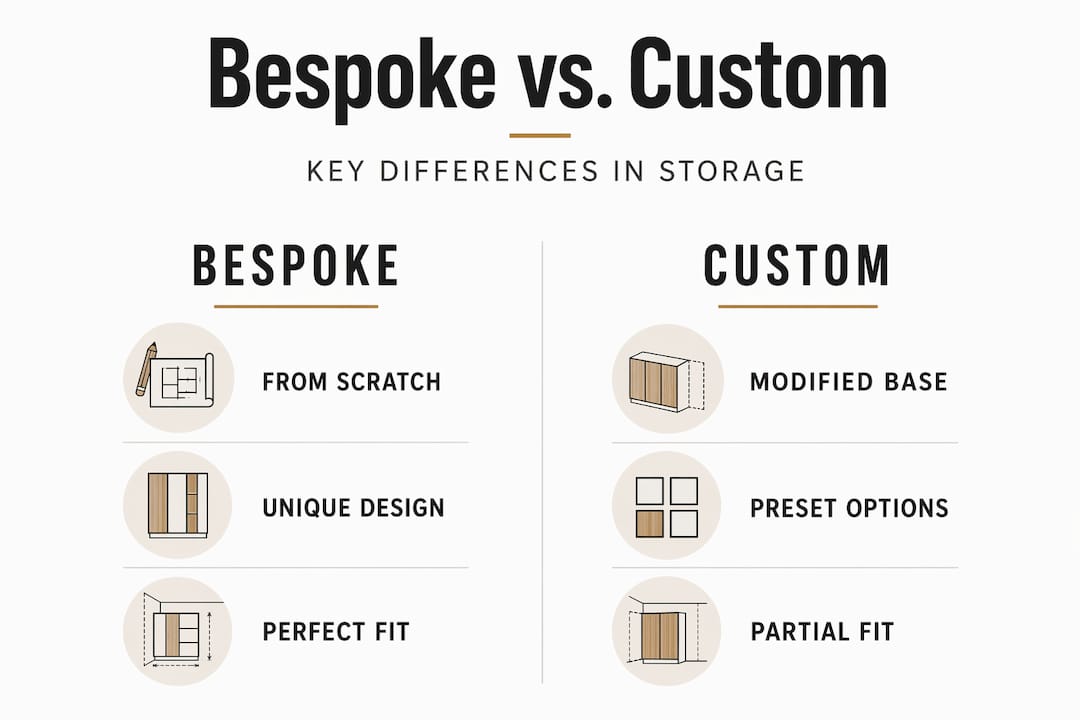
Compare the three main approaches side by side:
| Type | Starting point | Design process | Fit to space |
|---|---|---|---|
| Standard | Catalog template | No modification | Approximate |
| Custom | Existing design modified | Limited options selected | Better, not perfect |
| Bespoke | Blank slate | Iterative, collaborative | Exact |
The marketing world has blurred these lines badly. Retailers routinely label modular shelving systems as “bespoke” simply because you can rearrange the shelves. True bespoke furniture storage involves iterative, hands-on design where the client and maker adjust the concept in real time as the physical realities of the build emerge.
Pro Tip: When a retailer uses the word “bespoke,” ask one question: “Do you start the design from scratch, or from an existing template?” The answer tells you everything.
Bespoke storage options and materials
One of the genuine strengths of bespoke storage is its ability to work with spaces that defeat standard furniture. Under sloping ceilings, around chimney breasts, beneath staircases, inside dormer alcoves: these are exactly the spaces where a bespoke approach earns its cost back fastest. A fitted unit that claims every cubic inch of an otherwise dead corner is more valuable than three freestanding wardrobes pushed against a flat wall.
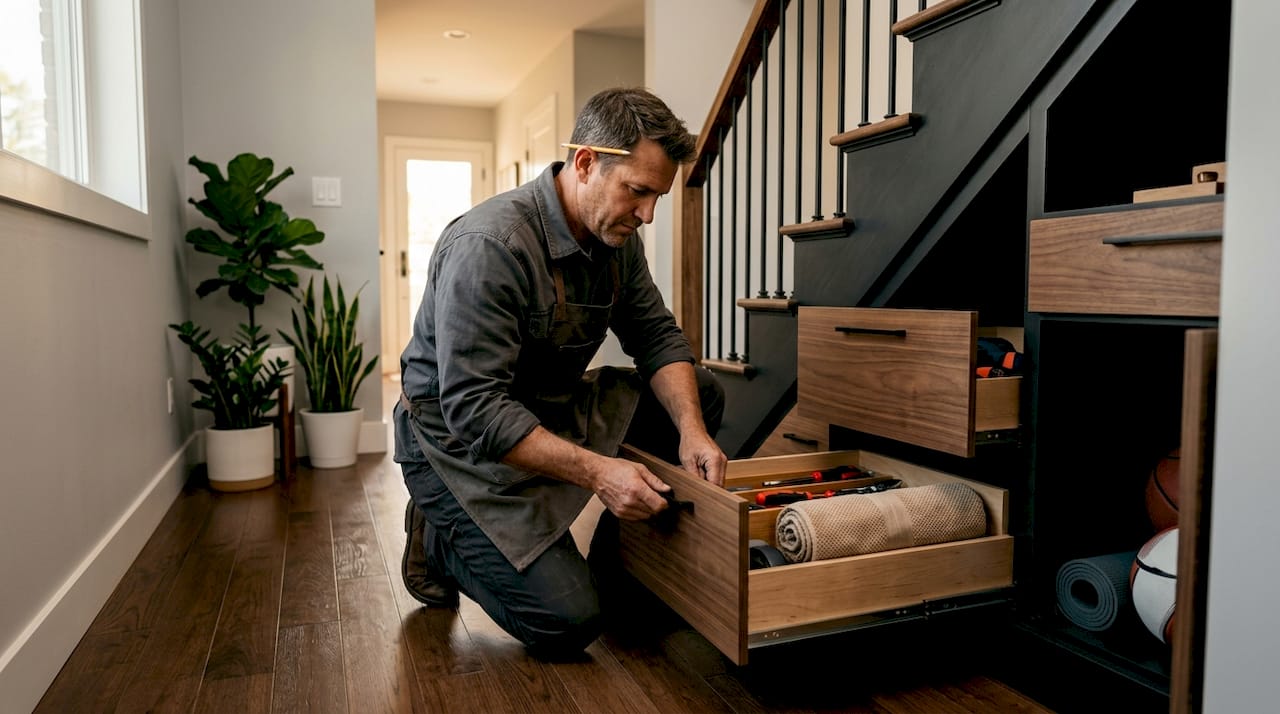
Materials in bespoke furniture storage are also entirely your choice, which affects both how the piece looks and how long it lasts. Sustainably sourced woods like white oak, walnut, and maple are popular for their grain character and durability. Painted MDF suits contemporary interiors where a smooth, seamless finish matters more than exposed grain. Metal accents, glass panels, and integrated lighting all enter the conversation based on what you need from the piece.
Here is a breakdown of features that clients most commonly build into their bespoke storage options:
- Adjustable shelving sized to specific items, not standard shelf heights
- Integrated cable management for home offices and media walls
- Pull-out drawers and trays positioned at ergonomically correct heights
- Soft-close mechanisms specified to match door weight and frequency of use
- Built-in lighting inside cabinets for wardrobes or display units
- Hidden compartments for valuables or items that need to stay out of sight
- Finish matching to existing architectural details like molding or door frames
The room also shapes the specification. Kitchen pantry storage might prioritize deep pull-outs and ventilation. A compact bedroom wardrobe benefits from vertical space maximization and slim drawer depths that do not interrupt movement. A living room media unit might double as display, bar storage, and a concealed filing system. Each context demands a different set of decisions.
Pro Tip: Before your first consultation, photograph the storage problem you are trying to solve, not just the empty space. Images of cluttered shelves or overloaded closets give your maker far more useful information than measurements alone.
Advantages of bespoke storage over other solutions
The advantages of bespoke storage are clearest when you map them against the specific frustrations of off-the-shelf furniture. Think about the last time you bought a wardrobe or a shelving unit and discovered it was six inches too short for your longest dresses, or that the shelf spacing left half a foot of dead air above every pile of books. Bespoke storage eliminates those compromises by design.
Here are the top advantages worth knowing before you decide:
- Maximum space utilization. Every inch of your room becomes usable. Bespoke solutions are engineered to your exact floor plan, including alcoves, soffits, and non-square corners that no catalog product can fill.
- Unique design fit. The piece reflects your taste, not a trend cycle. You select materials, proportions, and hardware that work with what you already own.
- Superior craftsmanship. Makers who work in true bespoke production focus on fewer, more considered pieces. Joinery quality, material selection, and finishing standards are higher than production-line furniture.
- Long-term adaptability. A well-built bespoke unit can be modified years later. Shelves repositioned, sections extended, finishes refreshed. That flexibility adds life span.
- Problems solved that off-the-shelf cannot fix. Sloped ceilings, load-bearing walls mid-room, unusually deep or shallow alcoves: these are the problems bespoke storage solves that frustrate standard furniture buyers entirely.
- Aesthetic cohesion. When your storage is designed with your room’s existing architecture in mind, the result reads as intentional interior design rather than accumulated furniture.
The bespoke storage benefits also extend to the psychological experience of your home. A room where storage is invisible or beautifully integrated feels calmer, larger, and more considered than one where storage units interrupt the sightlines.
How to approach designing bespoke storage
The process is where most people feel uncertain. You know you want something tailored, but you are not sure how to start a conversation with a maker or what to bring to a consultation. The good news is that a skilled craftsman will guide you through it. Your job is to show up prepared.
Before your first meeting, gather the following:
- Room dimensions, including ceiling height and any architectural features like alcoves or chimney breasts
- A clear list of what you need to store, grouped by category and estimated quantity
- Style references: photographs from magazines, social media, or rooms in your home you already love
- A realistic sense of your budget range, even if it’s approximate
The design process then moves through four stages. First, consultation: you share your needs and the maker assesses the space. Second, concept: initial drawings or 3D renders show how the solution could work. Third, iteration: you review and refine together, adjusting proportions, finishes, and internal configurations. Fourth, build and install: the final piece is crafted and fitted to the room.
Ongoing client input through the iteration stage is what separates a genuinely bespoke outcome from a “measure and make” service. Ask your maker how many rounds of revision are included and how they handle surprises uncovered during the build.
Pro Tip: Ask your maker directly: “Have you worked with a space like mine before?” Request photographs of similar projects. A strong portfolio focused on your type of challenge is more reassuring than a broad catalog of finished pieces.
Cost considerations and value assessment
Bespoke storage costs more upfront than standard or modular alternatives. That is simply true, and any article that glosses over it is not being honest with you. The relevant question is not “Is bespoke cheaper?” but “What am I actually comparing?”
Factors that influence the cost of a bespoke storage project include:
- Materials selected. Solid hardwood costs more than painted MDF. Premium hardware adds to the total.
- Complexity of the design. A straight run of shelving is faster to build than a curved unit with integrated lighting and multiple drawer configurations.
- Size of the piece. A floor-to-ceiling fitted wardrobe wall takes significantly more time and material than a single alcove unit.
- Installation requirements. Complex fits around architecture, electrical, or plumbing work increase labor time.
Bespoke storage’s long-term value becomes clearer when you count the cost of replacing cheaper furniture repeatedly. A flat-pack wardrobe that lasts five years before joints fail, drawer bottoms bow, and surfaces chip is not a budget win across a decade. A bespoke piece built from quality materials and proper joinery can last the lifetime of a home.
The strongest return on investment comes when bespoke storage solves a problem that has genuinely compromised how you live. Wasted space in a small apartment, a mudroom that never stays organized, a home office that doubles as a spare room: these are the situations where a tailored approach to customized space organization pays for itself in daily function.
My take on what bespoke storage really does to a home
I’ve worked with homeowners who came to bespoke storage after years of frustrating attempts with modular systems, and the pattern I see most often is the same. They were not really solving the problem. They were managing it.
What strikes me about the best bespoke storage projects I’ve been close to is how quickly the conversation shifts from storage to identity. Once a client realizes the piece can be built exactly to their needs, they stop asking “will this fit?” and start asking “what do I actually want my mornings to feel like?” That is a fundamentally different question, and it leads to fundamentally better outcomes.
The misconception I encounter most is that bespoke is only for large, expensive homes. That is backward. The clients who benefit most from truly tailored storage systems are often the ones with the least forgiving spaces. A 900-square-foot apartment with odd walls and a sloped ceiling needs bespoke thinking far more than a sprawling open-plan home. Precision matters most when you have the least room for error.
I’ve also seen how the iterative design process builds real confidence in homeowners who thought they had no design instinct. Give someone two materials to compare in hand, or show them how two shelf heights change the usability of a unit, and they make great decisions fast. The process teaches as it builds.
— Donovan
Ready to build storage that actually fits your life?
At Furnituredesigngroup, bespoke storage is not a marketing label. It’s what the team has been doing from day one, building custom furniture that starts with your space, your needs, and your style, then crafts a solution with over 20 years of hands-on experience behind every joint and finish. Based in Maryland, the family-owned studio works directly with homeowners through every stage of the design process, from first measurements to final installation. If you want to see what that looks like in practice, browse the project gallery and then reach out to start a conversation about your space.
FAQ
What is the difference between bespoke and custom storage?
Custom storage modifies an existing design to your preferences, while bespoke storage originates from scratch with no catalog template involved. Bespoke involves iterative collaboration between client and maker throughout the entire design and build process.
Is bespoke storage worth the higher cost?
For most homeowners dealing with awkward spaces or specific storage needs, yes. Bespoke storage’s durability and perfect spatial fit typically outlast multiple rounds of cheaper alternatives, making the long-term cost competitive.
What spaces benefit most from bespoke storage?
Non-standard spaces benefit the most, including rooms with sloped ceilings, alcoves, chimney breasts, or under-stair areas that standard furniture cannot fill. Small apartments where every cubic inch matters also see strong returns from a tailored approach.
How long does a bespoke storage project take?
Timelines vary by complexity and the maker’s schedule, but most projects run from initial consultation to installation in six to twelve weeks. More complex, multi-room projects or those requiring specialist materials will take longer.
Can bespoke storage be modified after it’s built?
A well-built bespoke piece is designed with adaptability in mind. Shelves can often be repositioned, sections extended, and finishes refreshed, which is one of the key long-term bespoke storage benefits over flat-pack alternatives.