
Every homeowner in Maryland knows how quickly rain and muddy shoes can turn a beautiful entryway into a messy drop zone. Creating a welcoming and organized entry space becomes essential, especially during wet seasons common in the Mid-Atlantic region. Choosing bespoke mud lockers means investing in both artisanal craftsmanship and everyday practicality, giving your home an entryway that balances custom design and everyday resilience.
Table of Contents
- Built-in Mud Lockers Defined and Demystified
- Key Types and Customization Possibilities
- Essential Design Features and Functions
- Comparing Built-in vs. Freestanding Solutions
- Maintenance, Upkeep, and Long-term Value
Key Takeaways
| Point | Details |
|---|---|
| Built-in Mud Lockers Enhance Organization | They effectively contain dirt and moisture, preventing mess in living spaces while providing structured storage for outdoor gear. |
| Customization Options Are Extensive | Homeowners can choose from various materials, designs, and technology upgrades to create a mud locker that meets specific needs and aesthetics. |
| Maintenance Is Key to Longevity | Regular cleaning and inspection ensure that mud lockers maintain functionality and appearance over time, protecting both storage and home value. |
| Consider Installation Type Carefully | Built-in solutions offer seamless integration into home design, while freestanding units provide flexibility and affordability. |
Built-in Mud Lockers Defined and Demystified
Built-in mud lockers represent innovative storage solutions designed to transform entryway spaces into highly functional organizational zones. These specialized units are strategically integrated into home designs to manage and contain the mess typically tracked inside from outdoor environments. Specialized storage systems provide homeowners with a dedicated space for managing muddy boots, wet jackets, and debris-laden gear.
At their core, built-in mud lockers serve multiple critical functions for modern households:
- Containment: Prevent dirt and moisture from spreading throughout living spaces
- Organization: Create structured storage for outdoor clothing and accessories
- Protection: Shield interior flooring and surfaces from potential water damage
- Aesthetic Integration: Blend seamlessly with home design while maintaining practical utility
The fundamental design of these mud lockers centers on durability and practicality. Constructed from water-resistant materials like sealed wood, marine-grade plywood, or composite surfaces, they can withstand constant exposure to moisture and mud. Home entryway systems leverage these design principles to create robust solutions that maintain both functionality and visual appeal.
Pro tip: When designing a mud locker, prioritize drainage and ventilation to prevent moisture buildup and potential mildew growth.
Key Types and Customization Possibilities
Modern built-in mud lockers offer an impressive range of design options that cater to diverse homeowner needs and aesthetic preferences. Mass customization trends have transformed these storage solutions from standardized units into personalized home integration systems that reflect individual lifestyles and spatial requirements.
Typical mud locker configurations include:
- Open Cubby Systems: Providing visual accessibility and quick gear retrieval
- Enclosed Locker Designs: Offering maximum dust and moisture protection
- Hybrid Models: Combining open shelving with closed storage compartments
- Bench-Integrated Units: Creating convenient seating alongside storage functionality
Customization options extend well beyond basic structural variations. Homeowners can now select from an array of materials, finishes, and integrated technologies that enhance both form and function. Potential personalization elements include specialized wood stains, hardware selections, charging station integrations, and modular component arrangements that adapt to specific family needs.
Technology has significantly expanded customization potential, allowing for precision-engineered solutions that maximize space efficiency and aesthetic appeal. Modern mud lockers can incorporate smart features like built-in device charging ports, humidity-controlled compartments, and adaptable shelving systems that grow and change with household requirements.
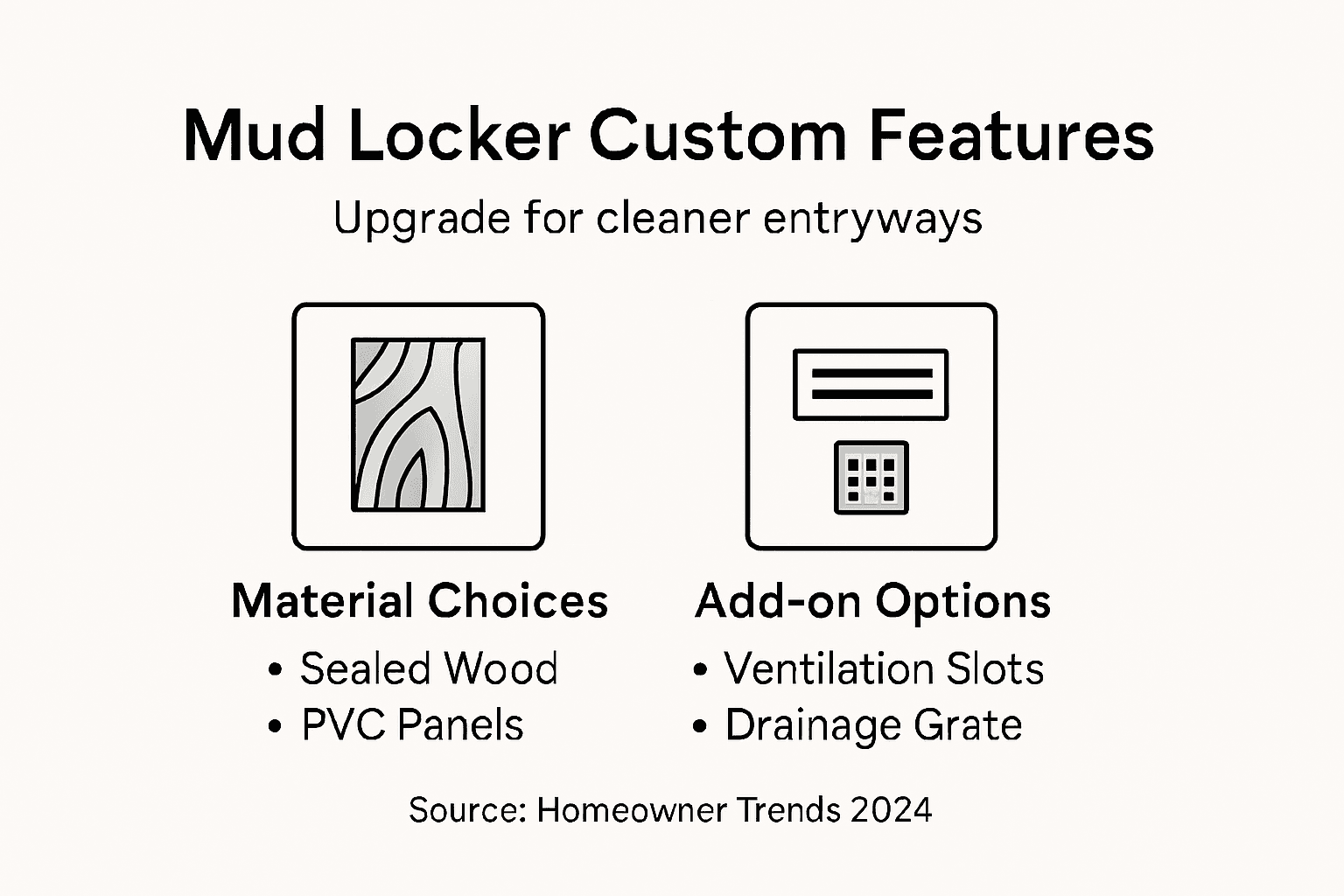
Pro tip: Measure your entryway space precisely and sketch potential configurations before selecting a mud locker design to ensure optimal fit and functionality.
Here’s a summary of customization features that set modern mud lockers apart from traditional storage options:
| Customization Feature | Benefit for Homeowners | Application Example |
|---|---|---|
| Specialized Materials | Enhanced durability | Marine-grade plywood |
| Integrated Tech Upgrades | Streamlined charging/storage | USB charging ports |
| Modular Components | Adaptable to family needs | Adjustable shelves |
| Designer Hardware | Increased aesthetic value | Custom hooks and handles |
Essential Design Features and Functions
Built-in mud lockers represent far more than simple storage spaces - they are sophisticated organizational systems engineered to manage household transitions efficiently. Moisture-resistant design features play a crucial role in preventing water damage and maintaining clean, hygienic entryways.
Key functional elements of well-designed mud lockers include:
- Drainage Systems: Integrated trays and sloped surfaces to channel moisture away
- Ventilation Channels: Preventing mold and mildew buildup
- Durable Surface Materials: Resistant to scratches, stains, and water exposure
- Modular Storage Components: Adaptable hooks, shelves, and compartments
- Ergonomic Design: Comfortable seating and easy-access storage configurations
Practical design considerations extend beyond basic functionality, incorporating elements that enhance user experience. Advanced mud lockers now feature technological integrations like USB charging ports, motion-activated lighting, and humidity-control mechanisms that transform these spaces from mere storage areas into intelligent home management zones.
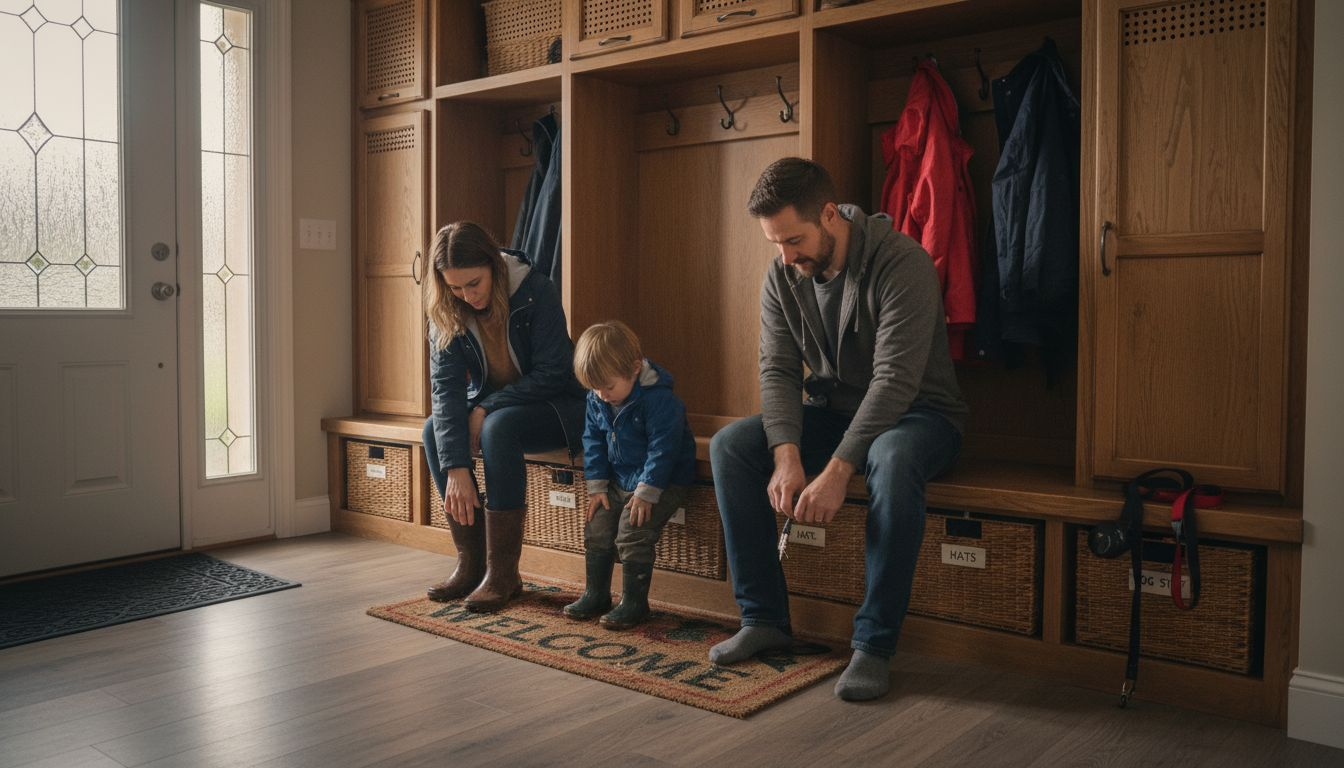
The most sophisticated mud lockers go beyond simple utility, creating multipurpose transitional spaces that seamlessly blend organization, technology, and design aesthetics. By prioritizing both form and function, these systems effectively manage outdoor gear while maintaining a clean, stylish home environment.
Pro tip: Select mud locker materials that complement your home’s existing color palette and architectural style to ensure seamless visual integration.
Comparing Built-in vs. Freestanding Solutions
Homeowners face a critical decision when selecting mud storage solutions: choosing between built-in and freestanding options that dramatically impact entryway functionality and aesthetic appeal. Architectural integration strategies reveal significant differences between these two approaches, each offering unique advantages for different household needs.
Key comparison points between built-in and freestanding mud lockers include:
- Installation: Built-in lockers require permanent construction, while freestanding units offer mobility
- Customization: Built-ins provide tailored designs matching home architecture
- Cost: Freestanding solutions typically have lower upfront expenses
- Space Efficiency: Built-in lockers maximize available entryway square footage
- Durability: Permanently installed systems often demonstrate superior long-term performance
Stability and design compatibility represent critical factors in selecting the ideal mud locker solution. Built-in systems excel in creating seamless, integrated storage that appears purposefully designed, whereas freestanding units maintain flexibility but may look like aftermarket additions to the home’s interior.
Ultimately, the choice depends on individual home layouts, budget constraints, and personal aesthetic preferences. Homeowners seeking a permanent, high-end solution that adds value to their property will likely gravitate toward custom-built integrated mud lockers, while those prioritizing affordability and adaptability might prefer modular freestanding alternatives.
Pro tip: Measure your entryway dimensions and evaluate long-term usage requirements before selecting between built-in and freestanding mud locker solutions.
Compare key aspects of built-in and freestanding mud locker solutions below:
| Aspect | Built-in Solution | Freestanding Alternative |
|---|---|---|
| Space Utilization | Custom fit for entryway | May limit available space |
| Installation | Requires professional construction | Simple, DIY setup |
| Style Integration | Seamlessly matches interior design | May appear as a standalone piece |
| Long-term Value | Adds lasting home value | Limited impact on resale |
Maintenance, Upkeep, and Long-term Value
Maintaining built-in mud lockers requires strategic care to preserve their functionality and aesthetic appeal over time. Home organization strategies emphasize the importance of routine maintenance to ensure these specialized storage systems continue performing optimally throughout their lifecycle.
Essential maintenance practices include:
- Surface Cleaning: Regular wiping with appropriate cleaning solutions
- Drainage Management: Checking and clearing moisture channels
- Material Inspection: Monitoring for wear, cracks, or potential damage
- Hardware Maintenance: Lubricating hinges and checking attachment points
- Ventilation Checks: Ensuring proper airflow to prevent moisture buildup
Long-term home value considerations demonstrate that well-maintained mud lockers contribute significantly to overall property preservation. The investment extends beyond mere storage - these systems actively protect flooring, reduce cleaning time, and prevent the spread of outdoor contaminants throughout living spaces.
Materials selection plays a crucial role in long-term maintenance efficiency. Homeowners should prioritize water-resistant, durable materials like marine-grade plywood, sealed hardwoods, or advanced composite surfaces that resist moisture, scratching, and bacterial growth. By selecting high-quality materials and implementing consistent maintenance routines, mud lockers can remain functional and visually appealing for decades.
Pro tip: Create a seasonal maintenance schedule that includes deep cleaning, hardware inspection, and surface treatment to maximize your mud locker’s longevity and performance.
Discover Custom Built-in Mud Lockers That Perfectly Match Your Home
Managing muddy boots and wet jackets can be a daily challenge for many homeowners. This article highlights the importance of durable, moisture-resistant mud lockers that prevent dirt and water from damaging your home while organizing your entryway beautifully. If you want a solution that blends functionality with aesthetic appeal and is tailored to your unique space and style consider exploring our bespoke entryway furniture. At Furniture Design Group we specialize in custom-crafted mud lockers designed to meet specific needs like built-in drainage systems and ergonomic storage compartments.
Ready to transform your entryway with expertly crafted built-in mud lockers made from high-quality materials and designed by artisans with over 20 years of experience Visit our website Furniture Design Group to explore our custom options and learn how we can create the perfect storage that fits seamlessly into your home. Don’t wait to protect your floors and enhance your home’s value with a personalized mud locker solution Contact us today by phone or email or stop by our Maryland showroom for a hands-on consultation.
Frequently Asked Questions
What are built-in mud lockers?
Built-in mud lockers are specialized storage solutions integrated into the design of a home, aimed at organizing and containing outdoor gear, such as muddy boots, wet jackets, and other debris brought in from outside. They help maintain cleanliness in entryways.
What materials are commonly used for built-in mud lockers?
Built-in mud lockers are typically constructed from water-resistant materials such as sealed wood, marine-grade plywood, or composite surfaces, making them durable enough to withstand constant exposure to moisture and mud.
What are the benefits of having a built-in mud locker compared to a freestanding unit?
Built-in mud lockers offer advantages such as customized fit for your entryway, added long-term value to your home, and better space efficiency. They usually integrate seamlessly with your home’s design, while freestanding units may appear as standalone pieces.
How can I maintain my built-in mud locker to ensure its longevity?
To maintain your built-in mud locker, perform regular cleaning, check drainage systems to prevent moisture buildup, monitor the material for wear or damage, and ensure proper ventilation. Creating a seasonal maintenance schedule can help preserve its functionality and appearance.