
Choosing entryway furniture for your home in Maryland can feel overwhelming when style and practicality both matter. Many homeowners want more than generic pieces—they want furniture that truly complements their living space and daily routines. Custom furniture blends craftsmanship with smart design, giving you the chance to create solutions tailored to your vision and lifestyle. Whether you are curious about common myths or how modern digital tools make customization easier, you will uncover what sets custom entryway options apart for Maryland homes.
Table of Contents
- Defining Custom Furniture And Common Myths
- Types Of Custom Furniture Solutions
- The Custom Design And Build Process
- Signature Features Of Custom-Crafted Pieces
- Quality, Costs, And Value Compared
Key Takeaways
| Point | Details |
|---|---|
| Custom Furniture is More Than Just Price | It offers unique artistry and functionality tailored to individual specifications, challenging common misconceptions about expense and accessibility. |
| Personalized Design Process Enhances Collaboration | Engaging directly with designers ensures that every piece meets specific aesthetic and functional needs, utilizing advanced technologies and traditional craftsmanship. |
| Investment in Quality and Longevity | While initial costs may be higher, custom furniture is built from superior materials and offers longer durability, leading to greater long-term value. |
| Diverse Custom Solutions Available | Various types of custom furniture, such as modular and fully bespoke options, provide flexibility to fit unique spatial requirements and personal styles. |
Defining Custom Furniture and Common Myths
Custom furniture represents far more than simply purchasing a pre-designed piece—it’s a sophisticated intersection of artistry, functionality, and personal expression. Unlike mass-produced items, custom furniture transforms functional objects into unique narrative statements about individual style and aesthetic sensibility.
At its core, custom furniture involves designing and crafting pieces specifically tailored to a client’s precise specifications, spatial requirements, and design preferences. Furniture design methods have evolved significantly, shifting from traditional manufacturing approaches toward more personalized, human-centered strategies.
Several pervasive myths frequently misrepresent the nature of custom furniture:
- Myth 1: Custom furniture is prohibitively expensive
- Myth 2: Custom pieces take months or years to complete
- Myth 3: Custom furniture lacks design sophistication
- Myth 4: Only wealthy individuals can afford custom pieces
In reality, custom furniture offers numerous advantages that challenge these misconceptions. The process involves direct collaboration between artisan and client, ensuring that every detail—from materials to dimensions—reflects individual preferences and functional needs.
Modern custom furniture design integrates advanced technologies and traditional craftsmanship, creating pieces that are simultaneously innovative and timeless. Designers now utilize computer-aided design tools, sustainable materials, and precision techniques that enable more efficient and creative production processes.
Pro tip: When exploring custom furniture, prioritize understanding your specific spatial and aesthetic requirements before engaging with a designer to ensure the most effective collaboration.
Types of Custom Furniture Solutions
Custom furniture solutions represent a dynamic spectrum of design approaches that transform functional spaces through personalized craftsmanship. From residential entryways to specialized home office configurations, these solutions offer unprecedented flexibility in meeting unique spatial and aesthetic requirements.
Digital customization techniques have revolutionized how furniture is designed and manufactured, enabling unprecedented precision and personalization. Modern computational design systems allow clients to define exact geometric and functional parameters, bridging traditional craftsmanship with cutting-edge technological capabilities.
The primary categories of custom furniture solutions include:
- Modular Custom Furniture: Flexible pieces that can be reconfigured to suit changing spatial needs
- Built-in Custom Solutions: Permanently installed furniture tailored to specific architectural dimensions
- Hybrid Custom Designs: Combining mass-produced elements with personalized modifications
- Fully Bespoke Furniture: Entirely hand-crafted pieces created from scratch
These solutions are driven by an emerging trend toward mass customization, where manufacturing processes become increasingly adaptable to individual client preferences. Advanced IT solutions now enable real-time interactions between designers and clients, streamlining the customization process from initial concept to final production.
Understanding the nuanced approaches to custom furniture requires recognizing that customization is not a one-size-fits-all proposition. Each solution represents a unique intersection of client vision, spatial constraints, functional requirements, and artistic expression.
This table highlights how different types of custom furniture solutions fit various spaces and needs:
| Solution Type | Best For | Design Flexibility | Typical Use Scenario |
|---|---|---|---|
| Modular | Small, adaptable rooms | High flexibility | Home offices, studio apartments |
| Built-in | Unique layouts | Fixed, precise fit | Kitchens, alcoves |
| Hybrid | Mixed requirements | Moderate customization | Retail or reception areas |
| Fully Bespoke | Statement pieces | Unlimited possibilities | Luxury living rooms, galleries |
Pro tip: Before commissioning custom furniture, carefully document your space’s dimensions, functional needs, and aesthetic preferences to facilitate a more precise design collaboration.
The Custom Design and Build Process
The custom furniture design and build process is a meticulous journey that transforms abstract concepts into tangible, functional art. It represents a collaborative dance between client vision, artistic expertise, and technical precision, requiring multiple carefully orchestrated stages of development.
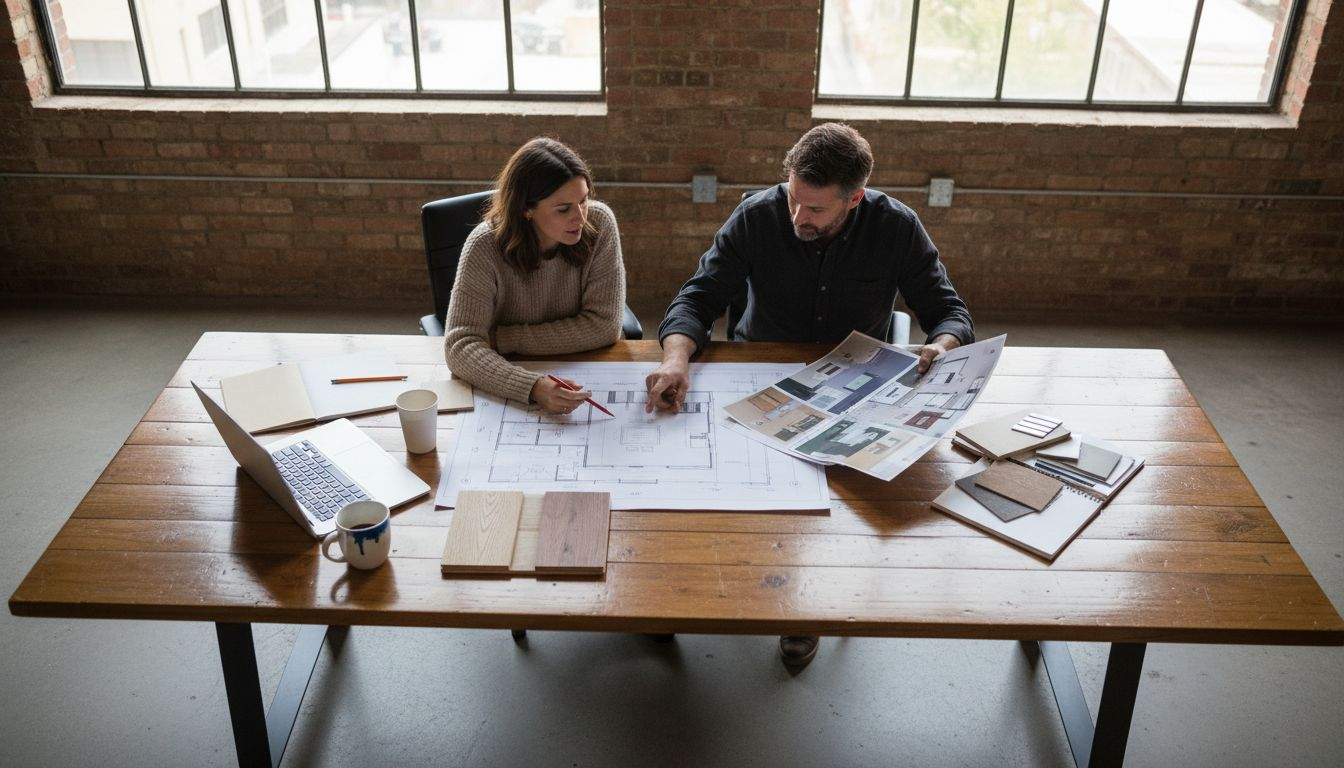
Technological integration in furniture production has revolutionized how designers communicate and execute custom projects, enabling more responsive and dynamic workflows that adapt to individual client needs.
The typical custom furniture design process involves several critical stages:
- Initial Consultation and Concept Development
- Detailed client needs assessment
- Spatial measurement and architectural analysis
- Preliminary design concept generation
- Design Refinement and Visualization
- Computer-aided design (CAD) modeling
- 3D rendering and virtual previews
- Client feedback and iterative modifications
- Material Selection and Fabrication Planning
- Material sourcing and quality assessment
- Structural engineering considerations
- Precision manufacturing techniques
- Crafting and Quality Control
- Handcrafted construction
- Detailed artisan workmanship
- Rigorous quality inspection processes
Modern custom furniture design integrates advanced computational tools with traditional craftsmanship, creating a seamless workflow that balances technological efficiency with artisanal expertise. This approach allows for unprecedented levels of personalization and precision in furniture creation.
Digital design systems enable real-time collaboration, transforming how custom furniture is conceived, developed, and realized.
By combining computational design capabilities with skilled artisan techniques, designers can now offer clients truly unique furniture solutions that precisely match their functional and aesthetic requirements.
Pro tip: Schedule multiple design consultations and request detailed mockups to ensure your custom furniture concept aligns perfectly with your spatial and stylistic vision.
Signature Features of Custom-Crafted Pieces
Custom-crafted furniture transcends ordinary manufacturing, embodying a profound intersection of artistry, functionality, and personal expression. Each piece represents a unique narrative, meticulously designed to reflect individual tastes, spatial constraints, and functional requirements.
Innovative furniture design strategies highlight the transformative potential of custom craftsmanship, emphasizing how personalized pieces contribute to enhanced product longevity and emotional connection.
Signature features of custom-crafted furniture distinguish these pieces from mass-produced alternatives:
- Tailored Dimensionality: Precisely measured to fit specific spatial requirements
- Unique Material Selection: Carefully curated materials reflecting client preferences
- Adaptive Functionality: Multifunctional designs responsive to evolving user needs
- Artisanal Construction Techniques: Handcrafted with meticulous attention to detail
- Personal Narrative Integration: Incorporating design elements that tell a unique story
These signature characteristics transform furniture from mere objects into personalized expressions of individual style and functional necessity. Each custom piece becomes a testament to the client’s aesthetic sensibility and the artisan’s technical expertise.
Custom furniture bridges the gap between functional utility and personal artistry, creating pieces that are simultaneously practical and profoundly meaningful.
The emotional durability of custom-crafted furniture stems from its ability to adapt, endure, and reflect the unique personality of its owner. Unlike mass-produced items, these pieces are designed with long-term use and personal connection as primary considerations.
Pro tip: During initial consultations, bring photographs of your space and collect material samples to help artisans understand your specific design vision and functional requirements.
Quality, Costs, and Value Compared
Custom furniture represents a sophisticated investment that transcends traditional price-based comparisons, offering a nuanced approach to value that considers long-term quality, functionality, and personal satisfaction. While initial costs may appear higher, the comprehensive benefits often justify the investment.
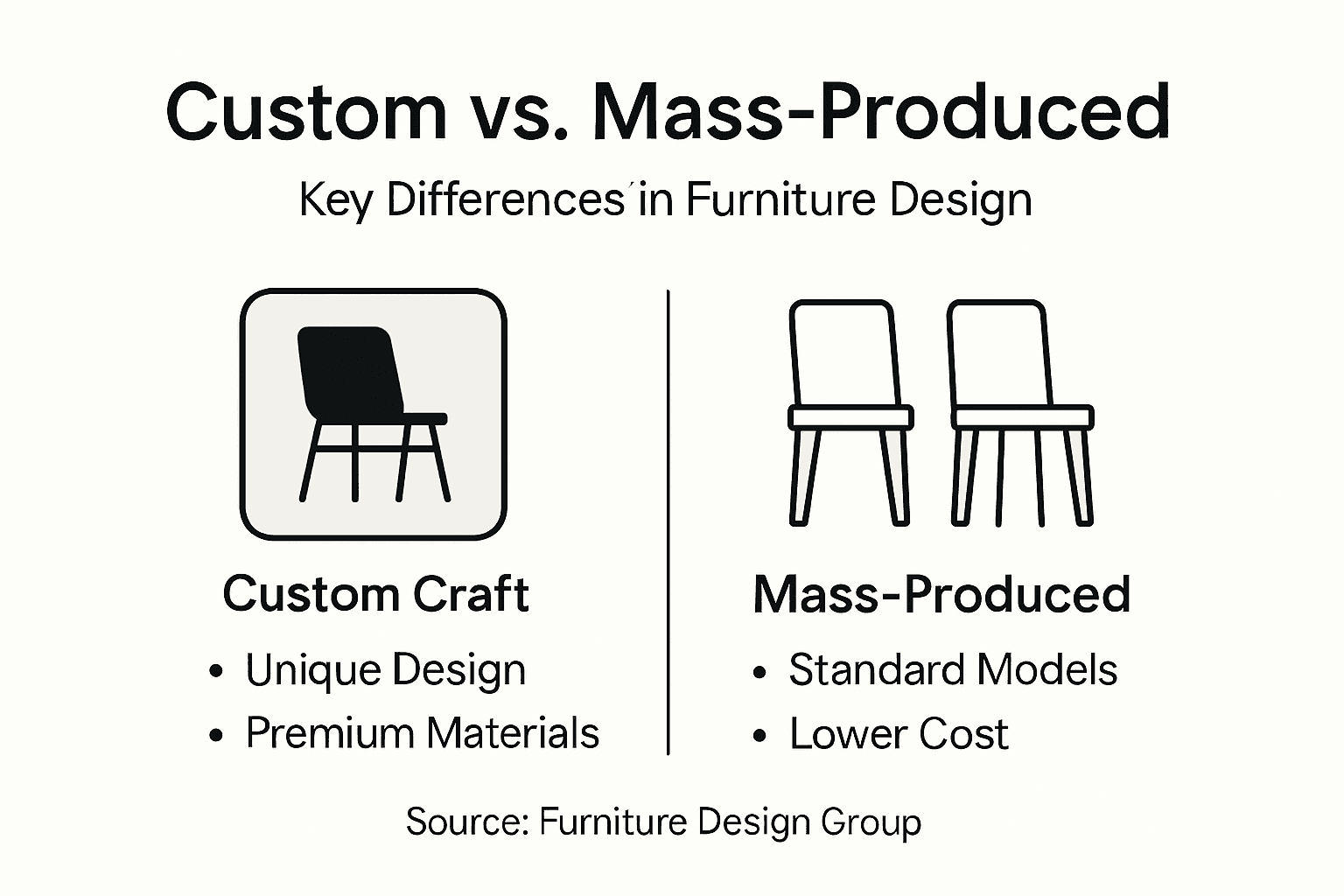
Quality management strategies in custom furniture production emphasize prevention and value creation, highlighting how strategic craftsmanship can reduce waste and enhance overall product performance.
Key comparative factors between custom and mass-produced furniture include:
- Initial Investment: Custom pieces typically cost 30-200% more than comparable mass-produced items
- Material Quality: Superior, hand-selected materials with longer durability
- Longevity: Custom furniture often lasts 2-3 times longer than standard products
- Repair and Maintenance: Easier to restore and modify over time
- Resale and Inheritance Potential: Higher retention of value
The true value of custom furniture extends beyond monetary considerations. These pieces represent personal narratives, embodying individual aesthetic preferences and functional requirements that mass-produced alternatives cannot replicate.
Here’s a concise comparison of key benefits and drawbacks between custom and mass-produced furniture:
| Aspect | Custom Furniture | Mass-Produced Furniture |
|---|---|---|
| Personalization | Tailored to individual needs | Limited style choices |
| Material Quality | Premium, hand-selected | Standard, bulk-sourced |
| Lead Time | Variable, often longer | Fast, consistent delivery |
| Long-Term Value | Durable, retains value | Frequent replacements needed |
| Design Collaboration | Direct designer interaction | No client input on design |
Custom furniture is an investment in craftsmanship, personal expression, and long-term quality, not merely a transactional purchase.
Economically, custom furniture demonstrates remarkable value proposition through reduced replacement frequency, superior materials, and adaptability to changing lifestyle needs. The initial higher cost becomes a strategic long-term investment in quality and personal satisfaction.
Pro tip: Request detailed cost breakdowns and material specifications during initial consultations to understand the comprehensive value of your custom furniture investment.
Discover the Art of Custom Craftsmanship with Furniture Design Group
The challenge of finding entryway furniture that perfectly fits your space, reflects your style, and offers lasting quality is real. This article reveals how custom furniture transcends mass production through tailored dimensionality and artisanal construction techniques. If you value personalized design that captures your unique story and functional needs, you understand why off-the-shelf pieces often fall short.
At Furniture Design Group, we bring more than 20 years of craftsmanship expertise to your home with custom-built mud lockers and entryway solutions designed just for you. Every piece is crafted to fit your exact measurements and stylistic preferences, embodying the seamless blend of artistry and practical functionality highlighted in the article.
Ready to transform your entryway with furniture that truly represents you? Explore our custom furniture collections today and experience the difference of true personalization. Connect with us for a personalized consultation over the phone, email, or make plans to visit our Maryland showroom. Act now to start a collaboration that turns your vision into a lasting statement piece tailored entirely to your home.
Frequently Asked Questions
What is custom furniture?
Custom furniture refers to pieces designed and crafted specifically to meet a client’s unique specifications, spatial requirements, and design preferences, transforming functional objects into personalized statements of style.
How does the custom furniture design process work?
The design process typically involves several stages, including an initial consultation to assess needs, design refinement and visualization, material selection, and finally crafting and quality control to ensure the final piece meets client expectations.
What are the key benefits of custom furniture compared to mass-produced items?
Custom furniture offers several advantages, such as personalized design, superior material quality, longer durability, and the ability to adapt to changing functional needs, making it a strategic long-term investment.
How can I ensure my custom furniture meets my design vision?
To ensure effective collaboration with a designer, it is essential to document your space’s dimensions, functional requirements, and aesthetic preferences, and to bring photographs and material samples during initial consultations.