
TL;DR:
- Quality craftsmanship involves skilled human techniques, heritage joinery, and carefully chosen materials for lasting durability. It significantly impacts furniture’s structural integrity, surface longevity, repairability, and overall value over time. Investing in well-crafted furniture ensures better performance, easier maintenance, and a deeper connection to the craft, making it a practical rather than luxury choice.
Quality craftsmanship is defined as skilled, deliberate human work using heritage techniques and high-integrity materials to produce furniture built for lasting durability and visual appeal. The importance of craftsmanship goes far beyond aesthetics. Research from NPJ Heritage Science, engineering studies on mortise-tenon joinery, and Alexandria’s 2026 conceptual analysis all confirm that craftsmanship determines how furniture performs structurally, how long its surfaces hold up, and how much value it delivers over a lifetime. For homeowners investing in pieces that anchor a room, understanding what separates crafted furniture from mass-produced alternatives is the most practical decision you can make.
Why quality craftsmanship matters for furniture durability
Craftsmanship determines structural integrity before a single person sits down. The joint design, wood species, and assembly method chosen by a skilled maker directly control how much load a piece can bear and how long it holds that load without failure.
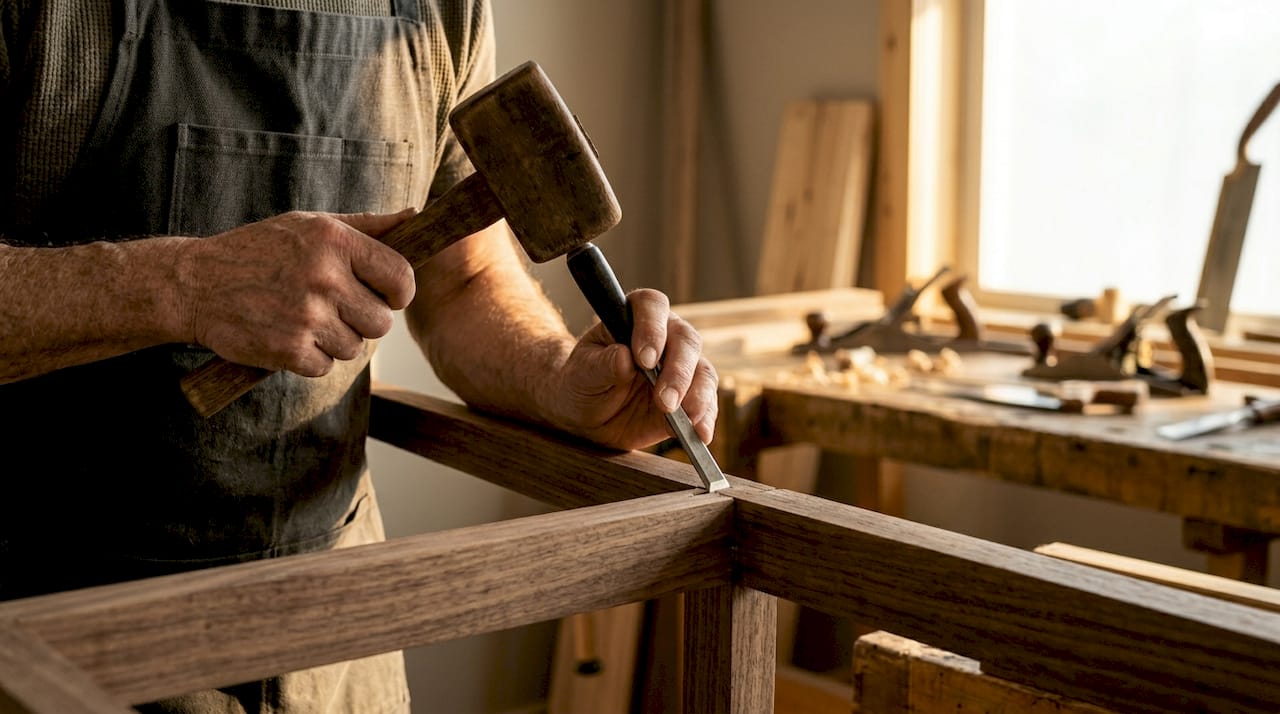
Engineering research on loose tenon-mortise joint strength classifies chair joint performance into low, medium, and high strength categories, with seat and back load capacities ranging from 1,516 N to over 2,095 N. That range is not trivial. A chair in the low-strength category may pass visual inspection but fail under the repeated stress of daily household use. A craftsman who selects the right joint geometry and wood species from the start eliminates that risk entirely.
Wood species selection and finger-joint geometry also play a measurable role. Studies show that longer finger length increases mean maximum tensile force and improves fracture resistance in bonded wood connections. This means a maker who understands material behavior is not guessing at strength. They are engineering it with their hands.
Adhesive choice adds another layer. Research on adhesive layer behavior in timber joints shows that different adhesives produce varied stiffness and failure stress distributions, which directly affects how a joint absorbs shock over years of use. A craftsman who matches adhesive to species and joint type is managing load paths the way a structural engineer would, just at the scale of a dining chair or entryway mud locker.
Furniture built to meet EN 12520:2015 strength benchmarks gives buyers measurable confidence that goes well beyond what a visual inspection can offer. Mass-produced furniture rarely specifies which strength category it meets. Crafted furniture, built by someone who understands these standards, typically exceeds them.
Pro Tip: When evaluating a furniture joint in person, press firmly on the corner of a seat or shelf. Any flex, creak, or lateral movement signals weak joinery. A well-crafted mortise-tenon or dovetail joint should feel completely rigid under hand pressure.
| Joint type | Strength category | Best application |
|---|---|---|
| Mortise-tenon | High | Chair legs, table bases |
| Finger joint | Medium to high | Frame connections, panels |
| Dowel joint | Low to medium | Cabinet backs, light shelving |
| Dovetail | High | Drawer boxes, case furniture |
How finishing craftsmanship affects surface life and long-term cost
A finish is not decoration. It is the primary defense between wood and the environment, and its quality determines how often you will need to restore or replace a piece.
A 2026 NPJ Heritage Science study on lacquer finishing processes found that surface properties including gloss, roughness, adhesion strength, and thermal cycling resistance all vary significantly based on the finishing technique used. Traditional processes applied by skilled hands produced superior results across every measured category. This matters practically because a finish with poor adhesion will peel, crack, or yellow within a few years, while a properly applied traditional lacquer can protect a surface for decades.
Homeowners consistently underestimate the role of finishes beyond appearance. A durable finish is a core component of furniture longevity strategy, not an afterthought. The difference between a factory spray finish and a hand-applied, multi-coat traditional lacquer is the difference between a surface that needs refinishing in five years and one that holds its color and texture for twenty.
When a finish does eventually need attention, the quality of the original application determines how easy and affordable that restoration will be. Professional refinishing costs range from $200 to $500 for a dining chair and up to $2,000 for a solid wood table, but professional work produces superior durability and appearance retention compared to DIY approaches. Furniture with a well-applied original finish is also easier to restore because the substrate is protected and the surface layers are consistent.
Here is how common finishing approaches compare in practical terms:
- Traditional hand-applied lacquer: Highest adhesion and thermal resistance, longest service life, requires skilled application
- Factory spray finish: Consistent coverage but lower adhesion scores, more prone to chipping and yellowing under UV exposure
- Oil and wax finishes: Penetrating protection, easy to spot-repair, requires periodic reapplication but forgives wear gracefully
- Polyurethane topcoat: Strong surface hardness, but difficult to repair without full stripping, and less forgiving on solid wood movement
Pro Tip: Ask your furniture maker which finishing system they use and how many coats are applied. A craftsman who can name the specific product, the number of coats, and the drying time between each one is working with intention. A vague answer is a red flag.
What makes good craftsmanship beyond materials and methods
Craftsmanship is not reducible to expensive wood or a high price tag. Alexandria’s 2026 analysis defines true craftsmanship through four criteria: trained human production, a defensible time investment, heritage technique, and uncompromising materials. The maker’s irreplaceability is central to this definition. A machine can replicate a shape. It cannot replicate judgment.
That judgment shows up in decisions that never appear in a product description. A skilled maker reads the grain of a board before cutting it, adjusting the joint layout to avoid weak points. They sand with the grain, not against it. They let a finish cure fully before applying the next coat rather than rushing to meet a production schedule. None of these decisions are visible in the finished piece, but all of them determine how the piece performs over time.
The cultural and economic arguments for skilled artisans are equally strong. When you buy a crafted piece, you are supporting a knowledge tradition that takes years to develop and cannot be automated. That knowledge has real economic value. A well-crafted piece from a maker like Furnituredesigngroup, with over 20 years of experience building custom entryway furniture in Maryland, holds its structural and aesthetic integrity in ways that flat-pack alternatives simply do not.
There is also a personal dimension. Research cited by Harper’s Bazaar on craft and wellbeing shows that engaging with craft correlates with increased life satisfaction and a deeper appreciation for patience and precision. Owning a crafted object connects you to that process. It changes how you relate to the things in your home, and that is a benefit no specification sheet captures.
Practical benefits of quality craftsmanship for homeowners
Choosing crafted furniture translates directly into better daily experience and lower long-term costs. The structural and finishing research covered above points to a clear set of practical advantages that homeowners can expect from quality work.
The benefits of quality work in furniture include:
- Structural reliability over decades: Properly jointed and finished furniture withstands daily use without loosening, warping, or cracking. Joinery crafted to exceed household strength standards means you are not replacing a chair in three years.
- Lower lifecycle cost: A piece that costs more upfront but lasts 30 years is cheaper per year than a mass-produced alternative replaced every five. Professional refinishing, when needed, is also more cost-effective on well-built furniture because the substrate is sound.
- Repairability: Crafted furniture can be disassembled, re-glued, and refinished. Most mass-produced furniture uses construction methods that make repair impossible. The repairability advantage of crafted pieces is one of the most underappreciated financial benefits of buying well.
- Aesthetic consistency: A hand-applied finish and carefully selected wood grain age gracefully. Factory finishes tend to degrade unevenly, producing a worn look rather than a patina.
- Home atmosphere: Crafted furniture anchors a room differently than mass-produced pieces. The weight, proportion, and material quality register subconsciously and contribute to the sense that a space is considered and intentional.
When shopping for furniture, look for makers who can explain their joinery choices, name their finishing materials, and show you examples of pieces they built years ago that are still in use. Those are the indicators that separate genuine craftsmanship from marketing language. Resources like joinery craftsmanship guides and finish selection comparisons can help you ask better questions before you buy.
Key takeaways
Quality craftsmanship in furniture is a structural and material discipline that determines durability, finish longevity, repairability, and long-term value far more than price or appearance alone.
| Point | Details |
|---|---|
| Joinery drives structural strength | Joint type and wood species determine load capacity, with mortise-tenon joints reaching the highest strength classifications. |
| Finishing technique controls surface life | Traditional hand-applied lacquers outperform factory finishes on adhesion, gloss retention, and thermal resistance. |
| Craftsmanship is defined by maker skill | True craftsmanship requires trained hands, heritage methods, and material discipline, not just premium pricing. |
| Repairability reduces lifecycle cost | Crafted furniture can be re-glued and refinished; mass-produced alternatives typically cannot be restored cost-effectively. |
| Wellbeing connects to craft quality | Owning and engaging with crafted objects correlates with higher life satisfaction and a deeper sense of home. |
Why I think most buyers undervalue craftsmanship until it’s too late
After years of watching homeowners make furniture decisions, the pattern I see most often is this: buyers focus on dimensions and finish color, then discover two years later that a joint has loosened or a surface has started to peel. At that point, the conversation shifts to repair costs and replacement timelines. The original price advantage of the mass-produced piece disappears quickly.
The misconception I hear most is that craftsmanship is a luxury category, something reserved for collectors or high-budget renovations. That framing is wrong. Craftsmanship is a practical category. It describes how a piece is built and whether it will hold up. A custom mud locker built with proper mortise-tenon joinery and a hand-applied finish is not a luxury purchase. It is a more rational one, because it will still be functional and attractive when a factory-built alternative has been replaced twice.
What I find most compelling about the research is how it confirms what skilled makers have always known intuitively. Joint geometry, adhesive selection, and finishing process are not aesthetic choices. They are engineering decisions. The craftsman who makes them well is doing applied mechanical work, not just woodworking. That distinction matters when you are choosing who builds the furniture in your home.
My advice is straightforward: ask the maker to show you a piece they built five or ten years ago. If they can, and if it still looks and performs well, you have found someone worth working with.
— Donovan
How Furnituredesigngroup builds furniture that lasts

Furnituredesigngroup has spent over 20 years building custom entryway furniture in Maryland with the joinery precision, material discipline, and finishing care this article describes. Every piece starts with a conversation about how you use your space, what materials suit your home, and how you want the furniture to age. The team specifies joinery for the load it will carry, selects wood species for both strength and grain character, and applies finishes with the multi-coat process that produces lasting surface integrity. If you are ready to invest in furniture built to perform for decades, explore custom furniture services from Furnituredesigngroup or browse the custom furniture portfolio to see craftsmanship in practice.
FAQ
What is quality craftsmanship in furniture?
Quality craftsmanship in furniture is skilled human production using heritage joinery techniques, carefully selected materials, and controlled finishing processes. Alexandria’s 2026 definition adds that it requires trained hands, a defensible time investment, and maker irreplaceability, criteria that no automated production process can meet.
How does craftsmanship affect furniture durability?
Craftsmanship affects durability through joint design, wood species selection, adhesive choice, and finishing technique. Engineering research shows that mortise-tenon joints reach load capacities above 2,095 N, while poorly jointed furniture falls into low-strength classifications that fail under normal household use.
Is crafted furniture worth the higher cost?
Crafted furniture costs more upfront but delivers lower lifecycle cost through structural longevity, repairability, and finish durability. A piece that lasts 30 years and can be professionally refinished for $200 to $500 is more economical than replacing a mass-produced alternative every five years.
What should I look for when buying quality furniture?
Look for makers who can name their joinery method, specify their finishing materials, and show you existing pieces that are years old and still performing well. Furniture built to EN 12520:2015 strength standards offers measurable structural confidence that visual inspection alone cannot provide.
Does finishing quality really matter that much?
Finishing quality determines how long a surface resists wear, UV exposure, and thermal cycling. The NPJ Heritage Science 2026 study found that traditional lacquer finishing processes produce measurably superior gloss retention, adhesion strength, and thermal resistance compared to standard factory finishing methods.